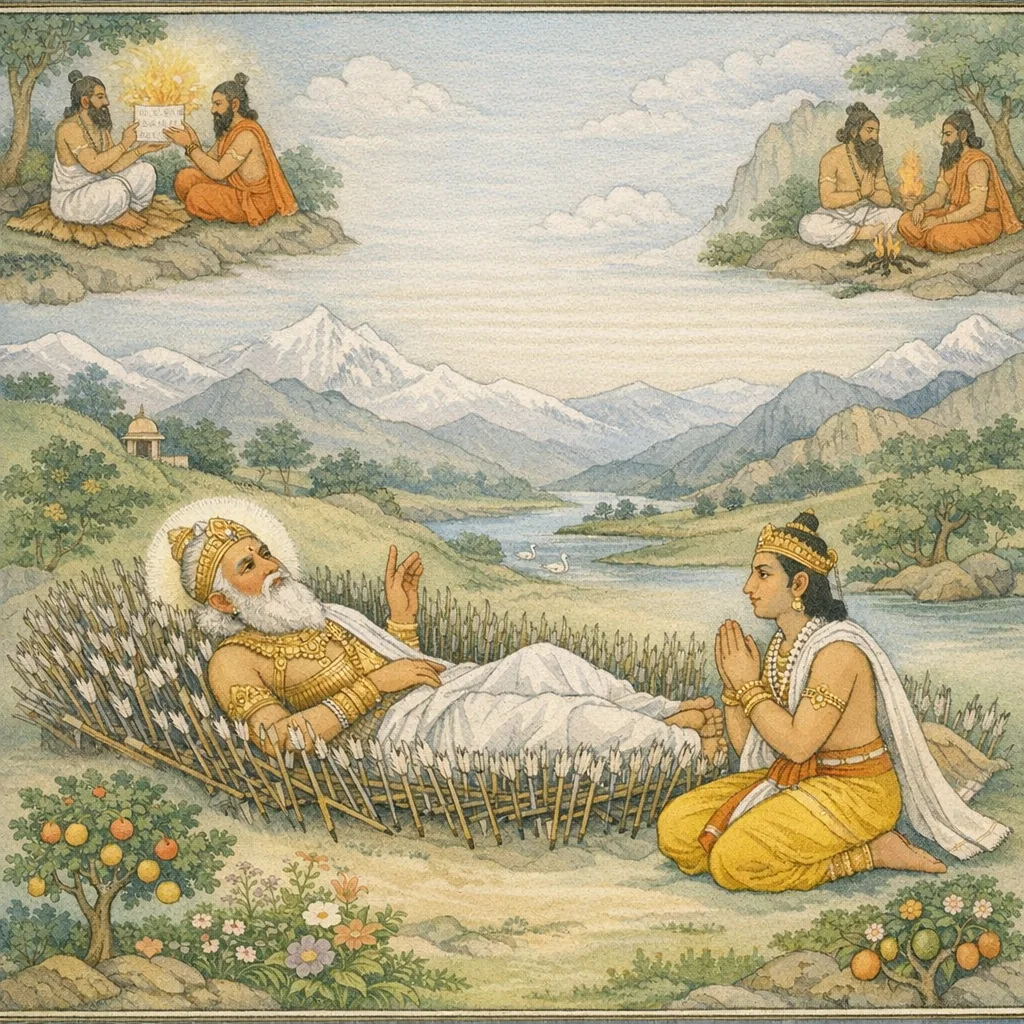
Adhyaya 162
संधेयासंधेय-पुरुषनिर्णयः (Criteria for Allies and Non-Allies) — with the opening of the Gautama narrative
Upa-parva: Rājadharmānuśāsana (राजधर्मानुशासन) — Counsel on Alliance, Friendship, and Avoidance of Harmful Associates
Yudhiṣṭhira asks Bhīṣma to define what kinds of people are ‘saumya’ (agreeable/fit for intimacy), with whom the highest affection arises, and who remains ‘kṣamā’ (enduring/forbearing, dependable) in the present and the future. He asserts that wealth and kin do not remain where true friends do not remain, underscoring friendship as a primary social anchor. Bhīṣma answers by distinguishing saṃdheya (fit for alliance) and asaṃdheya (unfit) persons. He lists asaṃdheya traits: greed, cruelty, abandonment of dharma, deception, pettiness, habitual wrongdoing, constant suspicion, laziness, procrastination, crookedness, exploitation, desertion in adversity, atheistic contempt for Veda, instability, slander, envy, gambling, harshness, opportunism toward friends, irrational anger, sudden aversion, and particularly ingratitude and betrayal. He then lists saṃdheya traits: good lineage and speech, learning and discernment, gratitude, self-control, truthfulness, steadiness, freedom from envy, reasonable satisfaction, loyalty under strain, confidentiality regarding friends’ faults, and care for dependents. Bhīṣma concludes that a kingdom expands through alliance with such persons, while identifying the kṛtaghna (ungrateful) as the worst among the दोषयुक्त (fault-laden). Prompted for elaboration, Bhīṣma begins an ancient illustrative account set in the north: a brahmin named Gautama enters a mleccha-associated settlement seeking livelihood, receives support from a wealthy dāsyu, becomes habituated to violence, and is confronted by a disciplined, Veda-trained friend who urges a return to truth, restraint, and compassion; Gautama responds with self-disclosure and proposes departure the next day.
Chapter Arc: भीष्म युधिष्ठिर से कहते हैं कि समस्त कर्म-फल का मूल तप है; बिना तप के मूढ़ मनुष्य क्रिया का फल नहीं पा सकता। → भीष्म तप की सर्वव्यापक सत्ता को क्रमशः विस्तृत करते हैं—प्रजापति ने तप से सृष्टि रची, ऋषियों ने तप से वेद पाए, अन्न-फल-मूल, औषधि-आरोग्य और विविध साधन-क्रियाएँ भी तप से सिद्ध होती हैं। → तप की परिभाषा बाह्य कष्ट से ऊपर उठकर नैतिक अनुशासन में प्रतिष्ठित होती है—अहिंसा, सत्यवचन, दान, इन्द्रियनिग्रह को ‘उपवास से भी श्रेष्ठ तप’ कहा जाता है; और संन्यास को परम तप के रूप में प्रतिष्ठा मिलती है। → भीष्म निष्कर्ष देते हैं कि देवता भी तप से महत्त्व को प्राप्त हुए; इच्छित फल, यहाँ तक कि देवत्व भी, तप से निश्चित रूप से सुलभ है—तप ही साधन और सिद्धि दोनों का मूल है।
Shlokas
Verse 1
पम्प बछ। ््ज्टस:, एकषष्ट्यधिकशततमो< ध्याय: तपकी महिमा भीष्म उवाच सर्वमेतत् तपोमूलं कवय: परिचक्षते | न हातप्ततपा मूढ: क्रियाफलमवाप्तुते,भीष्मजीने कहा--राजन्! इस सर्च्य जगत्का मूल कारण तप ही है, ऐसा विद्वान् पुरुष कहते हैं। जिस मूढ़ने तपस्या नहीं की है, उसे अपने शुभ कर्मोका फल नहीं मिलता है
Bhishma said: “O King, the sages declare that the root of all this—of the ordered world and its attainments—is austerity (tapas). A deluded person who has not undergone austerity does not obtain the fruit of his actions, even when those actions are outwardly meritorious.”
Verse 2
प्रजापतिरिदं सर्व तपसैवासृजत् प्रभु: । तथैव वेदानृषयस्तपसा प्रतिपेदिरे,भगवान् प्रजापतिने तपसे ही इस समस्त संसारकी सृष्टि की है तथा ऋषियोंने तपसे ही वेदोंका ज्ञान प्राप्त किया है
Bhīṣma said: The Lord Prajāpati brought forth this entire world through austerity alone; likewise, the seers attained the Vedas through austerity.
Verse 3
तपसैव ससर्जान्न फलमूलानि यानि च । त्रील्लॉकांस्तपसा सिद्धा: पश्यन्ति सुसमाहिता:,जो-जो फल, मूल और अन्न हैं, उनको विधाताने तपसे ही उत्पन्न किया है। तपस्यासे सिद्ध हुए एकाग्रचित्त महात्मा पुरुष तीनों लोकोंको प्रत्यक्ष देखते हैं
Bhīṣma said: It is through austerity alone that the Creator brought forth food, fruits, and roots. And those great souls who have attained perfection by austerity—steadfast and deeply concentrated—behold the three worlds directly.
Verse 4
ओऔषधान्यगदादीनि क्रियाश्व विविधास्तथा । तपसैव हि सिद्धान्ति तपोमूलं हि साधनम्,औषध, आरोग्य आदिकी प्राप्ति तथा नाना प्रकारकी क्रियाएँ तपस्यासे ही सिद्ध होती हैं; क्योंकि प्रत्येक साधनकी जड़ तपस्या ही है
Bhishma said: Medicines, antidotes, and the many kinds of practical disciplines all reach fulfillment only through austerity; for austerity is the root from which every effective means of attainment draws its power.
Verse 5
यद् दुरापं भवेत् किंचित् तत् सर्व तपसो भवेत् । ऐश्वर्यमृषय: प्राप्तास्तपसैव न संशय:,संसारमें जो कुछ भी दुर्लभ वस्तु हो, वह सब तपस्यासे सुलभ हो सकती है। ऋषियोंने तपस्यासे ही अणिमा आदि अष्टविध ऐश्वर्यको प्राप्त किया है, इसमें संशय नहीं है
Bhīṣma said: Whatever is difficult to obtain in this world—everything becomes attainable through tapas, austerity. The sages have indeed gained extraordinary powers and lofty attainments through tapas alone; of this there is no doubt.
Verse 6
सुरापो5सम्मतादायी भ्रूणहा गुरुतल्पग: । तपसैव सुतप्तेन नर: पापात् प्रमुच्यते,शराबी, किसीकी सम्मतिके बिना ही उसकी वस्तु उठा लेनेवाला (चोर), गर्भहत्यारा और गुरुपत्नीगामी मनुष्य भी अच्छी तरह की हुई तपस्याद्वारा ही पापसे छुटकारा पाता है
Bhīṣma said: Even a drinker of intoxicants, one who takes another’s property without consent, a slayer of an unborn child, and one who violates the teacher’s bed—such a person is released from sin only through austerity truly and intensely performed.
Verse 7
तपसो बहुरूपस्य तैस्तैद्वरि: प्रवर्ततः । निवृत्त्या वर्तमानस्य तपो नानशनात् परम्,तपस्याके अनेक रूप हैं और भिन्न-भिन्न साधनों एवं उपायोंद्वारा मनुष्य उसमें प्रवृत्त होता है; परंतु जो निवृत्तिमार्गसे चल रहा है, उसके लिये उपवाससे बढ़कर दूसरा कोई तप नहीं है
Tapas is of many kinds, and people take it up through various means and disciplines. Yet for one who walks the path of withdrawal (nivṛtti), there is no austerity higher than fasting (upavāsa).
Verse 8
अहिंसा सत्यवचनं दानमिन्द्रियनिग्रह: । एतेभ्यो हि महाराज तपो नानशनात् परम्,महाराज! अहिंसा, सत्यभाषण, दान और इन्द्रिय-संयम--इन सबसे बढ़कर तप है और उपवाससे बड़ी कोई तपस्या नहीं है
Bhīṣma said: “O great king, non-violence, truthful speech, generosity, and restraint of the senses—these are austerities. Yet beyond these, there is no higher penance than fasting (upavāsa).”
Verse 9
न दुष्करतं दानान्नातिमातरमाश्रय: । त्रैविद्येभ्य: परं नास्ति संन्यास: परम तप:,दानसे बढ़कर कोई दुष्कर धर्म नहीं है, माताकी सेवासे बड़ा कोई दूसरा आश्रय नहीं है, तीनों वेदोंके विद्वानोंसे श्रेष्ठ कोई विद्वान् नहीं है और संन्यास सबसे बड़ा तप है
Bhīṣma said: Nothing is more difficult than the discipline of giving. No refuge is greater than devoted service to one’s mother. No learning surpasses mastery of the three Vedas. And among austerities, renunciation (saṃnyāsa) is the highest tapas.
Verse 10
इन्द्रियाणीह रक्षन्ति स्वर्गधर्माभिगुप्तये । तस्मादर्थे च धर्मे च तपो नानशनात् परम्,इस संसारमें धार्मिक पुरुष स्वर्गके साधनभूत धर्मकी रक्षाके लिये इन्द्रियोंको सुरक्षित (संयमशील बनाये) रखते हैं। परंतु धर्म और अर्थ दोनोंकी सिद्धिके लिये तप ही श्रेष्ठ साधन है और उपवाससे बढ़कर कोई तपस्या नहीं है
Bhīṣma said: In this world, righteous people guard and restrain their senses in order to protect dharma, which is a means to heaven. Therefore, for the accomplishment of both prosperity (artha) and righteousness (dharma), austerity (tapas) is the highest means—and there is no austerity greater than fasting.
Verse 11
ऋषय: पितरो देवा मनुष्या मृगपक्षिण: । यानि चान्यानि भूतानि स्थावराणि चराणि च,ऋषि, पितर, देवता, मनुष्य, पशु-पक्षी तथा दूसरे जो चराचर प्राणी हैं, वे सब तपस्यामें ही तत्पर रहते हैं। तपस्यासे ही उन्हें सिद्धि प्राप्त होती है। इसी प्रकार देवताओंने भी तपस्यासे ही महत्त्वपूर्ण पद प्राप्त किया है
Bhishma said: “Sages, ancestors, gods, human beings, beasts and birds—and whatever other beings there are, whether immobile or moving—all are devoted to austerity. It is through austerity that they attain accomplishment; in the same way, even the gods have reached their exalted stations by austerity.”
Verse 12
तप: परायणा: सर्वे सिद्ध्यन्ति तपसा च ते । इत्येवं तपसा देवा महत्त्व प्रतिपेदिरे,ऋषि, पितर, देवता, मनुष्य, पशु-पक्षी तथा दूसरे जो चराचर प्राणी हैं, वे सब तपस्यामें ही तत्पर रहते हैं। तपस्यासे ही उन्हें सिद्धि प्राप्त होती है। इसी प्रकार देवताओंने भी तपस्यासे ही महत्त्वपूर्ण पद प्राप्त किया है
Bhishma said: All beings are devoted to austerity; by austerity they attain fulfillment and success. In this very way, even the gods attained their exalted greatness through austerity—showing that disciplined self-restraint is a universal means to spiritual and moral elevation.
Verse 13
इमानीष्टविभागानि फलानि तपस: सदा । तपसा शक्यते प्राप्तुं देवत्वमपि निश्चयात्,ये जो भिन्न-भिन्न अभीष्ट फल कहे गये हैं, वे सब सदा तपस्यासे ही सुलभ होते हैं। तपस्यासे निश्चय ही देवत्व भी प्राप्त किया जा सकता है
Bhishma said: “All these variously distinguished desired results are always attainable through austerity (tapas). Indeed, by austerity one can certainly attain even divine status.”
Verse 161
इति श्रीमहाभारते शान्तिपर्वणि आपद्धर्मपर्वणि तपः:प्रशंसायामेकषष्ट्यधिकशततमो<ध्याय:
Thus, in the Śrī Mahābhārata, within the Śānti Parvan—specifically the section on conduct in times of distress (Āpaddharma Parvan)—ends the one-hundred-and-sixty-first chapter, devoted to the praise of austerity (tapas).
Frequently Asked Questions
How a ruler (and any household) should decide whom to trust and ally with when external markers—wealth, kinship, social proximity—may conceal traits that predict betrayal, instability, or harm.
Treat alliance and friendship as virtue-based commitments: prefer the grateful, restrained, steady, and confidential; avoid the deceitful, unstable, violent, and especially the ungrateful betrayer, even if other advantages appear.
Yes: the chapter frames correct discernment in friendship and alliance as a governance-critical skill—its ‘fruit’ is the expansion and stability of the realm, while misjudgment (especially tolerating kṛtaghnatā) leads to predictable social and political decay.