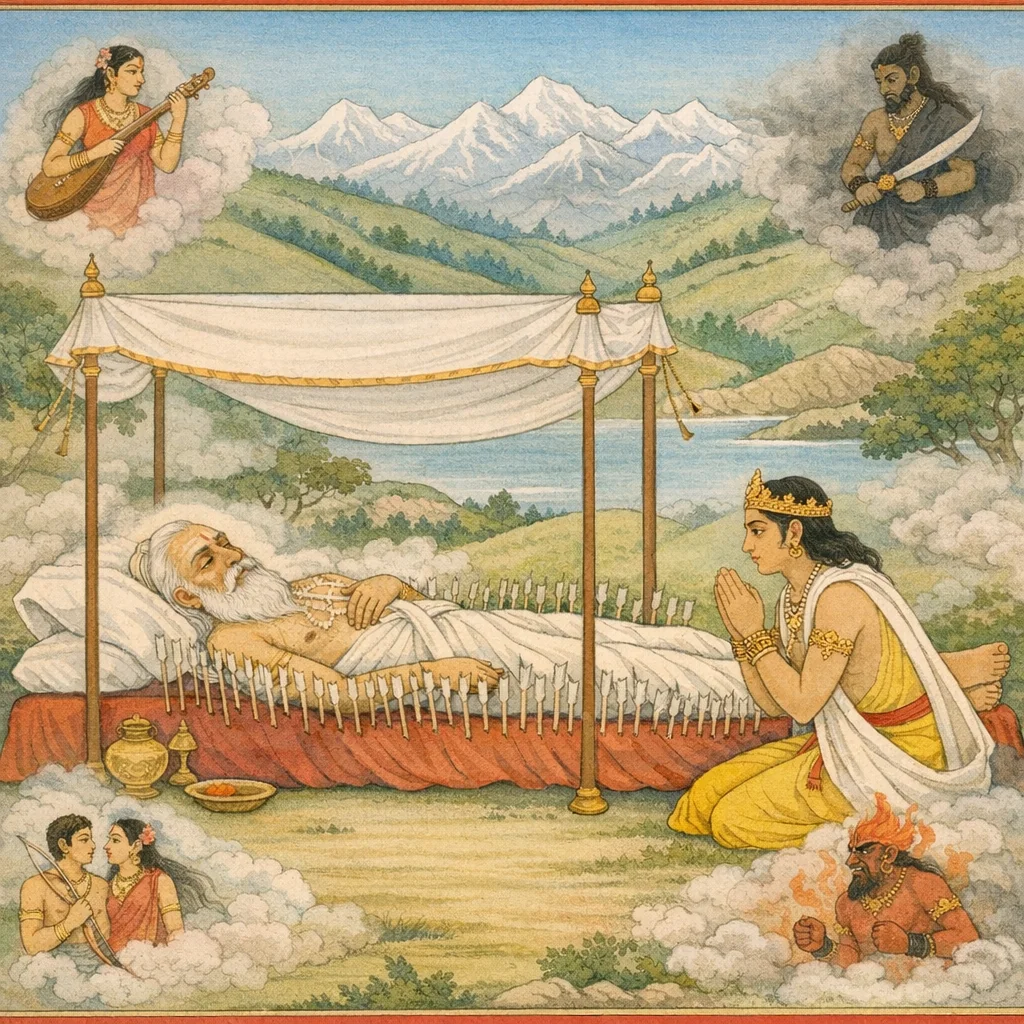
Adhyaya 160
Khaḍgotpattiḥ (Origin and Dharmic Function of the Sword) | खड्गोत्पत्तिः
Upa-parva: Rājadharmānuśāsana (Kingship and Governance Instruction)
Vaiśaṃpāyana reports a dialogue in which Nakula—identified as skilled in sword-combat—questions Bhīṣma on the comparative excellence of weapons and specifically advocates the sword’s superiority when bows break and mounts are depleted. He requests an account of the sword’s origin, purpose, and early lineage of transmission. Bhīṣma responds with an etiological cosmology: in primordial conditions Brahmā generates the ordered world and re-establishes dharma; when disruptive forces violate that order, Brahmā ‘conceives’ a potent being named Asi (sword) for protection of the world and restraint of hostile forces. The narrative depicts Rudra receiving the sword and using it to restore dharmic dominance, after which the sword is transmitted through a chain (Rudra → Viṣṇu → Marīci → ṛṣis → Indra → lokapālas → Manu and royal lineages) as a regulated instrument of protection. Bhīṣma articulates governance constraints: daṇḍa must be differentiated by subtle and gross causes and applied according to dharma, not whim; excessive or mismeasured punishment becomes ‘asīya’ (a distortion of the sword’s principle). The chapter closes with identifying the sword’s sacred associations (nakṣatra, deity, guru), eight esoteric names for remembrance linked to success, and a brief phalaśruti promising fame and posthumous benefit for understanding the doctrine of sword-discipline.
Chapter Arc: युधिष्ठिर, युद्ध-ध्वंस के बाद भी मन के भीतर उठते पाप, दुःख और पतन के मूल कारण को जानना चाहते हैं—क्या यह अज्ञान है, या लोभ, या दोनों? → भीष्म अज्ञान के दुष्परिणाम गिनाते हैं: अज्ञान से पाप होता है, साधु-वृत्ति से द्वेष उपजता है, नरक और दुर्गति मिलती है, और जीव संकटों में डूबता चला जाता है। फिर वे बताते हैं कि अज्ञान से ही राग-द्वेष-मोह, हर्ष-शोक, काम-क्रोध, दर्प, तन्द्रा और आलस्य जैसे विकार जन्म लेते हैं—मानो एक ही जड़ से अनेक काँटे फूट रहे हों। → भीष्म निर्णायक वाक्य कहते हैं: ‘अज्ञान और अतिलोभ—इन दोनों को एक ही समझो’; दोनों समान फल देने वाले, समान दोष वाले हैं। आगे वे लोभ की जड़ ‘मोह’ (अज्ञान) को बताते हैं और ‘काल-स्वरूप’ प्रवाह को कारण-रूप में रखकर दिखाते हैं कि अज्ञान-लोभ एक-दूसरे को जन्म देकर समस्त दोषों का चक्र रचते हैं। → उपदेश व्यावहारिक निष्कर्ष पर उतरता है: ‘प्रत्यक्ष प्रयत्न से लोभ त्यागो’; लोभ-त्याग से इस लोक में सुख और परलोक में शुभगति मिलती है। उदाहरणस्वरूप जनक, युवनाश्व, वृषादर्भि, प्रसेनजित आदि राजाओं का स्मरण कराकर बताया जाता है कि लोभ-क्षय से दिव्य पद प्राप्त होता है।
Shlokas
Verse 1
भीकम (2 अमान एकोनषष्टर्याधेकशततमो< ध्याय: अज्ञान और लोभको एक दूसरेका कारण बताकर दोनोंकी एकता करना और दोनोंको ही समस्त दोषोंका कारण सिद्ध करना युधिछिर उवाच अनर्थानामधिष्ठानमुक्तो लोभ: पितामह । अज्ञानमपि वै तात श्रोतुमिच्छामि तत्त्वतः,युधिष्ठिरने पूछा--पितामह! आपने सब अनर्थोंके आधारभूत लोभका वर्णन तो किया, अब अज्ञानका भी यथार्थरूपसे वर्णन कीजिये; मैं उसके परिणामको भी सुनना चाहता हूँ
Yudhiṣṭhira said: “Grandfather, you have explained greed as the very ground on which all misfortunes stand. Now, revered sir, I wish to hear the true nature of ignorance as well—so that I may understand it in reality.”
Verse 2
भीष्म उवाच करोति पापं योऊज्ञानान्नात्मनो वेत्ति च क्षयम् प्रद्वेष्टि साधुवृत्तांश्ष स लोकस्यैति वाच्यताम्,भीष्मजीने कहा--युधिष्ठि! जो मनुष्य अज्ञानवश पाप करता है और उससे होनेवाली अपनी ही हानिको नहीं समझता तथा श्रेष्ठ पुरुषोंसे द्वेष करता है, उसकी संसारमें बड़ी निन््दा होती है
Bhishma said: A man who, out of ignorance, commits sin, does not recognize the harm that accrues to his own self from it, and bears hatred toward those of virtuous conduct—such a person becomes a subject of public reproach in the world.
Verse 3
अज्ञानान्निरयं याति तथाज्ञानेन दुर्गतिम् अज्ञानात् क््लेशमाप्रोति तथापत्सु निमज्जति,अज्ञानसे ही जीव नरकमें पड़ता है। अज्ञानसे ही उसकी दुर्गति होती है, अज्ञानसे वह कष्ट उठाता तथा विपत्तियोंके समुद्रमें डूब जाता है
Bhīṣma said: Through ignorance a person goes to hell; through that same ignorance he meets an evil end. From ignorance he incurs suffering, and because of ignorance he sinks amid calamities, as though drowning in a sea of distress.
Verse 4
युधिछिर उवाच अज्ञानस्य प्रवृत्ति च स्थान वृद्धिक्षयोदयौ । मूलं योगं गतिं कालं॑ कारणं हेतुमेव च,युधिष्ठिरने पूछा--भूपाल! अज्ञानकी उत्पत्ति, स्थिति, वृद्धि, क्षय, उद्गम, मूल, योग, गति, काल, कारण और हेतु कया हैं?
Yudhiṣṭhira said: “O king, tell me about ignorance—its arising and activity, its abiding state, its increase and decline, and its emergence; also explain its root, its connection (yoga), its course (gati), the role of time, and what truly counts as its cause and its immediate motive.”
Verse 5
श्रोतुमिच्छामि तत्त्वेन यथावदिह पार्थिव । अज्ञानप्रसवं हीदं यद् दुःखमुपलभ्यते,पृथ्वीनाथ! मैं इस विषयको यथावत््रूपसे तत्त्वके विवेचनपूर्वक सुनना चाहता हूँ; क्योंकि यह जो दुःख उपलब्ध होता है, उसकी उत्पत्तिका कारण अज्ञान ही है
Yudhiṣṭhira said: “O king, I wish to hear this here in its true principle and in proper order. For the suffering that is experienced in this world arises from ignorance alone.”
Verse 6
भीष्म उवाच रागो द्वेषस्तथा मोहो हर्ष: शोको5भिमानिता । काम: क्रोधश्न दर्पक्ष तन्द्री चालस्यमेव च,भीष्मजीने कहा--राजन्। राग, द्वेष, मोह, हर्ष, शोक, अभिमान, काम, क्रोध, दर्प, तन्द्रा, आलस्य, इच्छा, वैर, ताप, दूसरोंकी उन्नति देखकर जलना और पापाचार करना-- इन सबको (अज्ञानका कार्य होनेसे) अज्ञान बताया गया है
Bhishma said: Passion and aversion, delusion, elation and grief, and self-conceit; desire and anger, pride, drowsiness, and indolence as well—these are to be understood as forms of ignorance, for they arise from not knowing the truth. In ethical terms, they are inner faults that cloud discernment and drive a person away from dharma.
Verse 7
इच्छा द्वेषस्तथा ताप: परवृद्धयुपतापिता । अज्ञानमेतन्निर्दिष्टं पापानां चैव या: क्रिया:,भीष्मजीने कहा--राजन्। राग, द्वेष, मोह, हर्ष, शोक, अभिमान, काम, क्रोध, दर्प, तन्द्रा, आलस्य, इच्छा, वैर, ताप, दूसरोंकी उन्नति देखकर जलना और पापाचार करना-- इन सबको (अज्ञानका कार्य होनेसे) अज्ञान बताया गया है
Bhishma said: “O king, desire, hatred, and inner torment—along with the burning envy that arises at another’s prosperity—and likewise the various acts of sin: all these are declared to be forms and workings of ignorance.”
Verse 8
एतस्य वा प्रवत्तेश्च वृद्धादीन्यां श्व पृच्छसि । विस्तरेण महाराज शृणु तच्च विशेषत:,महाराज! इस अज्ञानकी उत्पत्ति और वृद्धि आदिके विषयमें जो प्रश्न कर रहे हो, उसके विषयमें विशेष विस्तारके साथ किया हुआ मेरा वर्णन सुनो
Bhishma said: “O great king, you ask about the arising of this (ignorance) and about its growth and related stages. Listen, then, as I describe it to you in detail—carefully and with particular distinctions.”
Verse 9
उभावेतौ समफलौ समदोषौ च भारत । अज्ञानं चातिलोभश्षाप्येकं जानीहि पार्थिव,भारत! पृथ्वीनाथ! अज्ञान और अत्यन्त लोभ--इन दोनोंको एक समझो, क्योंकि इनके परिणाम और दोष समान ही हैं
Bhishma said: O Bharata, these two—ignorance and excessive greed—are equal in their fruits and equal in their faults. Therefore, O king, understand them as one, for they lead to the same ethical downfall and consequences.
Verse 10
लोभप्रभवमज्ञानं वृद्ध भूय: प्रवर्धते । स्थाने स्थान क्षये क्षैण्यमुपैति विविधां गतिम्,लोभसे ही अज्ञान प्रकट होता है और लोभके बढ़नेपर वह अज्ञान और भी बढ़ता है। जबतक लोभ रहता है, तबतक अज्ञान भी बना रहता है और जब लोभका क्षय होता है, तब अज्ञान भी क्षीण हो जाता है। अज्ञान और लोभके कारण ही जीव नाना प्रकारकी योनियोंमें जन्म लेता है
Bhishma said: Ignorance is born of greed, and as greed grows, that ignorance increases all the more. So long as greed remains, ignorance persists; and when greed is worn away, ignorance too dwindles. Driven by greed and ignorance, the embodied being passes into many different courses of existence, taking birth in diverse wombs.
Verse 11
मूलं लोभस्य मोहो वै कालात्मगतिरेव च । छिने भिन्ने तथा लोभे कारणं काल एव च,मोह ही निः:संदेह लोभका मूलकारण है। यह कालस्वरूप मोहात्मक अज्ञान ही मनुष्यकी बुरी गतिका कारण है। लोभके छिन्न-भिन्न होनेमें भी काल ही कारण है
Bhīṣma said: “Delusion is indeed the root of greed, and it is Time itself—moving as the inner Self—that drives beings toward their destined course. Even when greed is cut down or broken into fragments, the decisive cause behind its arising and its dissolution is Time alone.”
Verse 12
तस्याज्ञानाद्धि लोभो हि लोभादज्ञानमेव च । सर्वदोषास्तथा लोभात् तस्मालोभ॑ विवर्जयेत्,मूढ़ मनुष्यको अज्ञानसे लोभ और लोभसे अज्ञान होता है। लोभसे ही सारे दोष पैदा होते हैं; इसलिये लोभको त्याग देना चाहिये
Bhishma said: From ignorance, indeed, arises greed; and from greed, ignorance again increases. From greed spring all faults; therefore one should renounce greed.
Verse 13
जनको युवनाश्रवश्च वृषादर्भि: प्रसेनजित् । लोभक्षयाद् दिवं प्राप्तास्तथैवान्ये नराधिपा:,जनक, युवनाश्वच, वृषादर्भि, प्रसेनेजित् तथा अन्य नरेश लोभका नाश करके ही दिव्यलोकमें गये हैं
Bhīṣma said: King Janaka, Yuvanāśva, Vṛṣādarbhī, and Prasenajit—these and other rulers attained heaven precisely through the destruction of greed.
Verse 14
प्रत्यक्ष तु कुरुश्रेष्ठ त्यज लोभमिहात्मना । त्यक्त्वा लोभ॑ सुखं लोके प्रेत्य चानुचरिष्यसि,कुरुश्रेष्ठ! तुम स्वयं प्रयत्न करके इस प्रत्यक्ष दीखने वाले लोभका परित्याग करो। लोभका त्याग कर इस लोकमें सुख तथा मृत्युके पश्चात् परलोकमें भी आनन्द प्राप्त करके सुखपूर्वक विचरोगे
Bhīṣma says: “O best of the Kurus, by your own deliberate effort abandon this greed that is directly visible here and now. Having renounced greed, you will enjoy happiness in this world, and after death as well; you will move through life and beyond with well-being.”
Verse 159
इति श्रीमहा भारते शान्तिपर्वणि आपद्धर्मपर्वणि अज्ञानमाहात्म्ये एकोनषष्ट्यधिकशततमो<ध्याय:
Thus, in the Śrī Mahābhārata, within the Śānti Parva—specifically the section on conduct in times of distress (Āpaddharma)—ends the one-hundred-and-fifty-ninth chapter, themed on the “greatness (or significance) of ignorance.” This is the customary colophon marking the close of the chapter in Bhīṣma’s discourse on dharma.
Frequently Asked Questions
The dilemma concerns legitimacy of force: how to treat the sword not as personal aggression but as a dharma-governed instrument for protection, especially when conflict conditions degrade and restraint becomes harder to maintain.
Punitive authority must be measured and differentiated; when punishment exceeds proportion or is driven by anger/greed, it becomes a violation of the sword’s intended dharmic function and undermines social order.
Yes. The closing statement frames the teaching as an authoritative ‘first kalpa’ on the sword’s origin and discipline, asserting that hearing and understanding this khaḍga-sādhana yields renown and beneficial posthumous results.