Adhyaya 146
अबुद्धिपूर्वकपापविमोचनप्रश्नः — Janamejaya’s Unintended Transgression and the Indrota Rebuke
Upa-parva: Rājadharmānuśāsana (Kingship and Governance Instruction) — Indrota–Śaunaka Itihāsa Frame
Yudhiṣṭhira asks Bhīṣma how a person who commits pāpa ‘without prior understanding’ (abuddhipūrvam) may be released from its stain. Bhīṣma responds by promising an ancient itihāsa and introduces the brāhmaṇa Indrota of the Śaunaka lineage, who once addressed King Janamejaya. The narrative states that Janamejaya is afflicted by unintended brahmahatyā; as a result, brāhmaṇas and even his purohitas abandon him. The king, inwardly burning day and night, withdraws to the forest and undertakes excessive austerity, seeking a means of restoration. Approaching Indrota with deference—grasping his feet—Janamejaya is met with fear and severe censure: Indrota labels him a grave sinner (bhrūṇahā), orders him away, and describes the king as impure, socially inauspicious, and spiritually endangered. The rebuke expands into consequences: degradation after death, punitive realms, and return to inferior births, while also critiquing hostility toward brāhmaṇas and the harm done to ancestral lineage. The chapter’s function is to set the moral problem—how intention, contamination, and expiation interact—by heightening the urgency through exemplary admonition.
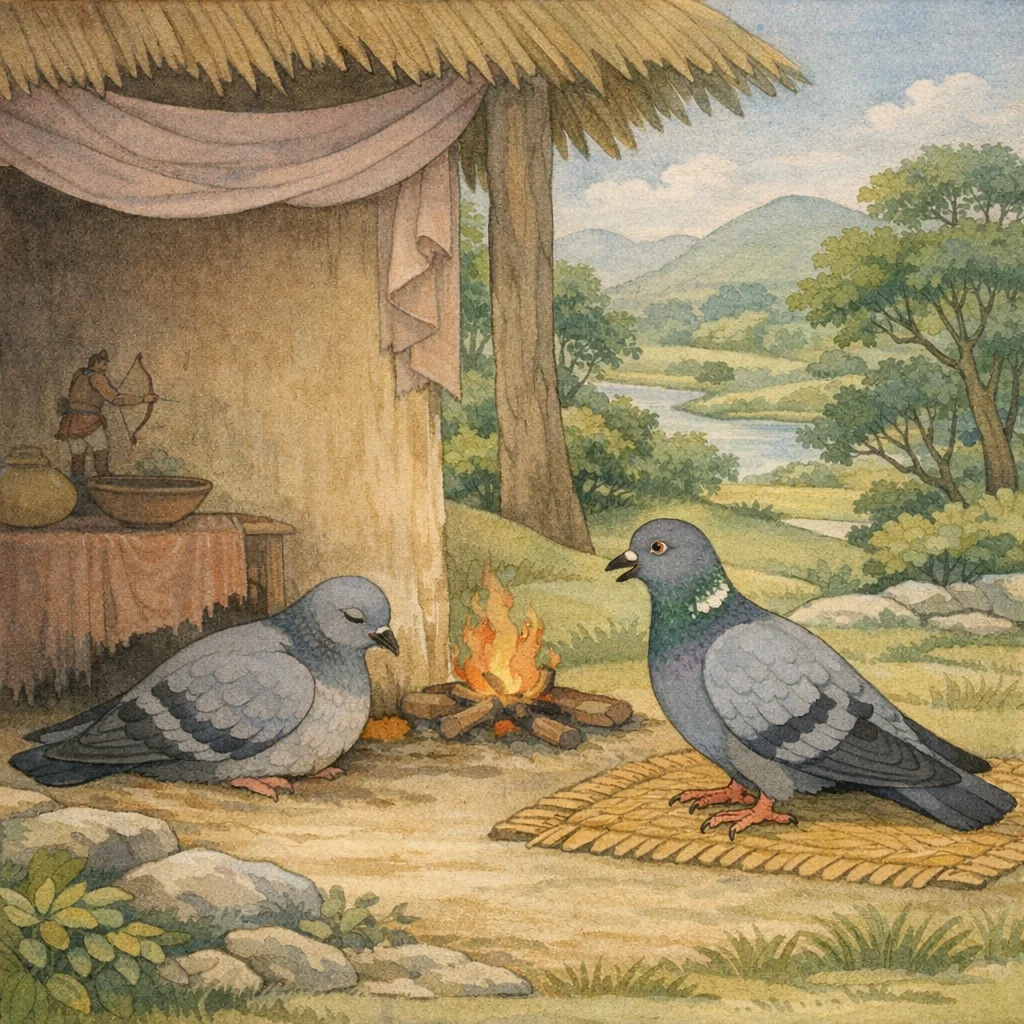
Chapter Arc: भीष्म युधिष्ठिर को एक करुण प्रसंग सुनाते हैं—वन में शरणागत होकर आए एक पक्षी (शाकुनिक/कबूतर) के कारण गृहस्थ-धर्म और शरणागत-रक्षा की परीक्षा खड़ी हो जाती है। → कबूतरी अपने पति से कहती है कि स्त्री का सौभाग्य पति के धर्म-निष्ठ वचनों में है; वह स्मरण कराती है कि ‘भर्ता ही परम दैवत’ है और पति की तुष्टि से ही देवता तुष्ट होते हैं। इसी बीच शरणागत पक्षी उनके वास में आकर पड़ा है—अब उसे बचाना या छोड़ देना, दोनों में धर्म-संकट है। → कबूतरी निर्णायक उपदेश देती है—‘शरणागत-संत्राता भव’; विशेष प्रयत्न करके शरणागत की रक्षा करो। वह जाति-धर्म के अनुरूप ‘कापोती-वृत्ति’ (अपनी सामर्थ्य के अनुसार गृहस्थ-धर्म) निभाने और अतिथि/शरणागत के लिए त्याग करने को सर्वोच्च श्रेय बताती है। → वह पति को आश्वस्त करती है कि जो गृहस्थ यथाशक्ति धर्म का पालन करता है, वह परलोक में अक्षय लोक पाता है; अतः भय, लोभ या मोह से नहीं, धर्म-बुद्धि से निर्णय करो। कथा का यह अध्याय कबूतरी के वचनों पर समाप्त होता है। → शरणागत पक्षी की रक्षा हेतु पति आगे क्या प्रत्यक्ष त्याग/कर्म करेगा—यह अगले प्रसंग की ओर संकेत बनकर रह जाता है।
Shlokas
Verse 1
अपने-आप बछ। अंक पजञज्चचत्वारिशर्दाधिकशततमो< ध्याय: कबूतरीका कबूतरसे शरणागत व्याधकी सेवाके लिये प्रार्थना भीष्म उवाच एवं विलपतस्तस्य श्रुत्वा तु करुणं वच: । गृहीता शकुनिघ्नेन कपोती वाक्यमत्रवीत्,भीष्मजी कहते हैं--युधिष्ठिर! इस तरह विलाप करते हुए कबूतरका वह करुणायुक्त वचन सुनकर बहेलियेके कैदमें पड़ी हुई कबूतरीने कहा
Bhishma said: “O Yudhishthira, hearing the pitiable words of that one who was lamenting thus, the she-pigeon—held captive by the bird-slayer (hunter)—spoke these words.”
Verse 2
कपोत्युवाच अहो>तीव सुभाग्याहं यस्या मे दयितः पति: । असतो वा सतो वापि गुणानेवं प्रभाषते,कबूतरी बोली--अहो! मेरा बड़ा सौभाग्य है कि मेरे प्रियतम पतिदेव इस प्रकार मेरे गुणोंका, वे मुझमें हों या न हों, गान कर रहे हैं
The she-pigeon said: “Ah, I am exceedingly fortunate—my beloved husband speaks of my virtues in this way, whether those qualities truly exist in me or do not.”
Verse 3
न सा स्त्री हाभिमन्तव्या यस्यां भर्ता न तुष्यति । तुष्टे भर्तरि नारीणां तुष्टा: स्यु: सर्वदेवता:,उस स्त्रीको स्त्री ही नहीं समझना चाहिये, जिसका पति उससे संतुष्ट नहीं रहता है। पतिके संतुष्ट रहनेसे स्त्रियोंपर सम्पूर्ण देवता संतुष्ट रहते हैं
Bhishma said: A woman should not be regarded as truly fulfilling the ideal of wifehood in whom her husband finds no contentment. When the husband is satisfied, it is held that all the gods are satisfied with that woman—indicating that household harmony and faithful conduct within marriage are treated here as a central measure of dharma.
Verse 4
अग्निसाक्षिकमित्येव भर्ता वै दैवतं परम् । दावाग्निनेव निर्दग्धा सपुष्पस्तबका लता
Bhīṣma said: “It is indeed called ‘witnessed by Fire’; for the husband is the supreme divinity for a wife. Like a flowering creeper with clusters of blossoms, burned up by a forest-fire, she is utterly consumed.”
Verse 5
भस्मीभवति सा नारी यस्या भर्ता न तुष्यति । अग्निको साक्षी बनाकर स्त्रीका जिसके साथ विवाह हो गया, वही उसका पति है और वही उसके लिये परम देवता है। जिसका पति संतुष्ट नहीं रहता, वह नारी दावानलसे दग्ध हुई पुष्पगुच्छोंसहित लताके समान भस्म हो जाती है ।। इति संचिन्त्य दु:खार्ता भर्तारें दु:खितं तदा
Bhishma said: “That woman is reduced to ashes whose husband is not pleased with her. The one with whom a woman is married—taking Fire as witness—is truly her husband, and for her he is the highest deity. If her husband does not remain satisfied, she withers and is consumed like a creeper with its clusters of flowers, burnt by a forest-fire and turned to ash.” Reflecting thus, she, afflicted with sorrow, then saw her husband distressed.
Verse 6
हन्त वक्ष्यामि ते श्रेय: श्रुत्वा तु कुरु तत् तथा
Bhīṣma said: “Come then—I shall tell you what is truly for your highest good. Having heard it, act accordingly, just as instructed.”
Verse 7
एष शाकुनिक: शेते तव वासं समाश्रित:
Bhīṣma said: “Here lies this gambler, having taken refuge in your dwelling.”
Verse 8
यो हि वच्िद् द्विज॑ हन्याद् गांच लोकस्य मातरम्
Bhīṣma said: “If any twice-born man were to kill a cow—the mother of the world—he would commit a grievous wrong, for the cow is upheld in dharma as a universal benefactress and a symbol of protection owed to the innocent.”
Verse 9
अस्माकं विहिता वृत्ति: कापोती जातिधर्मत:
Bhishma said: “For us, the prescribed way of living is the ‘pigeon-like’ mode of conduct, determined by the innate duty of our kind.”
Verse 10
यस्तु धर्म यथाशक्ति गृहस्थो हानुवर्तते
Bhīṣma said: “But the householder who, to the best of his ability, follows dharma without neglecting it—such a person upholds the proper order of life through steady, practicable righteousness rather than mere ideals.”
Verse 11
स त्वं संतानवानद्य पुत्रवानसि च द्विज
Bhīṣma said: “Now you are blessed with lineage and continuity; you are also a father, O twice-born. This marks the fulfillment of household duty and the securing of one’s line, a key support for dharma and social order.”
Verse 12
तत् स्वदेहे दयां त्यक्त्वा धर्मार्थों परिगृह[ च । पूजामस्मै प्रयुड्क्ष्व त्वं प्रीयेतास्य मनो यथा
Bhishma said: “Casting aside undue pity for your own body, accept what is right and beneficial in accordance with dharma. Then offer him due honor and service in such a way that his mind may be pleased.”
Verse 13
'पक्षिप्रवर! आप अब संतानवान् और पुत्रवान् हो चुके हैं। अतः आप अपनी देहपर दया न करके धर्म और अर्थपर ही दृष्टि रखते हुए इस बहेलियेका ऐसा सत्कार करें, जिससे इसका मन प्रसन्न हो जाय ।। मत्कृते मा च संतापं कुर्वीथास्त्वं विहड़म । शरीरयात्राकृत्यर्थमन्यान् दारानुपैष्यसि,“विहंगम! आप मेरे लिये संताप न करें। आपको अपनी शरीरयात्राका निर्वाह करनेके लिये दूसरी स्त्री मिल जायेगी
Bhishma said: “O best of birds, you are now blessed with offspring and sons. Therefore, do not cling to pity for your own body; keep your gaze upon dharma and artha, and honor this hunter in such a way that his mind is pleased. And, O bird, do not grieve on my account. For the sake of sustaining your life, you will obtain another mate.”
Verse 14
इति सा शकुनी वाकक््यं पञ्जरस्था तपस्विनी । अतिदुःखान्विता प्रोक्त्वा भर्तारं समुदैक्षत,इस प्रकार पिंजड़ेमें पड़ी हुई वह तपस्विनी कबूतरी पतिसे यह बात कहकर अत्यन्त दुखी हो पतिके मुँहकी ओर देखने लगी
Thus, the ascetic she-bird, confined within a cage, spoke these words in deep anguish; having addressed her husband, she then looked up toward his face—waiting for his response amid her sorrow and moral concern.
Verse 56
कपोती लुब्धकेनापि गृहीता वाक्यमब्रवीत् । ऐसा सोचकर दु:खसे पीड़ित हो व्याधके कैदमें पड़ी हुई कबूतरीने अपने दुःखित पतिसे उस समय इस प्रकार कहा-
Bhishma said: The female pigeon, though seized by the hunter, spoke these words—reflecting on her plight and tormented by sorrow as she lay captive, she addressed her grief-stricken mate, preparing to uphold what she saw as the righteous course even in calamity.
Verse 66
शरणागतसंत्राता भव कानन््त विशेषत: । 'प्राणनाथ! मैं आपके कल्याणकी बात बता रही हूँ, उसे सुनकर आप वैसा ही कीजिये। इस समय विशेष प्रयत्न करके एक शरणागत प्राणीकी रक्षा कीजिये
Bhishma said: “Become the protector of one who has sought refuge—especially now. Make a special effort at this moment to safeguard a being who has come to you for shelter.”
Verse 76
शीतार्तश्ष क्षुधार्तश्ष पूजामस्मै समाचर । “यह व्याध आपके निवास-स्थानपर आकर सर्दी और भूखसे पीड़ित होकर सो रहा है। आप इसकी यथोचित सेवा कीजिये
Bhishma said: “This hunter has come to your dwelling and, afflicted by cold and hunger, is lying asleep. Offer him due hospitality and service.”
Verse 83
शरणागतं च यो हन्यात् तुल्यं तेषां च पातकम् | “जो कोई पुरुष ब्राह्मणकी, लोकमाता गायकी तथा शरणागतकी हत्या करता है, उन तीनोंको समानरूपसे पातक लगता है
Bhīṣma says: “Whoever kills one who has sought refuge incurs a sin equal to that incurred by killing those most protected by dharma—such as a brāhmaṇa and the cow, regarded as a mother to the world. The teaching underscores that harming the helpless who surrender is among the gravest ethical violations, because refuge creates an inviolable bond of protection.”
Verse 96
सा न्याय्या55त्मवता नित्यं त्वद्विधेनानुवर्तितुम् । “भगवानने जातिधर्मके अनुसार हमारी कापोतीवृत्ति बना दी है। आप-जैसे मनस्वी पुरुषको सदा ही उस वृत्तिका पालन करना उचित है
Bhīṣma said: “It is proper for a self-governed and righteous person like you to adhere constantly to that course of conduct. The Lord has fashioned our disposition in accordance with our birth and duty; therefore, a high-minded man such as you should always follow the vocation and discipline that accords with his dharma.”
Verse 106
स प्रेत्य लभते लोकानक्षयानिति शुश्रुम । “जो गृहस्थ यथाशक्ति अपने धर्मका पालन करता है, वह मरनेके पश्चात् अक्षय लोकोंमें जाता है, ऐसा हमने सुन रखा है
Bhīṣma said: “We have heard that a householder who, to the best of his ability, upholds his own dharma attains imperishable worlds after death.”
Verse 145
इति श्रीमहाभारते शान्तिपर्वणि आपद्धर्मपर्वणि कपोतं प्रति कपोतीवाक्ये पडञ्चचचत्वारिंशदाधिकशततमो< ध्याय:,इस प्रकार श्रीमह्याभारत शान्तिपर्वके अन्तर्गत आपद्धर्मपर्वमें कबृतरके प्रति कबृतरीका वाक्यविषयक एक सौ पैंतालीसवाँ अध्याय पूरा हुआ
Bhīṣma said: “Thus, in the Śrī Mahābhārata, within the Śānti Parvan—specifically in the section on dharma in times of distress (Āpaddharma Parvan)—the one-hundred-and-forty-fifth chapter, concerning the speech of the female pigeon addressed to the pigeon, comes to an end.” This colophon marks the close of the episode, framing the pigeon-wife’s counsel as an ethical teaching on right conduct under adversity.
Frequently Asked Questions
Whether a grave wrong committed ‘without prior understanding’ can be morally and ritually resolved, and how culpability is assessed when intention is unclear but consequences and social damage are severe.
The text emphasizes that remorse and disciplined seeking of correction matter, yet social and ascetic authorities may enforce strict boundaries; resolution requires acknowledging harm, accepting censure, and moving toward appropriate prāyaścitta rather than relying on status or power.
No explicit phalaśruti appears in the provided passage; the chapter functions as a didactic setup within Bhīṣma’s longer instruction, using exemplary warning (consequence narration) to motivate the subsequent expiation-oriented teaching.