Adhyaya 120
मयूरवद्राजधर्मः (Mayūra-vat Rāja-dharma) — The Peacock-Model of Protective Kingship
Upa-parva: Rājadharmānuśāsana (Instruction on Royal Duties) — Mayūra-nīti (Peacock Model of Kingship)
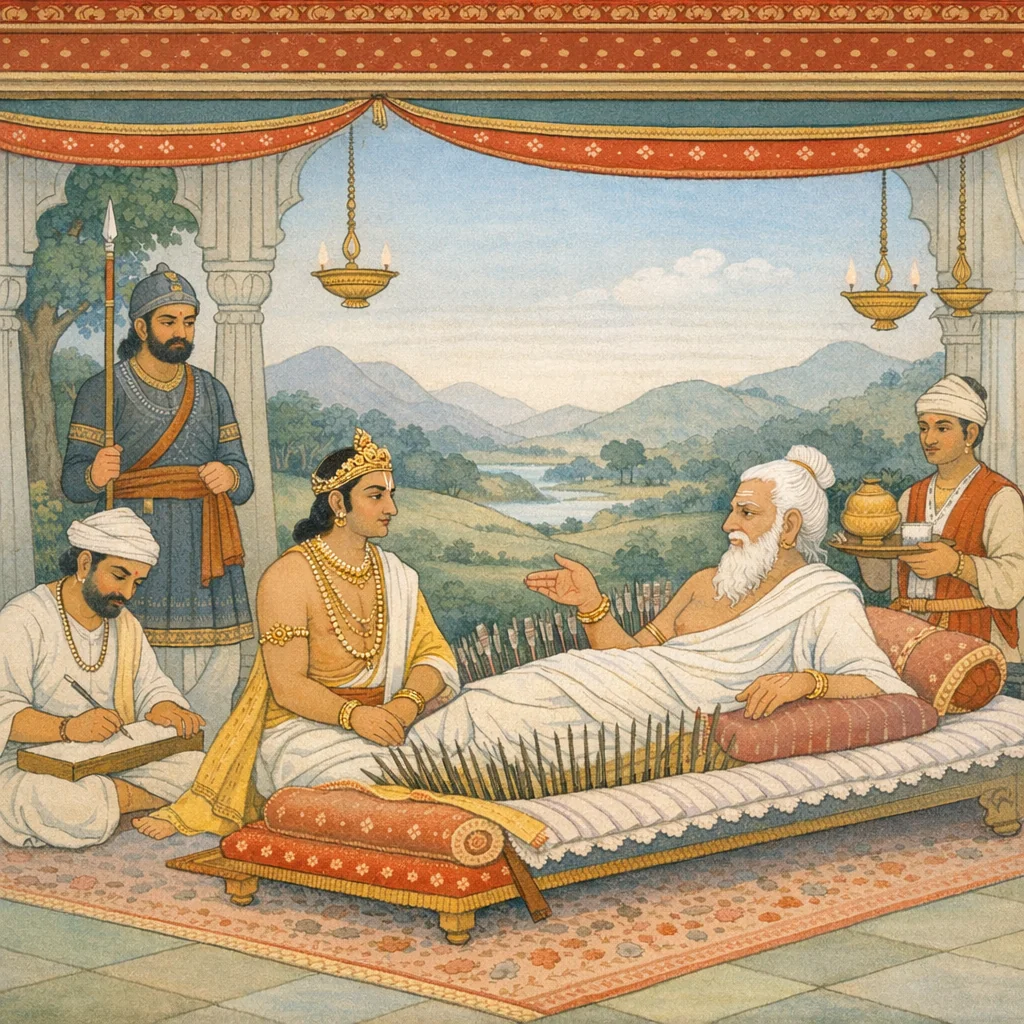
Yudhiṣṭhira asks Bhīṣma to restate, in expanded form, the established formulation of rājadharma articulated by earlier authorities. Bhīṣma defines the kṣatriya’s highest principle as the protection of all beings (rakṣaṇaṃ sarvabhūtānām) and describes a ruler who can assume multiple ‘forms’ according to circumstance—sharpness, indirectness, restraint, truthfulness, and straightforwardness—while remaining balanced. The king should guard counsel (mantra), cultivate refined speech and śāstra-competence, and remain vigilant at the thresholds of danger. He should seek support from learned and accomplished advisers, maintain readiness of daṇḍa while avoiding negligence, and move with strategic discretion, including careful conduct in sensitive terrains and avoidance of traps. The chapter outlines intelligence and risk management, selective association, and the disciplined handling of adversaries. Fiscal guidance emphasizes timely acquisition, daily incremental gains (bee-and-honey metaphor), protected reserves, and measured expenditure. Bhīṣma lists enabling virtues for wealth and stability—fortitude, skill, self-control, superior judgment, courage, valor, sense of place/time, and non-negligence—warning that even small threats or resources should not be underestimated. The discourse culminates in criteria for appointing ethical, trained, non-greedy officials and affirms that durable public welfare and legitimate happiness arise from policy aligned with dharma rather than from disorderly advantage.
Chapter Arc: भीष्म युधिष्ठिर को राजधर्म का व्यावहारिक मर्म बताते हैं—राज्य का ‘यथार्थ फल’ तभी मिलता है जब राजा गुणवान सेवकों को उनकी योग्यता के अनुरूप स्थान और कार्य देता है। → उपदेश कठोर प्रशासनिक सूक्ष्मताओं में उतरता है: अमात्यों/सेवकों को ‘नास्थाने’ न रखना, वर्ण-स्वभाव-गुण के अनुसार कर्म बाँटना, और ऐसे सहायकों का चयन करना जो कुलीन, शूर, ज्ञानवान, शुचि, दक्ष और अदोषदर्शी हों—क्योंकि गलत नियुक्ति से राज्य-कार्य बिखरता है। → भीष्म निर्णायक रूप से कहते हैं कि स्वामी-कार्य में बाण की तरह छूटकर दौड़ने वाले, राजहित में तत्पर भृत्यों को राजा को सान्त्व/प्रोत्साहन देना चाहिए; साथ ही कोष की निरन्तर रक्षा अनिवार्य है—क्योंकि राजा का मूल कोष है और वही वृद्धि का कारण है। → युधिष्ठिर के लिए नीति-सूत्र समेटे जाते हैं: ज्ञाति-बन्धु, मित्र-सम्बन्धी, और पौर-कार्य/लोकहित की सतत चिंता रखते हुए स्थिर बुद्धि से प्रजापालन करो—यही ‘नैष्ठिकी बुद्धि’ है। → भीष्म संकेत देते हैं कि यदि युधिष्ठिर और अधिक सुनना चाहें तो वे आगे उदाहरण/दृष्टान्त (शुनो निदर्शनं) सहित विस्तार करेंगे।
Shlokas
Verse 1
(दाक्षिणात्य अधिक पाठके ७ श्लोक मिलाकर कुल ३५ श्लोक हैं।) ऑपन-माजल बछ। अकाल एकोनविशर्त्याधिकशततमो< ध्याय: सेवकोंको उनके योग्य स्थानपर नियुक्त हक: 38 और सत्पुरुषोंका संग्रह करने, कोष बढ़ाने तथा देखभाल करनेके लिये राजाको प्रेरणा भीष्म उवाच एवं गुणयुतान् भृत्यान् स्वे स्वे स्थाने नराधिप: । नियोजयति कृत्येषु स राज्यफलमश्षुते
Bhishma said: A king who appoints capable, virtuous servants to the posts suited to them, and engages them in the tasks proper to their office, thereby enjoys the true fruits of kingship—effective governance, stability, and the welfare that follows from well-ordered administration.
Verse 2
भीष्मजी कहते हैं--युधिष्ठिर! इस प्रकार जो राजा गुणवान् भृत्योंको अपने-अपने स्थानपर रखते हुए कार्योमें लगाता है, वह राज्यके यथार्थ फलका भागी होता है ।। नश्चा स्वं स्थानमुत्क्रम्प प्रमाणमभिसत्कृत: । आरोप्य: थ्वा स्वकात्स्थानादु्क्रम्यान्यत् प्रमाद्यति,पहले कहे हुए इतिहाससे यह सिद्ध होता है कि कुत्ता अपने स्थानको छोड़कर ऊँचे चढ़ जाय तो न वह विश्वासके योग्य रह जाता है और न कभी उसका सत्कार ही होता है। कुत्तेको उसकी जगहसे उठाकर ऊँचे कदापि न बिठावे; क्योंकि वह दूसरे किसी ऊँचे स्थानपर चढ़कर प्रमाद करने लगता है (इसी प्रकार किसी हीन कुलके मनुष्यको उसकी योग्यता और मर्यादासे ऊँचा स्थान मिल जाय तो वह अहंकारवश उच्छुंखल हो जाता है)
Bhishma said: “Yudhishthira, a king who is himself virtuous and who keeps his servants in their proper stations, engaging each in the duties suited to him, truly receives the rightful fruits of sovereignty. For one should not be raised beyond his own place: when someone oversteps his station, he ceases to be reliable and is no longer worthy of honor. The old tale shows this clearly—if a dog is lifted from its place and made to climb higher, it becomes careless and untrustworthy. In the same way, when a person of low standing is given a position above his capacity and social measure, he often becomes arrogant and unruly.”
Verse 3
स्वजातिगुणसम्पन्ना: स्वेषु कर्मसु संस्थिता: । प्रकर्तव्या ह्ामात्यास्तु नास्थाने प्रक्रिया क्षमा,जो अपनी जातिके गुणसे सम्पन्न हो अपने वर्णोचित कर्मोमें ही लगे रहते हों, उन्हें मन्त्री बनाना चाहिये; किंतु किसीको भी उसकी योग्यतासे बाहरके कार्यमें नियुक्त करना उचित नहीं है
Bhishma said: Those who are endowed with the virtues proper to their own social order and who remain firmly established in their prescribed duties should be appointed as ministers. But assigning anyone to a task that is not their proper place—outside their competence and station—is not acceptable in governance.
Verse 4
अनुरूपाणि कर्माणि भृत्येभ्यो य: प्रयच्छति । स भृत्यगुणसम्पन्नो राजा फलमुपाश्रुते,जो राजा अपने सेवकोंको उनकी योग्यताके अनुरूप कार्य सौंपता है, वह भृत्यके गुणोंसे सम्पन्न हो उत्तम फलका भागी होता है
Bhishma said: The king who assigns duties to his servants in accordance with their aptitude and station becomes endowed with the virtues of good service and, through such well-ordered administration, attains excellent results. The ethical point is that just governance depends on fitting responsibility to capability, thereby sustaining loyalty, efficiency, and dharma in the realm.
Verse 5
शरभ: शरभस्थाने सिंह: सिंह इवोर्जित: । व्याप्रो व्याप्र इव स्थाप्यो द्वीपी द्वीपी यथा तथा,शरभको शरभकी जगह, बलवान सिंहको सिंहके स्थानमें, बाघको बाघकी जगह तथा चीतेको चीतेके स्थानपर नियुक्त करना चाहिये (तात्पर्य यह कि चारों वर्णोके लोगोंको उनकी मर्यादाके अनुसार कार्य देना उचित है)
Bhishma said: “Let the śarabha be placed in the post suited to a śarabha; the powerful lion in the lion’s own place; the tiger in the tiger’s proper station; and the leopard likewise in its own. In the same way, each should be appointed according to his own nature and rightful sphere.”
Verse 6
कर्मस्विहानुरूपेषु न््यस्या भृत्या यथाविधि । प्रतिलोम॑ न भृत्यास्ते स्थाप्या: कर्मफलैषिणा
Bhishma said: “Here, servants should be assigned—according to proper procedure—to tasks that suit their capacity and nature. One who is intent on results should not place servants in ‘reverse’ or improper roles, for such misassignment violates right order and leads to faulty outcomes.”
Verse 7
सब सेवकोंको उनके योग्य कार्यमें ही लगाना चाहिये। कर्मफलकी इच्छा करनेवाले राजाको चाहिये कि वह अपने सेवकोंको ऐसे कार्योंमें न नियुक्त करे, जो उनकी योग्यता और मर्यादाके प्रतिकूल पड़ते हों ।। यः प्रमाणमतिक्रम्य प्रतिलोम॑ नराधिप: । भृत्यान् स्थापयते<बुद्धिर्न स रञ्जयते प्रजा:,जो बुद्धिहीन नरेश मर्यादाका उल्लंघन करके अपने भृत्योंको प्रतिकूल कार्योंमें लगाता है, वह प्रजाको प्रसन्न नहीं रख सकता
Bhīṣma said: A king who seeks the fruits of action should assign each servant to work suited to his capacity and station. But the ruler who, lacking discernment, oversteps proper standards and places his dependents in duties contrary to their aptitude and rightful bounds cannot keep his people content.
Verse 8
न बालिशा न च क्षुद्रा नाप्राज्ञा नाजितेन्द्रिया: । नाकुलीना नरा: सर्वे स्थाप्या गुणणणैषिणा,उत्तम गुणोंकी इच्छा रखनेवाले नरेशको चाहिये कि वह उन सभी मनुष्योंको काममें न लगावे, जो मूर्ख, नीच, बुद्धिहीन, अजितेन्द्रिय और निन्दित कुलमें उत्पन्न हुए हों
Bhishma said: “A king who longs for the highest virtues should not set to work those men who are foolish, base, lacking in discernment, uncontrolled in their senses, and born in a censured lineage.”
Verse 9
साधव: कुलजा: शूरा ज्ञानवन्तो5नसूयका: । अक्षद्रा: शुचयो दक्षा:स्युर्नरा: पारिपाश्वका:,साधु, कुलीन, शूरवीर, ज्ञानवानू, अदोषदर्शी, अच्छे स्वभाववाले, पवित्र और कार्यदक्ष मनुष्योंको ही राजा अपना पार्श्चवर्ती सेवक बनावे
Bhishma said: “Let the king appoint as his close attendants those men who are virtuous, well-born, and valiant; who possess discernment and are free from envy; who are not given to gambling, are pure in conduct, and are efficient in action. Such men, standing near the ruler, safeguard the realm by their character as much as by their competence.”
Verse 10
न्यग्भूतास्तत्परा: शान्ताश्वौक्षा: प्रकृतिजै: शुभा: । स्वस्थानानपक्ुष्टा ये ते स्यू राज्ञां बहिश्वचरा:,जो विनीत, कार्यपरायण, शान्तस्वभाव, चतुर, स्वाभाविक शुभ गुणोंसे सम्पन्न तथा अपने-अपने पदपर निन्दासे रहित हों, वे ही राजाओंके बाह्य सेवक होने योग्य हैं
Bhishma said: “Those who are humble, devoted to their duty, calm in temperament, discerning and capable, endowed with innate auspicious qualities, and free from blame in their own appointed posts—such persons alone are fit to serve kings as external attendants and agents.”
Verse 11
सिंहस्य सतत पाश्वे सिंह एवानुगो भवेत् | असिंह: सिंहसहित: सिंहवललभते फलम्,सिंहके पास सदा सिंह ही सेवक रहे। यदि सिंहके साथ सिंहसे भिन्न प्राणी रहने लगता है तो वह सिंहके तुल्य ही फल भोगने लगता है
Bhishma said: “By a lion’s side, the attendant should be a lion alone. But if one who is not a lion remains in the company of a lion, he too comes to enjoy results as though he were a lion.”
Verse 12
यस्तु सिंह: श्वभि: कीर्ण: सिंहकर्मफले रत: । नस सिंहफल भोक्तुं शक्त: श्वभिरुपासित:,किंतु जो सिंह कुत्तोंसे घिरा रहकर सिंहोचित कर्म एवं फलमें अनुरक्त रहता है, वह कुत्तोंसे उपासित होनेके कारण सिंहोचित कर्मफलका उपभोग नहीं कर सकता
Bhishma said: “Even if a lion, surrounded by dogs, remains devoted to lion-like deeds and their proper rewards, he cannot truly enjoy the lion’s share—because, being attended and hemmed in by dogs, his rightful fruit is obstructed and diminished.”
Verse 13
एवमेतन्मजनुष्येन्द्र शूरैः प्राज्जैर्बहुशुतैः । कुलीनै: सह शक््येत कृत्स्ना जेतुं वसुन्धरा,नरेन्द्र! इसी प्रकार शूरवीर, विद्वान, बहुश्रुत और कुलीन पुरुषोंके साथ रहकर ही सारी पृथ्वीपर विजय पायी जा सकती है
Bhīṣma said: “So it is, O best of men. Only by keeping company with men who are heroic, wise, widely learned, and of noble conduct can one hope to conquer the whole earth, O king. Sovereignty is not won by solitary effort, but by alliance with virtue, competence, and disciplined counsel.”
Verse 14
नाविद्यो नानजुः पाश्चे नाप्राज्ञो नामहाधन: । संग्राह्मो वसुधापालै भुत्यो भृत्यवतां वर,भृत्यवानोंमें श्रेष्ठ युधिष्ठिर! भूपालोंको चाहिये कि अपने पास ऐसे किसी भृत्यका संग्रह न करें, जो विद्याहीन, सरलतासे रहित, मूर्ख और दरिद्र हो
Bhīṣma said: “O best of those who maintain attendants, a king who protects the earth should not keep in his service a retainer who is unlearned, lacking in straightforwardness, foolish, or greatly impoverished. Such a person becomes unfit for responsible duty and can endanger the order and welfare a ruler is bound to uphold.”
Verse 15
बाणवद्धिसृता यान्ति स्वामिकार्यपरा नरा: । ये भृत्या: पार्थिवहितास्तेषां सान्त्वं प्रयोजयेत्,जो मनुष्य स्वामीके कार्यमें तत्पर रहनेवाले हैं, वे धनुषसे छूटे हुए बाणके समान लक्ष्यसिद्धिके लिये आगे बढ़ते हैं। जो सेवक राजाके हित-साधनमें संलग्न रहते हों, राजा मधुर वचन बोलकर उन्हें प्रोत्साहन देता रहे
Bhishma said: Men who are intent on their lord’s work press forward toward accomplishing the goal like arrows released from a bow. Therefore, when servants are devoted to the welfare of the king, the ruler should continually encourage them with conciliatory, sweet words—so their zeal and loyalty remain firm.
Verse 16
कोशक्न सततं रक्ष्यो यत्नमास्थाय राजभि: । कोशमूला हि राजान: कोशो वृद्धिकरो भवेत्,राजाओंको पूरा प्रयत्न करके निरन्तर अपने कोषकी रक्षा करनी चाहिये; क्योंकि कोष ही उनकी जड़ है, कोष ही उन्हें आगे बढ़ानेवाला होता है
Bhīṣma said: A king must, with sustained effort, continually safeguard the treasury. For rulers are rooted in the treasury: it is the treasury that enables stability, governance, and growth.
Verse 17
कोष्ठागारं च ते नित्य॑ं स्फीतैर्धान्यि:सुसंवृतम् । सदास्तु सत्सु संन्यस्तं धनधान्यपरो भव,युधिष्ठिर! तुम्हारा अन्न-भण्डार सदा पुष्टिकारक अनाजोंसे भरा रहना चाहिये और उसकी रक्षाका भार श्रेष्ठ पुरुषोंको सौंप देना चाहिये। तुम सदा धन-धान्यकी वृद्धि करनेवाले बनो
Bhīṣma said: “O Yudhiṣṭhira, let your granary ever be well enclosed and filled with abundant grain. Entrust its protection to worthy men. And be ever devoted to increasing both wealth and provisions.”
Verse 18
नित्ययुक्ताश्न ते भृत्या भवन्तु रणकोविदा: । वाजिनां च प्रयोगेषु वैशारद्यमिहेष्यते,तुम्हारे सभी सेवक सदा उद्योगशील तथा युद्धकी कलामें कुशल हों। घोड़ोंकी सवारी करने अथवा उन्हें हाँकनेमें भी उनको विशेष चतुर होना चाहिये
Bhīṣma said: “Let your attendants be ever disciplined and constantly engaged in their duties, and let them be skilled in the arts of war. In the handling and employment of horses as well, expertise is to be sought here—so that your service and preparedness are never found wanting.”
Verse 19
ज्ञातिबन्धुजनावेक्षी मित्रसम्बन्धिसंवृत: । पौरकार्यहितान्वेषी भव कौरवनन्दन,कौरवनन्दन! तुम जातिभाइयोंपर ख्याल रखो, मित्रों और सम्बन्धियोंसे घिरे रहो तथा पुरवासियोंके कार्य और हितकी सिद्धिका उपाय ढूँढ़ा करो
Bhishma said: “O delight of the Kuru line, be one who looks after kinsmen, relatives, and dependents; remain supported by friends and relations; and continually seek the means to accomplish the tasks and welfare of the townspeople.”
Verse 20
एषा ते नैछ्िकी बुद्धि: प्रजास्वभिहिता मया । शुनो निदर्शनं तात कि भूय: श्रोतुमिच्छसि,तात! यह मैंने तुम्हारे निकट प्रजापालन-विषयक स्थिर बुद्धिका प्रतिपादन किया है और कुत्तेका दृष्टान्त सामने रखा है, अब और क्या सुनना चाहते हो?
Bhīṣma said: “This steadfast, principled understanding regarding the care and governance of the people has been explained to you by me. I have also set forth the illustration of the dog, dear child. What more do you wish to hear?”
Verse 119
इति श्रीमहा भारते शान्तिपर्वणि राजधर्मानुशासनपर्वणि श्रवर्षिसंवादे एकोनविंशत्यधिकशततमो<ध्याय:
Thus, in the Śrī Mahābhārata, within the Śānti Parva—specifically the section on the instruction of royal duties (Rājadharmānuśāsana Parva)—in the dialogue involving the sage Śrava, ends the one-hundred-and-nineteenth chapter.
Frequently Asked Questions
That the kṣatriya’s highest obligation is universal protection (rakṣaṇaṃ sarvabhūtānām), making governance primarily a duty of safeguarding life, order, and welfare rather than a pursuit of personal gain.
The peacock functions as a model of adaptive presentation and strategic discretion: a ruler may adopt multiple outward modes (severity, gentleness, directness, indirectness) to secure public good while maintaining inner balance and disciplined restraint.
Yes. The chapter asserts that policy aligned with dharma yields stable welfare and ‘puṇya-phala’ (meritorious benefit) for the ruler, whereas pleasures arising from disorderly or unethical means lack durable security and do not culminate in the highest public good.