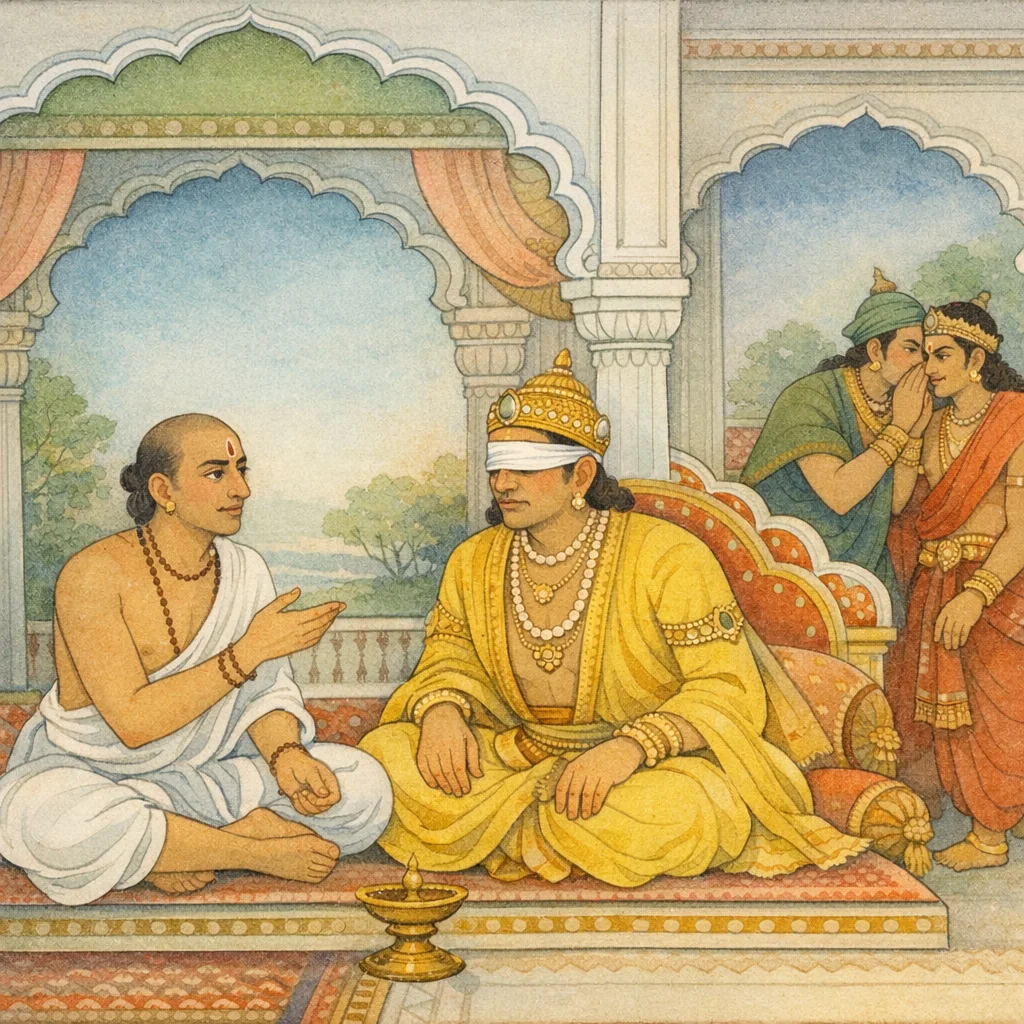
Adhyaya 63
Sabhā-parva Adhyāya 63 — Draupadī’s Contested Status, Vidura’s Warning, and Dhṛtarāṣṭra’s Boons
Upa-parva: Dyūta–Anuśaya (Dice-Game Aftermath in the Assembly)
In the Kuru assembly, Karṇa articulates a harsh doctrine of dependency, asserting that three are “without wealth/independent standing”—a slave, a student, and a woman lacking autonomy—and uses this to rhetorically degrade Draupadī and demand her compliance with the victors. Bhīma reacts with controlled fury, constrained by loyalty to Yudhiṣṭhira and the binding logic of the wager, yet issues a future-oriented vow of retribution tied to Duryodhana’s provocation. Duryodhana escalates by challenging Yudhiṣṭhira to answer whether he retained authority at the time Draupadī was staked, while Arjuna frames the dispute as a question of who holds lordship after defeat. Omens arise in Dhṛtarāṣṭra’s house, interpreted as grave portents; Vidura warns that the assembly is courting disaster through unethical counsel. Dhṛtarāṣṭra rebukes Duryodhana for impropriety toward a dharmapatnī and offers Draupadī boons. Draupadī requests first that Yudhiṣṭhira be freed from servitude, then that the remaining Pāṇḍavas be restored with arms and chariots. When offered a third boon, she refuses, arguing that greed destroys dharma and that measured acceptance aligns with social propriety and ethical restraint.
Chapter Arc: सभामण्डप में द्यूत का प्रस्ताव उठते ही विदुर का अंतःकरण काँप उठता है; वे जानते हैं कि यह खेल नहीं, कुल-कलह की जड़ है। → विदुर धृतराष्ट्र को वंश-परम्परा और राज्य-हित की दुहाई देकर चेताते हैं कि दुर्योधन मद में राष्ट्र-क्षेम को स्वयं नष्ट कर रहा है—जैसे उन्मत्त बैल अपने ही सींग तोड़ डालता है। वे शकुनि की ‘पर्वतीय’ कुटिलता और द्यूत-कौशल को रेखांकित कर बताते हैं कि यह समर-भूमि नहीं, छल का समुद्र है जिसमें बाल-बुद्धि डूब जाती है। → विदुर का निर्णायक उद्घोष—‘द्यूत कलह का मूल है’—और भविष्य-दर्शन: यदि युधिष्ठिर क्रोध/मद में संयम खो देंगे तो भीम, अर्जुन और यमजों सहित पाण्डव-समूह के लिए उस ‘तुमुल’ घड़ी में कोई द्वीप/आश्रय न रहेगा; दुर्योधन के दाँव से विनाश का सम्प्रहार उठेगा। → वे धृतराष्ट्र से आग्रह करते हैं कि धन-लालसा और दुर्योधन-प्रियता से ऊपर उठकर द्यूत को रोका जाए; शकुनि को उसके स्थान (गान्धार/पर्वतीय) लौटाया जाए और पाण्डवों से वैर-वृद्धि न की जाए। → धृतराष्ट्र क्या विदुर-वाक्य मानकर द्यूत रोकेंगे, या पुत्र-मोह के वशीभूत होकर विनाश का द्वार खोल देंगे?
Shlokas
Verse 1
/ (दाक्षिणात्य अधिक पाठका ३ *लोक मिलाकर कुल १७३ श्लोक हैं) त्रिषष्टितमो< ध्याय: विदुरजीके द्वारा जूएका घोर विरोध विदुर उवाच द्यूतं मूलं कलहस्याभ्युपैति मिथो भेदं महते दारुणाय । यदास्थितो<यं धृतराष्ट्रस्य पुत्रो दुर्योधन: सृजते वैरमुग्रम्,विदुरजी बोले--महाराज! जूआ खेलना झगड़ेकी जड़ है। इससे आपसमें फूट पैदा होती है, जो बड़े भयंकर संकटकी सृष्टि करती है। यह धृतराष्ट्रपुत्र दुर्योधन उसीका आश्रय लेकर इस समय भयानक वैरकी सृष्टि कर रहा है
Vidura said: “Gambling is the very root of quarrel. It brings about mutual division, leading to great and dreadful calamity. Taking refuge in it, this son of Dhṛtarāṣṭra—Duryodhana—now foments fierce enmity.”
Verse 2
प्रातीपेया: शान्तनवा भैमसेना: सबाह्विका: । दुर्योधनापराधेन कृच्छू प्राप्स्यन्ति सर्वश:,दुर्योधनके अपराधसे प्रतीप, शन्तनु, भीमसेन- तथा बाह्नलीकके वंशज सब प्रकारसे घोर संकटमें पड़ जायँगे
Vidura warns that because of Duryodhana’s wrongdoing, all these royal lines—descended from Pratīpa, from Śāntanu, from Bhīmasena, and from the Bāhlīkas—will, in every way, fall into grievous distress. The ethical thrust is clear: a single leader’s adharma can drag entire families and dynasties into suffering.
Verse 3
दुर्योधनो मदेनैष क्षेमं राष्ट्रादपोहति । विषाणं गौरिव मदात् स्वयमारुजते55त्मन:,जैसे मतवाला बैल मदोन्मत्त होकर स्वयं ही अपने सींगोंको तोड़ लेता है, उसी प्रकार यह दुर्योधन मदान्धताके कारण स्वयं अपने राज्यसे मंगलका बहिष्कार कर रहा है
Vidura said: “This Duryodhana, blinded by intoxication of pride, is driving prosperity and safety away from the kingdom. Like a bull, crazed with rut, that breaks its own horns by its own doing, he is himself ruining the very means of his strength.”
Verse 4
यक्षित्तमन्वेति परस्य राजन् वीर: कवि: स्वामवमन्य दृष्टिम् । नावं समुद्रे इव बालनेत्रा- मारुह्य घोरे व्यसने निमज्जेत्,राजन्! जो वीर और दिद्वान् मनुष्य अपनी दृष्टिकी अवहेलना करके दूसरेके चित्तके अनुसार चलता है, वह समुद्रमें मूर्ख नाविकद्वारा चलायी जाती हुई नावपर बैठे हुए मनुष्यके समान भयंकर विपत्तिमें पड़ जाता है
Vidura said: O King, the hero—even if learned and discerning—who, slighting his own judgment, follows the mind of another, sinks into dreadful calamity like a man who boards a boat on the sea steered by a foolish, inexperienced pilot.
Verse 5
दुर्योधनो ग्लहते पाण्डवेन प्रियायसे त्वं जयतीति तच्च । अतिनर्मा जायते सम्प्रहारो यतो विनाश: समुपैति पुंसाम्,दुर्योधन पाण्डुनन्दन युधिष्ठिरके साथ दाँव लगाकर जूआ खेल रहा है, साथ ही वह जीत भी रहा है; यह सोचकर तुम बहुत प्रसन्न हो रहे हो; किंतु आजका यह अतिशय विनोद शीघ्र ही भयंकर युद्धके रूपमें परिणत होनेवाला है, जिससे (अगणित) मनुष्योंका संहार होगा
Vidura warns that Duryodhana is gambling with the Pāṇḍava, and you are delighting in the thought, “You are winning.” But this excessive sport will soon harden into a dreadful armed conflict, from which the ruin and slaughter of countless people will arise.
Verse 6
आकर्षस्तेडवाक्फल: सुप्रणीतो हृदि प्रौढो मन्त्रपद: समाधि: । युधिष्ठिरिण कलहस्तवाय- मचिन्तितो5नभिमत: स्वबन्धुना,जूआ अधःपतन करनेवाला है; परंतु शकुनिने इसे उत्तम मानकर यहाँ उपस्थित किया है। यह जूएका निश्चय आपलोगोंके हृदयमें गुप्त मन्त्रणाके पश्चात् स्थिर हुआ है। परंतु यह जूएका खेल आपके अपने ही बन्धु युधिष्ठिके साथ आपके विचार और इच्छाके विरुद्ध कलहके रूपमें परिणत हो जायगा
Vidura said: “This plan of yours—well-drawn up in the heart, weighty in counsel, and carried out with persuasive speech—will bear its fruit. Yet this gambling, brought here and approved by Śakuni as something ‘excellent’, is in truth a cause of downfall. After secret deliberation it has been firmly settled among you; but it will turn, against your own better judgment and desire, into a quarrel with your own kinsman Yudhiṣṭhira.”
Verse 7
प्रातीपेया: शान्तनवा: शृणुध्व॑ काव्यां वाचं संसदि कौरवाणाम् । वैश्वानरं प्रज्वलितं सुघोरं मा यास्यध्वं मन्दमनुप्रपन्ना:,प्रतीप और शन्तनुके वंशजो! कौरवोंकी सभामें मेरी कही हुई बात ध्यानसे सुनो। यह विद्वानोंको भी मान्य है। तुमलोग इस मूर्ख दुर्योधनके पीछे चलकर वैरकी धधकती हुई भयानक आगमें न कूदो
Vidura said: “O descendants of Pratīpa and Śāntanu, listen carefully in the Kaurava assembly to my well-considered words. Do not, by following that dull-witted man, rush into the fiercely blazing and dreadful fire of enmity. Restrain yourselves now, before hatred becomes an inescapable conflagration.”
Verse 8
यदा मन्युं पाण्डवोडजातशगत्रु- न संयच्छेदक्षमदाभिभूत: । वृकोदर: सव्यसाची यमौ च कोजत्र द्वीप: स्यात् तुमुले वस्तदानीम्,जूएके मदमें भूले हुए अजातशत्रु युधिष्ठिर जब अपना क्रोध न रोक सकेंगे तथा भीमसेन, अर्जुन एवं नकुल-सहदेव भी जब क्रुद्ध हो उठेंगे, उस समय घमासान युद्ध छिड़ जानेपर विपत्तिके महासागरमें डूबते हुए तुमलोगोंका कौन आश्रयदाता होगा?
Vidura warns that if Yudhiṣṭhira—called Ajātaśatru, ‘one who has no enemies’—overpowered by wounded forbearance, can no longer restrain his anger, and if Bhīma, Arjuna, and the twin brothers Nakula and Sahadeva also rise in wrath, then when a terrible, all-consuming war breaks out, who among you will be an island of refuge for those drowning in the ocean of calamity?
Verse 9
महाराज प्रभवस्त्वं धनानां पुरा द्यूतान्मनसा यावदिच्छे: । बहुवित्तान् पाण्डवां श्वेज्जयस्त्वं कि ते तत् स्याद् वसु विन्देह पार्थान्,महाराज! आप जूएसे पहले भी मनसे जितना धन चाहते, उतना धन पा सकते थे; यदि अत्यन्त धनवान् पाण्डवोंको आपने जूएके द्वारा जीत ही लिया तो इससे आपका क्या होगा? कुन्तीके पुत्र स्वयं ही धनस्वरूप हैं। आप इन्हींको अपनाइये
Vidura said: “O King, you have long been capable of obtaining wealth—before any gambling—simply to the extent your mind desired. Even if, by dice, you were to ‘win’ the Pāṇḍavas who possess abundant riches, what would that truly bring you? The sons of Kuntī are themselves a treasure. Make them your own—win them over by goodwill, not by deceit.”
Verse 10
जानीमहे देवितं सौबलस्य वेद द्यूते निकृतिं पर्वतीय: । यतः प्राप्त: शकुनिस्तत्र यातु मा यूयुधो भारत पाण्डवेयान्,मैं सुबलपुत्र शकुनिका जूआ खेलना कैसा है, यह जानता हूँ। यह पर्वतीय नरेश जूएकी सारी कपटविद्याको जानता है। मेरी इच्छा है कि यह शकुनि जहाँसे आया है, वहीं लौट जाय। भारत! इस तरह कौरवों तथा पाण्डवोंमें युद्धकी आग न भड़काओ
Vidura said: “I know well the cunning of Saubala’s son. This king of the hills is thoroughly versed in deceit in the game of dice. Let Śakuni go back to the very place from which he came. O Bhārata, do not inflame the fire of conflict between the Kauravas and the sons of Pāṇḍu.”
Verse 63
इति श्रीमहा भारते सभापर्वणि द्यूतपर्वणि विदुरवाक्ये त्रिषष्टितमो5ध्याय:
Thus, in the revered Mahābhārata, within the Sabhā Parva—specifically in the Dyūta (Gambling) section—ends the sixty-third chapter, known as “Vidura’s Speech.”
Frequently Asked Questions
Whether a person can be treated as a transferable stake when the wagering party’s authority is itself disputed after defeat—i.e., the dharma-status of claims made through compromised agency and coercive court procedure.
Ethical governance requires active restraint: when procedure is used to rationalize harm, elders and rulers must intervene; additionally, Draupadī’s refusal of a third boon models alobha (non-greed) as a stabilizing virtue amid crisis.
No explicit phalaśruti appears; the chapter’s meta-function is juridical and ethical—showing how understanding dharma in contested authority contexts is crucial for interpreting the epic’s later escalation and the moral accounting of outcomes.