Adhyaya 35
Śiśupāla-nigraha-prastāva: Yudhiṣṭhira’s Conciliation and Bhīṣma’s Defense of Kṛṣṇa (Book 2, Chapter 35)
Upa-parva: Rājasūya–Arghyārhaṇāsaṃvāda (Discourse on Arghya Honor during the Rājasūya)
Vaiśaṃpāyana reports that Yudhiṣṭhira approaches Śiśupāla after his harsh remarks and addresses him with measured, conciliatory speech. Yudhiṣṭhira argues that Śiśupāla’s words are improper for a king, ethically defective (adharma), and needlessly abrasive; he urges patience by pointing to the presence of many senior rulers who tolerate the assembly’s decision to honor Kṛṣṇa. He further notes that Bhīṣma, as a preeminent elder, understands Kṛṣṇa’s true stature in a way Śiśupāla does not. Bhīṣma then rejects appeasement: one who refuses honor to the most eminent should not be soothed. He frames Kṛṣṇa as worthy of reverence not only for the Pandavas but for all worlds, citing Kṛṣṇa’s martial supremacy, excellence in knowledge and strength, and a comprehensive catalog of virtues. Bhīṣma escalates the claim into a cosmological register, presenting Kṛṣṇa as the ground of elements, directions, luminaries, and worldly order. He concludes that Śiśupāla’s dissent reflects immaturity and misrecognition of dharma, and that the assembly is justified in proceeding with the contested honor.
Chapter Arc: राजसूय-दीक्षा के तेज में युधिष्ठिर पितामह भीष्म और गुरु द्रोण सहित समस्त वरिष्ठों का प्रत्युद्गमन कर विनयपूर्वक उनसे यज्ञ-कार्य में अनुग्रह और सहभागिता की याचना करते हैं। → युधिष्ठिर अपने महान धन-वैभव को ‘प्रणय’ (स्नेह-निवेदन) बनाकर सबको इच्छानुसार ग्रहण करने का आग्रह करते हैं और फिर यथायोग्य अधिकारों में सबको नियुक्त करते हैं—यज्ञ की व्यवस्था, अतिथि-सत्कार, दान-वितरण और सभा की शोभा एक साथ बढ़ती जाती है। → दूर-दूर से आए राजाओं की दृष्टि धर्मराज और उनकी सभा पर टिकती है; कोई भी सत्कार में कमी नहीं रहने देता—‘यज्ञ’ के नाम पर प्रतिस्पर्धा करते हुए प्रत्येक राजा बहुसंख्यक रत्न-धन अर्पित करता है, और युधिष्ठिर का वैभव तथा यज्ञ की श्री चरम पर पहुँचती है। → सभा रत्नों, समृद्ध राजाओं और संतुष्ट ब्राह्मणों/वर्णों से परिपूर्ण होकर देवताओं-सा तृप्ति-भाव रचती है; दक्षिणा, अन्न और महाधन से सब प्रसन्न होते हैं और राजसूय-यज्ञ का आयोजन सुव्यवस्थित रूप से आगे बढ़ता है। → प्रतिस्पर्धी दान और बढ़ती हुई ‘श्री’ के बीच यह संकेत उभरता है कि इतना वैभव और प्रतिष्ठा आगे चलकर ईर्ष्या/द्वेष को भी आमंत्रित कर सकती है।
Shlokas
Verse 1
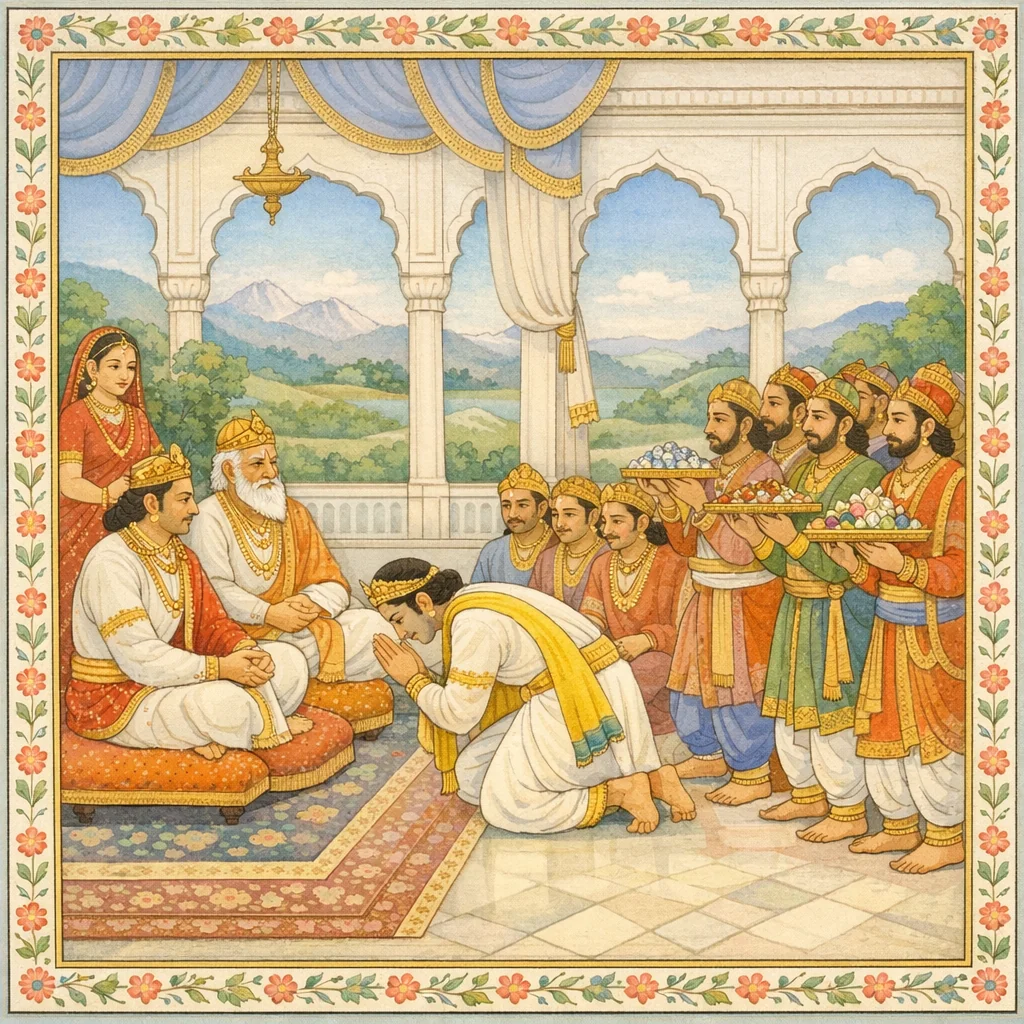
ऑफ -ण क्र पज्चत्रिशो5 ध्याय: राजसूययज्ञका वर्णन वैशम्पायन उवाच पितामहं गुरुं चैव प्रत्युद्गम्य युधिष्ठिर: । अभिवाद्य ततो राजन्निदं वचनमत्रवीत्,वैशम्पायनजी कहते हैं--जनमेजय! पितामह भीष्म तथा गुरु द्रोणाचार्य आदिकी अगवानी करके युधिष्ठिरने उनके चरणोंमें प्रणाम किया और भीष्म, द्रोण, कृप, अश्व॒त्थामा, दुर्योधन और विविंशतिसे कहा--“'इस यज्ञमें आपलोग सब प्रकारसे मुझपर अनुग्रह करें
Vaiśampāyana said: O King Janamejaya, Yudhiṣṭhira went forth to receive the grandsire Bhīṣma and his teacher Droṇa. Having bowed to them with reverence, he spoke these words—seeking their favor and support for the rite, and asking the elders to grant him their full goodwill in the coming Rājasūya sacrifice. The scene teaches that even royal power must rest on humility, reverence for elders, and the assent of the wise.
Verse 2
भीष्म द्रोणं कृप॑ द्रौणिं दुर्योधनविविंशती । अस्मिन् यज्ञे भवन्तों मामनुगृह्नन्तु सर्वश:,वैशम्पायनजी कहते हैं--जनमेजय! पितामह भीष्म तथा गुरु द्रोणाचार्य आदिकी अगवानी करके युधिष्ठिरने उनके चरणोंमें प्रणाम किया और भीष्म, द्रोण, कृप, अश्व॒त्थामा, दुर्योधन और विविंशतिसे कहा--“'इस यज्ञमें आपलोग सब प्रकारसे मुझपर अनुग्रह करें
Vaiśampāyana said: Addressing Bhīṣma, Droṇa, Kṛpa, Droṇi (Aśvatthāmā), Duryodhana, and Viviṃśati, Yudhiṣṭhira appealed with reverence, “In this sacrifice, may you all extend your favor to me in every way.” The moment underscores the moral weight of seeking the elders’ sanction and goodwill even when family loyalties are strained.
Verse 3
इदं व: सुमहच्चैव यदिहास्ति धनं मम । प्रणयन्तु भवन्तो मां यथेष्टमभिमन्त्रिता:,यहाँ मेरा जो यह महान् धन है, उसे आपलोग मेरी प्रार्थना मानकर इच्छानुसार सत्कर्मोमें लगाइये
Vaiśampāyana said: “This great wealth of mine that is here—I offer it to you. You who have been invited with due honor, accept me in goodwill, and employ this wealth as you deem fit for righteous ends.”
Verse 4
एवमुक्त्वा स तानू सर्वान् दीक्षित: पाण्डवाग्रज: । युयोज स यथायोगमधिकारेष्वनन्तरम्,यज्ञदीक्षित युधिष्ठिरने ऐसा कहकर उन सबको यथायोग्य अधिकारोंमें लगाया
Vaiśampāyana said: Having spoken thus, Yudhiṣṭhira—the eldest of the Pāṇḍavas, now consecrated for the sacrifice—promptly assigned all of them to their proper duties, each according to fitness and due order. The verse highlights orderly rule and the ethical allotment of responsibility in a sacred undertaking.
Verse 5
भक्ष्यभोज्याधिकारेषु दःशासनमयोजयत् | परिग्रहे ब्राह्मणानामश्च॒त्थामानमुक्तवान्,भक्ष्य-भोज्य आदि सामग्रीकी देख-रेख तथा उसके बाँटने परोसनेकी व्यवस्थाका अधिकार दुःशासनको दिया। ब्राह्मणोंके स्वागत-सत्कारका भार उन्होंने अश्वत्थामाको सौंप दिया
Vaiśampāyana said: He appointed Duḥśāsana to oversee the provisions of food—its custody, distribution, and serving. For the reception and honoring of the brāhmaṇas, he entrusted the responsibility to Aśvatthāmā. The passage shows royal power expressed through delegated duties: the management of sustenance and the dharmic obligation of hospitality toward the learned.
Verse 6
राज्ञां तु प्रतिपूजार्थ संजयं स न्ययोजयत् | कृताकृतपरिज्ञाने भीष्मद्रोणी महामती,राजाओंकी सेवा और सत्कारके लिये धर्मराजने संजयको नियुक्त किया। कौन काम हुआ और कौन नहीं हुआ, इसकी देख-रेखका काम महाबुद्धिमान् भीष्म और द्रोणाचार्यको मिला
Vaiśampāyana said: For the purpose of properly honoring and attending upon the assembled kings, Dharmarāja appointed Saṃjaya. The supervision of what had been done and what remained undone—the careful auditing of duties and arrangements—was entrusted to the great-minded Bhīṣma and Droṇa.
Verse 7
हिरण्यस्य सुवर्णस्य रत्नानां चान्ववेक्षणे | दक्षिणानां च वै दाने कृपं राजा न्न्ययोजयत्,उत्तम वर्णके स्वर्ण तथा रत्नोंको परखने, रखने और दक्षिणा देनेके कार्यमें राजाने कृपाचार्यकी नियुक्ति की। इसी प्रकार दूसरे-दूसरे श्रेष्ठ पुरुषोंको यथायोग्य भिन्न-भिन्न कार्योमें लगाया। नकुलके द्वारा सम्मानपूर्वक बुलाकर लाये हुए बाह्लिक, धृतराष्ट्र, सोमदत्त और जयद्रथ वहाँ घरके मालिककी तरह सुखपूर्वक रहने और इच्छानुसार विचरने लगे
Vaiśampāyana said: The king appointed Kṛpa to supervise the inspection and custody of gold, fine gold, and gems, and also the distribution of honoraria and gifts. Thus, other eminent men too were assigned, each according to his fitness, to different duties. Meanwhile, Bāhlīka, Dhṛtarāṣṭra, Somadatta, and Jayadratha—brought respectfully by Nakula—stayed there comfortably like masters of the house, moving about as they wished.
Verse 8
तथान्यान् पुरुषव्याप्रांस्तस्मिंस्तस्मिन् न््ययोजयत् । बाह्निको धृतराष्ट्रश्न सोमदत्तो जयद्रथ: । नकुलेन समानीता: स्वामिवत् तत्र रेमिरे,उत्तम वर्णके स्वर्ण तथा रत्नोंको परखने, रखने और दक्षिणा देनेके कार्यमें राजाने कृपाचार्यकी नियुक्ति की। इसी प्रकार दूसरे-दूसरे श्रेष्ठ पुरुषोंको यथायोग्य भिन्न-भिन्न कार्योमें लगाया। नकुलके द्वारा सम्मानपूर्वक बुलाकर लाये हुए बाह्लिक, धृतराष्ट्र, सोमदत्त और जयद्रथ वहाँ घरके मालिककी तरह सुखपूर्वक रहने और इच्छानुसार विचरने लगे
Vaiśaṃpāyana said: “In the same way, the king appointed other capable men to their respective duties, assigning each to the task suited to him. Bāhlīka, Dhṛtarāṣṭra, Somadatta, and Jayadratha—honourably brought there by Nakula—stayed in that place at ease, moving about freely, as if they themselves were the masters of the house.”
Verse 9
क्षत्ता व्ययकरस्त्वासीद् विदुर: सर्वधर्मवित् । दुर्योधनस्त्वर्हणानि प्रतिजग्राह सर्वश:,सम्पूर्ण धर्मोके ज्ञाता विदुरजी धनको व्यय करनेके कार्यमें नियुक्त किये गये थे तथा राजा दुर्योधन कर देनेवाले राजाओंसे सब प्रकारकी भेंट स्वीकार करने और व्यवस्थापूर्वक रखनेका काम सँभाल रहे थे
Vaiśampāyana said: Vidura, the kṣattā and knower of all dharma, was appointed to manage expenditures. Duryodhana, for his part, accepted in every way the honors and gifts offered by the tribute-paying kings, taking charge of receiving and duly arranging them—thus setting Vidura over righteous administration while he himself oversaw the collection of royal offerings.
Verse 10
चरणक्षालने कृष्णो ब्राह्मणानां स्वयं हाभूत् । सर्वलोकसमावृत्त: पिप्रीषु: फलमुत्तमम्,सब लोगोंसे घिरे हुए भगवान् श्रीकृष्ण सबको संतुष्ट करनेकी इच्छासे स्वयं ही ब्राह्मणोंके चरण पखारनेमें लगे थे, जिससे उत्तम फलकी प्राप्ति होती है
Vaiśaṃpāyana said: Surrounded by all the assembled people, Kṛṣṇa himself took up the service of washing the Brāhmaṇas’ feet, wishing to please everyone—an act held to yield the highest spiritual merit. The scene underscores that true greatness expresses itself through humility and reverence toward the worthy, especially in public settings where conduct becomes an ethical example.
Verse 11
द्रष्टकामा: सभां चैव धर्मराजं युधिष्ठिरम् । न कश्चिदाहरत् तत्र सहस्रावरमर्हणम्,धर्मराज युधिष्ठिरको और उनकी सभाको देखनेकी इच्छासे आये हुए राजाओंमेंसे कोई भी ऐसा नहीं था, जो एक हजार स्वर्णमुद्राओंसे कम भेंट लाया हो
Vaiśampāyana said: The kings who came, eager to behold both the royal assembly and Dharmarāja Yudhiṣṭhira, were such that not a single one there brought an offering worth less than a thousand (gold coins). The scene underscores the acknowledged righteousness and prestige of Yudhiṣṭhira’s rule, where honor is expressed through generous, publicly accountable gifts.
Verse 12
रत्नैश्व बहुभिस्तत्र धर्मराजमवर्धयत् । कथं तु मम कौरव्यो रत्नदानै: समाप्नुयात्
Vaiśampāyana said: There, with many precious gems, he enhanced the honor and standing of Dharmarāja (Yudhiṣṭhira). Yet the Kaurava (Duryodhana) wondered, ‘How can my purpose ever be fulfilled merely by giving jewels?’—hinting that outward gifts and displays of wealth cannot by themselves secure the deeper aims of prestige, superiority, or moral legitimacy.
Verse 13
भवनै: सविमानाग्रै: सोदर्कर्बलसंवृतैः
Vaiśaṃpāyana said: “(The city/royal quarter) was filled with mansions crowned by lofty upper chambers, and it was enclosed and protected by strong defensive works—ramparts and fortifications—suggesting both prosperity and vigilant governance.”
Verse 14
लोकराजविमानैश्व ब्राह्मणावसथै: सह । कृतैरावसर्थ्दिव्यर्विमानप्रतिमैस्तथा
Vaiśampāyana said: Along with royal, world-ruling mansions and also with dwellings set apart for brāhmaṇas, there were splendid residences that had been constructed—divine in appearance, and likewise resembling celestial vimānas. The narration underscores a public display of prosperity and order: royal grandeur is presented as complete only when it includes honored provision for the learned and the sacred, reflecting the ethical ideal that power should be accompanied by support of dharma and those who uphold it.
Verse 15
विचित्रै रत्नवद्धिश्व ऋद्धवा परमया युतै: । राजभिश्च समावृत्तैरतीव श्रीसमृद्धिभि: । अशोभत सदो राजन् कौन्तेयस्य महात्मन:
Vaiśampāyana said: O King, the assembly-hall of the high-souled son of Kuntī shone with splendor—adorned with wondrous riches, jewel-studded and of the highest magnificence, and thronged with kings who themselves were exceedingly prosperous. Thus was it seen how royal power and public honor gather around a ruler whose stature is acknowledged by other sovereigns.
Verse 16
राजन् ! जिनके शिखर यज्ञ देखनेके लिये आये हुए देवताओंके विमानोंका स्पर्श कर रहे थे, जो जलाशयोंसे परिपूर्ण और सेनाओंसे घिरे हुए थे, उन सुन्दर भवनों, इन्द्रादि लोकपालोंके विमानों, ब्राह्मणोंके निवासस्थानों तथा परम समृद्धिसे सम्पन्न रत्नोंसे परिपूर्ण चित्र एवं विमानके तुल्य बने हुए दिव्य गृहोंसे, समागत राजाओंसे तथा असीम श्रीसमृद्धियोंसे महात्मा कुन्तीनन्दन युधिष्ठिरकी वह सभा बड़ी शोभा पा रही थी ।। १३-- १५ || ऋद्धया तु वरुण देवं स्पर्थमानो युधिष्ठिर: । षडग्निनाथ यज्ञेन सोडयजद् दक्षिणावता,महाराज युधिष्ठिर अपनी अनुपम समृद्धिद्वारा वरुणदेवताकी बराबरी कर रहे थे। उन्होंने यज्ञमें छः अग्नियोंकी- स्थापना करके पर्याप्त दक्षिणा देकर उस यज्ञके द्वारा भगवान्का यजन किया
O King! Those splendid mansions had summits that seemed to touch the vimānas of the gods who had come to behold the sacrifice; they were filled with pools and ringed by armies. There were the vimānas of Indra and the other Lokapālas, the dwellings of Brahmins, and divine houses like heavenly cars, brimming with jewels and supreme prosperity. With kings assembled and boundless splendor all around, the sabhā of Yudhiṣṭhira, Kuntī’s son, shone exceedingly. By the excellence of his fortune Yudhiṣṭhira seemed to rival Varuṇa himself: he established a sacrifice with six sacred fires and, granting abundant dakṣiṇā, worshiped the Lord through that rite.
Verse 17
सवञ्जनान् सर्वकामै: समृद्धैः समतर्पयत् । अन्नवान् बहुभक्ष्यश्न भुक्तवज्जनसंवृत: । रत्नोपहारसम्पन्नो बभूव स समागम:,राजाने उस यज्ञमें आये हुए सब लोगोंको उनकी सभी कामनाएँ पूर्ण करके संतुष्ट किया। वह यज्ञसमारोह अन्नसे भरापूरा था, उसमें खाने-पीनेकी सब सामग्रियाँ पर्याप्त मात्रामें सदा प्रस्तुत रहती थीं। वह यज्ञ खा-पीकर तृप्त हुए लोगोंसे ही पूर्ण था। वहाँ कोई भूखा नहीं रहने पाता था तथा उस उत्सवसमारोहमें सब ओर रत्नोंका ही उपहार दिया जाता था
Vaiśampāyana said: The king satisfied all the people present—together with their attendants—by fulfilling their wishes with abundant provisions. That great gathering was rich in food and many kinds of delicacies, crowded with guests who had eaten to their fill. It became a festival marked by lavish gifts, with jewels offered on every side—so that none remained hungry or unmet in desire.
Verse 18
इडाज्यहोमाहुतिभिमन्त्रशिक्षाविशारदै: । तस्मिन् हि ततृपुर्देवास्तते यज्ञे महर्षिभि:,मन्त्रशिक्षामें निपुण महर्षियोंद्वारा विस्तारपूर्वक किये जानेवाले उस यज्ञमें इडा (मन्त्र- पाठ एवं स्तुति), घृतहोम तथा तिल आदि शाकल्य पदार्थोंकी आहुतियोंसे देवतालोग तृप्त हो गये
Vaiśampāyana said: In that sacrifice, elaborately performed by great seers skilled in the discipline of Vedic recitation and ritual instruction, the gods were fully satisfied by the iḍā (ritual recitation and praise), by offerings of ghee poured into the fire, and by the various oblations presented therein.
Verse 19
यथा देवास्तथा विप्रा दक्षिणान्नमहा धनै: । ततृपुः सर्ववर्णाश्व॒ तस्मिन् यज्ञे मुदान्विता:,जिस प्रकार देवता तृप्त हुए उसी प्रकार दक्षिणामें अन्न और महान् धन पाकर ब्राह्मण भी तृप्त हो गये। अधिक क्या कहा जाय, उस यज्ञमें सभी वर्णके लोग बड़े प्रसन्न थे, सबको पूर्ण तृप्ति मिली थी
Vaiśampāyana said: Just as the gods were satisfied, so too were the Brahmins satisfied—having received sacrificial fees in the form of food and great wealth. Indeed, at that sacrifice all the social orders were filled with joy, each attaining complete contentment.
Verse 34
इस प्रकार श्रीमह्याभारत सभापव॑के अन्तर्गत राजस्यपर्वमें निमन्त्रित राजाओंका आगमनविषयक चौंतीसवाँ अध्याय पूरा हुआ
Thus, in the revered Mahābhārata, within the Sabhā Parva—specifically in the Rājasūya section—the thirty-fourth chapter, concerning the arrival of the invited kings, is concluded. The narration formally closes this episode, emphasizing the orderly gathering of rulers for a great royal rite and the public, ethical weight borne by such political‑religious assemblies.
Verse 35
इति श्रीमहा भारते सभापर्वणि राजसूयपर्वणि यज्ञकरणे पज्चत्रिंशो डध्याय:
Thus ends the thirty-fifth chapter, “On the performance of the sacrifice,” in the Rājasūya section of the Sabhā Parva of the revered Mahābhārata. The narrative frame marks the completion of a unit of instruction and action centered on the proper execution of a royal rite, underscoring the epic’s insistence that power and sovereignty must be ritually and ethically grounded in dharma.
Verse 126
यज्ञमित्येव राजान: स्पर्धमाना ददुर्धनम् प्रत्येक राजा बहुसंख्यक रत्नोंकी भेंट देकर धर्मराज युधिष्ठिरके धनकी वृद्धि करने लगा। सभी राजा यह होड़ लगाकर धन दे रहे थे कि कुरुनन्दन युधिष्ठिर किसी प्रकार मेरे ही दिये हुए रत्नोंके दानसे अपना यज्ञ सम्पूर्ण करें
Crying only, “The sacrifice!”, the kings vied with one another and poured forth wealth. Each ruler, presenting countless jewels as gifts, set about increasing the treasure of Dharmarāja Yudhiṣṭhira. All of them gave in rivalry, thinking: “May Yudhiṣṭhira, joy of the Kuru line, complete his sacrifice by the very donation of gems that I have offered.”
Frequently Asked Questions
The dilemma is whether a public insult in a formal assembly should be met with conciliatory tolerance (to preserve decorum) or with firm correction (to protect dharma, protocol, and the legitimacy of collective honor).
Public institutions are sustained by disciplined speech and calibrated authority: patience is virtuous, but legitimizing baseless harshness corrodes dharma; honor is framed as guṇa- and order-based rather than merely personal or factional.
No explicit phalaśruti appears in this excerpt; the meta-function is doctrinal and institutional—establishing a normative rationale for precedence, reverence, and corrective speech within the sabhā.