Adhyaya 95
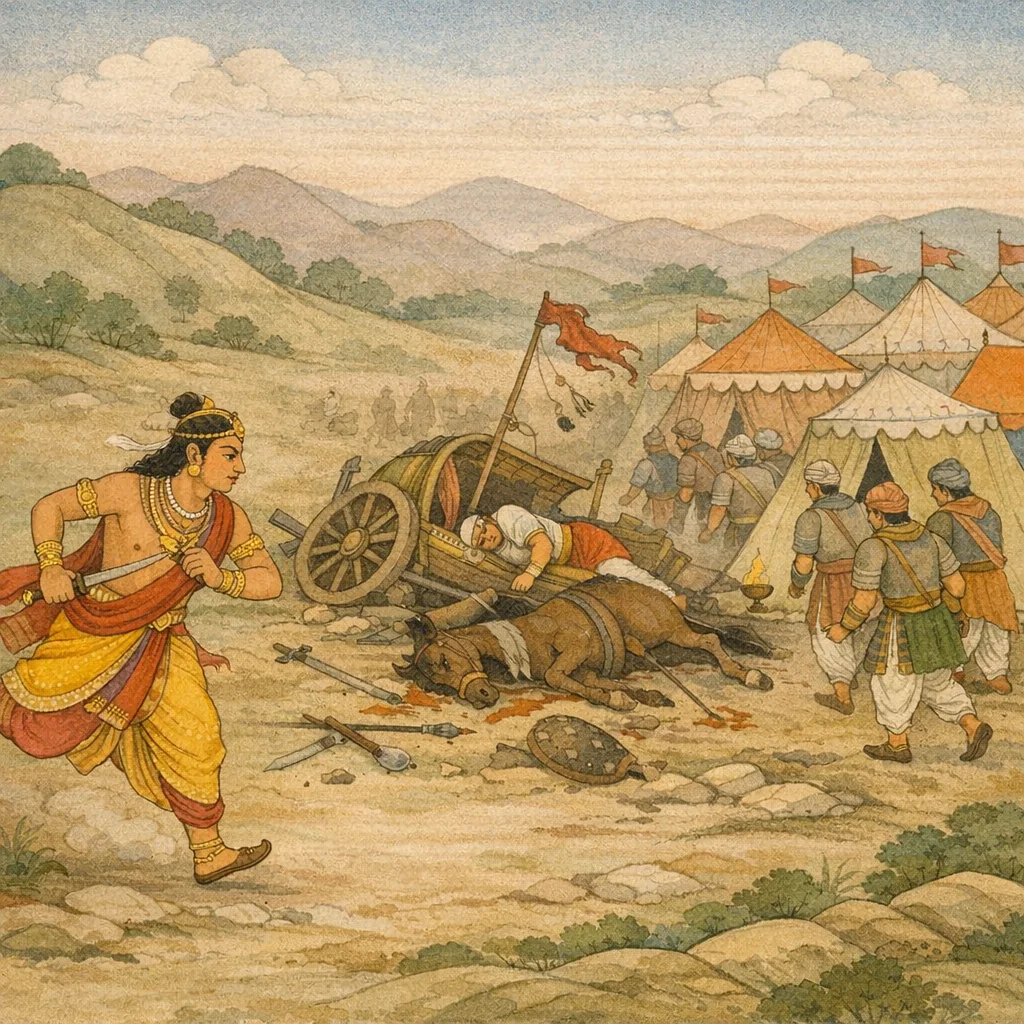
Chapter Arc: संजय धृतराष्ट्र से कहता है—महायुद्ध में वैकर्तन कर्ण के वध का समाचार फैलते ही कौरव-सेना भय से काँप उठी और दिशाएँ ताकने लगी। → कर्ण के गिरते ही घायल, क्षत-विक्षत, लज्जित और उद्विग्न महारथियों में भगदड़ मचती है; कोई रोकने पर भी नहीं रुकता। दुर्योधन उनके मनोभाव समझकर शल्य की अनुमति लेकर सेना को लौटने (शिबिर की ओर हटने) की आज्ञा देता है। → पाण्डवों की विजय स्पष्ट दिखते ही अश्वत्थामा बार-बार उच्छ्वास भरता हुआ शिबिर की ओर दौड़ पड़ता है; उसी क्षण कौरव-पक्ष का मनोबल निर्णायक रूप से टूटता दिखता है। → छिन्नध्वज शल्य भी दसों दिशाएँ देखते हुए शिबिर की ओर प्रस्थान करता है; अन्य अनेक महारथी भी रक्तस्राव करते, काँपते, विवर्ण मुख से दुर्योधन की आज्ञा शिरोधार्य कर शिबिर में प्रवेश करते हैं। → रात्रि/अगले चरण में शिबिर के भीतर क्या निर्णय होगा—कौरव-नेतृत्व किस उपाय से पराजय की क्षति की भरपाई करेगा—यह अनकहा रहकर आगे की कथा का द्वार खोलता है।
Shlokas
Verse 1
ऑपन--माज बक। अकाल पञ्चनवतितमो< ध्याय: कौरव-सेनाका शिबिरकी लक पलायन और शिबिरोंमें प्रवेश संजय उवाच हते वैकर्तने राजन् कुरवो भयपीडिता: । वीक्षमाणा दिश: सर्वा: पयपितु: सहस्रश:,संजय कहते हैं--राजन्! वैकर्तन कर्णके मारे जानेपर भयसे पीड़ित हुए सहस्रों कौरव योद्धा सम्पूर्ण दिशाओंकी ओर देखते हुए भाग निकले इस प्रकार श्रीमह्ा भारत कर्णपर्वमें कौरव-सेनाका शिबिरकी ओर प्रस्थानविषयक पंचानबेवाँ अध्याय प्रा हुआ ॥/ ९५ ॥। ऑपन--#र< बक। है २ >> षण्णवतितमोब< ध्याय: युधिष्ठिरका रणभूमिमें कर्णको मारा गया देखकर प्रसन्न हो श्रीकृष्ण और अर्जुनकी प्रशंसा करना, धृतराष्ट्रका शोकमग्न होना तथा कर्णपर्वके श्रवणकी महिमा संजय उवाच तथा निपतिते कर्णे परसैन्ये च विद्रुते आश््लिष्य पार्थ दाशाहों हर्षाद् वचनमब्रवीत्
Sañjaya said: “O King, when Vaikartana (Karna) was slain, the Kuru warriors—crushed by fear—looked about in every direction and fled in their thousands. The fall of their foremost champion shattered their resolve, and panic spread through the host.”
Verse 2
कर्ण तु निहतं दृष्ट्वा शत्रुभि: परमाहवे । भीता दिशो व्यकीर्यन्त तावका: क्षतविक्षता:,शत्रुओंने उस महायुद्धमें वैकर्तन कर्णको मार डाला है, यह देखकर आपके सैनिक भयभीत हो उठे थे। उनका सारा शरीर घावोंसे भर गया था। इसलिये वे भागकर सम्पूर्ण दिशाओंमें बिखर गये
Sañjaya said: “Seeing Karṇa slain by the enemies in that most terrible battle, your warriors—wounded and torn—were seized by fear and scattered in flight in every direction. The fall of their foremost champion shattered their resolve, and panic overtook the host.”
Verse 3
ततो<वहारं चक्रुस्ते योधा: सर्वे समनन््ततः । निवार्यमाणाश्रोद्विग्नास्तावका भृशदु:खिता:,तब आपके समस्त योद्धा जो अत्यन्त दुःखी और उद्विग्न हो रहे थे, मना करनेपर सब ओरसे युद्ध बंद करके लौटने लगे
Then all those warriors of yours, deeply distressed and shaken, ceased the fighting on every side and began to withdraw, even as they were being restrained and urged otherwise. The scene captures a moment when grief and agitation overpower martial resolve, revealing the human cost of war beneath the demands of duty.
Verse 4
तेषां तन््मतमाज्ञाय पुत्रो दुर्योधनस्तव । अवहारं ततश्षक्रे शल्यस्यानुमते नूप
Sañjaya said: Having understood their decision, your son Duryodhana then carried out a strategic withdrawal, O king, with Śalya’s consent.
Verse 5
नरेश्वरर उन सबका अभिप्राय जानकर राजा शल्यकी अनुमति ले आपके पुत्र दुर्योधनने सेनाको लौटनेकी आज्ञा दी ।। कृतवर्मा रथैस्तूर्ण वृतों भारत तावकै: । नारायणावशेषैश्व शिबिरायैव दुद्गुवे,भारत! नारायणी-सेनाके जो वीर शेष रह गये थे, उनसे तथा आपके अन्य रथी योद्धाओंसे घिरा हुआ कृतवर्मा भी तुरंत शिबिरकी ओर ही भाग चला
Sañjaya said: Understanding the intention of all those warriors, and having obtained King Śalya’s consent, your son Duryodhana ordered the army to withdraw. Then Kṛtavarmā—quickly surrounded by your chariot-fighters and by the remaining heroes of the Nārāyaṇī force—fled straight toward the camp.
Verse 6
गान्धाराणां सहस्नेण शकुनि: परिवारित: । हतमाधिरथिं दृष्टवा शिबिरायैव दुद्रुवे
Sañjaya said: Surrounded by a thousand Gandhāra warriors, Śakuni—seeing Ādhirathi (Karna) slain—fled straight back to the camp.
Verse 7
सहसौरों गान्धार योद्धाओंसे घिरा हुआ शकुनि भी अधिरथपुत्र कर्णको मारा गया देख छावनीकी ओर ही भागा ।। कृप: शारद्वतो राजन् नागानीकेन भारत । महामेघनिभेनाशु शिबिरायैव दुद्रुवे,भरतवंशी नरेश! शरद्वानके पुत्र कृपाचार्य मेघोंकी घटाके समान अपनी गजसेनाके साथ शीघ्रतापूर्वक शिबिरकी ओर ही भाग चले
Sañjaya said: Shakuni too—surrounded by thousands of Gandhāra warriors—on seeing Karṇa, the son of Adhiratha, slain, fled straight toward the camp. And Kripa, the son of Śaradvat, O king, O Bhārata, swiftly withdrew to the camp with his elephant-corps, dark and massed like a great rain-cloud.
Verse 8
अश्वत्थामा तत: शूरो विनि:श्वस्य पुन: पुनः । पाण्डवानां जयं दृष्टवा शिबिरायैव दुद्रुवे,तदनन्तर शूरवीर अभश्व॒त्थामा पाण्डवोंकी विजय देख बारंबार उच्छवास लेता हुआ छावनीकी ओर ही भागने लगा
Sañjaya said: Then the valiant Aśvatthāmā, heaving repeated sighs, and seeing the Pāṇḍavas’ victory, fled straight back toward the camp.
Verse 9
संशप्तकावशिष्टेन बलेन महता वृतः । सुशर्मापि ययौ राजन् वीक्षमाणो भयार्दित:,राजन! संशप्तकोंकी बची हुई विशाल सेनासे घिरा हुआ सुशर्मा भी भयसे पीड़ित हो इधर-उधर देखता हुआ छावनीकी ओर चल दिया
Sañjaya said: O King, Suśarmā too—surrounded by the great force that remained of the Saṁśaptakas—set off toward the camp, looking about in all directions, distressed by fear.
Verse 10
दुर्योधनो5पि नृपतिर्हतसर्वस्वबान्धव: । ययौ शोकसमाविष्टश्चिन्तयन् विमना बहु,जिसके भाई नष्ट हो गये थे और सर्वस्व लुट गया था, वह राजा दुर्योधन भी शोकमग्न, उदास और विशेष चिन्तित होकर शिबिरकी ओर चल पड़ा
Sañjaya said: King Duryodhana too—bereft of his kinsmen and with all his fortunes shattered—set out toward the camp, overwhelmed by grief, downcast in spirit, and turning many anxious thoughts over in his mind.
Verse 11
छिन्नध्वजेन शल्यस्तु रथेन रथिनां वर: । प्रययौं शिबिरायैव वीक्षमाणो दिशो दश,रथियोंमें श्रेष्ठ राजा शल्यने भी जिसकी ध्वजा कट गयी थी, उस रथके द्वारा दसों दिशाओंकी ओर देखते हुए छावनीकी ओर ही प्रस्थान किया
Sañjaya said: Then King Śalya, foremost among chariot-warriors, set out for the camp in that chariot whose banner had been cut down. As he went, he kept looking in all ten directions—anxious and alert—yet his course was straight back toward the encampment.
Verse 12
ततो<5परे सुबहवो भरतानां महारथा: । प्राद्रवन्त भयत्रस्ता हियाविष्टा विचेतस:
Sañjaya said: Then many other great chariot-warriors of the Bharata host, shaken by fear, fled in haste—overcome by shame and robbed of clear judgment.
Verse 13
भरतवंशियोंके दूसरे-दूसरे बहुसंखयक महारथी भी भयभीत, लज्जित और अचेत होकर शिबिरकी ओर दौड़े ।। असृक् क्षरन्तः सोद्धिग्ना वेपमानास्तथातुरा: । कुरवो दुद्रुवु: सर्वे दृष्टवा कर्ण निपातितम्,कर्णको मारा गया देख सभी कौरव-सैनिक खून बहाते और काँपते हुए उद्विग्न तथा आतुर होकर छावनीकी ओर भागने लगे
Sañjaya said: Seeing Karṇa struck down, all the Kuru warriors—bleeding, shaken with alarm, trembling and distressed—fled in a rout toward their camp.
Verse 14
प्रशंसन्तो<र्जुनं केचित् केचित् कर्ण महारथा: । व्यद्रवन्त दिशो भीता: कुरव: कुरुसत्तम,कुरुश्रेष्ठ! कौरव-महारथियोंमेंसे कुछ लोग अर्जुनकी प्रशंसा करते थे और कुछ कर्णकी। वे सब-के-सब भयभीत होकर चारों दिशाओंमें भाग खड़े हुए
Sañjaya said: Some among the Kuru warriors praised Arjuna, while others praised Karṇa, the great chariot-fighter. But all the Kurus, seized by fear, fled in every direction—O best of the Kurus, O foremost of the Kuru line. The scene shows that amid the clash of champions, partisan acclaim yields to the moral and psychological truth of war: fear can dissolve cohesion even in a famed host.
Verse 15
तेषां योधसहस््राणां तावकानां महामृथधे । नासीत्तत्र पुमान् कश्चिद् यो युद्धाय मनो दधे,आपके उन हजारों योद्धाओंमें वहाँ कोई भी ऐसा पुरुष नहीं था, जो अपने मनमें उस महासमरमें युद्धके लिये उत्साह रखता हो
Sañjaya said: Among those thousands of your warriors, in that great and dreadful battle, there was not a single man who set his mind firmly on fighting. The moment reveals a moral collapse within the host: when resolve fails, mere numbers and weapons cannot sustain a cause, and fear spreads where dharma and confidence have already been shaken.
Verse 16
हते कर्णे महाराज निराशा: कुरवो5भवन् । जीवितेष्वपि राज्येषु दारेषु च धनेषु च,महाराज! कर्णके मारे जानेपर कौरव अपने राज्यसे, धनसे, स्त्रियोंसे और जीवनसे भी निराश हो गये
Sañjaya said: “O King, when Karṇa was slain, the Kurus fell into utter despair—losing all hope even in life itself, and in their kingdom, their wives, and their wealth.” The verse underscores how the fall of a single pillar of strength in an unrighteous war can collapse morale and expose the fragility of worldly attachments.
Verse 17
तान् समानीय पुत्रस्ते यत्नेन महता विभु: । निवेशाय मनो दश्रे दु:ःखशोकसमन्वित:,दुःख और शोकमें डूबे हुए आपके पुत्र राजा दुर्योधनने बड़े यत्नसे उन सबको साथ ले आकर छावनीमें विश्राम करनेका विचार किया
Sañjaya said: Your son, the mighty king—overwhelmed by grief and sorrow—gathered them all together with great effort and resolved in his mind to withdraw to the camp for rest. The verse highlights how, amid the moral and emotional weight of war, even a powerful ruler is driven by exhaustion and inner anguish to seek temporary refuge in repose rather than clarity of judgment.
Verse 18
तस्याज्ञां शिरसा योधा: परिगृहा[ विशाम्पते | विवर्णवदना राजन् न््यविशन्त महारथा:,प्रजानाथ! वे सब महारथी योद्धा दुर्योधनकी आज्ञा शिरोधार्य करके शिबिरमें प्रविष्ट हुए। उन सबके मुखोंकी कान्ति फीकी पड़ गयी थी
Sañjaya said: “O lord of the people, those warriors, taking his command upon their heads in obedience, entered the camp. O King, the great chariot-fighters went in with faces drained of color—an outward sign of inner shock and foreboding amid the burdens of war and duty.”
Verse 94
इस प्रकार श्रीमह्याभारत कर्णपर्वमें रणभूमिका वर्णनविषयक चौरानबेवाँ अध्याय पूरा हुआ
Thus ends the ninety-fourth chapter of the Karṇa Parva of the sacred Śrī Mahābhārata, devoted to describing the setting of the battlefield. This closing formula signals a transition: the narrative pauses after establishing the scene of war, preparing the reader for the ethical and strategic consequences that will unfold amid the violence of Kurukṣetra.
Verse 95
इति श्रीमहाभारते कर्णपर्वणि शिबिरप्रयाणे पजचनवतितमो< ध्याय:
Thus ends the ninety-fifth chapter, titled “The March to the Camp,” in the Karṇa Parva of the sacred Mahābhārata. The narration marks a formal closure to this segment of the war-account, emphasizing the ordered movement of forces and the continuing momentum of the conflict.