Adhyaya 42
कर्णपर्व — द्विचक्रिकी युद्धपरिस्थिति: धृष्टद्युम्न- द्रौणि-संघर्षः तथा अर्जुन-रक्षणम् (Chapter 42)
Upa-parva: Karṇa–Śaineya–Drauṇi–Dhṛṣṭadyumna Saṅgrāma (Battle Episode)
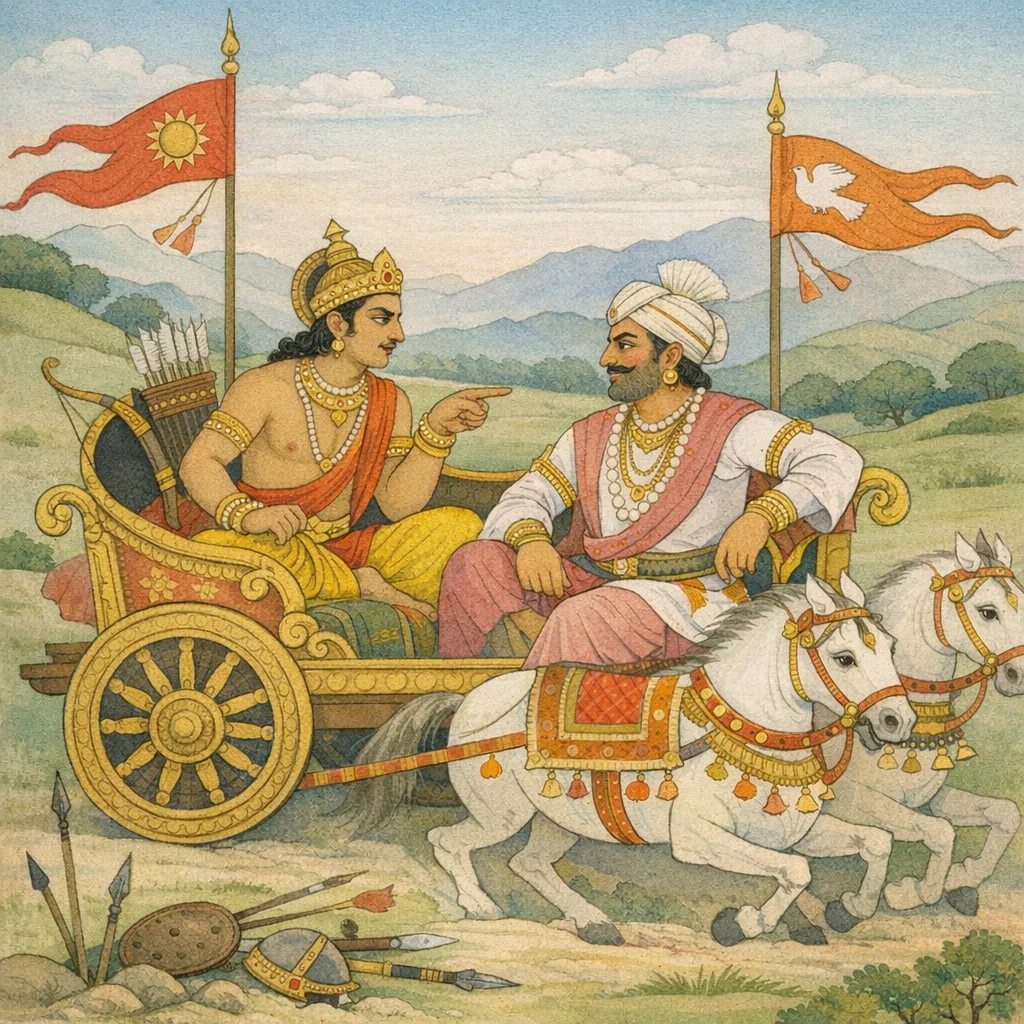
Sañjaya reports a renewed convergence of forces: the Kuru–Sṛñjaya formations rejoin and a fear-inducing engagement intensifies between Karṇa’s side and the Pāṇḍavas. Dhṛṣṭadyumna, supported by allied kings and Pāṇḍava mahārathas, advances toward Karṇa, who absorbs the onrush ‘like a mountain holding back floods.’ Dhṛṣṭadyumna strikes Karṇa; Karṇa counters with the Vijaya bow, breaks Dhṛṣṭadyumna’s bow, and wounds him, while Sātyaki (Śaineya) intercepts a lethal, gold-adorned arrow sent by Karṇa. Karṇa then surrounds Sātyaki with arrow-showers; the combat spectacle is described as terrifying yet visually compelling. Aśvatthāmā (Drauṇi) enters with the explicit objective of punishing Dhṛṣṭadyumna for Droṇa’s earlier death, issuing accusatory challenges. A duel escalates: both sides exchange dense volleys until Dhṛṣṭadyumna is disarmed, made chariotless, and pursued at close range. Observing the imminent risk, Kṛṣṇa instructs Arjuna to rescue Dhṛṣṭadyumna; Kṛṣṇa drives the chariot toward Drauṇi, Arjuna strikes Drauṇi with forceful arrows, and Drauṇi is momentarily incapacitated. Sahadeva then removes Dhṛṣṭadyumna from immediate danger. The Pāñcālas celebrate audibly, while Arjuna redirects Kṛṣṇa toward the Saṃśaptakas, indicating continuing operational priorities beyond the rescue.
Chapter Arc: रणभूमि की धूल के बीच, सारथि-राजा शल्य के कटाक्षों से कर्ण का आत्माभिमान भड़क उठता है—और वह वाणी से ही युद्ध का शंखनाद कर देता है। → शल्य ने ‘निदर्शनार्थ’ जो वाग्जाल फैलाया था, कर्ण उसे अपमान और भय-प्रयास मानकर पलटता है: वह कहता है कि केवल शब्दों से उसे डराया नहीं जा सकता, और शल्य को किसी और को भयभीत करने की सलाह देता है। → कर्ण का गर्जन-घोष: ‘यदि इन्द्र सहित समस्त देवता भी मुझसे युद्ध करें, तब भी मुझे भय नहीं; फिर अर्जुन और केशव से क्या डर?’—यहाँ उसका अजेय-स्वाभिमान चरम पर पहुँचता है। → कर्ण शल्य को स्मरण कराता है कि वह अभी जीवित है तो तीन कारणों से—सारथि बनकर सखाभाव, सौहार्द, और मित्रभाव; साथ ही दुर्योधन के महान् कार्य का भार कर्ण पर है, इसलिए वह शल्य के अप्रिय वचनों को पहले से तय ‘समय’ के अनुसार क्षमा करेगा। → कर्ण का यह वचन कि ‘हजारों शल्य न भी हों तो भी मैं विजय पा सकता हूँ’—आगामी निर्णायक संग्राम (अर्जुन-कर्ण टकराव) की ओर कथा को तीखे संकेत के साथ धकेल देता है।
Shlokas
Verse 1
अड-#-कत ३-मिद् आदि धातुओंका अर्थ क्रमश: स्नेह, आनन्द, प्रीणन (तृप्त करना), प्राण (रक्षा), सस्नेह दर्शन और आमोद है। २-शद् आदि धातुओंका अर्थ क्रमश: इस प्रकार है--शातन (काटना या छेदना), शासन करना, तनूकरण (क्षीण कर देना), हिंसा करना, अवसादन (शिथिल करना) और निषूदन (वध)। त्रिचत्वारिशो< ध्याय: कर्णका आत्मप्रशंसापूर्वक शल्यको फटकारना संजय उवाच ततः पुनर्महाराज मद्रराजमरिंदम: । अभ्यभाषत राधेय: संनिवार्योत्तरं वच:,संजय कहते हैं--महाराज! तदनन्तर शत्रुओंका दमन करनेवाले राधापुत्र कर्णने शल्यको रोककर पुनः उनसे इस प्रकार कहा--
Sanjaya said: O great king, thereafter Radheya Karna, the subduer of foes, checked the king of Madra, Shalya, and spoke to him again with the following words. The moment signals a charged ethical tension within the Kaurava camp: in the midst of war, Karna asserts control over speech and conduct, preparing to rebuke what he deems obstructive or dishonouring counsel.
Verse 2
यत् त्वं निदर्शनार्थ मां शल्य जल्पितवानसि । नाहं शक््यस्त्वया वाचा बिभीषयितुमाहवे,“शल्य! तुमने दृष्टान्तके लिये मेरे प्रति जो वाग्जाल फैलाया है उसके उत्तरमें निवेदन है कि तुम इस युद्धस्थलमें मुझे अपनी बातोंसे नहीं डरा सकते
Sañjaya said: “O Śalya, the web of words you have spun at me merely by way of illustration—know this in reply: in this battlefield you cannot frighten me with speech.”
Verse 3
यदि मां देवता: सर्वा योधयेयु: सवासवा: | तथापि मे भयं न स्यात् किमु पार्थात् सकेशवात्,“यदि इन्द्रसहित सम्पूर्ण देवता मुझसे युद्ध करने लगें तो भी मुझे उनसे कोई भय नहीं होगा। फिर श्रीकृष्णसहित अर्जुनसे क्या भय हो सकता है
Sañjaya said: “Even if all the gods—Indra included—were to fight against me, I would feel no fear. How much less, then, could I fear Arjuna, even with Keśava (Kṛṣṇa) at his side?”
Verse 4
नाहं भीषयितुं शक्यो वाड्मात्रेण कथंचन । अन्यं जानीहि यः शकक््यस्त्वया भीषयितुं रणे,“मुझे केवल बातोंसे किसी प्रकार भी डराया नहीं जा सकता, जिसे तुम रणभूमिमें डरा सको, ऐसे किसी दूसरे ही पुरुषका पता लगाओ
Sañjaya said: “I cannot be frightened in any way by mere words. Seek out someone else—some other man whom you are capable of intimidating on the battlefield.”
Verse 5
नीचस्य बलमेतावत् पारुष्यं यत्त्वमात्थ माम् | अशक्तो मद्गुणान् वक्तुं वल्गसे बहु दुर्मते,“तुमने मेरे प्रति जो कटु वचन कहा है, इतना ही नीच पुरुषका बल है। दुर्बुद्धे! तुम मेरे गुणोंका वर्णन करनेमें असमर्थ होकर बहुत-सी ऊटपटांग बातें बकते जा रहे हो
Sañjaya said: “This much alone is the strength of a base man—harshness of speech such as you have hurled at me. Foolish-minded as you are, unable to speak of my merits, you keep prattling on with many wild and irrelevant words.”
Verse 6
नहि कर्ण: समुद्धूतो भयार्थमिह मद्रक । विक्रमार्थमहं जातो यशो<र्थ च तथा55त्मन:,“मद्रनिवासी शल्य! कर्ण इस संसारमें भयभीत होनेके लिये नहीं पैदा हुआ है। मैं तो पराक्रम प्रकट करने और अपने यशको फैलानेके लिये ही उत्पन्न हुआ हूँ
Sañjaya said: “O Mādraka (Śalya), Karṇa has not been stirred up here for the sake of fear. I have been born to display valor, and to spread my fame—so too, to fulfill my own purpose.”
Verse 7
सखिभावेन सौहार्दान्मित्रभावेन चैव हि । कारणैस्त्रिभिरेतैस्त्वं शल्य जीवसि साम्प्रतम्,“शल्य! एक तो तुम सारथि बनकर मेरे सखा हो गये हो, दूसरे सौहार्दवश मैंने तुम्हें क्षमा कर दिया है और तीसरे मित्र दुर्योधनकी अभीष्टसिद्धिका मेरे मनमें विचार है--इन्हीं तीन कारणोंसे तुम अबतक जीवित हो
Sañjaya said: “O Śalya, you are alive even now for three reasons: first, by becoming my charioteer you have entered the bond of companionship; second, out of goodwill I have forgiven you; and third, I keep in mind the fulfillment of Duryodhana’s purpose. For these three causes, you have been spared.”
Verse 8
राज्ञश्न धार्तराष्ट्रस्य कार्य सुमहदुद्यतम् । मयि तच्चाहितं शल्य तेन जीवसि मे क्षणम्,*राजा दुर्योधनका महान् कार्य उपस्थित हुआ है और उसका सारा भार मुझपर रखा गया है। शल्य! इसीलिये तुम क्षणभर भी जीवित हो
Sañjaya said: “A very great task of the Dhārtarāṣṭra king has now arisen and is set in motion. Its entire burden has been placed upon me. Therefore, O Śalya, you remain alive—if only for a moment—because of me.”
Verse 9
कृतश्च॒ समय: पूर्व क्षन्तव्यं विप्रियं तव । ऋते शल्यसहस्त्रेण विजयेयमहं परान् | मित्रद्रोहस्तु पापीयानिति जीवसि साम्प्रतम्
Sañjaya said: “An agreement was made earlier: you must forgive what is displeasing to you. Except for Śalya—who is worth a thousand— I would have conquered the other foes. But now you live on with this thought: ‘Betrayal of a friend is a graver sin.’”
Verse 42
इस प्रकार श्रीमह्या भारत कर्णपर्वमें कर्ण और शल्यका संवादविषयक बयालीसवाँ अध्याय पूरा हुआ
Sanjaya said: Thus ends the forty-second chapter of the Karna Parva of the sacred Mahabharata, dealing with the dialogue between Karna and Shalya.
Verse 43
“इसके सिवा, मैंने पहले ही यह शर्त कर दी है कि तुम्हारे अप्रिय वचनोंको क्षमा करूँगा। वैसे तो हजारों शल्य न रहें तो भी मैं शत्रुओंपर विजय पा सकता हूँ; परंतु मित्रद्रोह महान् पाप है, इसीलिये तुम अबतक जीवित हो” ।। इति श्रीमहाभारते कर्णपर्वणि कर्णशल्यसंवादे त्रिचत्वारिंशो5ध्याय:
Sañjaya said: “Moreover, I had already laid down this condition—that I would forgive your harsh and unpleasant words. Even if there were not thousands of Shalyas, I could still win victory over my enemies; but betrayal of a friend is a grievous sin. For that reason, you are still alive.”
Frequently Asked Questions
The chapter stages a conflict between retaliatory justice and operational duty: Drauṇi frames Dhṛṣṭadyumna as culpable for Droṇa’s death and seeks retribution, while the Pāṇḍava side treats Dhṛṣṭadyumna’s protection as a command-preserving necessity—highlighting how moral claims collide with battlefield imperatives.
Efficacy in crisis depends on role-appropriate action: counsel (Kṛṣṇa), execution (Arjuna), and extraction (Sahadeva) operate as a coordinated system, illustrating that dharma in complex environments often manifests as timely, distributed responsibility rather than solitary heroism.
No explicit phalaśruti is stated here; the meta-commentary is implicit in Sañjaya’s evaluative framing—battle as both ‘terrifying’ and ‘worthy of viewing’—which signals the epic’s broader intent to document consequence-laden action without reducing it to simple moral spectacle.