Adhyaya 65
Droṇa-parva Adhyāya 65 — Duḥśāsana’s Elephant Corps Engages Arjuna; Retreat to the Śakaṭa-vyūha
Upa-parva: Śakaṭa-vyūha Saṃgrāma (Episode: Duḥśāsana seeks refuge with Droṇa)
Dhṛtarāṣṭra, hearing of a collapse at the front, questions who among the Kaurava champions can oppose Arjuna and whether troops are holding within Droṇa’s Śakaṭa-vyūha. Saṃjaya reports that Arjuna’s pressure has shattered the Kaurava line; no warrior can comfortably face him as he strikes repeatedly with excellent arrows. Observing the disarray, Duḥśāsana advances in anger, armored in ornate gold, and envelops Arjuna with a massive elephant contingent, producing a dense soundscape of bells, conches, bowstring snaps, and elephant cries. Arjuna responds with a forceful counteraction: he penetrates the elephant ranks, wounds and fells elephants, and cuts down riders with bhallas, while also damaging chariot equipment—bowstrings, standards, yokes, and poles—creating widespread confusion. The battlefield becomes littered with fallen elephants, horses, weapons, banners, ornaments, and severed limbs, emphasizing the catastrophic breakdown of unit integrity. Duḥśāsana’s force, distressed and leader-shaken, flees; Duḥśāsana himself, wounded by arrows, withdraws with his remaining troops toward Droṇa, seeking protection by entering the Śakaṭa-vyūha.
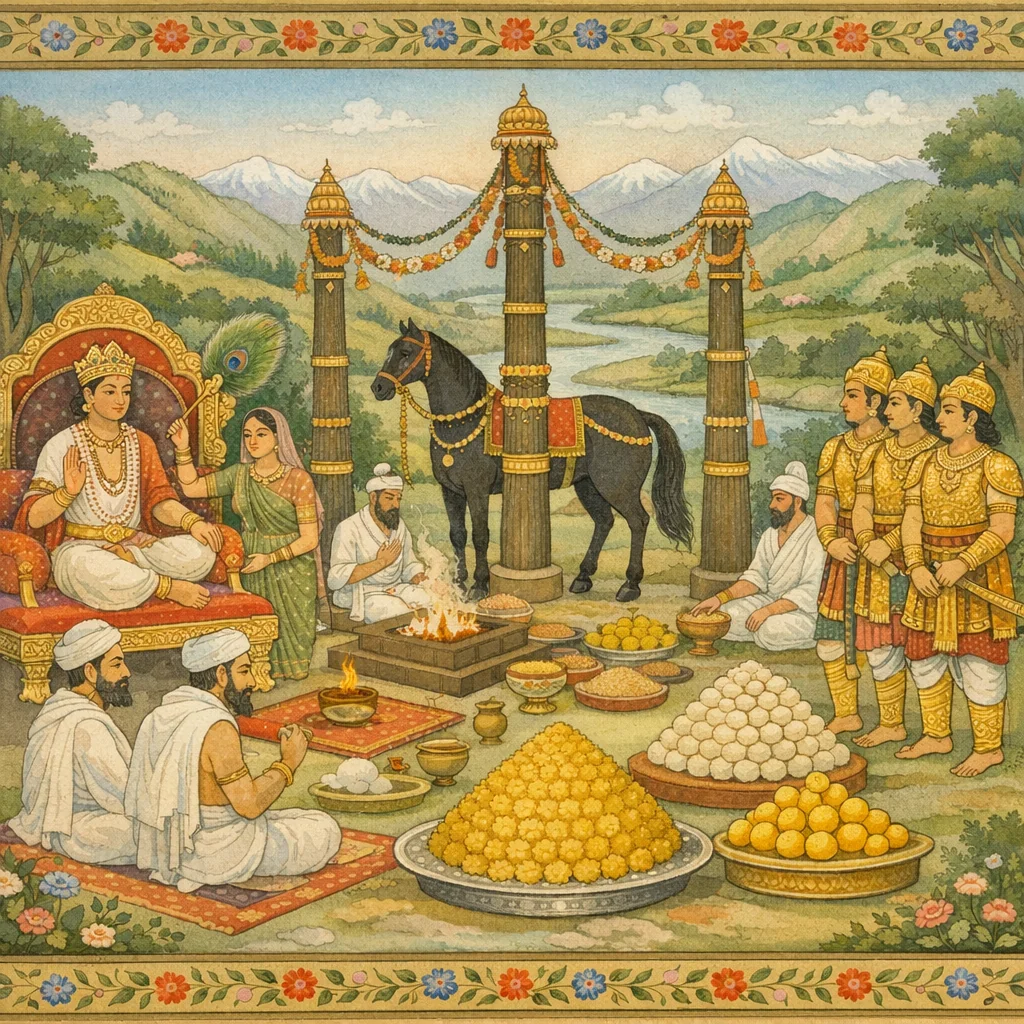
Chapter Arc: नारद सृञ्जय को एक अप्रत्याशित सांत्वना-कथा सुनाते हैं—राजा शशबिन्दु का अद्भुत वैभव, असंख्य संतति और अश्वमेध-यज्ञों की अपार समृद्धि। → शशबिन्दु की ‘अतिशयता’ बढ़ती जाती है: असंख्य रानियाँ, प्रत्येक से असंख्य पुत्र; वे पुत्र स्वर्ण-कवचधारी, उत्तम धनुर्धर, वेदपारंगत और यज्ञकर्ता; पिता उन्हें ब्राह्मणों को दान कर देता है, और यज्ञ-स्थल पर अन्न-पान के पर्वत-से ढेर लगते हैं। → अश्वमेध के बाद भी तेरह पर्वत-प्रमाण अन्न शेष रह जाना—दान, ऐश्वर्य और कर्मकाण्ड की चरम सीमा का दृश्य; इसी चरम पर नारद का संकेत उभरता है कि पुण्य का माप केवल ‘पुत्र-संपदा’ या ‘यज्ञ-वैभव’ नहीं। → नारद सृञ्जय को उपदेश देते हैं कि पुत्र-शोक में न डूबे; चारों भद्र (गुण/आचरण) और यज्ञ-दान की मर्यादा—ये पुत्र से भी ‘पुण्यतर’ कहे गए हैं; ‘अयज्वान’ और ‘अदाक्षिण्य’ (यज्ञ-हीनता और दक्षिणा-हीनता) को निन्दित बताकर धर्म-मार्ग की ओर मन को स्थिर करते हैं। → कुरुक्षेत्र के रक्त-धूमिल वर्तमान में यह कथा किस प्रकार सृञ्जय के शोक और धृतराष्ट्र के प्रश्नों को आगे मोड़ेगी—यह संकेत देकर अध्याय विराम लेता है।
Shlokas
Verse 1
भीकम (2 अमान पज्चषष्टितमो< ध्याय: राजा शशबिन्दुका चरित्र नारद उवाच शशबिन्दुं च राजानं मृतं सृज्जय शुश्रुम । ईजे स विविधीर्यज्जै: श्रीमान् सत्यपराक्रम:,नारदजी कहते हैं--सृंजय! मेरे सुननेमें आया है कि राजा शशबिन्दुकी भी मृत्यु हो गयी थी। उन सत्यपराक्रमी श्रीमान् नरेशने नाना प्रकारके यज्ञोंका अनुष्ठान किया था इस प्रकार श्रीमहाभारत द्रोणपर्वके अन्तर्गत अभिमन्युवधपर्वमें षोडशराजकीयोपाख्यानविषयक पैंसठवाँ अध्याय पूरा हुआ ॥/ ६५ ॥/ अपन कराता बछ। अर: षट्षष्टितमो<5 ध्याय: राजा गयका चरित्र नारद उवाच गयं चामूर्तरयसं मृतं सृज्जय शुश्रुम । यो वै वर्षशतं राजा हुतशिष्टाशनो5भवत्
Nārada said: “O Sṛñjaya, I have heard that King Śaśabindu, too, has passed away. That illustrious ruler, whose valor was steadfast in truth, performed sacrifices of many kinds.”
Verse 2
तस्य भार्यासहसत्राणां शतमासीन्महात्मन: । एकैकस्यां च भारयायां सहस्रं तनया5भवन्,महामना शशबिन्दुके एक लाख स्त्रियाँ थीं और प्रत्येक स्त्रीके गर्भसे एक-एक हजार पुत्र उत्पन्न हुए थे
That great-souled king had a hundred thousand wives; and from each wife a thousand sons were born—such was the extraordinary fecundity and royal magnitude attributed to the high-minded Śaśabindu.
Verse 3
ते कुमारा: पराक्रान्ता: सर्वे नियुतयाजिन: । राजान: क्रतुभिर्मुख्यैरीजाना वेदपारगा:,वे सभी राजकुमार अत्यन्त पराक्रमी और वेदोंके पारंगत विद्वान् थे। वे राजा होनेपर दस लाख यज्ञ करनेका संकल्प ले प्रधान-प्रधान यज्ञोंका अनुष्ठान कर चुके थे
Nārada said: “Those princes were all mighty in valor. Having become kings, they were masters of the Vedas and had already performed the foremost sacrificial rites—men who had undertaken (and fulfilled) the vast vow of offering sacrifices in countless numbers.”
Verse 4
हिरण्यकवचा: सर्वे सर्वे चोत्तमधन्विन: । सर्वेडश्चवमेधैरीजाना: कुमारा: शशबिन्दव:,शशबिन्दुके उन सभी पुत्रोंने सोनेके कवच धारण कर रखे थे। वे सब उत्तम धनुर्धर थे और अश्वमेध-यज्ञोंका अनुष्ठान कर चुके थे
Nārada said: All those princes, the sons of Śaśabindu, wore golden cuirasses. Each of them was an excellent archer, and all had performed many Aśvamedha sacrifices.
Verse 5
तानश्रमेथधे राजेन्द्रो ब्राह्मणेभ्योडददत् पिता । शतं शतं रथगजा एकैकं पृष्ठतो<न्वयु:
Nārada said: Then the king—acting as a fatherly protector—made gifts to the brāhmaṇas in that hermitage. Hundreds upon hundreds of chariots and elephants followed behind, each in turn, as part of the royal donation.
Verse 6
पिता महाराज शशबिन्दुने अश्वमेध-यज्ञ करके उसमें अपने वे सभी पुत्र ब्राह्मणोंको दे डाले। एक-एक राजकुमारके पीछे सौ-सौ रथ और हाथी गये थे ।। राजपुत्र॑ तदा कन्यास्तपनीयस्वलंकृता: । कन्यां कन्यां शतं नागा नागे नागे शतं रथा:,उस समय प्रत्येक राजकुमारके साथ सुवर्ण-भूषित सौ-सौ कन्याएँ थीं। एक-एक कन्याके पीछे सौ-सौ हाथी और प्रत्येक हाथीके पीछे सौ-सौ रथ थे
Nārada said: At that time, each prince was accompanied by a hundred maidens adorned with gold. Behind each maiden went a hundred elephants, and behind each elephant a hundred chariots—an extravagant display of royal wealth offered away in sacrifice, revealing both grandeur and the moral tension of giving living dependents as “dāna” in the name of ritual merit.
Verse 7
रथे रथे शतं चाश्वा बलिनो हेममालिन: । अश्वे अश्वे गोसहस्रं गवां पज्चाशदाविका:,हर एक रथके साथ सोनेके हारोंसे विभूषित सौ-सौ बलवान अश्व थे। प्रत्येक अश्वके पीछे हजार-हजार गौएँ तथा एक-एक गायके पीछे पचास-पचास भेड़ें थीं
Nārada said: “With each chariot there were a hundred powerful horses, adorned with garlands of gold. Behind each horse followed a thousand cows, and behind each cow there were fifty sheep.” The verse underscores the immense scale of wealth and provisioning associated with royal warfare, hinting at the ethical weight of resources gathered, displayed, and redistributed in the context of conflict.
Verse 8
एतद् धनमपर्याप्तमश्वमेधे महामखे । शशबिन्दुर्महा भागो ब्राह्मणे भ्यो हमन्यत,यह अपार धन महाभाग शशबिन्दुने अपने अश्वमेध नामक महायजञ्ञमें ब्राह्मणोंके लिये दान किया था
Nārada said: “This wealth was beyond measure. In the great sacrifice of the Aśvamedha, the highly fortunate king Śaśabindu set aside (and bestowed) immense riches for the Brāhmaṇas.”
Verse 9
वार्क्षश्व॒ यूपा यावन्त अश्वमेधे महामखे । ते तथैव पुनश्चान्ये तावनन्त: काउ्चना5भवन्,उनके महायज्ञ अश्वमेधमें जितने काष्ठके यूप थे, वे तो ज्यों-के-त्यों थे ही, फिर उतने ही और सुवर्णमय यूप बनाये गये थे
Narada said: “In that great Aśvamedha sacrifice, as many sacrificial posts (yūpas) as there were made of wood remained exactly as they were; and then, in addition, the same number of other yūpas were fashioned of gold.” The statement highlights the extraordinary scale of the rite and the donor’s lavish, merit-seeking generosity, where ritual exactness is matched by opulence—raising an ethical contrast between true dharma as inner restraint and dharma pursued through display and abundance.
Verse 10
भक्ष्यानज्नपाननिचया: पर्वता: क्रोशमुच्छिता: । तस्याश्वमेधे निर्वत्ते राज्ञ: शिष्टास्त्रयोदश
Nārada said: “There were heaps of foods and drinks—like mountains rising a krośa high. When that king’s Aśvamedha sacrifice was completed, thirteen (things/portions) still remained.”
Verse 11
उस यज्ञमें भक्ष्य-भोज्य अन्न-पानके पर्वतोंके समान एक कोस ऊँचे ढेर लगे हुए थे। राजाका अश्वमेध-यज्ञ पूरा हो जानेपर अन्नके तेरह पर्वत बच गये थे ।। तुष्टपुष्टजनाकीर्णा शान्तविघध्नामनामयाम् । शशबिन्दुरिमां भूमिं चिरं भुक्त्वा दिवं गत:,शशबिन्दुके राज्यकालमें यह पृथ्वी हृष्ट-पुष्ट मनुष्योंसे भरी थी। यहाँ कोई विघ्न-बाधा और रोग-व्याधि नहीं थी। शशबिन्दु इस वसुधाका दीर्घकालतक उपभोग करके अन्तमें स्वर्गलोकको चले गये
Nārada said: In the reign of Śaśabindu, the earth was crowded with people who were content and well-nourished. Obstacles and calamities were stilled, and there was no disease. Having long enjoyed and governed this world in such prosperity, Śaśabindu finally departed to heaven—showing that righteous rule and the welfare of subjects lead to lasting fame and a blessed end.
Verse 12
स चेन्ममार सृञज्जय चतुर्भद्रतरस्त्वया । पुत्रात् पुण्यतरस्तुभ्यं मा पुत्रमनुतप्यथा: । अयज्वानमदाक्षिण्यमश्रि श्रैत्येत्युदाहरत्,वैत्य सुंजय! वे चारों कल्याणकारी गुणोंमें तुमसे बढ़े-चढ़े थे और तुम्हारे पुत्रोंसे तो बहुत अधिक पुण्यात्मा थे। जब वे भी मर गये, तब दूसरोंकी तो बात ही क्या है? अतः तुम यज्ञ और दान-दक्षिणासे रहित अपने पुत्रके लिये शोक न करो। ऐसा नारदजीने कहा
Nārada said: “O Sṛñjaya, if even those who were endowed with fourfold auspicious virtues—surpassing you in excellence and far more meritorious than your own sons—have met with death, what need is there to speak of others? Therefore do not grieve for your son, who was without sacrifice and without the giving of gifts and priestly fees (dākṣiṇā).” Thus did Nārada instruct you, O Suṃjaya.
Verse 65
इति श्रीमहा भारते द्रोणपर्वणि अभिमन्युवधपर्वणि षोडशराजकीये पज्चषष्टितमो5 ध्याय:
Thus ends the sixty-fifth chapter in the Droṇa Parva of the Śrī Mahābhārata, within the section narrating the slaying of Abhimanyu, in the subdivision concerning the sixteen kings.
Frequently Asked Questions
The chapter implicitly stages the tension between valorous persistence and prudent withdrawal: commanders must balance the ideal of steadfast combat with responsibility to preserve remaining forces and maintain command coherence.
Operational discipline matters: formations and protected rally-points can prevent total rout, while precise disruption of key systems (mounts, riders, chariot components, signaling) can collapse an opponent’s cohesion more effectively than isolated duels.
No explicit phalaśruti appears in this unit; its interpretive value is contextual—illustrating how narrative reportage (Saṃjaya to Dhṛtarāṣṭra) links tactical detail to broader reflections on leadership, fear, and duty.