Adhyaya 64
Adhyāya 64 — Omens, Conch Signals, and Arjuna’s Assault on the Elephant Division
Upa-parva: Droṇa-parva — Kurukṣetra Saṃgrāma-krama (Arjuna’s breakthrough against Durmarṣaṇa’s position)
Saṃjaya reports that once the arrays are formed and war-instruments resound, ominous signs appear around Arjuna—birds, animals, inauspicious portents, meteors, tremors, and harsh winds—marking a charged transition into combat. On the Pāṇḍava side, leaders arrange their forces, while Durmarṣaṇa positions himself at the front and declares his resolve to restrain Arjuna. Arjuna mounts his chariot, shines in martial description, and sounds his conch; Kṛṣṇa answers with the Pāñcajanya, producing a fear-inducing sonic effect in the opposing ranks. Arjuna then orders the chariot toward Durmarṣaṇa’s sector, breaks into the elephant contingent, and initiates a severe engagement. The chapter emphasizes speed, precision, and the disorientation of opponents: missile volleys, decapitations, confusion in identification (“Where is Arjuna?”), and the collapse of morale leading to flight or misdirected movement. Thematically, the narrative juxtaposes kāla-like inevitability (omens and dread) with human agency expressed as vow, command, and tactical execution.
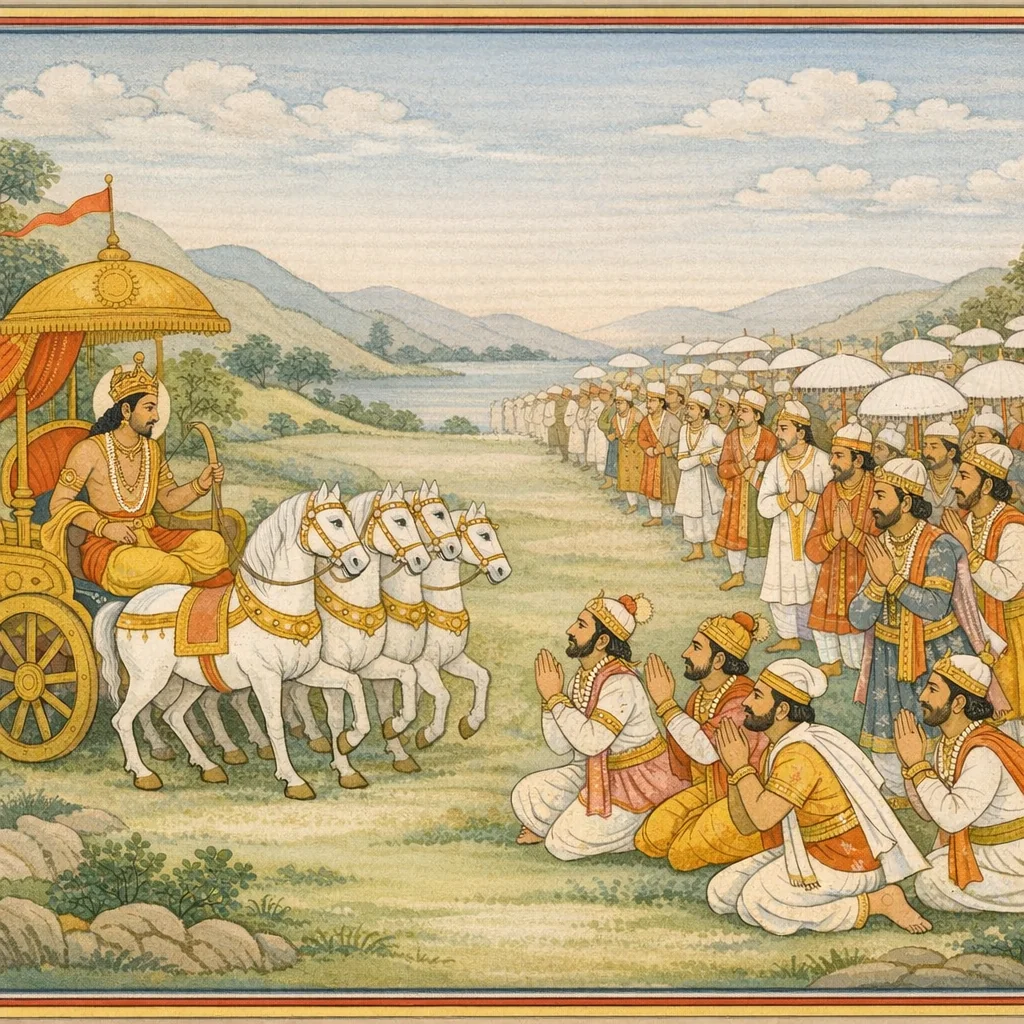
Chapter Arc: Narada addresses Sruñjaya and turns the war-torn listener’s mind away from the immediate carnage to a blazing exemplar of royal might and sacrificial dharma: the famed king Ambarisha, son of Nabhaga, who once stood alone against a multitude of kings. → The scale swells into near-impossibility—“a thousand thousands” of kings advance with chariots, banners, umbrellas, and weapons; yet Ambarisha, trained in strength and agility, shatters their martial display—cutting standards, chariots, and weapons—without a tremor of pain or hesitation, until the enemy’s confidence collapses. → The turning point arrives when the defeated kings, casting off armor and seeking life, approach as supplicants and declare him their refuge—an inversion of battlefield hierarchy where sovereignty is proven not only by conquest but by the power to grant safety. → Having brought foes under control and won the earth, Ambarisha performs sacrifices by the book—hundreds of yajñas with immense gifts; the rishis rejoice and openly acclaim that such lavish, righteous sacrifice is rare across ages, and the king’s fame becomes inseparable from generosity and order.
Shlokas
Verse 1
अत---#क्र- चतु:षष्टितमो<5 ध्याय: राजा अम्बरीषका चरित्र नारद उवाच नाभागमम्बरीषं च मृतं सृज्जय शुश्रुम । यः सहस्रं सहस्राणां राज्ञां चैकस्त्वयोधयत्
Nārada said: “O Sṛñjaya, we have heard that Nābhāga and Ambarīṣa are dead—Ambarīṣa who, single-handed, fought against thousands upon thousands of kings.”
Verse 2
नारदजी कहते हैं--सूंजय! मैंने सुना है कि नाभागके पुत्र राजा अम्बरीष भी मृत्युको प्राप्त हुए थे, जिन्होंने अकेले ही दस लाख राजाओंसे युद्ध किया था ।। जिगीषमाणा: संग्रामे समन्ताद् वैरिणो<भ्ययु: । अस्त्रयुद्धविदो घोरा: सृजन्तश्चाशिवा गिर:,राजाके शत्रुओंने उन्हें युद्धमें जीतनेकी इच्छासे चारों ओरसे उनपर आक्रमण किया था। वे सब अस्त्रयुद्धकी कलामें निपुण और भयंकर थे तथा राजाके प्रति अभद्र वचनोंका प्रयोग कर रहे थे
Nārada said: “Sanjaya, I have heard that King Ambarīṣa, the son of Nābhāga, also met his death—he who, all alone, fought against ten lakhs of kings. In that battle, his enemies, eager to conquer him, surged in from every side. Skilled in the science of weapons and terrifying in their assault, they hurled not only missiles but also harsh, ill-omened words at the king.”
Verse 3
बललाघवशिक्षाभिस्तेषां सो<स्त्रबलेन च । छत्रायुधध्वजरथांश्छित्त्वा प्रासान् गतव्यथ:,परंतु राजा अम्बरीषको इससे तनिक भी व्यथा नहीं हुई। उन्होंने शारीरिक बल, अस्त्र- बल, हाथोंकी फुर्ती और युद्धसम्बन्धी शिक्षाके द्वारा शत्रुओंके छत्र, आयुध, ध्वजा, रथ और प्रासोंके टुकड़े-टुकड़े कर डाले
Nārada said: Untroubled by their attacks, King Ambarīṣa—by bodily strength, quickness of hand, disciplined training, and the power of his weapons—shattered the enemies’ parasols, weapons, banners, chariots, and spears, cutting them to pieces. The scene underscores a ruler’s composed mastery in battle: skill and restraint, not agitation, govern his force.
Verse 4
त एन॑ मुक्तसंनाहा: प्रार्थयन् जीवितैषिण: । शरण्यमीयु: शरणं तवास्म इति वादिन:,तब वे शत्रु अपने प्राण बचानेके लिये कवच खोलकर उनसे प्रार्थना करने लगे और हम सब प्रकारसे आपके हैं; ऐसा कहते हुए उन शरणदाता नरेशकी शरणमें चले गये
Then those foes, having cast off their armor and longing to preserve their lives, began to plead. Declaring, “We are yours; you are our refuge,” they approached the shelter-giving king for protection—showing how, even amid war, the appeal to refuge and the duty to grant it can override hostility.
Verse 5
स तु तान् वशगान् कृत्वा जित्वा चेमां वसुन्धराम् । ईजे यज्ञशतैरिष्टर्यथाशास्त्रं तथानघ,अनघ! इस प्रकार उन शत्रुओंको वशीभूत करके इस सम्पूर्ण पृथ्वीपर विजय पाकर उन्होंने शास्त्रविधिके अनुसार सौ अभीष्ट यज्ञोंका अनुष्ठान किया
Nārada said: Having brought those foes under his control and having conquered this entire earth, he then performed—exactly as the scriptures prescribe—a hundred duly desired sacrifices, O sinless one.
Verse 6
बुभुजु: सर्वसम्पन्नमन्नमन्ये जना: सदा | तस्मिन यज्ञे तु विप्रेन्द्रा: संतृप्ता: परमार्चिता:,उन सज्ञोमें श्रेष्ठ ब्राह्मण तथा अन्य लोग भी सदा सर्वगुणसम्पन्न अन्न भोजन करते और अत्यन्त आदर-सत्कार पाकर अत्यन्त संतुष्ट होते थे
Nārada said: Others too would always partake of food that was complete in every respect. And in that sacrifice, the foremost of brāhmaṇas—honoured with the highest reverence—were fully satisfied.
Verse 7
मोदकान् पूरिकापूपान् स्वादपूर्णाश्व॒ शष्कुली: । करम्भान् पृथुमृद्वीका अन्नानि सुकृतानि च,लड्डू, पूरी, पुए, स्वादिष्ट कचौड़ी, करम्भ, मोटे मुनक्के, तैयार अन्न, मैरेयक, अपूप, रागखाण्डव, पानक, शुद्ध एवं सुन्दर ढंगसे बने हुए मधुर और सुगन्धित भोज्य पदार्थ, घी, मधु, दूध, जल, दही, सरस वस्तुएँ तथा सुस्वादु फल, मूल वहाँ ब्राह्मणगलोग भोजन करते थे
Nārada said: “There were modakas, purīs, pūpas (sweet cakes), and śaṣkulīs—snacks rich in flavor; also karambha, flattened rice, raisins, and other well-prepared foods.”
Verse 8
सूपान् मैरेयकापूपान् रागखाण्डवपानकान् । मृष्टान्नानि सुयुक्तानि मृदूनि सुरभीणि च,लड्डू, पूरी, पुए, स्वादिष्ट कचौड़ी, करम्भ, मोटे मुनक्के, तैयार अन्न, मैरेयक, अपूप, रागखाण्डव, पानक, शुद्ध एवं सुन्दर ढंगसे बने हुए मधुर और सुगन्धित भोज्य पदार्थ, घी, मधु, दूध, जल, दही, सरस वस्तुएँ तथा सुस्वादु फल, मूल वहाँ ब्राह्मणगलोग भोजन करते थे
Nārada said: “There were soups, intoxicating mareya drink, and apūpa cakes; also sweet preparations such as rāga and khāṇḍava, and refreshing pānaka beverages. Well-prepared delicacies—soft in texture and fragrant—were served.”
Verse 9
घृतं मधु पयस्तोयं दधीनि रसवन्ति च । फल मूलं च सुस्वादु द्विजास्तत्रोपभुज्जते,लड्डू, पूरी, पुए, स्वादिष्ट कचौड़ी, करम्भ, मोटे मुनक्के, तैयार अन्न, मैरेयक, अपूप, रागखाण्डव, पानक, शुद्ध एवं सुन्दर ढंगसे बने हुए मधुर और सुगन्धित भोज्य पदार्थ, घी, मधु, दूध, जल, दही, सरस वस्तुएँ तथा सुस्वादु फल, मूल वहाँ ब्राह्मणगलोग भोजन करते थे
Narada said: “There, the Brahmins partook of rich and wholesome fare—ghee and honey, milk and water, curds and other savory delicacies, along with sweet fruits and edible roots.”
Verse 10
मादनीयानि पापानि विदित्वा चात्मन: सुखम् । अपिबन्त यथाकामं पानपा गीतवादितै:,मादक वस्तुएँ पापजनक होती हैं, यह जानकर भी पीनेवाले लोग अपने सुखके लिये गीत और वाद्योंके साथ इच्छानुसार उनका पान करते थे
Nārada said: Even knowing that intoxicating drinks are sinful, the drinkers—seeking their own pleasure—still drank as much as they wished, accompanied by singing and instrumental music.
Verse 11
तत्र सम गाथा गायन्ति क्षीबा हृष्टा: पठन्ति च । नाभागस्तुतिसंयुक्ता ननृतुश्चन सहस्रश:,पीकर मतवाले बने हुए सहस्रों मनुष्य वहाँ हर्षमें भरकर गाथा गाते, अम्बरीषकी स्तुतिसे युक्त कविताएँ पढ़ते और नृत्य करते थे
There, thousands of people—exhilarated as if intoxicated and overflowing with joy—sang harmonious ballads. They also recited verses joined with praise of Nābhāga, and they danced in great numbers.
Verse 12
तेषु यज्ञेष्वम्बरीषो दक्षिणामत्यकालयत् | राज्ञां शतसहस्राणि दश प्रयुतयाजिनाम्,उन यज्ञोंमें राजा अम्बरीषने दस लाख यज्ञकर्ता ब्राह्मणोंको दक्षिणाके रूपमें दस लाख राजाओंको ही दे दिया था
Nārada said: “In those sacrificial rites, King Ambarīṣa arranged an extraordinary gift-fee (dakṣiṇā): to the ten lakh Brahmins who had performed ten lakh sacrifices, he granted—by way of dakṣiṇā—ten lakh kings themselves.”
Verse 13
हिरण्यकवचान् सर्वान् श्वेतच्छत्रप्रकीर्णकान् । हिरण्यस्यन्दनारूढान् सानुयात्रपरिच्छदान्,वे सब राजा सोनेके कवच धारण किये, श्वेत छत्र लगाये, सुवर्णमय रथपर आरूढ़ हुए तथा अपने अनुगामी सेवकों और आवश्यक सामग्रियोंसे सम्पन्न थे
Narada said: “All those kings wore golden cuirasses and were distinguished by white parasols. Mounted on chariots adorned with gold, they were fully equipped—attended by their retinues and furnished with the necessary supplies.”
Verse 14
ईजानो वितते यज्ञे दक्षिणामत्यकालयत् । मूर्धाभिषिक्तांश्व नृपान् राजपुत्रशतानि च
Nārada said: While performing a fully extended sacrificial rite, he did not delay in granting the prescribed gifts (dakṣiṇā). He bestowed them upon consecrated kings and upon hundreds of princes as well—acting promptly and in accordance with ritual duty.
Verse 15
नैवं पूर्वे जनाश्नक्रुर्न करिष्यन्ति चापरे
Nārada said: “Never did the people of former times accomplish such a deed, nor will those of later times do so.”
Verse 16
यदम्बरीषो नृपति: करोत्यमितदक्षिण: । इत्येवमनुमोदन्ते प्रीता यस्य महर्षय:
Nārada said: “Whatever King Ambarīṣa—whose gifts are boundless—undertakes, the great seers, delighted with him, approve it, saying, ‘So indeed it is.’”
Verse 17
महर्षिलोग उनके ऊपर प्रसन्न होकर उनके कार्योका अनुमोदन करते हुए कहते थे कि असंख्य दक्षिणा देनेवाले राजा अम्बरीष जैसा यज्ञ कर रहे हैं, वैसा न तो पहलेके राजाओंने किया और न आगे कोई करेंगे ।। स चेन्ममार सृञ्जय चतुर्भद्रतरस्त्वया । पुत्रात् पुण्यतरस्तुभ्यं मा पुत्रमनुतप्यथा: । अयज्वानमदाक्षिण्यमश्रि श्रैत्येत्युदाहरत्,वैत्य सृंजय! वे पूर्वोक्त चारों कल्याणकारी गुणोंमें तुमसे बढ़-चढ़कर थे और तुम्हारे पुत्रकी अपेक्षा भी अधिक पुण्यात्मा थे। जब वे भी जीवित न रह सके, तब दूसरोंकी तो बात ही क्या है? अतः तुम यज्ञ और दान-दक्षिणासे रहित अपने पुत्रके लिये शोक न करो। ऐसा नारदजीने कहा
Narada said: “O Sṛñjaya, if even those four men—more blessed than you and more meritorious even than your son—have died, then what need is there to speak of others? Therefore do not grieve for your son, who was without sacrifice and without gifts and priestly fees.”
Verse 64
इति श्रीमहा भारते द्रोणपर्वणि अभिमन्युवधपर्वणि षोडशराजकीये चतु:षष्टितमो5 ध्याय:,इस प्रकार श्रीमहाभारत द्रोणपर्वके अन्तर्गत अभिमन्युवधपर्वमें षोडशराजकीयो- पाख्यानविषयक चौंसठवाँ अध्याय पूरा हुआ
Thus ends the sixty-fourth chapter of the Droṇa Parva of the Śrī Mahābhārata, within the sub-section concerning the slaying of Abhimanyu, specifically the episode known as the account of the sixteen kings.
Verse 143
सदण्डकोशनिचयान ब्राह्मणे भ्यो हमन्यत । उस विस्तृत यज्ञमें यजमान अम्बरीषने उन मूर्धथाभिषिक्त नरेशों और सैकड़ों राजकुमारोंको दण्ड और खजानों-सहित ब्राह्मणोंके अधीन कर दिया
Nārada said: In that expansive sacrifice, the patron-king Ambarīṣa placed the consecrated rulers and hundreds of princes—together with their instruments of authority and their amassed treasuries—under the stewardship of the Brāhmaṇas.
Frequently Asked Questions
The tension lies in fulfilling kṣatra-duty through overwhelming force while confronting signs of impending mass harm; the narrative frames battlefield action as duty-bound yet shadowed by kāla-like inevitability and collective suffering.
Discipline and clarity of intent—supported by signaling, formation management, and decisive initiative—can determine outcomes as much as numerical strength; morale disruption is depicted as a strategic lever.
No explicit phalaśruti is stated in this passage; its meta-level significance is thematic, reinforcing how omens, fear, and perception shape human action within the epic’s broader inquiry into dharma and time.