Adhyaya 60
Droṇa-parva Adhyāya 60: Arjuna’s return, auspicious omens, and mission delegation
Upa-parva: Saindhava-vadha-prayāṇa (Arjuna’s departure to slay Jayadratha)
Sañjaya reports that Arjuna appears before the Bharata king (Yudhiṣṭhira) and his circle; Yudhiṣṭhira rises, embraces him, and offers blessings, reading Arjuna’s composure and Kṛṣṇa’s favor as indicators of certain success. Arjuna describes an extraordinary encounter granted by Keśava’s grace—his meeting with Tryambaka (Śiva)—as reassurance to allies. The assembly performs reverential gestures and praises Vṛṣāṅka (Śiva). With permission, the allies depart swiftly for engagement. Yuyudhāna (Sātyaki), Acyuta (Kṛṣṇa), and Arjuna leave the royal quarters; Kṛṣṇa prepares Arjuna’s chariot like a professional sūta, and the chariot is ritually empowered with victory-mantras. Arjuna circumambulates the chariot, mounts amid benedictions, and proceeds with Kṛṣṇa and Sātyaki accompanying. Omens and celebratory sounds (bards, instruments) accompany the march; Arjuna interprets these as signs of victory and instructs Sātyaki to guard Yudhiṣṭhira with full attention while Arjuna advances toward Saindhava, asserting confidence where Vāsudeva is present.
Chapter Arc: नारद संजय से कहते हैं कि जिन भगीरथ ने पूर्वजों के उद्धार हेतु गंगा को पृथ्वी पर उतारा, वे भी काल के वश होकर देह त्याग चुके—यह सुनकर ‘महानतम’ की भी नश्वरता का बोध कथा का द्वार खोलता है। → भगीरथ के यज्ञ-वैभव का विस्तार आता है: रथों में बैठी कन्याएँ, चार-चार अश्वों से जुते रथ, स्वर्णमालाओं से विभूषित नाग, हाथियों के पीछे सहस्र अश्व, अश्वों के साथ शत-शत गौएँ—दान-धर्म का विराट दृश्य बढ़ता जाता है; साथ ही गंगा-तट पर उनके सतत दान और अतिथि-सत्कार का वर्णन उनके पुण्य को ऊँचा उठाता है। → गन्धर्वों द्वारा देव-मनुष्य-पितरों के समक्ष मधुर गाथा-गान और यह उद्घोष कि जितेन्द्रिय भगीरथ ने ब्राह्मणों की मनोवांछित वस्तुएँ तत्काल प्रदान कीं तथा ‘ज्ञानयज्ञ’ और ‘ध्यानयज्ञ’ को प्रधान माना—राजा का वैभव नहीं, उसका संयम और अंतःयज्ञ ही चरम बिंदु बनता है। → नारद का निष्कर्ष स्पष्ट होता है: दान, यज्ञ, तप, और आचरण—इन मानकों पर भगीरथ की कीर्ति और पुण्य अत्युच्च हैं; उनकी कथा संजय के लिए मापदण्ड बनकर बैठती है कि राजधर्म का सार बाह्य विजय नहीं, लोक-हित और आत्म-शुद्धि है। → कौरव-पाण्डव युद्धभूमि की पृष्ठभूमि में यह उपाख्यान एक मौन प्रश्न छोड़ता है—क्या वर्तमान राजवंश (धृतराष्ट्र-पुत्र) ऐसे आदर्श के निकट भी है, या पतन की ओर ही बढ़ रहा है?
Shlokas
Verse 1
(दाक्षिणात्य अधिक पाठके १०३ श्लोक मिलाकर कुल ३५६ *लोक हैं) शीशना ह्न अ्ीस्जनी: षष्टितमो< ध्याय: राजा भगीरथका चरित्र नारद उवाच भगीरथं च राजानं मृतं सृज्जय शुश्रुम । (परित्राणाय पूर्वेषां येन गड्जावतारिता । यस्येन्द्रो बाहुवीर्येण प्रीतो राज्ञो महात्मन: ।। योअश्वमेधशतैरीजे समाप्तवरदक्षिणै: । हविर्मन्त्रान्नसम्पन्नै्देवानामादधान्मुदम् ।। यस्येन्द्रो वितते यज्ञे सोमं पीत्वा मदोत्कट: । असुराणां सहस््राणि बहूनि च सुरेश्वर: ।। अजयदू बाहुवीर्येण भगवॉल्लोकपूजित: ।) येन भागीरथी गड़ा चयनै: काज्चनैश्विता
Narada said: “O Sṛñjaya, we have heard that King Bhagīratha has passed away—he by whom the river Gaṅgā was brought down to earth for the deliverance of the ancestors. His life is remembered as an act of responsibility toward forebears and as a model of royal duty: using power and austerity not for self-display, but to secure the welfare of those who depend upon the king, including those who came before.”
Verse 2
नारदजी कहते हैं--सूंजय! हमारे सुननेमें आया है कि राजा भगीरथ भी मर गये, जिन्होंने अपने पूर्वजोंका उद्धार करनेके लिये इस भूतलपर गंगाजीको उतारा था। जिन महामना नरेशके बाहुबलसे इन्द्र बहुत प्रसन्न थे, जिन्होंने प्रचुर एवं उत्तम दक्षिणासे युक्त हविष्य, मन्त्र और अन्नसे सम्पन्न सौ अश्वमेध यज्ञोंका अनुष्ठान किया और देवताओंका आनन्द बढ़ाया, जिनके महान् यज्ञमें इन्द्र सोमरस पीकर मदोन्मत्त हो उठे थे तथा जिनके यहाँ रहकर लोकपूजित भगवान् देवेन्द्रने अपने बाहुबलसे अनेक सहस्र असुरोंको पराजित किया, उन्हीं राजा भगीरथने यज्ञ करते समय गंगाके दोनों किनारोंपर सोनेकी ईंटोंके घाट बनवाये थे ।। यः: सहस्र॑ं सहस्राणां कन्या हेमविभूषिता: । राज्ञश्न राजपुत्रांश्व ब्राह्मणेभ्यो हूमन्यत,इतना ही नहीं, उन्होंने कितने ही राजाओं तथा राजपुत्रोंकी जीतकर उनके यहाँसे सुवर्णमय आभूषणोंसे विभूषित दस लाख कन्याएँ लाकर उन्हें ब्राह्मणोंको दान किया था
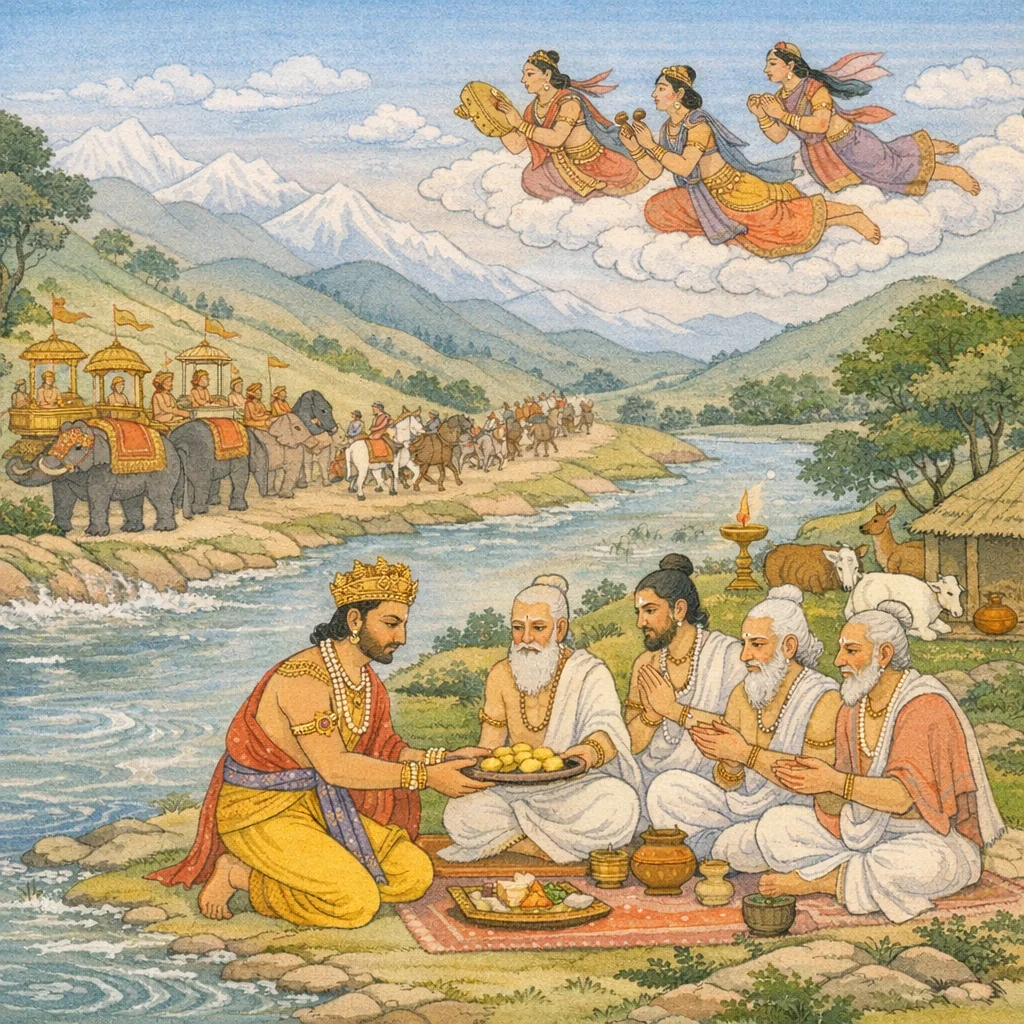
Narada said: “Sanjaya, we have heard that King Bhagiratha too has died—the very one who brought the Ganga down to this earth to deliver his ancestors. By the strength of his arms Indra was greatly pleased. He performed a hundred Ashvamedha sacrifices, rich in oblations, mantras, and abundant food, and endowed with lavish and excellent gifts, thereby increasing the joy of the gods. In his great sacrifice Indra drank Soma and became intoxicated with exhilaration; and while dwelling in Bhagiratha’s presence, the world-revered lord of the gods, Devaraja Indra, by his own might defeated many thousands of asuras. During those rites Bhagiratha had landing-steps made on both banks of the Ganga with bricks of gold. Moreover, having conquered many kings and princes, he brought ten lakhs of maidens adorned with golden ornaments and gave them as gifts to Brahmins.”
Verse 3
सर्वा रथगता: कन्या रथा: सर्वे चतुर्युजः । रथे रथे शतं नागा: सर्वे वै हेममालिन:,वे सभी कन्याएँ रथोंमें बैठी थीं। उन सभी रथोंमें चार-चार घोड़े जुते थे। प्रत्येक रथके पीछे सोनेके हारोंसे अलंकृत सौ-सौ हाथी चलते थे
Nārada said: All the maidens were seated in chariots. Every chariot was drawn by four horses, and behind each chariot marched a hundred elephants, all adorned with garlands of gold—an image of royal splendor and carefully ordered procession.
Verse 4
सहसमप्रचाश्चैकैकं गजानां पृष्ठतोडन्वयु: । अश्वे अश्वे शतं गावो गवां पश्चादजाविकम्,एक-एक हाथीके पीछे हजार-हजार घोड़े जा रहे थे और एक-एक घोड़ेके साथ सौ-सौ गौएँ एवं गौओंके पीछे भेड़ और बकरियोंके झुंड चलते थे
Nārada said: “In that procession, a thousand horses followed behind each elephant; with each horse went a hundred cows, and behind the cows moved flocks of goats and sheep.” The verse highlights the immense scale of wealth and provisioning that accompanies royal and martial enterprises, implying both the burden of stewardship and the ethical responsibility to protect and sustain dependents even amid war.
Verse 5
तेनाक्रान्ता जलौघेन दक्षिणा भूयसीर्ददत् । उपद्वरेडतिव्यथिता तस्याड़के निषसाद ह,राजा भगीरथ गंगाके तटपर भूयसी (प्रचुर) दक्षिणा देते हुए निवास करते थे। अतः उनके संकल्पकालिक जलप्रवाहसे आक्रान्त होकर गंगादेवी मानो अत्यन्त व्यथित हो उठीं और समीपवर्ती राजाके अंकमें आ बैठीं
Nārada said: Overwhelmed by the surging flood of waters, while the king was giving abundant gifts (dakṣiṇā), the Goddess Gaṅgā—deeply distressed—came close and sat upon his lap, as if seeking refuge. The episode underscores how even meritorious acts like lavish giving must be guided by discernment, lest they cause unintended harm and compel the afflicted to seek protection from the very agent of the disturbance.
Verse 6
तथा भागीरथी गड्ढा उर्वशी चाभवत् पुरा । दुहितृत्वं गता राज्ञ: पुत्रत्वमगमत् तदा,इस प्रकार भगीरथकी पुत्री होनेसे गंगाजी भागीरथी कहलायीं और उनके ऊरुपर बैठनेके कारण उर्वशी नामसे प्रसिद्ध हुईं। राजाके पुत्रीभावको प्राप्त होकर उनका नरकसे त्राण करनेके कारण वे उस समय पुत्रभावको भी प्राप्त हुईं
Nārada said: “Thus, in ancient times Gaṅgā came to be known as Bhāgīrathī, as she was regarded as the daughter of King Bhagīratha; and she became famed as Urvaśī because she sat upon his thigh. And at that time, by assuming the status of the king’s daughter and thereby becoming the means of delivering his ancestors from hell, she also came to be spoken of as having the role of a ‘son’—for the sake of ancestral rescue.”
Verse 7
तां तु गाथां जगुः प्रीता गन्धर्वा: सूर्यवर्चस: । पितृदेवमनुष्याणां शृण्वतां वल्गुवादिन:,सूर्यके समान तेजस्वी और मधुरभाषी गन्धर्वोने प्रसन्न होकर देवताओं, पितरों और मनुष्योंके सुनते हुए यह गाथा गायी थी
Delighted, the Gandharvas—radiant as the sun and sweet of speech—sang that very ballad while the Pitṛs, the gods, and human beings listened.
Verse 8
भगीरथं यजमानमैक्ष्वाकुं भूरिदक्षिणम् । गड्जा समुद्रगा देवी वव्रे पितरमी श्वरम्,यज्ञ करते समय भूयसी दक्षिणा देनेवाले इक्ष्वाकुवंशी ऐश्वर्यशशाली राजा भगीरथको समुद्रगामिनी गंगादेवीने अपना पिता मान लिया था
Nārada said: The goddess Gaṅgā, who flows to the ocean, accepted as her father the illustrious Ikṣvāku-descended king Bhagīratha—one who performed sacrifices and was famed for giving abundant sacrificial gifts.
Verse 9
तस्य सेन्द्रै: सुरगणैर्देवर्यय: स्वलड्कृत: । सम्यक्परिगृहीतश्न शान्तविध्नो निरामय:,इन्द्र आदि सम्पूर्ण देवताओंने उनके यज्ञको सुशोभित किया था। उसमें प्राप्त हुए हविष्यको भलीभाँति ग्रहण करके उसके विघ्नोंको शान्त करते हुए उसे निर्बाधरूपसे पूर्ण किया था
With Indra and the full host of gods, the divine companies graced his sacrifice. Having duly accepted the offered oblations, they quelled its hindrances and brought it to completion—unobstructed, in peace, and free from affliction.
Verse 10
यो य इच्छेत विप्रो वै यत्र यत्रात्मन: प्रियम् । भगीरथस्तदा प्रीतस्तत्र तत्राददद् वशी
Nārada said: “Whatever a brāhmaṇa might desire—wherever he wished for what was pleasing to his own heart—there and then the self-controlled Bhagīratha, delighted, would grant it.”
Verse 11
जिस-जिस ब्राह्मणने जहाँ-जहाँ अपने मनको प्रिय लगनेवाली जिस-जिस वस्तुको पाना चाहा, जितेन्द्रिय राजाने वहीं-वहीं प्रसन्नतापूर्वक वह वस्तु उसे तत्काल समर्पित की |। नादेयं ब्राह्मणस्यासीद् यस्य यत्स्यात् प्रियं धनम् । सोडपि विप्रप्रसादेन ब्रह्मलोक॑ गतो नूप:,उनके पास जो भी प्रिय धन था, वह ब्राह्मणके लिये अदेय नहीं था। राजा भगीरथ ब्राह्मणोंकी कृपासे ब्रह्मलोकको प्राप्त हुए
Narada said: Whatever cherished wealth a brahmin desired, there was nothing that King Bhagiratha—master of his senses—would refuse; he gladly offered it at once. Indeed, no possession dear to him was ever “not to be given” when a brahmin asked. By the grace and satisfaction of the brahmins, that king attained Brahmaloka—showing that disciplined generosity and reverence for the worthy bear the highest spiritual fruit.
Verse 12
येन याती मखमुखौ दिशाशाविह पादपा: | तेनावस्थातुमिच्छन्ति तं गत्वा राजमी श्वरम्
Nārada said: “In whichever direction the sacrificial fires and the trees here seem to turn their faces, in that very direction they wish to remain. Having gone to that sovereign lord of kings, they seek to take their stand there.”
Verse 13
शत्रुओंकी दशा और आशाका हनन करनेवाले सूंजय! राजा भगीरथने यज्ञोंमें प्रधान ज्ञानयज्ञ और ध्यानयज्ञको ग्रहण किया था। इसलिये किरणोंका पान करनेवाले महर्षिगण भी उस ब्रह्मलोकमें जितेन्द्रिय राजा भगीरथके निकट जाकर उसी स्थानपर रहनेकी इच्छा करते थे ।। स चेन्ममार सृञ्जय चतुर्भद्रतरस्त्वया । पुत्रात् पुण्यतरस्तुभ्यं मा पुत्रमनुतप्यथा:
Nārada said: “O Sṛñjaya, breaker of the enemies’ condition and of their hopes! King Bhagīratha, among sacrifices, chose above all the sacrifice of knowledge and the sacrifice of meditation. For that reason even the great seers—drinkers of the sun’s rays—would go near that self-controlled king Bhagīratha in the world of Brahman and desire to dwell in that very place. If that one (your son) has died, O Sṛñjaya, he is fourfold more blessed than you; he is more meritorious for you than a son—therefore do not grieve for your son.”
Verse 60
इति श्रीमहाभारते द्रोणपर्वणि अभिमन्युवधपर्वणि षोडशराजकीये षष्टितमो<थध्याय:
Thus ends the sixtieth chapter in the Droṇa Parva of the Śrī Mahābhārata, within the section concerning the slaying of Abhimanyu, in the sub-division known as the “Sixteen Kings” episode.
Verse 136
अयज्वानमदाक्षिण्यमश्रि श्रैत्येत्युदाहरत् । वैत्य सुंजय! वे भगीरथ उपर्युक्त चारों बातोंमें तुमसे बहुत बढ़कर थे। तुम्हारे पुत्रकी अपेक्षा उनका पुण्य बहुत अधिक था। जब वे भी जीवित न रह सके, तब दूसरोंकी तो बात ही क्या है? अतः तुम यज्ञानुष्ठान और दान-दक्षिणासे रहित अपने पुत्रके लिये शोक न करो। नारदजीने राजा सूंजयसे यही बात कही
Narada said: “O Suñjaya, people cite as blame the man who performs no sacrifice, gives no priestly fee, and lives without prosperity or sacred learning. Yet even Bhagiratha—far superior to you in these four respects, and far more meritorious than your son—could not remain alive. If such a one could not escape death, what need be said of others? Therefore do not grieve for your son, who was without sacrificial observance and gifts of charity and fees.” Thus Narada instructed King Suñjaya.
Frequently Asked Questions
The tension between single-target mission urgency (reaching Saindhava) and the non-negotiable duty to safeguard sovereign leadership (Yudhiṣṭhira) is resolved through explicit delegation to Sātyaki and coordinated command roles.
Effective action is portrayed as a synthesis of preparedness, disciplined responsibility, and moral clarity: auspicious signs and divine favor are meaningful when paired with structured protection, ritual readiness, and accountable decision-making.
No formal phalaśruti is stated; the chapter’s meta-function is archival and motivational—linking divine encounter, omens, and procedural readiness to the epic’s broader causality of vow, duty, and outcome.