Adhyaya 58
Droṇa-parva Adhyāya 58: Yudhiṣṭhira’s dawn rites, royal gifts, and the reception of Kṛṣṇa
Upa-parva: Prātaḥkriyā–Satkāra (Morning rites and reception of Hṛṣīkeśa) — contextual unit within Droṇa-parva
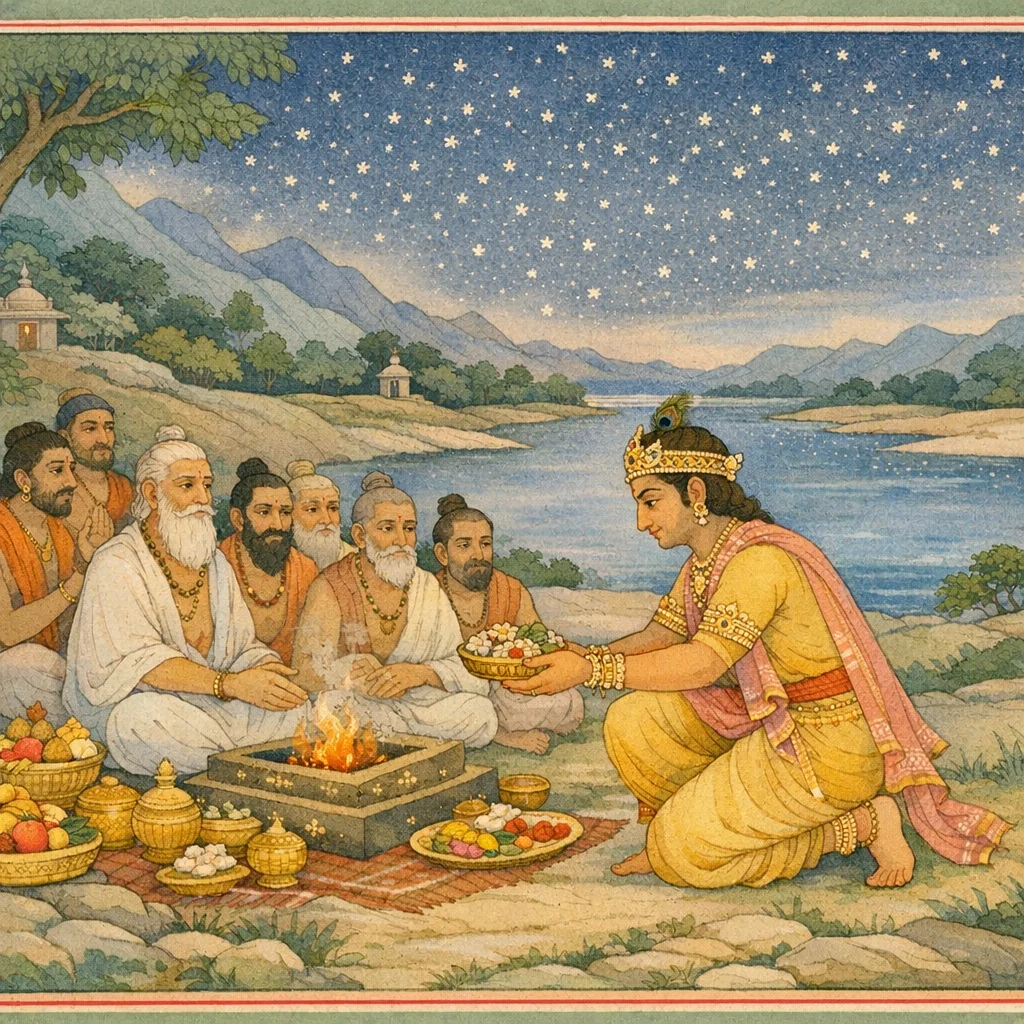
Saṃjaya narrates that while Kṛṣṇa and Dāruka converse, night passes and the king awakens to a courtly dawn marked by bards, dancers, and a dense orchestration of instruments whose sound reaches the sky. Yudhiṣṭhira rises from a fine bed and proceeds to bathing and purification: attendants with golden vessels assist; he bathes with consecrated, sandal-scented water; performs bodily anointing; stands facing east with joined palms; recites prescribed japa; and enters the fire-sanctuary to offer mantra-purified oblations. He then encounters learned, disciplined brāhmaṇas and honors them with offerings and substantial dakṣiṇā—gold, horses, garments, and well-described cattle—followed by circumambulation and attention to auspicious signs and objects. The king is seated on an ornate throne and praised by court voices and celestial musicians, presenting kingship as ritually anchored and publicly affirmed. Finally, as the sound of movement swells (chariots, horses, elephants, footsteps), a doorkeeper formally announces Hṛṣīkeśa’s arrival; Yudhiṣṭhira welcomes Mādhava, orders arghya and an honored seat, and receives him with reciprocal respect, preparing the ground for counsel and action.
Chapter Arc: संजय धृतराष्ट्र को युद्ध-समाचार के बीच एक प्राचीन आदर्श-राजा का आख्यान सुनाते हैं—शिबि औशीनर, जिसकी रथ-घोष से पर्वत, द्वीप, समुद्र और वन तक गूँज उठते थे। → शिबि की कीर्ति केवल रण-विजय से नहीं, यज्ञों की बहुविध परंपरा, पर्याप्त दक्षिणा, और प्रार्थियों की कामनापूर्ति से बढ़ती जाती है; वर्णन क्रमशः अतिशयोक्ति-सी लगने वाली समृद्धि और दान-प्रवाह तक पहुँचता है—मानो मेघधाराओं, नक्षत्रों और गंगातट की रेत जितनी गणना। → शिबि का चरित्र-शिखर इस रूप में उभरता है कि वह ‘सर्वमूर्धाभिषिक्तानां सम्मत’—समस्त अभिषिक्त राजाओं में युद्ध और धर्म दोनों में मान्य—और अश्वमेधादि यज्ञों द्वारा पृथ्वी-विजय के बाद भी दान-धर्म में अडिग दिखाया जाता है; स्वर्णमुद्राओं, हेमयूपों, स्वर्ण-प्राकारों का विराट दृश्य उसी उत्कर्ष का चरम है। → इच्छित वरों और पुण्यफल को प्राप्त कर शिबि समय आने पर स्वर्गलोक को प्राप्त होता है; संजय धृतराष्ट्र को संकेत देता है कि शिबि की चारों श्रेष्ठताओं के सामने वर्तमान राजधर्म और पुत्र-मोह तुच्छ पड़ते हैं। → युद्धभूमि की ओर लौटने से पहले यह प्रश्न हवा में टँगा रह जाता है—क्या धृतराष्ट्र (और दुर्योधन) शिबि-जैसी त्याग-नीति से कुछ सीखेंगे, या विनाश की धारा को ही चुनेंगे?
Shlokas
Verse 1
इस प्रकार श्रीमह्ाभारत द्रोणपर्वके अन्तर्गत अभिमन्युवधपर्वमें षोडशराजकीयो- पाख्यानविषयक सत्तावनवाँ अध्याय पूरा हुआ ॥/ ५७ ॥ ऑपन-साज बक। अऑि-छऋाय अष्टपञज्चाशत्तमो< ध्याय: राजा शिबिके यज्ञ और दानकी महत्ता नारद उवाच शिबिमौशीनरं चापि मृतं सृज्जय शुश्रुम । य इमां पृथिवीं सर्वा चर्मवत् पर्यवेष्टयत्,नारदजी कहते हैं--सूंजय! जिन्होंने इस सम्पूर्ण पृथ्वीको चमड़ेकी भाँति लपेट लिया था, (सर्वथा अपने अधीन कर लिया था) वे उशीनरपुत्र राजा शिबि भी मरे थे, यह हमने सुना है इस प्रकार श्रीमहाभारत द्रोणपर्वके अन्तर्गत षोडशराजकीयोपाख्यानविषयक जद्ठावनवाँ अध्याय पूरा हुआ ॥/ ५८ ॥ भनीप्स््ज्ल्िसज (9) नीला एकोनषशष्टितमो< ध्याय: भगवान् श्रीरामका चरित्र नारद उवाच रामं दाशरथिं चैव मृतं सृज्जय शुश्रुम । यं प्रजा अन्वमोदन्त पिता पुत्रानिवौरसान्
Narada said: “O Sṛñjaya, we have heard that even Śibi, the son of Uśīnara, has died—he who once ‘wrapped up’ this entire earth like a hide, bringing it wholly under his sway. The point is clear: even the most powerful and world-subduing kings are not exempt from mortality.”
Verse 2
साद्रिद्वीपार्णववनां रथघोषेण नादयन् । स शिबिर्व रिपून् नित्यं मुख्यान् निध्नन् सपत्नजित्,राजा शिबिने पर्वत, द्वीप, समुद्र और वनोंसहित इस पृथ्वीको अपने रथकी घरघराहटसे प्रतिध्वनित करते हुए प्रधान-प्रधान शत्रुओंको मारकर सदा ही अपने विपक्षियोंपर विजय प्राप्त की थी
Nārada said: “Making the earth—together with its mountains, islands, oceans, and forests—resound with the thunder of his chariot, that king, ever a conqueror of rivals, continually struck down the foremost of his enemies, like a blazing camp-fire consuming what stands before it.”
Verse 3
तेन यज्जैर्बहुविधैरिष्टं पर्याप्तदक्षिणै: । स राजा वीर्यवान् धीमानवाप्य वसु पुष्कलम्
Nārada said: “By those many kinds of sacrifices—performed with gifts to the priests in full measure—that king, valiant and wise, obtained abundant wealth.”
Verse 4
सर्वमूर्धाभिषिक्तानां सम्मत: सो5भवद् युधि । अयजयच्चाश्वमेधैर्यों विजित्य पृथिवीमिमाम्
Nārada said: “In battle he became the acknowledged choice of all the consecrated kings. And having conquered this earth, he caused Aśvamedha sacrifices to be performed.”
Verse 5
उन्होंने प्रचुर दक्षिणाओंसे युक्त नाना प्रकारके यज्ञोंका अनुष्ठान किया था। वे पराक्रमी और बुद्धिमान् नरेश पर्याप्त धन पाकर युद्धमें सम्पूर्ण मूर्धाभिषिक्त राजाओंकी दृष्टिमें सम्माननीय वीर हो गये थे। उन्होंने इस पृथ्वीको जीतकर अनेक अश्वमेध-यज्ञ किये थे ।। निरर्गलैर्बहुफलैर्निष्ककोटिसहस्रद: । हस्त्यश्वपशुभिथरर्धान्यिर्मगैगोंडजाविभिस्तथा
Nārada said: “He performed many kinds of sacrifices, richly endowed with gifts—bestowing thousands of crores of niṣkas (gold pieces), along with elephants, horses, other livestock, abundant grain, and even game and forest produce. By such lavish rites, that valiant and discerning king gained immense wealth and renown; in battle he was honored in the eyes of all consecrated monarchs; and after conquering the earth, he conducted many Aśvamedha sacrifices.”
Verse 6
यावत्यो वर्षतो धारा यावत्यो दिवि तारका:,तावतीरददद गा वै शिबिरौशीनरो<थ्वरे । बरसते हुए मेघसे जितनी धाराएँ गिरती हैं, आकाशमें जितने नक्षत्र दिखायी देते हैं, गंगाके किनारे जितने बालूके कण हैं, सुमेरु पर्वतमें जितने स्थूल प्रस्तरखण्ड हैं तथा महासागरमें जितने रत्न और प्राणी निवास करते हैं, उतनी गौएँ उशीनरपुत्र शिबिने यज्ञमें ब्राह्मणोंको दी थीं
Nārada said: “As many streams of rain fall from the raining clouds, and as many stars shine in the sky—so many cows did Śibi, the son of Uśīnara, truly give away to the Brāhmaṇas in a sacrificial rite.”
Verse 7
यावत्य: सिकता गाड्ग्यो यावन्मेरोर्महोपला: । उदन्वति च यावन्ति रत्नानि प्राणिनोडपि च
Nārada said: “O Gāḍgya, as countless as the grains of sand, as numerous as the great boulders of Mount Meru, and as abundant as the jewels found in the ocean—so too are living beings.”
Verse 8
नो यन्तारं धुरस्तस्य कज्चिदन्यं प्रजापति:
Nārada said: “For him there is no other charioteer to bear that burden—Prajāpati alone is the one who guides and sustains it.”
Verse 9
भूतं भव्यं भवन्तं वा नाध्यगच्छन्नरोत्तमम् | प्रजापतिने भी अपनी सृष्टिमें भूत, भविष्य और वर्तमान कालके किसी भी दूसरे नरश्रेष्ठ राजाको ऐसा नहीं पाया जो शिबिके कार्यभारको सँभाल सकता हो ।। तस्यासन् विविधा यज्ञा: सर्वकामै: समन्विता:
Nārada said: “In the past, in the future, or even in the present, the Creator (Prajāpati) has not found any other best of men—any king equal to him—who could bear and carry out the burden of Shibi’s charge. For him there were many kinds of sacrifices, complete with every desired offering and benefit.”
Verse 10
शुचि स्वाद्वन्नपानं च ब्राह्मणा: प्रयुतायुता:,उन यज्ञोंमें खाने-पीनेकी वस्तुएँ पवित्र और स्वादिष्ट होती थीं। वहाँ दूध-दहीके बड़े- बड़े सरोवर बने हुए थे। वहाँ हजारों और लाखों ब्राह्मण भाँति-भाँतिके खाद्य पदार्थ पाकर प्रसन्नता प्रकट करनेवाली बातें कहते थे। उनकी यज्ञशालाओंमें पीनेयोग्य पदार्थोकी नदियाँ बहती थीं और शुद्ध अन्नके पर्वतोंके समान ढेर लगे रहते थे
Nārada said: “There were pure and delicious foods and drinks in those sacrificial rites. There, countless Brahmins—by tens of thousands and even hundreds of thousands—received a variety of offerings and voiced words of gladness. In the sacrificial halls, streams of drinkable liquids seemed to flow, and heaps of spotless grain rose like mountains.”
Verse 11
नानाभक्ष्यै: प्रियकथा: पयोदधिमहाह्दा: । तस्यासन् यज्ञवाटेषु नद्यः शुभ्रान्नपर्वता:,उन यज्ञोंमें खाने-पीनेकी वस्तुएँ पवित्र और स्वादिष्ट होती थीं। वहाँ दूध-दहीके बड़े- बड़े सरोवर बने हुए थे। वहाँ हजारों और लाखों ब्राह्मण भाँति-भाँतिके खाद्य पदार्थ पाकर प्रसन्नता प्रकट करनेवाली बातें कहते थे। उनकी यज्ञशालाओंमें पीनेयोग्य पदार्थोकी नदियाँ बहती थीं और शुद्ध अन्नके पर्वतोंके समान ढेर लगे रहते थे
Nārada said: “In his sacrificial enclosures there were many kinds of delightful foods, and people spoke pleasing words in gladness. Vast reservoirs of milk and curd were present. In those yajña-grounds, streams of drinkable refreshments seemed to flow like rivers, and heaps of pure cooked rice stood like mountains.”
Verse 12
पिबत स्नात खादध्वमिति यद् रोचते जना: । यस्मै प्रादाद् वरं रुद्रस्तुष्ट: पुण्येन कर्मणा,वहाँ सबके लिये यह घोषणा की जाती थी कि 'सज्जनो! स्नान करो और जिसकी जैसी रुचि हो उसके अनुसार अन्न-पान लेकर खूब खाओ-पीओ”। भगवान् शिवने राजा शिबिके पुण्यकर्मसे प्रसन्न होकर उन्हें यह वर दिया था कि राजन! सदा दान करते रहनेपर भी तुम्हारा धन क्षीण नहीं होगा, तुम्हारी श्रद्धा, कीर्ति और पुण्यकर्म भी अक्षय होंगे। तुम्हारे कहनेके अनुसार ही सब प्राणी तुमसे प्रेम करेंगे और अन्तमें तुम्हें उत्तम स्वर्गलोककी प्राप्ति होगी
Nārada said: “It was publicly proclaimed for everyone: ‘Good people, bathe, and then eat and drink freely according to your own liking.’ Pleased by the king’s meritorious deeds, Lord Rudra (Śiva) granted him a boon: ‘O king, even though you continue giving in charity, your wealth will not diminish; your faith, fame, and merit will also remain undiminished. As you wish, beings will love you, and in the end you will attain the excellent world of heaven.’
Verse 13
अक्षयं ददतो वित्तं श्रद्धा कीर्तिस्तथा किया: । यथोक्तमेव भूतानां प्रियत्वं स्वर्गमुत्तमम्,वहाँ सबके लिये यह घोषणा की जाती थी कि 'सज्जनो! स्नान करो और जिसकी जैसी रुचि हो उसके अनुसार अन्न-पान लेकर खूब खाओ-पीओ”। भगवान् शिवने राजा शिबिके पुण्यकर्मसे प्रसन्न होकर उन्हें यह वर दिया था कि राजन! सदा दान करते रहनेपर भी तुम्हारा धन क्षीण नहीं होगा, तुम्हारी श्रद्धा, कीर्ति और पुण्यकर्म भी अक्षय होंगे। तुम्हारे कहनेके अनुसार ही सब प्राणी तुमसे प्रेम करेंगे और अन्तमें तुम्हें उत्तम स्वर्गलोककी प्राप्ति होगी
Narada said: “For one who keeps giving, the wealth does not diminish; likewise faith, fame, and meritorious acts remain inexhaustible. Exactly as you have spoken, all beings will hold you dear, and in the end you will attain the highest heaven.”
Verse 14
47 ०. ] ए १) 55 >शप अ 2022, एतॉल्लब्ध्वा वरानिष्टान् शिबि: काले दिव॑ गत: । स चेन्ममार सृज्जय चतुर्भद्रतरस्त्वया
“Having obtained these desired boons, King Śibi, in due course of time, went to heaven. And if that Sṛñjaya has indeed died, then you (O king) are fourfold more fortunate than he—since you have been granted a greater share of auspiciousness and merit.”
Verse 15
पुत्रात् पुण्यतरस्तुभ्यं मा पुत्रमनुतप्यथा: । अयज्वानमदाक्षिण्य- मभ्ि श॥वैत्येत्युदाहरत्
Nārada said: “For you, one who is more virtuous than a (mere) son is preferable; therefore do not grieve over your son. People cite the maxim, ‘An un-sacrificing man, one who gives no priestly fee, is to be suspected/condemned,’ and thus they speak.”
Verse 56
विविधां पृथिवीं पुण्यां शिबि्राह्मणसात्करोत् । उनके वे यज्ञ प्रचुर फल देनेवाले थे और सदा निर्बाध-रूपसे चलते रहते थे। उन्होंने सहस्रकोटि स्वर्णमुद्राओंका दान किया था। राजा शिबिने हाथी, घोड़े, मृग, गौ, भेड़ और बकरी आदि पशुओं तथा धान्योंसहित नाना प्रकारके पवित्र भूखण्ड ब्राह्मणोंक अधीन कर दिये थे
Narada said: King Śibi, famed for righteousness, transferred many kinds of sacred and fertile tracts of land into the possession of Brahmins. His sacrifices were abundant in merit, yielding rich results, and they proceeded continually without obstruction. He bestowed gifts amounting to hundreds of millions of gold coins, and he granted to Brahmins holy estates together with elephants, horses, deer, cows, sheep, goats, and stores of grain—thus exemplifying the kingly duty of generosity and protection through lawful giving.
Verse 58
इन अभीष्ट वरोंको पाकर राजा शिबि समय आनेपर स्वर्गलोकमें गये। सूंजय! वे तुम्हारी अपेक्षा पूर्वोक्त चारों बातोंमें बहुत बढ़े-चढ़े थे। तुम्हारे पुत्रसे भी अधिक पुण्यात्मा थे। श्वित्यनन्दन! जब वे शिबि भी मर गये, तब तुम्हें यज्ञ और दानसे रहित अपने पुत्रके लिये इस प्रकार शोक नहीं करना चाहिये। नारदजीने राजा सूंजयसे यही बात कही ।। इति श्रीमहाभारते द्रोणपर्वणि अभिमन्युवधपर्वणि षोडशराजकीये अष्टपज्चाशत्तमोड ध्याय:
Narada said: “Having obtained those desired boons, King Śibi, when his time came, departed to the world of heaven. O Sañjaya, in the four matters mentioned earlier they surpassed you greatly; they were even more meritorious than your son. O son of Śvityānanda, when even those Śibis have died, you should not grieve in this manner for your own son—who was devoid of sacrifice and charity.” Thus Narada spoke this very counsel to King Sañjaya.
Verse 73
तावतीरददद गा वै शिबिरौशीनरो<थ्वरे । बरसते हुए मेघसे जितनी धाराएँ गिरती हैं, आकाशमें जितने नक्षत्र दिखायी देते हैं, गंगाके किनारे जितने बालूके कण हैं, सुमेरु पर्वतमें जितने स्थूल प्रस्तरखण्ड हैं तथा महासागरमें जितने रत्न और प्राणी निवास करते हैं, उतनी गौएँ उशीनरपुत्र शिबिने यज्ञमें ब्राह्मणोंको दी थीं
Nārada said: In his sacrificial rite, Śibi, the son of Uśīnara, gave to the Brahmins as many cows as there are rain-streams that fall from a cloud in downpour, as many as the stars seen in the sky, as many as the grains of sand along the bank of the Gaṅgā, as many as the great stone-masses on Mount Sumeru, and as many as the jewels and living beings that dwell in the great ocean. The passage magnifies Śibi’s generosity as an ethical exemplar of dāna (gift-giving) performed in a dharmic, ritual context.
Verse 96
हेमयूपासनगृहा हेमप्राकारतोरणा: । उन्होंने नाना प्रकारके बहुत-से यज्ञ किये, जिनमें प्रार्थियोंकी सम्पूर्ण कामनाएँ पूर्ण की जाती थीं। उन यज्ञोंमें यज्ञस्तम्भ, आसन, गृह, परकोटे और दरवाजे सुवर्णके बने हुए थे
Narada said: Their sacrificial rites were performed with extraordinary royal splendor—so that the wishes of all supplicants were fulfilled. In those sacrifices, the ritual posts, seats, halls, enclosing ramparts, and gateways were fashioned of gold, displaying both generosity and the power to provide for others.
Frequently Asked Questions
Rather than a single explicit dilemma, the chapter stages an ethical tension: maintaining rigorous ritual duty, generosity, and public auspicious order while operating under the pressures of an ongoing strategic conflict.
Legitimate authority is portrayed as grounded in self-discipline and reciprocity: inner purification (japa, restraint) and outer responsibility (honoring learning, orderly hospitality) are complementary foundations for decision-making.
No explicit phalāśruti is stated here; the passage functions as descriptive meta-ethics, implying that attentive performance of duty and auspicious protocol sustains social order and prepares the ruler for counsel and action.