Adhyaya 23
Pañcahotṛ-Vidhāna and the Dispute of the Five Vāyus (पञ्चहोतृविधानम् — पञ्चवायूनां श्रेष्ठत्वविवादः)
Upa-parva: Āśvamedhika-parva — Prāṇa-Vāyu Pañcahotṛ-Dialogues (Pañcavāyu-Itihāsa Episode)
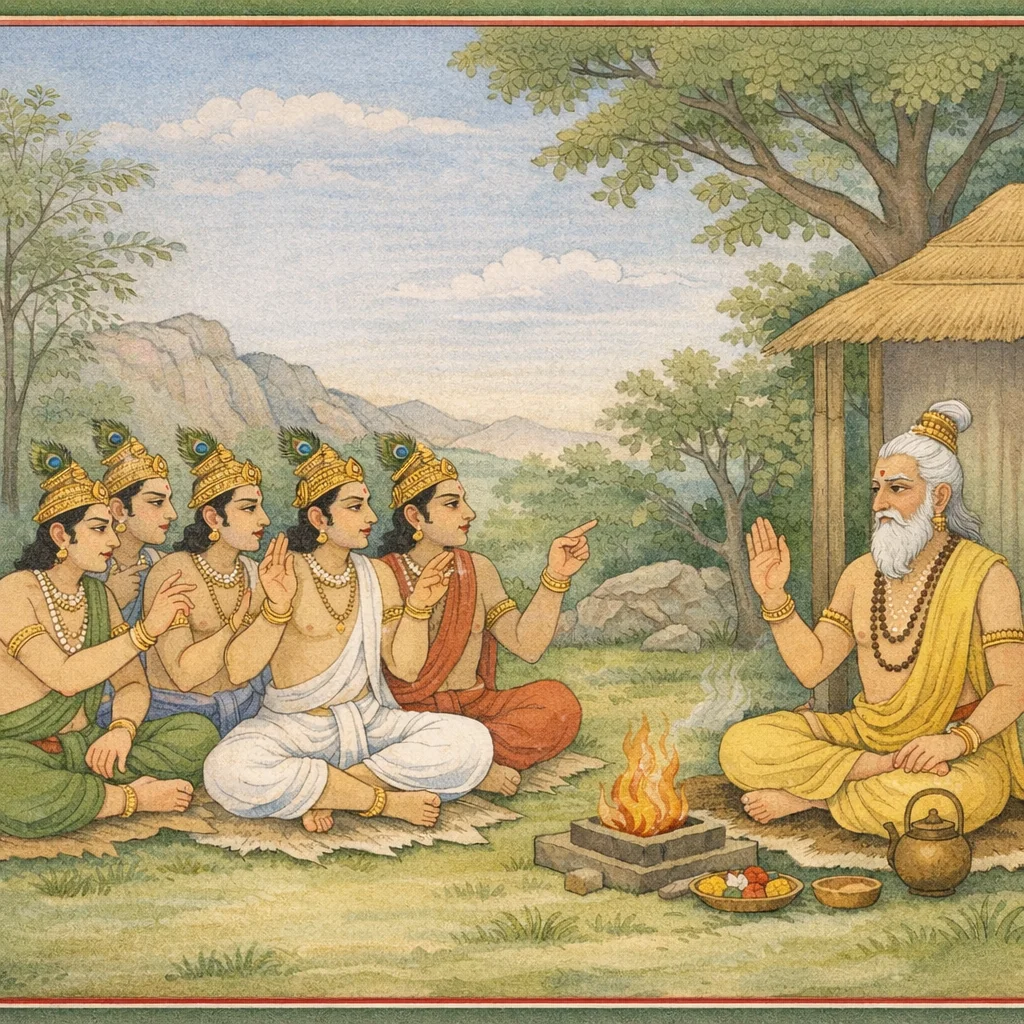
A brāhmaṇa introduces an ancient itihāsa explaining the “five hotṛs” as the five vital airs: prāṇa, apāna, vyāna, udāna, and samāna. A brāhmaṇī queries how this fivefold model relates to an earlier view of seven hotṛs, prompting a clarification of the five as a ‘higher’ (para) formulation. The brāhmaṇa outlines a sequential dependence among the vāyus (prāṇa conditioning apāna, apāna conditioning vyāna, and so on). The vāyus then approach Prajāpati/Brahmā to ask who is eldest and thus श्रेष्ठ (best). Brahmā defines the श्रेष्ठ as that principle upon whose dissolution all others collapse and upon whose activity they resume. Each vāyu, in turn, claims superiority by enacting a temporary withdrawal and return, while the others counter-argue that it remains under another’s control. The dispute culminates with Brahmā’s adjudication: all are “best” in their own domain, mutually characterized, and mutually protective; the five are differentiated expressions of a single underlying self-principle that becomes manifold. The chapter closes with an injunction toward reciprocal support and well-being (svasti), emphasizing cooperation over rivalry.
Chapter Arc: अनुगीता के ब्राह्मण-गीत में पंच प्राणों (प्राण, अपान, उदान, समान, व्यान) को ‘पंच होतृ’ कहकर उनकी श्रेष्ठता का विधान होता है—मानो देह-यज्ञ के पाँच पुरोहित एक साथ सभा में उपस्थित हों। → पाँचों वायुओं में श्रेष्ठता का विवाद उठता है। प्रत्येक अपने-अपने सामर्थ्य का दावा करता है और प्रमाण देने के लिए ‘प्रलीन’ होकर दिखाता है कि उसके लय होते ही अन्य प्राण भी लय को प्राप्त होते हैं, और उसके पुनः प्रवर्तन से सब फिर चल पड़ते हैं। → प्राण और अपान (और क्रमशः अन्य) अपने-अपने ‘मयि प्रलीने…’ वाले दावे के साथ देह-व्यवस्था को ठहराकर दिखाते हैं; विवाद तीव्र होता है कि कौन सर्वव्यापक है, कौन अधीन है, कौन प्रधान। → प्रजापति समवेत प्राणों को उपदेश देते हैं—‘सर्वे स्वविषये श्रेष्ठाः’—सब अपने-अपने क्षेत्र में श्रेष्ठ हैं और सबका धर्म परस्पर-आश्रित है। फिर सिद्धान्त उद्घोषित होता है: एक ही वायु स्थिर-अस्थिर रूपों में विशेष भेद से पाँच कहलाती है; अतः अहंकार-जन्य प्रतियोगिता त्याज्य है।
Shlokas
Verse 1
इस प्रकार श्रीमह्ााभारत आश्वमेधिकपर्वके अन्तर्गत अनुगीतापर्वमें ब्राह्मणगीताविषयक बाईसवाँ अध्याय पूरा हुआ ॥/ २२ ॥। - इस श्लोकका सारांश इस प्रकार समझना चाहिये--पहले आत्मा मनको उच्चारण करनेके लिये प्रेरित करता है, तब मन जठराग्निको प्रज्वलित करता है। जठराग्निके प्रज्वलित होनेपर उसके प्रभावसे प्राणवायु अपानवायुसे जा मिलता है। उसके बाद वह वायु उदानवायुके प्रभावसे ऊपर चढ़कर मस्तकमें टकराता है और फिर व्यानवायुके प्रभावसे कण्ठ-तालु आदि स्थानोंमें होकर वेगसे वर्ण उत्पन्न कराता हुआ वैखरीरूपसे मनुष्योंके कानमें प्रविष्ट होता है। जब प्राणवायुका वेग निवृत्त हो जाता है, तब वह फिर समानभावसे चलने लगता है। त्रयोविशो<् ध्याय: प्राण, अपान आदिका संवाद और ब्रह्माजीका सबकी श्रेष्ठ बतलाना ब्राह्मण उवाच अत्राप्युदाहरन्तीममितिहासं पुरातनम् । सुभगे पञ्चहोतृणां विधानमिह यादृशम्,ब्राह्मणने कहा--प्रिये! अब पञ्चहोताओंके यज्ञका जैसा विधान है, उसके विषयमें एक प्राचीन दृष्टान्त बतलाया जाता है
The Brāhmaṇa said: “Beloved, here too they cite an ancient precedent. I shall relate, as it is taught in this context, the rule and arrangement of the ‘five-officiant’ sacrifice.”
Verse 2
प्राणापानावुदानश्च॒ समानो व्यान एव च | पज्चहोतुस्तथैतान् वै परं भावं विदुर्बुधा:
The brāhmaṇa said: “Prāṇa, apāna, udāna, samāna, and vyāna—these five vital currents are known by the wise as the ‘five hotṛ-priests’. Knowing their highest meaning, one beholds the inner sacrifice: the disciplined breaths become instruments of self-mastery and spiritual ascent.”
Verse 3
प्राण, अपान, उदान, समान और व्यान--ये पाँचों प्राण पाँच होता हैं। विद्वान् पुरुष इन्हें सबसे श्रेष्ठ मानते हैं ।। ब्राह्मण्युवाच स्वभावात् सप्तहोतार इति मे पूर्विका मति: । यथा वै पञ्चहोतार: परो भावस्तदुच्यताम्,ब्राह्मणी बोली--नाथ! पहले तो मैं समझती थी कि स्वभावतः सात होता हैं; किंतु अब आपके मुँहसे पाँच होताओंकी बात मालूम हुई। अतः ये पाँचों होता किस प्रकार हैं? आप इनकी श्रेष्ठताका वर्णन कीजिये
The Brahmin woman said: “My earlier understanding was that, by nature, there are seven ‘hotṛs’, the offerers. But now, from your words, I have learned of five offerers. Please explain how these five are to be understood, and describe their pre-eminence.”
Verse 4
ब्राह्मण उवाच प्राणेन सम्भूतो वायुरपानो जायते ततः । अपाने सम्भूतो वायुस्ततो व्यान: प्रवर्तते,ब्राह्मणने कहा--प्रिये! वायु प्राणके द्वारा पुष्ट होकर अपानरूप, अपानके द्वारा पुष्ट होकर व्यानरूप, व्यानसे पुष्ट होकर उदानरूप, उदानसे परिपुष्ट होकर समानरूप होता है। एक बार इन पाँचों वायुओंने सबके पूर्वज पितामह ब्रह्माजीसे प्रश्न किया--'भगवन्! हममें जो श्रेष्ठ हो उसका नाम बता दीजिये, वही हमलोगोंमें प्रधान होगा”
The Brahmin said: “From prāṇa, the vital wind, apāna is born; and from apāna, vyāna comes forth and begins to function. Thus each life-breath arises supported by another.” In this way, the five vital airs—seeking to know which among them was truly foremost—approached Brahmā, the grandsire of all beings, and asked him to declare the श्रेष्ठ (the best), so that the one named might be accepted as chief among them.
Verse 5
व्यानेन सम्भृतो वायुस्ततोदान: प्रवर्तते । उदाने सम्भूतो वायु: समानो नाम जायते,ब्राह्मणने कहा--प्रिये! वायु प्राणके द्वारा पुष्ट होकर अपानरूप, अपानके द्वारा पुष्ट होकर व्यानरूप, व्यानसे पुष्ट होकर उदानरूप, उदानसे परिपुष्ट होकर समानरूप होता है। एक बार इन पाँचों वायुओंने सबके पूर्वज पितामह ब्रह्माजीसे प्रश्न किया--'भगवन्! हममें जो श्रेष्ठ हो उसका नाम बता दीजिये, वही हमलोगोंमें प्रधान होगा”
The Brāhmaṇa said: “When the vital wind is sustained by vyāna, it then functions as udāna; and when sustained through udāna, that same vital wind arises as what is called samāna. Thus, nourished and supported in succession, the life-winds take on their distinct roles. Once, these five winds approached Brahmā, the grandsire of all beings, and asked: ‘Blessed Lord, declare which among us is the श्रेष्ठ (the best); let that one be regarded as the chief among us.’”
Verse 6
तेडपृच्छन्त पुरा सन्त: पूर्वजातं पितामहम् | यो नः श्रेष्ठस्तमाचक्ष्व स न: श्रेष्ठो भविष्यति,ब्राह्मणने कहा--प्रिये! वायु प्राणके द्वारा पुष्ट होकर अपानरूप, अपानके द्वारा पुष्ट होकर व्यानरूप, व्यानसे पुष्ट होकर उदानरूप, उदानसे परिपुष्ट होकर समानरूप होता है। एक बार इन पाँचों वायुओंने सबके पूर्वज पितामह ब्रह्माजीसे प्रश्न किया--'भगवन्! हममें जो श्रेष्ठ हो उसका नाम बता दीजिये, वही हमलोगोंमें प्रधान होगा”
Long ago, the noble ones questioned the Primordial Grandsire, the first-born ancestor: “Tell us which among us is the best; whoever is declared best shall become our leader.” The verse thus raises a moral inquiry into rightful precedence—authority should rest on true excellence, not mere claim.
Verse 7
ब्रह्मोवाच यस्मिन् प्रलीने प्रलयं व्रजन्ति सर्वे प्राणा: प्राणभूतां शरीरे । यस्मिन् प्रचीर्णे च पुनश्चरन्ति स वै श्रेष्ठो गच्छत यत्र काम:,ब्रद्माजीने कहा--प्राणधारियोंके शरीरमें स्थित हुए तुमलोगोंमेंसे जिसका लय हो जानेपर सभी प्राण लीन हो जायँ और जिसके संचरित होनेपर सब-के-सब संचार करने लगें, वही श्रेष्ठ है। अब तुम्हारी जहाँ इच्छा हो, जाओ
Brahmā said: “Among you who abide in the bodies of living beings, that principle is the highest—when it dissolves, all the vital breaths sink into dissolution; when it acts, they all move again. Now go wherever you wish.”
Verse 8
प्राण उवाच मयि प्रलीने प्रलयं व्रजन्ति सर्वे प्राणा: प्राणभूतां शरीरे । मयि प्रचीर्णे च पुनश्चरन्ति श्रेष्ठो हाहं पश्यत मां प्रलीनम्,यह सुनकर प्राणवायुने अपान आदिसे कहा--मेरे लीन होनेपर प्राणियोंके शरीरमें स्थित सभी प्राण लीन हो जाते हैं तथा मेरे संचरित होनेपर सब-के-सब संचार करने लगते हैं, इसलिये मैं ही सबसे श्रेष्ठ हूँ। देखो, अब मैं लीन हो रहा हूँ (फिर तुम्हारा भी लय हो जायगा)
Prāṇa said: “When I subside, all the vital functions within the embodied being collapse into dissolution. When I move again, they all resume their activity. Therefore I am the foremost. Look—now I am withdrawing into stillness.”
Verse 9
ब्राह्मण उवाच प्राण: प्रालीयत तत: पुनश्न प्रचचार ह । समानश्षाप्युदानश्व वचोडब्रूतां पुन: शुभे,ब्राह्मण कहते हैं--शुभे! यों कहकर प्राणवायु थोड़ी देरके लिये छिप गया और उसके बाद फिर चलने लगा। तब समान और उदानवायु उससे पुनः बोले--
The Brāhmaṇa said: “O auspicious lady, having spoken thus, the vital breath (Prāṇa) withdrew for a short while, and then began to move again. Thereupon Samāna and Udāna once more addressed him in speech.”
Verse 10
न त्वं सर्वमिदं व्याप्प तिष्ठतीह यथा वयम् | नत्वं श्रेष्ठो हि न: प्राण अपानो हि वशे तव । प्रचचार पुन: प्राणस्तमपानो5भ्यभाषत,“प्राण! जैसे हमलोग इस शरीरमें व्याप्त हैं, उस तरह तुम इस शरीरमें व्याप्त होकर नहीं रहते। इसलिये तुम हमलोगोंसे श्रेष्ठ नहीं हो। केवल अपान तुम्हारे वशमें है [अतः तुम्हारे लय होनेसे हमारी कोई हानि नहीं हो सकती]।” तब प्राण पुनः पूर्ववत् चलने लगा। तदनन्तर अपान बोला
They said: “You do not pervade and remain throughout this whole body here as we do. Therefore you are not superior to us. Indeed, only apāna is under your control; hence, even if you were to subside, no harm would come to us.” Then prāṇa began to move again as before. After that, apāna spoke.
Verse 11
अपान उवाच मयि प्रलीने प्रलयं व्रजन्ति सर्वे प्राणा: प्राणभूतां शरीरे । मयि प्रचीर्णे च पुनश्चरन्ति श्रेष्ठो हाहं पश्यत मां प्रलीनम्,अपानने कहा--ेरे लीन होनेपर प्राणियोंके शरीरमें स्थित सभी प्राण लीन हो जाते हैं तथा मेरे संचरित होनेपर सब-के-सब संचार करने लगते हैं। इसलिये मैं ही सबसे श्रेष्ठ हूँ। देखो, अब मैं लीन हो रहा हूँ (फिर तुम्हारा भी लय हो जायगा)
Apāna said: “When I subside, all the vital functions in the bodies of living beings move toward dissolution. When I course again, they all begin to move once more. Therefore I am the foremost. Look—now I am withdrawing into myself; with my withdrawal, the rest too will fall into abeyance.”
Verse 12
ब्राह्मण उवाच व्यानश्व तमुदानश्व भाषमाणमथोचतु: । अपान न व्वं श्रेष्ठोडईसि प्राणो हि वशगस्तव,ब्राह्मण कहते हैं--तब व्यान और उदानने पूर्वोक्त बात कहनेवाले अपानसे कहा --“अपान! केवल प्राण तुम्हारे अधीन है, इसलिये तुम हमसे श्रेष्ठ नहीं हो सकते”
The Brāhmaṇa said: Then Vyāna and Udāna addressed Apāna, who had been speaking thus: “Apāna, you are not superior to us, for only Prāṇa is under your control.”
Verse 13
अपान: प्रचचाराथ व्यानस्तं पुनरब्रवीत् । श्रेष्ठो5हमस्मि सर्वेषां श्रूयतां येन हेतुना,यह सुनकर अपान भी पूर्ववत् चलने लगा। तब व्यानने उससे फिर कहा--'मैं ही सबसे श्रेष्ठ हूँ। मेरी श्रेष्ठतठाका कारण क्या है। वह सुनो
Then Apāna resumed his movement as before. Thereupon Vyāna addressed him again: “I am the foremost among all. Listen to the reason by which my superiority is established.”
Verse 14
मयि प्रलीने प्रलयं व्रजन्ति सर्वे प्राणा: प्राणभूतां शरीरे । मयि प्रचीर्णे च पुनश्चरन्ति श्रेष्ठो हाहं पश्यत मां प्रलीनम्,“मेरे लीन होनेपर प्राणियोंके शरीरमें स्थित सभी प्राण लीन हो जाते हैं तथा मेरे संचरित होनेपर सब-के-सब संचार करने लगते हैं। इसलिये मैं ही सबसे श्रेष्ठ हूँ। देखो, अब मैं लीन हो रहा हूँ (फिर तुम्हारा भी लय हो जायगा)'
The Brāhmaṇa said: “When I subside, all the vital breaths that animate a creature’s body also sink into dissolution. When I move again, they all begin to move once more. Therefore I am the foremost. Look—now I am withdrawing; then your own dissolution will follow as well.”
Verse 15
ब्राह्मण उवाच प्रालीयत ततो व्यान: पुनश्च प्रचचार ह । प्राणापानावुदानश्न॒ समानश्च तमब्रुवन् । न त्वं श्रेष्ठोडसि नो व्यान समानस्तु वशे तव,ब्राह्मण कहते हैं--तब व्यान कुछ देरके लिये लीन हो गया, फिर चलने लगा। उस समय प्राण, अपान, उदान और समानने उससे कहा--“व्यान! तुम हमसे श्रेष्ठ नहीं हो, केवल समान वायु तुम्हारे वशमें है”
The Brāhmaṇa said: “Then Vyāna dissolved for a while, and afterwards began to move again. At that time Prāṇa, Apāna, Udāna, and Samāna addressed him: ‘Vyāna, you are not superior to us. Only Samāna is under your control.’”
Verse 16
प्रचचार पुनर्व्यान: समान: पुनरब्रवीत् श्रेष्ठो5हमस्मि सर्वेषां श्रूयतां येन हेतुना,यह सुनकर व्यान पूर्ववत् चलने लगा। तब समानने पुनः कहा--“मैं जिस कारणसे सबमें श्रेष्ठ हूँ, वह बताता हूँ सुनो
Hearing this, Vyāna resumed his movement as before. Then Samāna spoke again: “Listen to the reason why I am the foremost among all.”
Verse 17
मयि प्रलीने प्रलयं व्रजन्ति सर्वे प्राणा: प्राणभूतां शरीरे । मयि प्रचीर्णे च पुनश्चरन्ति श्रेष्ठो हाहं पश्यत मां प्रलीनम्,“मेरे लीन होनेपर प्राणियोंके शरीरमें स्थित सभी प्राण लीन हो जाते हैं तथा मेरे संचरित होनेपर सब-के-सब संचार करने लगते हैं। इसलिये मैं ही सबसे श्रेष्ठ हूँ। देखो, अब मैं लीन हो रहा हूँ (फिर तुम्हारा भी लय हो जायगा)'
The Brāhmaṇa said: “When I withdraw and merge into myself, all the vital breaths that constitute life in embodied beings fall into dissolution within the body. And when I spread forth and move again, they all begin to function once more. Therefore I am the foremost. Look—now I am withdrawing into myself (and with my withdrawal, your life too will subside).”
Verse 18
(ब्राह्मण उवाच ततः समान: प्रालिल्ये पुनश्न प्रचचार ह | प्राणापानाबुदानश्च व्यानश्वैव तमब्रुवन् ।। न त्वं समान श्रेष्ठोडसि व्यान एव वशे तव ।) ब्राह्मण कहते हैं--यह कहकर समान कुछ देरके लिये लीन हो गया और पुन: पूर्ववत् चलने लगा। उस समस प्राण, अपान, व्यान और उदानने उससे कहा--'समान! तुम हमलोगोंसे श्रेष्ठ नहीं हो, केवल व्यान ही तुम्हारे वशमें है' ।। समान: प्रचचाराथ उदानस्तमुवाच ह । श्रेष्ठो5हमस्मि सर्वेषां श्रूयतां येन हेतुना,यह सुनकर समान पूर्ववत् चलने लगा। तब उदानने उससे कहा--'मैं ही सबसे श्रेष्ठ हूँ, इसका क्या कारण है? यह सुनो
The Brāhmaṇa said: Having spoken thus, Samāna became still for a short while, then began to move again as before. Then Prāṇa, Apāna, Udāna, and Vyāna addressed him: “Samāna, you are not superior to us; only Vyāna is under your control.” Hearing this, Samāna continued on as before. Thereupon Udāna said to him, “I am the foremost of all—listen to the reason why.”
Verse 19
मयि प्रलीने प्रलयं व्रजन्ति सर्वे प्राणा: प्राणभूतां शरीरे । मयि प्रचीर्णे च पुनश्चरन्ति श्रेष्ठो हाहं पश्यत मां प्रलीनम्,“मेरे लीन होनेपर प्राणियोंके शरीरमें स्थित सभी प्राण लीन हो जाते हैं तथा मेरे संचरित होनेपर सब-के-सब संचार करने लगते हैं। इसलिये मैं ही सबसे श्रेष्ठ हूँ। देखो, अब मैं लीन हो रहा हूँ (फिर तुम्हारा भी लय हो जायगा)”
The brāhmaṇa said: “When I dissolve, all the vital breaths—those that constitute life within embodied beings—also pass into dissolution in the body. And when I move again, they all begin to move once more. Therefore I am the foremost. Look—now I am entering dissolution (and then your dissolution too will follow).”
Verse 20
ततः प्रालीयतोदान: पुनश्च प्रचचार ह । प्राणापानौ समाननश्च व्यानश्वैव तमब्रुवन् । उदान न व्वं श्रेष्ठो$सि व्यान एव वशे तव,यह सुनकर उदान कुछ देरके लिये लीन हो गया और पुन: चलने लगा। तब प्राण, अपान, समान और व्यानने उससे कहा--'उदान! तुम हमलोगोंसे श्रेष्ठ नहीं हो। केवल व्यान ही तुम्हारे वशमें है!
Then Udāna, having withdrawn for a moment as though dissolving into stillness, began to move again. Thereupon Prāṇa, Apāna, Samāna, and Vyāna addressed him: “Udāna, you are not superior to us. Only Vyāna is under your control.”
Verse 21
ब्राह्मण उवाच ततस्तानब्रवीद् ब्रह्मा समवेतान् प्रजापति: । सर्वे श्रेष्ठा न वा श्रेष्ठा: सर्वे चान्योन्य धर्मिण:,ब्राह्मण कहते हैं--तदनन्तर वे सभी प्राण ब्रह्माजीके पास एकत्र हुए। उस समय उन सबसे प्रजापति ब्रह्माने कहा--“वायुगण! तुम सभी श्रेष्ठ हो। अथवा तुममेंसे कोई भी श्रेष्ठ नहीं है। तुम सबका धारणरूप धर्म एक-दूसरेपर अवलम्बित है
The Brāhmaṇa said: Then all those vital beings gathered before Brahmā, the Lord of creatures. Addressing them, Prajāpati Brahmā declared: “All of you are superior—or else none of you is superior. For the sustaining principle (dharma) of each depends upon the others.”
Verse 22
सर्वे स्वविषये श्रेष्ठा: सर्वे चान्योन्यधर्मिण: । इति तानब्रवीत् सर्वान् समवेतान् प्रजापति:,“सभी अपने-अपने स्थानपर श्रेष्ठ हो और सबका धर्म एक-दूसरेपर अवलम्बित है।' इस प्रकार वहाँ एकत्र हुए सब प्राणोंसे प्रजापतिने फिर कहा--
Prajāpati addressed all those assembled and declared: “Each of you is foremost in your own proper sphere, and the duty of each depends upon the others.” Thus he spoke, affirming mutual interdependence as the basis of rightful order.
Verse 23
एक: स्थिरश्नास्थिरश्न॒ विशेषात् पज्च वायव: । एक एव ममैवात्मा बहुधाप्युपचीयते,“एक ही वायु स्थिर और अस्थिररूपसे विराजमान है। उसीके विशेष भेदसे पाँच वायु होते हैं। इस तरह एक ही मेरा आत्मा अनेक रूपोंमें वृद्धिको प्राप्त होता है इति श्रीमहाभारते आश्वमेधिके पर्वणि अनुगीतापर्वणि ब्राह्मणगीतासु त्रयोविंशो 5 ध्याय: इस प्रकार श्रीमह्याभारत आश्वमेधिकपर्वके अन्तर्गत अनुगीतापर्वमें ब्राह्मण-गीताविषयक तेईसवाँ अध्याय पूरा हुआ
The Brahmin said: “The vital wind is one, yet it appears in both steady and unsteady modes. By its particular differentiations it is spoken of as five vital airs. In the same way, my one Self alone seems to grow and expand into many forms.”
Verse 24
परस्परस्य सुहृदो भावयन्त: परस्परम् | स्वस्ति व्रजत भद्रं वो धारयध्वं परस्परम्,“तुम्हारा कल्याण हो। तुम कुशलपूर्वक जाओ और एक-दूसरेके हितैषी रहकर परस्परकी उन्नतिमें सहायता पहुँचाते हुए एक-दूसरेको धारण किये रहो”
The brāhmaṇa said: “May you be well. Go forth in safety. Remain mutually well-disposed as friends, strengthening one another and upholding one another—each supporting the other’s welfare and progress.”
Frequently Asked Questions
A rivalry dilemma framed as precedence: whether a single function can claim absolute श्रेष्ठत्व when the system’s continuity depends on coordinated, reciprocal operation.
Excellence is contextual: each component is indispensable within its sphere, and stability arises from mutual support (अन्योन्यधर्म) rather than dominance.
No explicit phalaśruti is stated; the meta-teaching functions as practical soteriology by presenting unity-in-diversity and cooperation as the interpretive key to embodied life and disciplined conduct.