Adhyaya 1
Āśvamedhika-parva Adhyāya 1 — Yudhiṣṭhira’s Lament by the Gaṅgā and Dhṛtarāṣṭra’s Counsel
Upa-parva: Āśvamedhika-parva — Opening Lament and Counsel (Adhyāya 1 context unit)
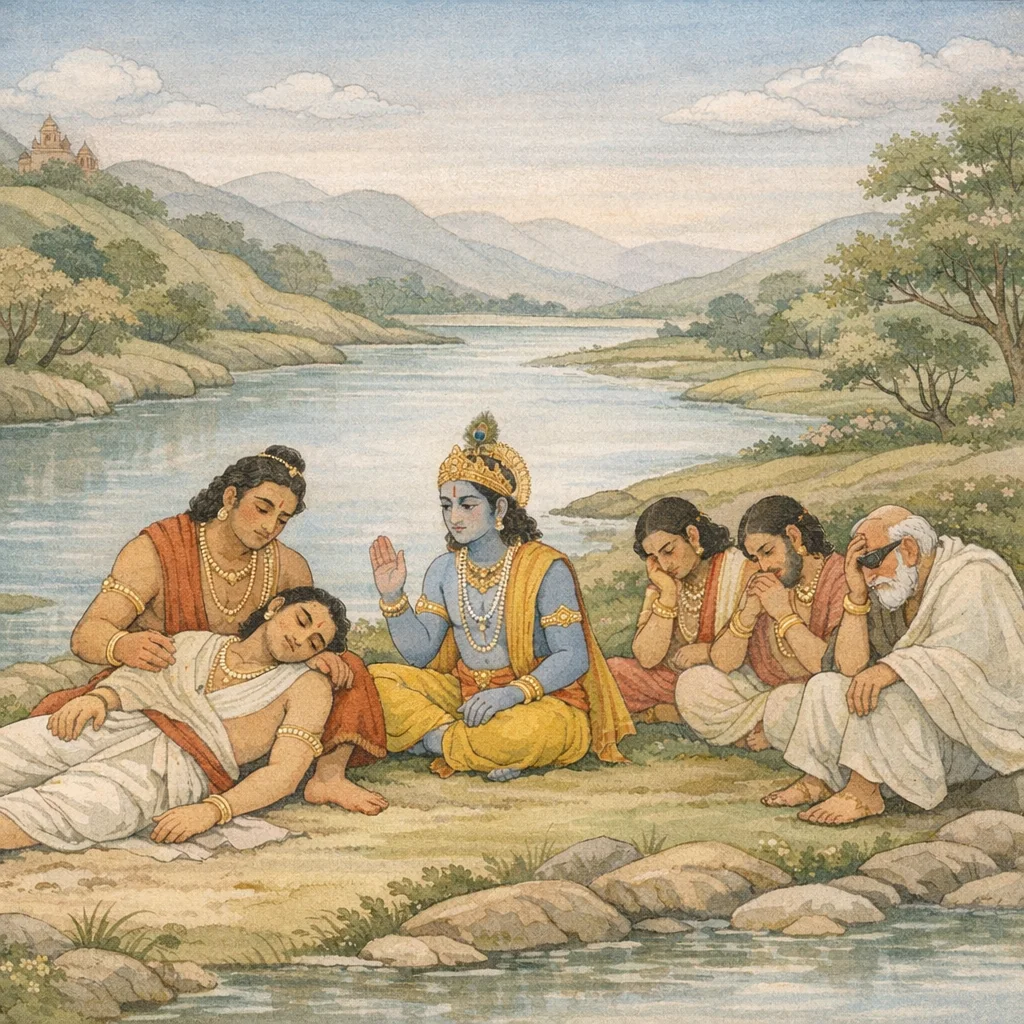
Vaiśaṃpāyana describes Yudhiṣṭhira, having completed the prescribed water-rites (kṛtodaka), crossing and then collapsing on the bank of the Gaṅgā in visible grief, compared to an elephant struck by a hunter. Bhīma, urged by Kṛṣṇa, physically supports him; Kṛṣṇa verbally restrains despair. The Pāṇḍavas gather, sharing renewed sorrow at Yudhiṣṭhira’s condition. Dhṛtarāṣṭra—present and burdened by his own losses—addresses Yudhiṣṭhira: urging him to rise, perform immediate royal duties, and accept the earth he has won in accordance with kṣatra-dharma. He states that he (and Gāndhārī) have stronger cause for lament, being bereft of sons, and confesses regret for not listening to Vidura’s beneficial counsel. He recalls Vidura’s earlier warning that Duryodhana’s wrongdoing would destroy the lineage, including recommendations to restrain Duryodhana, keep him away from Karṇa and Śakuni, prevent the gambling catastrophe, and install Yudhiṣṭhira as king (or, alternatively, govern as a stabilizing regent). The chapter closes with Dhṛtarāṣṭra’s admission of being immersed in grief due to ignoring sweet, prudent advice, while emphasizing that Yudhiṣṭhira should not succumb to sorrow despite the elders’ suffering.
Chapter Arc: युद्ध के बाद की शांति भी शांति नहीं—गंगातट पर कृतोदक के पश्चात युधिष्ठिर का मन टूटता है, और वे शोक के भार से जैसे रणभूमि में फिर गिर पड़ते हैं। → धृतराष्ट्र के साथ अंतिम संस्कार-क्रिया (कृतोदक) के बाद युधिष्ठिर की इन्द्रियाँ व्याकुल हो उठती हैं; वे तट पर व्याध-विद्ध गज की भाँति ढहते हैं। पाण्डव उन्हें देखकर स्वयं फिर शोक में डूब जाते हैं। कृष्ण संकेत करते हैं, भीम उन्हें थामते हैं—पर भीतर का अपराध-बोध और राज्य-भार का भय थमता नहीं। → धृतराष्ट्र का आत्मस्वीकार—विदुर की दूरदर्शी सलाह (दुर्योधन का वध/धर्मराज का अभिषेक) न मानकर दुर्योधन का साथ देने का फल ‘शोक-सागर’ बनकर लौटा; यह स्वीकारोक्ति युधिष्ठिर के शोक को वैध भी करती है और और तीखा भी। → धृतराष्ट्र युधिष्ठिर को दृष्टि उठाकर माता-पिता (वृद्ध जन) के दुःख की ओर देखने और स्वयं को अत्यधिक न शोक करने का उपदेश देते हैं—राजधर्म की ओर लौटने का संकेत, और परिवार-धर्म के प्रति उत्तरदायित्व का स्मरण। → युधिष्ठिर का शोक अभी शांत नहीं—क्या वे राज्य-धर्म स्वीकार कर पाएँगे, और क्या यही शोक आगे अश्वमेध के संकल्प में रूपांतरित होगा?
Shlokas
Verse 1
अनुशासनपर्वकी कुल श्लोकसंख्या-- ९८१० ॥|* नशा (0) आस अस न ॥ ३० श्रीपरमात्मने नम: ।। श्रीमहाभारतम् आश्वमेधिकपर्व अश्वमेधपर्व प्रथमो 5 ध्याय: युधिष्ठिरका शोकमग्न होकर गिरना और धृतराष्ट्रका उन्हें समझाना नारायणं नमस्कृत्य नरं चैव नरोत्तमम् | देवीं सरस्वतीं चैव ततो जयमुदीरयेत्,अन्तर्यामी नारायणस्वरूप भगवान् श्रीकृष्ण, (उनके नित्य सखा) नरस्वरूप नरश्रेष्ठ अर्जुन, (उनकी लीला प्रकट करनेवाली) भगवती सरस्वती और (उनकी लीलाओंका संकलन करनेवाले) महर्षि वेदव्यासको नमस्कार करके जय (महाभारत)-का पाठ करना चाहिये इति श्रीमहाभारते आश्वमेधिके पर्वणि अश्वमेधपर्वणि प्रथमो5ध्याय:
Vaiśampāyana said: Having bowed to Nārāyaṇa, and also to Nara—the best of men—and likewise to the goddess Sarasvatī, one should then recite ‘Jaya’ (the Mahābhārata). This opening invocation frames the ensuing narrative as a sacred, ethically charged remembrance: the epic is to be approached with reverence to the divine indweller, the exemplary human hero, and the power of inspired speech that preserves and reveals dharma.
Verse 2
वैशमग्पायन उवाच कृतोदकं तु राजान धृतराष्ट्रं युधिष्ठिर: । पुरस्कृत्य महाबाहुरुत्तताराकुलेन्द्रियः,वैशम्पायनजी कहते हैं--जनमेजय! जब राजा धृतराष्ट्र भीष्मको जलांजलि दे चुके, तब महाबाहु युधिष्ठिर उन्हें आगे करके जलसे बाहर निकले। उस समय उनकी सम्पूर्ण इन्द्रियाँ शोकसे व्याकुल हो रही थीं
Vaiśaṃpāyana said: O Janamejaya, when King Dhṛtarāṣṭra had completed the water-offering rites (for Bhīṣma), the mighty-armed Yudhiṣṭhira, placing him in front as an elder to be honored, came up out of the water. At that time his senses were wholly unsettled, overwhelmed by grief—showing how even the righteous must pass through sorrow while still upholding reverence and proper conduct.
Verse 3
उत्तीर्य तु महाबाहुर्बाष्पव्याकुललोचन: । पपात तीरे गड़ाया व्याधविद्ध इव द्विप:,बाहर निकलकर विशालबाहु युधिष्ठिर गंगाजीके तटपर व्याथके बाणोंसे बिंधे हुए गजराजके समान गिर पड़े। उस समय उनके दोनों नेत्रोंसे आँसुओंकी धारा बह रही थी
Having come out (of the river), the mighty-armed Yudhiṣṭhira—his eyes clouded and overwhelmed with tears—collapsed on the bank of the Gaṅgā, like a great elephant struck by a hunter’s arrow. The scene underscores how even a righteous king, burdened by the moral weight of past violence and responsibility, can be physically undone by grief.
Verse 4
तं॑ सीदमानं जग्राह भीम: कृष्णेन चोदित: । मैवमित्यब्रवीच्चैनं कृष्ण: परबलार्दन:,उन्हें शिथिल होते देख श्रीकृष्णकी प्रेरणासे भीमसेनने उन्हें पकड़ लिया। तत्पश्चात् शत्रुसेनाका संहार करनेवाले श्रीकृष्णने उनसे कहा--'राजन्! आपको ऐसा अधीर नहीं होना चाहिये!
Seeing him falter, Bhīma, urged on by Kṛṣṇa, caught hold of him and held him up. Then Kṛṣṇa, the crusher of hostile might, said to him: “O King, you should not lose yourself in such impatience and distress.”
Verse 5
तमार्त पतितं भूमौ श्वसन्तं च पुन: पुनः । ददृशुः पार्थिवा राजन् धर्मपुत्रं युधिष्ठिरम्,राजन! वहाँ आये हुए समस्त भूपालोंने देखा कि धर्मपुत्र युधिष्ठिर शोकार्त होकर पृथ्वीपर पड़े हैं और बारंबार लंबी साँस खींच रहे हैं
Vaiśaṃpāyana said: O King, the assembled rulers saw Dharmaputra Yudhiṣṭhira fallen upon the ground in anguish, again and again drawing heavy breaths—an outward sign of the inner burden of grief and responsibility that follows the war.
Verse 6
त॑ं दृष्टवा दीनमनसं गतसत्त्वं नरेश्वरम् | भूय: शोकसमाविष्टा: पाण्डवा: समुपाविशन्,राजाको इतना दीनचित्त और हतोत्साह देखकर पाण्डव फिर शोकमें डूब गये और उन्हींके पास बैठ रहे
Seeing the king—his mind sunk in dejection and his inner strength spent—the Pāṇḍavas were once again overwhelmed by grief, and they sat down close by him, sharing in his sorrow.
Verse 7
राजा तु धृतराष्ट्रश्न पुत्रशोकाभिपीडित: । वाक्यमाह महाबुद्धि: प्रज्ञाचक्षुन्नरिश्वरम्,उस समय पुत्रशोकसे पीड़ित हुए परम बुद्धिमान प्रज्ञाचक्षु राजा धृतराष्ट्रने महाराज युधिष्ठिस्से कहा--
Then King Dhṛtarāṣṭra, crushed by grief for his sons, addressed the lord of men with words. Though blinded in body, he was one whose vision was wisdom—speaking from the moral weight of loss in the aftermath of war.
Verse 8
उत्तिष्ठ कुरुशार्टूल कुरु कार्यमनन्तरम् | क्षत्रधर्मेण कौन्तेय जितेयमवनी त्वया,“कुरुवंशके सिंह! कुन्तीकुमार! उठो और इसके बाद जो कार्य प्राप्त है, उसे पूर्ण करो। तुमने क्षत्रियधर्मके अनुसार इस पृथ्वीपर विजय पायी है
Vaiśaṃpāyana said: “Rise, tiger among the Kurus. Accomplish without delay the task that now lies before you. O son of Kuntī, by the dharma of a kṣatriya you have won this earth; therefore proceed to the next duty that follows victory.”
Verse 9
भुड्क्ष्व भोगान् भ्रातृभिश्च सुहृद्धिश्न मनोडनुगान् । शोचितव्यं न पश्यामि त्वया धर्मभूतां वर,“धर्मात्माओंमें श्रेष्ठ युधिष्ठिर!ी अब तुम अपने भाइयों और सुहृदोंके साथ मनोवांछित भोग भोगो। तुम्हारे लिये शोक करनेका कोई कारण मुझे नहीं दिखायी देता
Vaiśaṃpāyana said: “O best among the upholders of dharma, Yudhiṣṭhira, enjoy the rightful pleasures you desire together with your brothers and loyal friends. I see no reason for you to grieve any longer.”
Verse 10
शोचितव्यं मया चैव गान्धार्या च महीपते । ययो: पुत्रशतं नष्ट स्वप्नलब्धं यथा धनम्,'पृथ्वीनाथ! शोक तो मुझको और गान्धारीको करना चाहिये, जिनके सौ पुत्र स्वप्नमें प्राप्त हुए धनकी भाँति नष्ट हो गये
Vaiśaṃpāyana said: “O king, it is for me—and for Gāndhārī as well—to grieve: for the hundred sons of hers have perished, vanishing like wealth obtained in a dream.”
Verse 11
अश्रुत्वा हितकामस्य विदुरस्य महात्मन: । वाक्यानि सुमहार्थानि परितप्यामि दुर्मति:,“अपने हितैषी महात्मा विदुरके महान् अर्थयुक्त वचनोंको अनसुना करके आज मैं दुर्बुद्धि धृतराष्ट्र अत्यन्त संतप्त हो रहा हूँ
Having refused to heed the profoundly meaningful words of the great-souled Vidura—who sought only my welfare—I, the foolish Dhṛtarāṣṭra, now burn with remorse.
Verse 12
उक्तवान् विदुरो यन्मां धर्मात्मा दिव्यदर्शन: । दुर्योधनापराधेन कुलं ते विनशिष्यति,“दिव्य दृष्टि रखनेवाले धर्मात्मा विदुरने मुझसे यह पहले ही कह दिया था कि “दुर्योधनके अपराधसे आपका सारा कुल नष्ट हो जायगा। यदि आप अपने कुलका कल्याण करना चाहते हैं तो मेरी बात मान लीजिये। इस मन्दबुद्धि दुष्टात्मा राजा दुर्योधनको मार डालिये
Vaiśaṃpāyana said: “The righteous Vidura, endowed with divine sight, had already told me: ‘Because of Duryodhana’s wrongdoing, your entire lineage will be destroyed.’”
Verse 13
स्वस्ति चेदिच्छसे राजन् कुलस्य कुरु मे वच: । वध्यतामेष दुष्टात्मा मन्दो राजा सुयोधन:,“दिव्य दृष्टि रखनेवाले धर्मात्मा विदुरने मुझसे यह पहले ही कह दिया था कि “दुर्योधनके अपराधसे आपका सारा कुल नष्ट हो जायगा। यदि आप अपने कुलका कल्याण करना चाहते हैं तो मेरी बात मान लीजिये। इस मन्दबुद्धि दुष्टात्मा राजा दुर्योधनको मार डालिये
Vaiśaṃpāyana said: “O King, if you truly desire the welfare of your lineage, then do as I say. Let this wicked-souled, dull-witted king Suyodhana be slain.”
Verse 14
कर्णश्न शकुनिश्चैव नैनं पश्यतु कहिचित् । द्यूतसंघातमप्येषामप्रमादेन वारय,“कर्ण और शकुनिको इससे कभी मिलने न दीजिये। आप पूर्ण सावधान रहकर इन सबके द्यूतविषयक संगठनको रोकिये
Vaiśaṃpāyana said: “Let neither Karṇa nor Śakuni ever meet him. And with unremitting vigilance, restrain even the slightest gathering among them that tends toward gambling.”
Verse 15
अभिषेचय राजानं धर्मात्मानं युधिष्ठिरम् । स पालयिष्यति वशी धर्मेण पृथिवीमिमाम्,“धर्मात्मा राजा युधिष्ठिरको अपने राज्यपर अभिषिक्त कीजिये। ये मन और इन्द्रियोंको वशमें रखनेवाले हैं, अतः धर्मपूर्वक इस पृथ्वीका पालन करेंगे
Vaiśaṃpāyana said: “Consecrate King Yudhiṣṭhira, whose very nature is dharma. Self-controlled and master of his senses, he will govern this earth in accordance with righteousness.”
Verse 16
अथ नेच्छसि राजानं कुन्तीपुत्रं युधिष्ठिरम् । मेढीभूत: स्वयं राज्यं प्रतिगृह्नीष्व पार्थिव,“नरेश्वर! यदि आप कुन्तीपुत्र युधिष्ठिरको राजा बनाना नहीं चाहते तो स्वयं ही मेठ बनकर सारे राज्यका भार स्वयं ही लिये रहिये
Vaiśaṃpāyana said: “If you do not wish to have Kuntī’s son Yudhiṣṭhira installed as king, then you yourself—becoming the central pillar that bears the yoke—accept the kingdom and carry its burden. O ruler of men, take the responsibility upon yourself.”
Verse 17
सम॑ सर्वेषु भूतेषु वर्तमानं नराधिप । अनुजीवन्तु सर्वे त्वां ज्ञातयो भ्रातृभि: सह,“महाराज! आप सभी प्राणियोंके प्रति समान बर्ताव करें और सभी सजातीय मनुष्य अपने भाई-बन्धुओंके साथ आपके आश्रित रहकर जीवन-निर्वाह करें"
Vaiśaṃpāyana said: “O king, conduct yourself with equal regard toward all beings. Let all your kinsmen, together with their brothers, live depending upon you and sustain their livelihood under your protection.”
Verse 18
एवं ब्रुवति कौन्तेय विदुरे दीर्घदर्शिनि । दुर्योधनमहं पापमन्ववर्त वृथामति:,“कुन्तीनन्दन! दूरदर्शी विदुरके ऐसा कहनेपर भी मैंने पापी दुर्योधनका ही अनुसरण किया। मेरी बुद्धि निरर्थक हो गयी थी
Vaiśaṃpāyana said: “O son of Kuntī, even while the far-seeing Vidura was speaking thus, I—my judgment rendered futile—kept following the sinful Duryodhana.”
Verse 19
अश्रुत्वा तस्य धीरस्य वाक्यानि मधुराण्यहम् । फल प्राप्प महद् दुःखं निमग्न: शोकसागरे,'धीर विदुरके मधुर वचनोंको अनसुना करके मुझे यह महान् दुःखरूपी फल प्राप्त हुआ है। मैं शोकके महान् समुद्रमें डूब गया हूँ
Having failed to listen to the sweet, wise words of that steadfast man, I have reaped a grievous fruit—great sorrow. I am sunk in the ocean of grief.
Verse 20
वृद्धौ हि तेडद्य पितरौ पश्य नौ दुःखितौ नृप । न शोचितव्यं भवता पश्यामीह जनाधिप,“नरेश्वर! दुःखमें डूबे हुए हम दोनों बूढ़े माता-पिताकी ओर देखो। तुम्हारे लिये शोक करनेका औचित्य मैं नहीं देख पाता हूँ”
Vaiśaṃpāyana said: “O king, look—your two parents are now aged, and we are overwhelmed with sorrow. Yet, O lord of men, I do not see that you ought to grieve for your own sake here. Rather, let your gaze fall upon us and act with the steadiness and responsibility befitting a ruler.”
Frequently Asked Questions
The dilemma is whether a righteous ruler may remain immobilized by grief after catastrophic loss, or must re-enter governance as a dharmic obligation to protect social order and dependents.
The chapter frames duty as a stabilizing ethic: sorrow is acknowledged, but leadership requires composure, responsiveness to wise counsel, and action aligned with dharma and public welfare.
No explicit phalaśruti appears in these verses; the meta-function is implicit—positioning counsel, repentance, and duty as interpretive keys for reading the post-war restoration narrative.