Adhyaya 14
धृतराष्ट्रस्य क्षमायाचनं तथा युधिष्ठिरे न्यासदानम् / Dhṛtarāṣṭra’s Request for Forgiveness and the Entrustment to Yudhiṣṭhira
Upa-parva: Nagarānuśāsana / Kṣamā-yācñā Episode (Dhṛtarāṣṭra’s public request for pardon)
Dhṛtarāṣṭra addresses the assembled citizens and countryfolk, recalling the righteous governance of Śaṃtanu and Vicitravīrya (protected by Bhīṣma) and noting Pāṇḍu’s beloved status and proper rule. He acknowledges his own service to the people, asking that any shortcomings be forgiven. He then identifies Duryodhana’s untroubled enjoyment of the kingdom and admits that the ensuing great conflict arose from the prince’s errors and from Dhṛtarāṣṭra’s own misgovernance. Seeking reconciliation, he requests that the community not retain resentment and asks permission to depart, emphasizing his old age, bereavement, and suffering. He presents Gāndhārī as equally afflicted and requests similar compassion for her. Dhṛtarāṣṭra publicly affirms Yudhiṣṭhira as the Kuru king to be regarded in all circumstances, praising the Pāṇḍava brothers as capable counselors aligned with dharma and artha. He frames Yudhiṣṭhira as a ‘nyāsa’ (entrusted charge) given to the people and conversely the people as entrusted to the king, then asks pardon for any offenses committed by his sons or other dependents. The chapter closes with the public’s wordless, tearful reaction and mutual glances, signaling collective grief and the gravity of ethical transition.
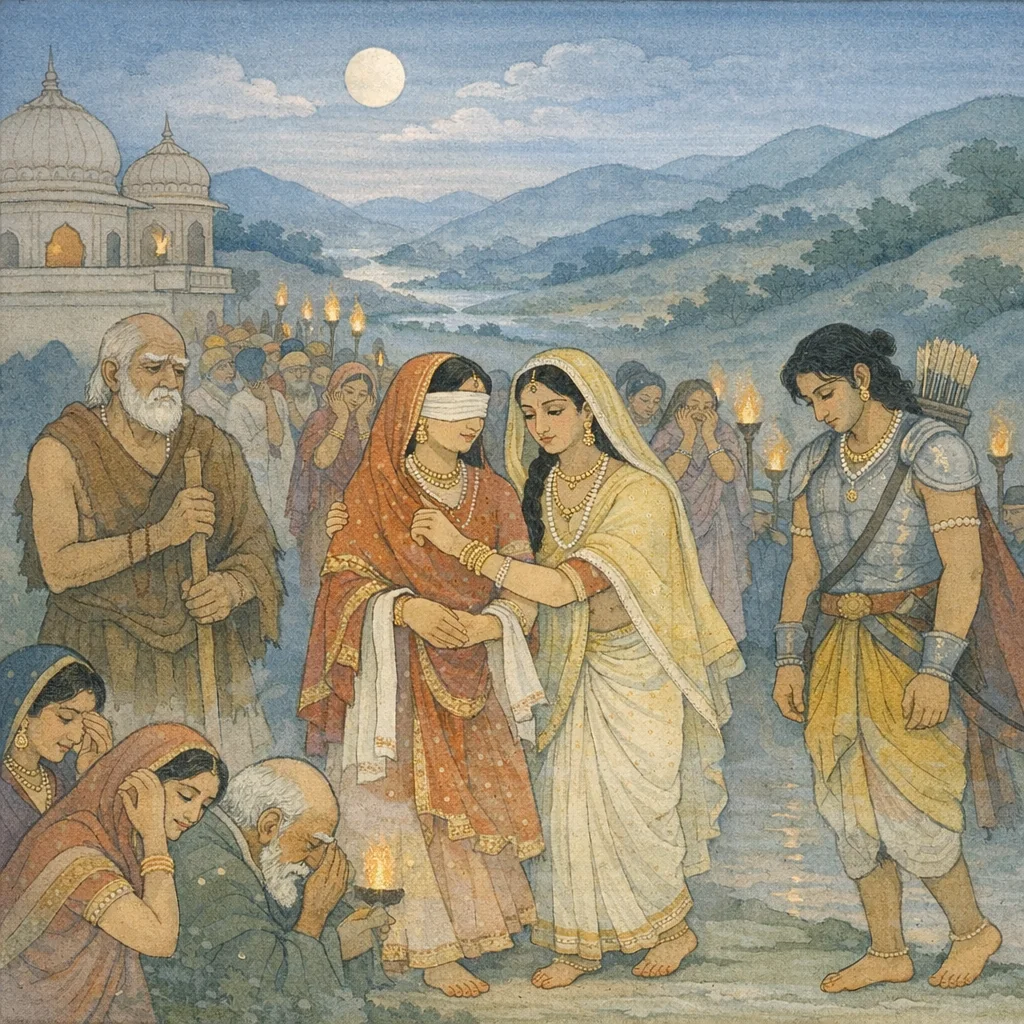
Chapter Arc: कार्तिक-पूर्णिमा की प्रभात बेला में अंबिकासुत धृतराष्ट्र पाण्डवों को बुलाकर वन-प्रस्थान का निश्चय प्रकट करते हैं—राजमहल के भीतर ही संन्यास का शंखनाद गूंज उठता है। → वेदपारंगत ब्राह्मणों से यात्राकालोचित इष्टि कराकर, अग्निहोत्र को आगे रख, वल्कल-अजिन धारण कर धृतराष्ट्र गृह से निकलते हैं। नगर-जन और अंतःपुर की स्त्रियाँ शोकाकुल होकर राजमार्ग पर उमड़ पड़ती हैं; पाण्डवों के मन में पुरानी वनवास-यात्राओं और द्यूतसभा की स्मृतियाँ फिर से जाग उठती हैं। → अर्जुन तीव्र दुःख से बार-बार निःश्वास लेते हुए युधिष्ठिर से विनय करते हैं—‘ऐसा न हो’—पर स्वयं को रोककर दीनवत् शिथिल पड़ जाते हैं; उसी क्षण कुंती, नेत्रबद्ध गांधारी का हाथ थामकर उसे सहारा देती हैं और धृतराष्ट्र गांधारी के कंधे पर हाथ रखकर, मौन दृढ़ता से आगे बढ़ते हैं—वैर का युग मानो करुणा में गलकर विदा लेता है। → भीम, अर्जुन, माद्रीपुत्र (नकुल-सहदेव), विदुर, संजय, धौम्य आदि आचार्य-जन तथा अन्य अनुयायी अश्रुपूरित कंठ से साथ चलते हैं; हस्तिनापुर का पौरवर्ग धृतराष्ट्र के वन-गमन से वैसा ही शोकग्रस्त होता है जैसा कभी पाण्डवों के वनवास-प्रस्थान पर हुआ था। → वन-मार्ग पर यह करुण यात्रा आगे किस आश्रम-जीवन और किस अंतिम परिणति की ओर बढ़ेगी—यह प्रश्न नगर के आँसुओं के बीच अधूरा रह जाता है।
Shlokas
Verse 1
ऑपन-माज बछ। अऑि-छऋायज पज्चदशो< ध्याय: गान्धारीसहित धृतराष्ट्रका वनको प्रस्थान वैशम्पायन उवाच ततः प्रभाते राजा स धृतराष्ट्रो<म्बिकासुत: । आहुय पाण्डवान् वीरान् वनवासे कृतक्षण:
Vaiśampāyana said: Then, at daybreak, King Dhṛtarāṣṭra, the son of Ambikā, having summoned the heroic Pāṇḍavas, resolved upon departing for life in the forest.
Verse 2
कार्तिक्यां कारयित्वेष्टिं ब्राह्मुणैवेंदपारगै:,उस दिन कार्तिककी पूर्णिमा थी। उसमें उन्होंने वेदके पारंगत विद्वान् ब्राह्मणोंसे यात्राकालोचित इष्टि करवाकर वल्कल और मृगचर्म धारण किये और अग्निहोत्रको आगे करके पुत्र-वधुओंसे घिरे हुए राजा धृतराष्ट्र राजभवनसे बाहर निकले
Vaiśampāyana said: On the full-moon day of Kārttika, having had the seasonally appropriate iṣṭi-rite performed by learned Brāhmaṇas who had mastered the Vedas, King Dhṛtarāṣṭra donned bark-garments and a deer-skin. Placing the agnihotra at the forefront as his sacred duty, and surrounded by his sons’ wives, he departed from the royal palace.
Verse 3
अगन्निहोत्रं पुरस्कृत्य वल्कलाजिनसंवृत: । वधूजनवृतो राजा निर्ययौ भवनात् ततः,उस दिन कार्तिककी पूर्णिमा थी। उसमें उन्होंने वेदके पारंगत विद्वान् ब्राह्मणोंसे यात्राकालोचित इष्टि करवाकर वल्कल और मृगचर्म धारण किये और अग्निहोत्रको आगे करके पुत्र-वधुओंसे घिरे हुए राजा धृतराष्ट्र राजभवनसे बाहर निकले
Vaiśampāyana said: Having placed the sacred household fire (Agnihotra) in front, the king—clad in bark-garments and a deer-skin—departed from the palace. Surrounded by his daughters-in-law, he went forth, marking a deliberate turn from royal comfort toward the disciplined life of renunciation and duty.
Verse 4
ततः स्त्रिय: कौरवपाण्डवानां याक्षापरा: कौरवराजवंश्या: । तासां नाद: प्रादुरासीत् तदानीं वैचित्रवीर्ये नृपतौ प्रयाते
Then the women of the Kauravas and the Pāṇḍavas—ladies of the royal Kuru line, overwhelmed by grief—raised a loud cry at that very moment, when King Vicitravīrya had departed (from life).
Verse 5
विचित्रवीर्यनन्दन राजा धृतराष्ट्रके इस प्रकार प्रस्थान करनेपर कौरवों और पाण्डवोंकी स्त्रियाँ तथा कौरवराजवंशकी अन्यान्य महिलाएँ सहसा रो पड़ीं। उनके रोनेका महान् शब्द उस समय सब ओर गूँज उठा था ।। ततो लाजै: सुमनोभिश्नव राजा विचित्राभिस्तद् गृहं पूजयित्वा । सम्पूज्यार्थ्भुत्यवर्ग च सर्व ततः समुत्सृज्य ययौ नरेन्द्र:,घरसे निकलकर राजा धुृतराष्ट्रने लावा और भाँति-भाँतिके फूलोंसे उस राजभवनकी पूजा की और समस्त सेवकवर्गका धनसे सत्कार करके उन सबको छोड़कर वे महाराज वहाँसे चल दिये
Vaiśampāyana said: When King Dhṛtarāṣṭra, the son of Vicitravīrya, set out in this manner, the women of the Kauravas and the Pāṇḍavas, and the other ladies of the royal Kuru line, suddenly broke into tears. The great sound of their lamentation then resounded in every direction. Thereafter the king worshipped that royal residence with parched grain and with fresh, many-coloured flowers; and having honoured the entire body of attendants with gifts, he dismissed them all and departed.
Verse 6
ततो राजा प्राञ्जलिवेंपमानो युधिष्ठिर: सस्वरं बाष्पकण्ठ: । विमुच्योच्चैर्महानादं हि साधो क्व यास्यसीत्यपतत् तात भूमौ,तात! उस समय राजा युधिष्छिर हाथ जोड़े हुए काँपने लगे। आँसुओंसे उनका गला भर आया। वे जोर-जोरसे महान् आर्तनाद करते हुए फूट-फ़ूटकर रोने लगे। और “महात्मन्! आप मुझे छोड़कर कहाँ चले जा रहे हैं।” ऐसा कहते हुए पृथ्वीपर गिर पड़े
Then King Yudhiṣṭhira, with palms joined, began to tremble; his voice broke as tears choked his throat. Releasing a loud, anguished cry, he wept openly and, saying, “O noble one, where are you going, leaving me behind?”, he fell down upon the earth.
Verse 7
तथार्जुनस्तीव्रदु:खाभितप्तो मुहुर्मुहुर्नि:श्वसन् भारता ग्र्यः । युधिष्ठिरं मैवमित्येवमुक्त्वा निगृह्माथो दीनवत् सीदमान:,उस समय भरतवंशके अग्रगण्य वीर अर्जुन दुस्सह दुःखसे संतप्त हो बारंबार लंबी साँस खींचते हुए वहाँ युधिष्ठिससे बोले--“भैया! आप ऐसे अधीर न हो जाइये।” यों कहकर वे उन्हें दोनों हाथोंसे पकड़कर दीनकी भाँति शिथिल होकर बैठ गये
Vaiśampāyana said: Then Arjuna, foremost among the Bharatas, scorched by unbearable grief and again and again heaving deep sighs, spoke to Yudhiṣṭhira, “Brother, do not become so overwhelmed.” Saying this, he held him with both hands and, like one utterly dejected, sank down and sat, his strength giving way.
Verse 8
वृकोदर: फाल्गुनश्चैव वीरौ माद्रीपुत्रौ विदुरः संजयश्च । वैश्यापुत्र: सहितो गौतमेन धौम्यो विदप्राश्चान्वयुर्बाष्पकण्ठा:,तत्पश्चात् युधिष्ठिरसहित भीमसेन, अर्जुन, वीर माद्रीकुमार, विदुर, संजय, वैश्यापुत्र युयुत्सु, कृपाचार्य, धौम्य तथा और भी बहुत-से ब्राह्मण आँसू बहाते हुए गद्गदकण्ठ होकर उनके पीछे-पीछे चले। आगे-आगे कुन्ती अपने कंधेपर रखे हुए गान्धारीके हाथको पकड़े चल रही थीं। उनके पीछे आँखोंपर पट्टी बाँधे गान्धारी थी और राजा धुृतराष्ट्र गान्धारीके कंधेपर हाथ रखे निश्चिन्ततापूर्वक चले जा रहे थे
Vaiśampāyana said: Bhīma (Vṛkodara) and Arjuna (Phālguna), the two heroic sons of Mādrī (Nakula and Sahadeva), Vidura and Sañjaya, and Yuyutsu—the son of a Vaiśya woman—together with Gautama (Kṛpa), Dhaumya, and many other brāhmaṇas followed behind them, their throats choked with tears. (In the continuing scene) Kuntī walked in front holding Gāndhārī’s hand upon her shoulder; behind her came blindfolded Gāndhārī, while King Dhṛtarāṣṭra, resting his hand on Gāndhārī’s shoulder, proceeded with quiet trust.
Verse 9
कुन्ती गान्धारीं बद्धनेत्रां व्रजन्तीं स्कन्धासक्तं हस्तमथोद्वहन्ती । राजा गान्धार्या: स्कन्धदेशेडवसज्य पा्िं ययौ धृतराष्ट्र: प्रतीत:,तत्पश्चात् युधिष्ठिरसहित भीमसेन, अर्जुन, वीर माद्रीकुमार, विदुर, संजय, वैश्यापुत्र युयुत्सु, कृपाचार्य, धौम्य तथा और भी बहुत-से ब्राह्मण आँसू बहाते हुए गद्गदकण्ठ होकर उनके पीछे-पीछे चले। आगे-आगे कुन्ती अपने कंधेपर रखे हुए गान्धारीके हाथको पकड़े चल रही थीं। उनके पीछे आँखोंपर पट्टी बाँधे गान्धारी थी और राजा धुृतराष्ट्र गान्धारीके कंधेपर हाथ रखे निश्चिन्ततापूर्वक चले जा रहे थे
Vaiśampāyana said: Kuntī went forward, holding up the hand of Gāndhārī whose eyes were bound, keeping that hand resting upon her own shoulder. King Dhṛtarāṣṭra followed, calm and trusting, placing his hand upon Gāndhārī’s shoulder. After them came Yudhiṣṭhira with Bhīmasena and Arjuna, the valiant sons of Mādrī, Vidura, Sañjaya, Yuyutsu the son of a Vaiśya woman, Kṛpācārya, Dhaumya, and many other brāhmaṇas—walking behind them with tears, their voices choked with grief.
Verse 10
पाव जा ए-स्प्य्ल्न है24 उ ॥। ि |! हि 8] नल 28९ ५ कह |] 52 4 | ४ ॥ 0७४७5 |! तथा कृष्णा द्रौपदी सात्वती च बालापत्या चोत्तरा कौरवी च । चित्राड़दा याश्र काश्रित्स्त्रियो5न्या: सार्थ राज्ञा प्रस्थितास्ता वधूभि:,द्रपदकुमारी कृष्णा, सुभद्रा, गोदमें नन््हा-सा बालक लिये उत्तरा, कौरव्यनागकी पुत्री उलूपी, बभ्रुवाहनकी माता चित्रांगदा तथा अन्य जो कोई भी अन्तःपुरकी स्त्रियाँ थीं; वे सब अपनी बहुओंसहित राजा धृतराष्ट्रके साथ चल पड़ीं
Vaiśampāyana said: Draupadī (Kṛṣṇā) also set out, and Subhadrā of the Sātvata line, and Uttarā of the Kuru house carrying her young child. Citrāṅgadā too, and whatever other women of the inner apartments there were—all of them departed together with the king, accompanied by their daughters-in-law.
Verse 11
तासां नादो रुदतीनां तदासीदू राजन् दुःखात् कुररीणामिवोच्चै: । ततो निष्पेतुर्रह्यिणक्षत्रियाणां विट्शूद्राणां चैव भार्या: समान्तात्,राजन! उस समय वे सब स्ट्रियाँ दुःखसे व्याकुल हो कुररियोंके समान उच्चस्वरसे विलाप कर रही थीं। उनके रोनेका कोलाहल सब ओर व्याप्त हो गया था। उसे सुनकर पुरवासी ब्राह्मणों, क्षत्रियों, वैश्यों और शूद्रोंकी स्त्रियाँ भी चारों ओरसे घर छोड़कर बाहर निकल आयीं
Vaiśampāyana said: “O king, at that time the sound of those women weeping rose loudly—like the piercing cries of kurarī birds—born of grief. Then, from all around, the wives of householders—Kṣatriyas as well as Vaiśyas and Śūdras—rushed out from their homes.”
Verse 12
तन्निर्याणे दु:खित: पौरवर्गो गजाह्वये चैव बभूव राजन् | यथा पूर्व गच्छतां पाण्डवानां द्यूते राजन् कौरवाणां सभाया:,राजन! जैसे पूर्वकालमें द्यूतक्रीड़ाके समय कौरवसभासे निकलकर वनवासके लिये पाण्डवोंके प्रस्थान करनेपर हस्तिनापुरके नागरिकोंका समुदाय दु:खमें डूब गया था, उसी प्रकार धृतराष्ट्रके जाते समय भी समस्त पुरवासी शोकसे संतप्त हो उठे थे
Vaiśampāyana said: O King, when he set out, the entire body of citizens in Gajāhvaya (Hastināpura) was plunged into grief. Just as in former times—when, after the dice-game, the Pāṇḍavas departed from the Kauravas’ assembly for exile—the people of the city were overwhelmed by sorrow, so too were all the townsfolk tormented by lamentation at Dhṛtarāṣṭra’s departure.
Verse 13
या नापश्यंश्वन्द्रमसं न सूर्य रामा: कदाचिदपि तस्मिन् नरेन्द्रे । महावनं गच्छति कौरवेन्द्रे शोकेनार्ता राजमार्ग प्रपेदु:,रनिवासकी जिन रमणियोंने कभी बाहर आकर सूर्य और चन्द्रमाको भी नहीं देखा था, वे ही कौरवराज धृतराष्ट्रके महावनके लिये प्रस्थान करते समय शोकसे व्याकुल होकर खुली सड़कपर आ गयी थीं
Vaiśampāyana said: Those noble ladies who had never at any time seen the moon or the sun—so secluded had they been while that king lived—when the Kuru lord set out for the great forest, came out onto the public road, overwhelmed by grief.
Verse 15
इति श्रीमहाभारते आश्रमवासिके पर्वणि आश्रमवासपर्वणि धृतराष्ट्रनिर्याणे पज्चदशो<ध्याय:
Thus, in the Śrī Mahābhārata, within the Āśramavāsika Parva—specifically in the section on the forest-dwelling (āśrama-life) and the departure of Dhṛtarāṣṭra—ends the fifteenth chapter.
Verse 16
गान्धारीसहितो धीमानभ्यनन्दद् यथाविधि । वैशम्पायनजी कहते हैं--जनमेजय! तदनन्तर ग्यारहवें दिन प्रात:ःकाल गान्धारीसहित बुद्धिमान् अम्बिकानन्दन धृतराष्ट्रने वनवासकी तैयारी करके वीर पाण्डवोंको बुलाया और उनका यथावत् अभिनन्दन किया
Vaiśampāyana said: “O Janamejaya, thereafter, on the eleventh day at dawn, the wise Dhṛtarāṣṭra—son of Ambikā—accompanied by Gāndhārī, having made preparations for life in the forest, summoned the heroic Pāṇḍavas and greeted them in the proper, prescribed manner.”
Frequently Asked Questions
He confronts the tension between personal attachment to his sons and the duty of impartial kingship, admitting that partiality and permissiveness contributed to systemic harm and now require public atonement.
Legitimate authority after crisis is stabilized through truth-speaking, acceptance of responsibility, and forgiveness-seeking, coupled with a clear handover of protective obligations to a dharma-aligned successor.
No explicit phalaśruti appears in these verses; the meta-function is narrative-ethical—modeling reconciliation and the formal ‘nyāsa’ mechanism as part of the epic’s transition from conflict to renunciation.