Adhyaya 27
Gaṅgā-māhātmya: Siddha–Śilavṛtti-saṃvāda and Gaṅgā-stava (गङ्गामाहात्म्यं—सिद्ध-शिलवृत्ति-संवादः)
Upa-parva: Tīrtha-mahātmya (Gaṅgā-stava Itihāsa Episode)
Vaiśaṃpāyana describes Bhīṣma’s eminence and the scene of his attendance by Yudhiṣṭhira and others after Gaṅgeya (Bhīṣma) has been struck down in battle. Numerous ṛṣis arrive to see Bhīṣma; Yudhiṣṭhira honors them in proper sequence, they converse pleasantly, and then vanish from sight, leaving the Pāṇḍavas reflective on their tapas. After this, Yudhiṣṭhira asks Bhīṣma to identify the most sanctifying regions, polities, hermitages, mountains, and rivers. Bhīṣma answers by introducing an ancient narrative: a siddha, after traversing the earth, visits a householder who lives by śiloñcha/śilavṛtti (subsisting on gleaned grains) and is received according to rite. The householder asks the same question, and the siddha replies that those lands are best through which the Bhāgīrathī Gaṅgā flows. A long stava follows, asserting Gaṅgā’s superiority over austerities and sacrifices for obtaining an auspicious ‘gati’, emphasizing purification through seeing, touching, bathing, drinking, and even uttering her name; it also includes merit claims regarding ancestral uplift, removal of sin, and the affective solace of Gaṅgā-darśana. The siddha concludes that Gaṅgā’s qualities are immeasurable and urges sustained devotion; Bhīṣma applies the lesson to Yudhiṣṭhira. The chapter closes with a phalaśruti: hearing or reciting this Gaṅgā-stava-itihāsa releases one from impurities (kilbiṣa).
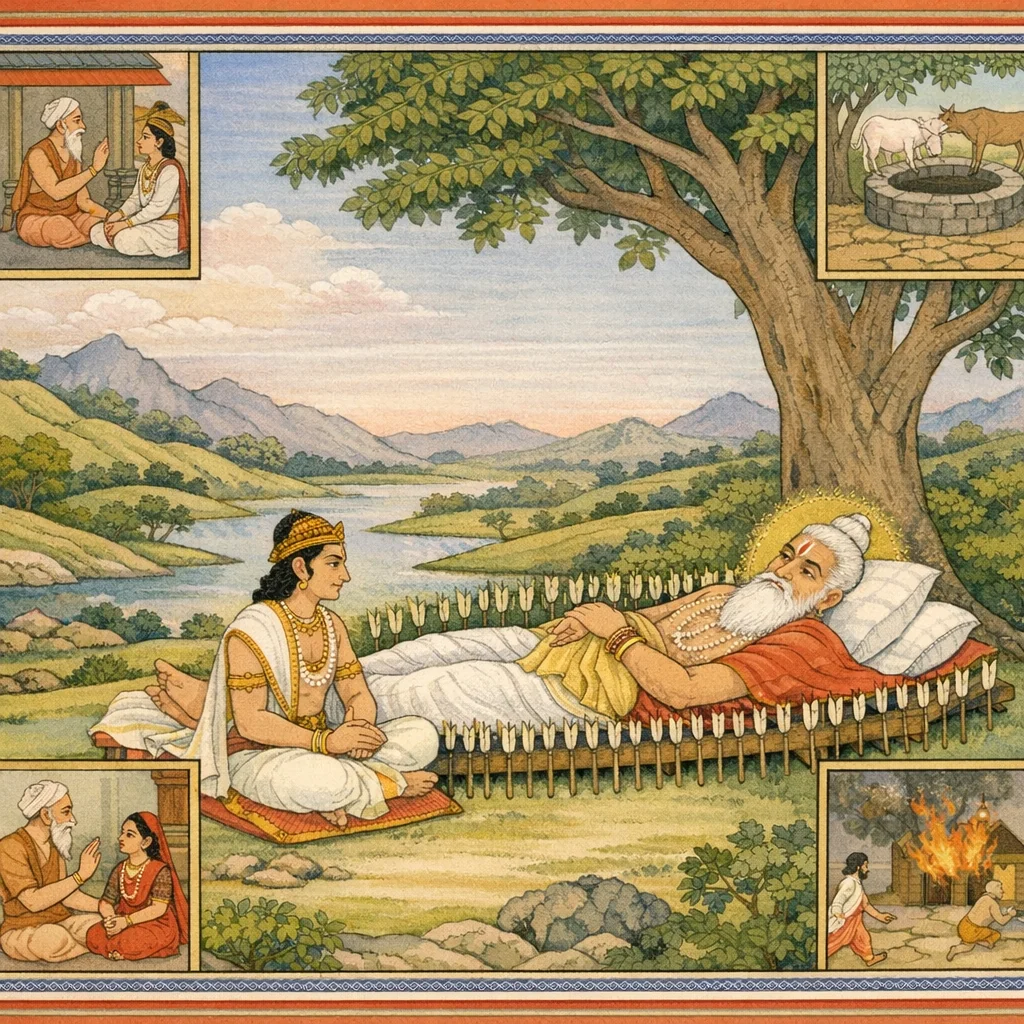
Chapter Arc: शान्ति के बाद के उपदेश-प्रसंग में भीष्म युधिष्ठिर से कहते हैं कि वे एक प्राचीन प्रश्न का उत्तर सुनें—ऐसे कौन-से कर्म हैं जो प्रत्यक्ष वध किए बिना भी ‘ब्रह्महत्या’ के तुल्य पाप बन जाते हैं। → भीष्म स्मरण कराते हैं कि उन्होंने कभी धर्म-निपुण व्यास से यह रहस्य पूछा था—अहिंसा का आवरण ओढ़कर भी ब्रह्मघ्नता कैसे घटित होती है। फिर वे एक-एक करके ऐसे सामाजिक-अन्याय गिनाते हैं: भूख से टूटे ब्राह्मण को ‘कुछ नहीं’ कहकर टालना, प्यास से व्याकुल गौओं के जल में बाधा डालना, योग्य वर होते हुए भी कन्या का विवाह न करना, ब्राह्मणों को अकारण मर्मभेदी शोक देना, असहाय/विकल ब्राह्मण की वस्तु हर लेना, और मोहवश आश्रम-वन-ग्राम-नगर में आग लगा देना। → सूची का नैतिक शिखर तब आता है जब ‘अहिंसा’ की परिभाषा उलट जाती है—यह स्पष्ट किया जाता है कि जीवन-रक्षा, आश्रय-रक्षा, अन्न-जल-रक्षा और ब्राह्मण-कल्याण में बाधा डालना भी ब्रह्मघात के समान है; पाप का केन्द्र ‘कर्म की हिंसा’ नहीं, ‘धर्म-रक्षा में विफलता’ बन जाता है। → भीष्म व्यास-वचन के आधार पर निष्कर्ष देते हैं कि जो व्यक्ति दीन, प्यासे, असहाय और धर्माश्रितों की रक्षा में बाधक बनता है, वह ब्रह्मघाती समझा जाए—क्योंकि वह समाज के धर्म-स्तम्भों को गिराता है। → अगले उपदेश के लिए संकेत रहता है कि अब इन पापों के प्रायश्चित्त/दान-धर्म और प्रतिकार-धर्म की विधियाँ आगे कही जाएँगी।
Shlokas
Verse 1
(दाक्षिणात्य अधिक पाठके ८३ श्लोक मिलाकर कुल १११३ “लोक हैं) न२्च्स्स्््तसािस्सि (9) ४२ >>, - जब कोई अपनी कन्याको इस शर्तपर ब्याहता है कि 'इससे जो पहला पुत्र होगा, उसे मैं गोद ले लूँगा और अपना पुत्र मानूँगा” तो उसे “पुत्रिकाधर्मके अनुसार विवाह” कहते हैं। इस नियमसे प्राप्त होनेवाला पुत्र श्राद्धका अधिकारी नहीं है। चतुर्विशो$ध्याय: ब्रह्महत्याके समान पापोंका निरूपण युधिछिर उवाच इदं मे तत्त्वतो राजन् वक्तुमहसि भारत । अहिंसयित्वापि कथं ब्रह्म॒हत्या विधीयते,युधिष्ठिरने पूछा--भरतवंशी नरेश! अब आप मुझे यह ठीक-ठीक बतानेकी कृपा करें कि ब्राह्मणकी हिंसा न करनेपर भी मनुष्यको ब्रह्महत्याका पाप कैसे लगता है?
Yudhiṣṭhira said: “O king, descendant of Bharata, explain this to me in its true nature: how can the sin called brahmahatyā—the grievous guilt bound up with a Brāhmaṇa’s death—be incurred even when one has not committed violence?”
Verse 2
भीष्म उवाच व्यासमामन्त्रय राजेन्द्र पुरा यत् पृष्टवानहम् । तत्ते5हं सम्प्रवक्ष्यामि तदिहैकमना: शृणु,भीष्मजीने कहा--राजेन्द्र! पूर्वकालमें मैंने एक बार व्यासजीको बुलाकर उनसे जो प्रश्न किया था (तथा उन्होंने मुझे उसका जो उत्तर दिया था), वह सब तुम्हें बता रहा हूँ। तुम यहाँ एकाग्रचित्त होकर सुनो
Bhīṣma said: “O king of kings, long ago I summoned Vyāsa and asked him a question. I shall now recount to you that very matter; listen here with a single-pointed mind.”
Verse 3
चतुर्थस्त्वं वसिष्ठस्य तत्त्वमाख्याहि मे मुने । अहिंसयित्वा केनेह ब्रह्महत्या विधीयते,मैंने पूछा था--'मुने! आप वसिष्ठजीके वंशजोंमें चौथी पीढ़ीके पुरुष हैं। कृपया मुझे यह ठीक-ठीक बताइये कि ब्राह्मणकी हिंसा न करनेपर भी किन कर्मोके करनेसे ब्रह्महत्याका पाप लगता है?”
Bhīṣma said: “O sage, you are the fourth in descent from Vasiṣṭha. Tell me the truth precisely: in this world, by what actions does the sin of brahmahatyā—the gravest guilt bound up with a Brāhmaṇa’s death—arise even when one has not committed violence against a Brāhmaṇa?”
Verse 4
इति पृष्टो मया राजन् पराशरशरीरज: । अब्रवीन्निपुणो धर्मे नि:संशयमनुत्तमम्,राजन! मेरे द्वारा इस प्रकार पूछनेपर पराशर-पुत्र धर्मनिपुण व्यासजीने यह संदेहरहित परम उत्तम बात कही--
Bhishma said: “O King, when I questioned him in this manner, Vyasa—the son of Parashara, born of his body—who was deeply skilled in dharma, replied with an unsurpassed teaching, free from all doubt.”
Verse 5
ब्राह्मणं स्वयमाहूय भिक्षार्थे कृशवृत्तिनम् । ब्रूयान्नास्तीति यः पश्चात्तं विद्याद् ब्रह्मघातिनम्,'भीष्म! जिसकी जीविकावृत्ति नष्ट हो गयी है, ऐसे ब्राह्मणको भिक्षा देनेके लिये स्वयं बुलाकर जो पीछे देनेसे इनकार कर देता है, उसे ब्रह्महत्यारा समझो
Bhishma said: “If someone personally summons a Brahmin whose livelihood has become meagre, calling him for alms, and then afterwards says, ‘There is nothing (to give),’ know that person to be a slayer of a Brahmin—guilty as one who commits brahma-hatyā.”
Verse 6
मध्यस्थस्येह विप्रस्थ योडनूचानस्थ भारत । वृत्तिं हरति दुर्बुद्धिस्तं विद्याद् ब्रह्मघातिनम्,“भरतनन्दन! जो दुष्ट बुद्धिवाला मनुष्य तटस्थ रहनेवाले विद्वान् ब्राह्मणकी जीविका छीन लेता है, उसे भी ब्रह्महत्यारा ही समझना चाहिये
Bhishma said: “O descendant of Bharata, know that man of wicked understanding who, here in this world, deprives a neutral and learned Brahmin of his means of livelihood to be no different from a slayer of a Brahmin.”
Verse 7
गोकुलस्य तृषार्तस्य जलार्थे वसुधाधिप । उत्पादयति यो विषध्नं त॑ विद्याद् ब्रह्मघातिनम्,'पृथ्वीनाथ! जो प्याससे पीड़ित हुई गौओंके पानी पीनेमें विघ्न डालता है, उसे भी ब्रह्मघाती जाने
Bhishma said: “O lord of the earth, one who creates a harmful obstruction when a herd of cows, tormented by thirst, seeks water—know that person to be a slayer of a Brahmin.”
Verse 8
यः प्रवृत्तां श्रुतिं सम्यक् शास्त्र वा मुनिभि: कृतम् । दूषयत्यनभिज्ञाय त॑ विद्याद् ब्रह्मघातिनम्,'जो मनुष्य उत्तम कर्मका विधान करनेवाली श्रुतियों और ऋषिप्रणीत शास्त्रोंपर बिना समझे-बूझे दोषारोपण करता है, उसको भी ब्रह्मघाती ही समझो
Bhīṣma said: Whoever, without true understanding, disparages the authoritative Vedic revelation that enjoins proper action, or the treatises composed by sages, should be regarded as a slayer of Brahman—one who commits a grave spiritual offense by undermining the foundations of dharma.
Verse 9
आत्मजां रूपसम्पन्नां महतीं सदृशे वरे | न प्रयच्छति य: कन्यां त॑ विद्याद् ब्रद्मघातिनम्,जो अपनी रूपवती कन्याकी बड़ी उम्र हो जानेपर भी उसका योग्य वरके साथ विवाह नहीं करता, उसे ब्रह्महत्यारा जाने
Bhīṣma said: If a man does not give his own daughter—endowed with beauty—when she has reached maturity, in marriage to a suitable bridegroom, he should be regarded as one who bears the sin of slaying a brāhmaṇa (brahma-ghātin).
Verse 10
अधर्मनिरतो मूढो मिथ्या यो वै द्विजातिषु । दद्यान्मर्मातिगं शोकं त॑ विद्याद् ब्रद्मघातिनम्
Bhīṣma said: “A deluded man, devoted to adharma, who speaks falsely and slanders among the twice-born (dvija)—if he inflicts grief that pierces to the very core, know him to be a slayer of a brāhmaṇa (brahma-ghātin).”
Verse 11
“जो पापपरायण मूढ़ मनुष्य ब्राह्मणोंको अकारण ही मर्मभेदी शोक प्रदान करता है, उसे ब्रह्मघाती जाने ।। चक्षुषा विप्रहीणस्य पंगुलस्य जडस्य वा । हरेत यो वै सर्वस्वं त॑ विद्याद् ब्रहद्मघातिनम्,“जो अन्धे, लूले और गूँगे मनुष्योंका सर्वस्व हर लेता है, उसे ब्रह्मघाती जाने
Bhīṣma said: The deluded man devoted to sin who, without cause, inflicts heart-piercing grief upon brāhmaṇas should be regarded as a brahma-ghātin. Likewise, whoever seizes the entire livelihood of one who is blind, or lame, or helpless and dull-witted—such a person should be known as a brahma-ghātin.
Verse 12
आश्रमे वा वने वापि ग्रामे वा यदि वा पुरे । आअन्मनिं समुत्सूजेन्मोहात्तं विद्याद् ब्रह्मघातिनम्,“जो मोहवश आश्रम, वन, गाँव अथवा नगरमें आग लगा देता है, उसे भी ब्रह्मघाती ही समझना चाहिये'
Bhīṣma said: Whether in a hermitage, a forest, a village, or a city—whoever, out of delusion, sets fire there should be regarded as a slayer of a brāhmaṇa (brahma-ghātin).
Verse 24
इति श्रीमहाभारते अनुशासनपर्वणि दानथधर्मपर्वणि ब्रह्मघ्नक थने चतुर्विशो5ध्याय:
Thus ends the twenty-fourth chapter in the Anuśāsana Parva of the Śrī Mahābhārata, within the section on the dharma of giving (dāna), in the episode concerning the slaying of a brāhmaṇa.
Frequently Asked Questions
Yudhiṣṭhira asks which places—countries, polities, hermitages, mountains, and rivers—are foremost in sanctity; the teaching reframes the inquiry as guidance on where and how dharma is practically cultivated through tīrtha association.
The chapter presents Gaṅgā as a paradigmatic locus where intention (śraddhā), practice (bathing/seeing/remembering), and moral transformation converge, portraying purification as both ritual and ethical reorientation.
Yes. The closing statement asserts that one who hears or recites this sacred itihāsa combined with Gaṅgā’s praise is released from impurities (sarva-kilbiṣa), functioning as a formal phalaśruti.