Adhyaya 6
Cyavana’s Birth and Bhṛgu’s Curse upon Agni (च्यवनजन्म तथा अग्निशापः)
Upa-parva: Pauloma Upaparva (Pulomā–Cyavana Episode)
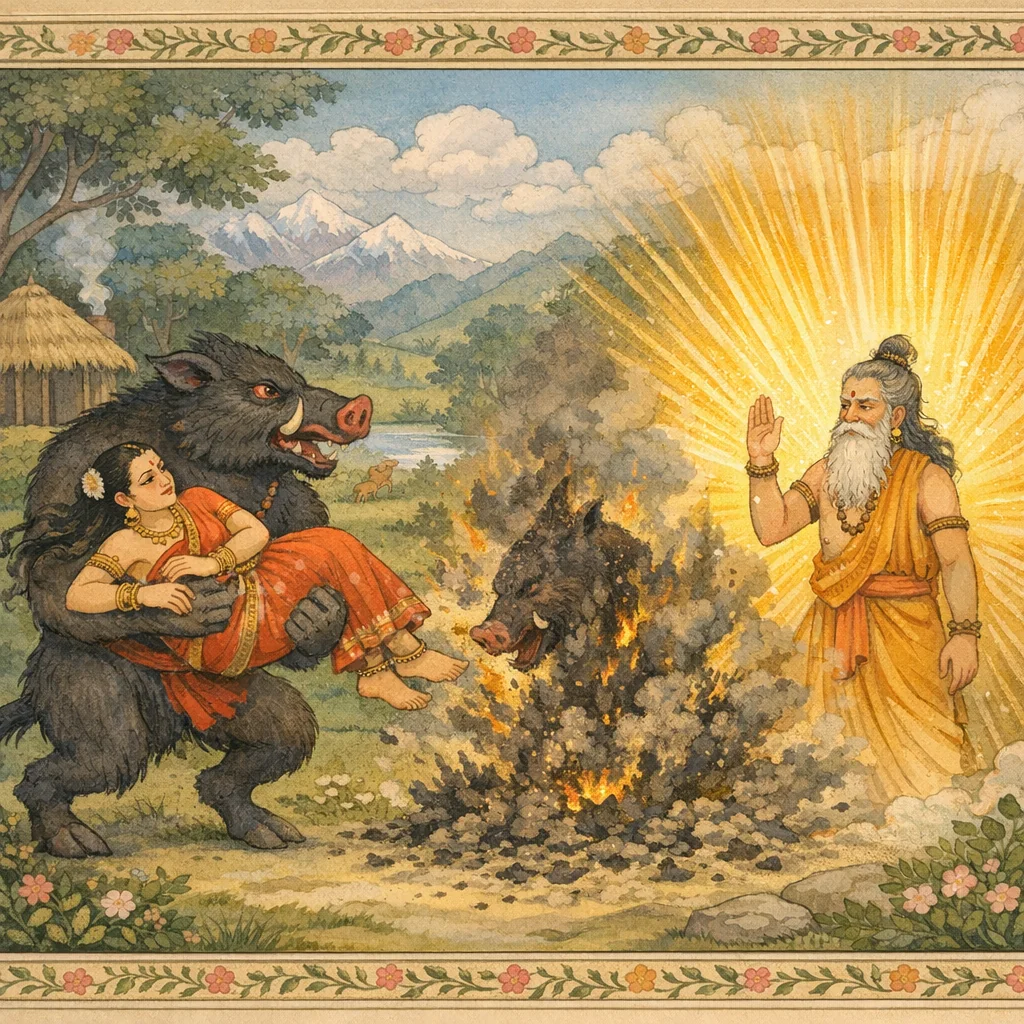
Sauti recounts how, after hearing Agni’s words, the rākṣasa strikes Pulomā; the unborn child exits the womb in a surge of radiance and the rākṣasa is reduced to ashes. Pulomā, distressed, carries the infant Cyavana; Brahmā encounters her, consoles her, and from her tears a river arises, which Brahmā names “Vadhūsarā,” marking her path toward Cyavana’s āśrama. Bhṛgu then sees Pulomā and the newborn and interrogates her about how the rākṣasa learned her identity. Pulomā states that Agni disclosed her to the rākṣasa; Bhṛgu, angered, pronounces a curse on Agni: he will become “sarvabhakṣa” (one who consumes all), reframing Agni’s purity and role through the moral logic of culpable disclosure.
Chapter Arc: उग्रश्रवा सूत शौनक के यज्ञ में पुलोमा-उपाख्यान उठाते हैं—कैसे एक क्षण की असावधानी से ऋषि-गृहस्थी पर राक्षसी संकट टूट पड़ा। → अग्नि के वचन से राक्षस पुलोमा का पता पा लेता है और वराह-रूप धरकर वायु-वेग से उसे उठा ले जाता है; भय, अपहरण और गर्भिणी की विवशता से कथा का तनाव बढ़ता है। → अपहरण के बीच ही पुलोमा के गर्भ से सूर्य-तेजस्वी च्यवन जन्म लेते हैं; उस तेज से राक्षस भस्म हो जाता है और पुलोमा मुक्त होकर गिर पड़ती है। → पुलोमा पुत्र को लेकर किसी तरह भृगु-आश्रम की ओर बढ़ती है; ब्रह्मा उसे सांत्वना देते हैं और उसके अश्रु-बिंदुओं से एक महान नदी प्रवाहित होती है, जिसे ‘वधूसरा’ नाम मिलता है। → भृगु लौटकर पूछते हैं कि राक्षस को उसका पता किसने बताया; पुलोमा अग्नि का नाम लेती है—और भृगु क्रोध में अग्नि को शाप देने को उद्यत होते हैं।
Shlokas
Verse 1
उग्रश्रवाजी कहते हैं--ब्रह्मन! अग्निका यह वचन सुनकर उस राक्षसने वराहका रूप धारण करके मन और वायुके समान वेगसे उसका अपहरण किया
Ugraśravas said: “O Brahmin! On hearing Agnikā’s words, that rākṣasa assumed the form of a boar and, with a speed like that of the mind and the wind, carried her away.”
Verse 2
ततः स गर्भो निवसन् कुक्षौ भूगुकुलोद्वह । रोषान्मातुश्च्युत: कुक्षेक्ष्यवनस्तेन सो5भवत्,भगुवंशशिरोमणे! उस समय वह गर्भ जो अपनी माताकी कुक्षिमें निवास कर रहा था, अत्यन्त रोषके कारण योगबलसे माताके उदरसे च्युत होकर बाहर निकल आया। च्युत होनेके कारण ही उसका नाम च्यवन हुआ
Then that embryo, dwelling in his mother’s womb—O foremost of the Bhṛgu lineage—was, through intense anger, cast out from the womb by yogic power and came forth. Because he had “fallen away” (cyuta) from the womb, he became known as Cyavana.
Verse 3
त॑ दृष्टवा मातुरुदराच्च्युतमादित्यवर्चसम् | तद् रक्षो भस्मसाद्धूतं पपात परिमुच्य ताम्,माताके उदरसे च्युत होकर गिरे हुए उस सूर्यके समान तेजस्वी गर्भको देखते ही वह राक्षस पुलोमाको छोड़कर गिर पड़ा और तत्काल जलकर भस्म हो गया
Seeing that radiant embryo—fallen from its mother’s womb and blazing like the sun—the rākṣasa at once released her; scorched into ashes, it collapsed.
Verse 4
सा तमादाय सुश्रोणी ससार भृगुनन्दनम् | च्यवनं भार्गवं पुत्र॑ पुलोमा दुःखमूर्च्छिता,सुन्दर कटिप्रदेशवाली पुलोमा दु:ःखसे मूर्च्छिंत हो गयी और किसी तरह सँभलकर भगुकुलको आनन्दित करनेवाले अपने पुत्र भार्गव च्यवनको गोदमें लेकर ब्रह्माजीके पास चली
Pulomā, the fair-hipped lady, fainting under the weight of grief, somehow gathered herself, took her son Cyavana of the Bhṛgu lineage into her arms, and hurried away—seeking refuge and redress.
Verse 5
तां ददर्श स्वयं ब्रह्मा सर्वलोकपितामह:ः । रुदतीं बाष्पपूर्णाक्षीं भुगोर्भायामनिन्दिताम्,सम्पूर्ण लोकोंके पितामह ब्रह्माजीने स्वयं भूगुकी उस पतिव्रता पत्नीको रोती और नेत्रोंस आँसू बहाती देखा। तब पितामह भगवान् ब्रह्माने अपनी पुत्रवधूको सान्त्वना दी-- उसे धीरज बँँधाया। उसके आँसुओंकी बूँदोंसे एक बहुत बड़ी नदी प्रकट हो गयी
Brahmā himself—the grandsire and progenitor of all worlds—saw Bhṛgu’s blameless wife, weeping with eyes filled with tears.
Verse 6
सान्त्वयामास भगवान् वर्धूं ब्रह्मा पितामह:ः । अश्रुबिन्दूद्धवा तस्या: प्रावर्तत महानदी,सम्पूर्ण लोकोंके पितामह ब्रह्माजीने स्वयं भूगुकी उस पतिव्रता पत्नीको रोती और नेत्रोंस आँसू बहाती देखा। तब पितामह भगवान् ब्रह्माने अपनी पुत्रवधूको सान्त्वना दी-- उसे धीरज बँँधाया। उसके आँसुओंकी बूँदोंसे एक बहुत बड़ी नदी प्रकट हो गयी इति श्रीमहाभारते आदिपर्वणि पौलोमपर्वणि अग्निशापे षष्ठछो5ध्याय:
Seeing his daughter-in-law weeping and shedding tears, the venerable Lord Brahmā, the grandsire of the worlds, consoled her and strengthened her resolve. From the drops of her tears there arose a mighty river, flowing forth as a great stream.
Verse 7
आवर्तन्ती सृतिं तस्या भूगो: पन्त्यास्तपस्विन: । तस्या मार्ग सृतवतीं दृष्टवा तु सरितं तदा,वह नदी तपस्वी भूगुकी उस पत्नीके मार्गको आप्लावित किये हुए थी। उस समय लोकपितामह भगवान् ब्रह्माने पुलोमाके मार्गका अनुसरण करनेवाली उस नदीको देखकर उसका नाम वधूसरा रख दिया, जो च्यवनके आश्रमके पास प्रवाहित होती है
The river, swirling and overflowing, flooded the path of that ascetic Bhṛgu’s wife. Seeing that stream following her track, the Lord of creatures, Brahmā, then gave the river a name—Vadhūsarā—since it flowed near Cyavana’s hermitage.
Verse 8
नाम तस्यास्तदा नद्याक्षक्रे लोकपितामह: । वधूसरेति भगवांद्ष्यवनस्याश्रमं प्रति,वह नदी तपस्वी भूगुकी उस पत्नीके मार्गको आप्लावित किये हुए थी। उस समय लोकपितामह भगवान् ब्रह्माने पुलोमाके मार्गका अनुसरण करनेवाली उस नदीको देखकर उसका नाम वधूसरा रख दिया, जो च्यवनके आश्रमके पास प्रवाहित होती है
Śaunaka said: At that time the Lord, the grandsire of the worlds (Brahmā), gave that river a name. Seeing it flowing along the path of the bride (Pulomā) toward the hermitage in Ṛṣyavana, he named the river Vadhūsarā—marking, as it were, the sanctifying trace of a chaste wife’s journey and the divine recognition of that event.
Verse 9
स एव च्यवनो जज्ञे भृगो: पुत्र: प्रतापवान् । त॑ं ददर्श पिता तत्र च्यवनं तां च भामिनीम् । स पुलोमां ततो भार्या पप्रच्छ कुपितो भृगु:,इस प्रकार भृगुपुत्र प्रतापी च्यवनका जन्म हुआ। तदनन्तर पिता भृगुने वहाँ अपने पुत्र च्यवन तथा पत्नी पुलोमाको देखा और सब बातें जानकर उन्होंने अपनी भार्या पुलोमासे कुपित होकर पूछा--
Thus was born Cyavana, the illustrious son of Bhṛgu. Thereupon his father beheld there both his son Cyavana and that lady Pulomā. Enraged, Bhṛgu questioned his wife Pulomā—seeking an account of what had occurred.
Verse 10
भूगुरुवाच केनासि रक्षसे तस्मै कथिता त्वं जिहीर्षते । नहिवत्वां वेद तद् रक्षो मद्भार्या चारहासिनीम्,भगु बोले--कल्याणी! तुम्हें हर लेनेकी इच्छासे आये हुए उस राक्षसको किसने तुम्हारा परिचय दे दिया? मनोहर मुसकानवाली मेरी पत्नी तुझ पुलोमाको वह राक्षस नहीं जानता था
Bhṛgu said: “By whom were you identified to that rākṣasa who came desiring to carry you off? For that rākṣasa did not know you—Pulomā, my wife of lovely smile.”
Verse 11
तत्त्वमाख्याहि त॑ हराद्य शप्तुमिच्छाम्यहं रुषा बिभेति को न शापान्मे कस्य चायं व्यतिक्रम:,प्रिये! ठीक-ठीक बताओ। आज मैं कुपित होकर अपने उस अपराधीको शाप देना चाहता हूँ। कौन मेरे शापसे नहीं डरता है? किसके द्वारा यह अपराध हुआ है?
“Tell me the truth at once. Today, in anger, I wish to curse that offender. Who does not fear my curses? By whom has this transgression been committed, my dear?”
Verse 12
पुलोगोवाच अग्निना भगवंस्तस्मै रक्षसे5हं निवेदिता । ततो मामनयद् रक्ष: क्रोशन्ती कुररीमिव,पुलोमा बोली--भगवन्! अग्निदेवने उस राक्षसको मेरा परिचय दे दिया। इससे कुररीकी भाँति विलाप करती हुई मुझ अबलाको वह राक्षस उठा ले गया
Pulomā said: “Revered one, Agni disclosed my identity to that rākṣasa. Then the rākṣasa carried me off, while I cried out like a kurarī-bird.”
Verse 13
साहं तव सुतस्यास्य तेजसा परिमोक्षिता | भस्मीभूतं च तद् रक्षो मामुत्सृज्य पपात वै,आपके इस पुत्रके तेजसे मैं उस राक्षसके चंगुलसे छूट सकी हूँ। राक्षस मुझे छोड़कर गिरा और जलकर भस्म हो गया
By the radiance of this son of yours, I was freed from the rākṣasa’s grasp. Releasing me, that demon fell down and was burned to ashes.
Verse 14
सौतिर्वाच इति श्रुत्वा पुलोमाया भृगु: परममन्युमान् । शशापाग्निमतिक्रुद्ध: सर्वभक्षो भविष्यसि,उग्रश्रवाजी कहते हैं--पुलोमाका यह वचन सुनकर परम क्रोधी महर्षि भृगुका क्रोध और भी बढ़ गया। उन्होंने अग्निदेवको शाप दिया--“तुम सर्वभक्षी हो जाओगे”
Sauti said: Hearing Pulomā’s words, the sage Bhṛgu was filled with fierce wrath. In his anger he cursed Agni: “You shall become an all-devouring consumer.”
Frequently Asked Questions
The dilemma concerns whether a truthful disclosure by a cosmic witness (Agni) is ethically neutral or culpable when it enables wrongdoing; Bhṛgu treats facilitative speech as morally chargeable due to its causal role in harm.
The chapter frames speech as an act with consequences: truth and disclosure must be evaluated alongside intent, context, and foreseeable harm, because dharma operates through both principles and outcomes.
No explicit phalaśruti is stated here; the meta-significance is structural—this origin episode explains how curses and ethical judgments reshape cosmic roles, a recurring mechanism throughout the epic.