Adhyaya 178
Ādi Parva, Adhyāya 178 — Royal Contestants Assemble; Cosmic Witnesses; The Bow Remains Unstrung
Upa-parva: Svayaṃvara (Draupadī) Episode — Princes’ Contest and Assembly Spectacle
Vaiśaṃpāyana describes a densely populated arena where ornamented young kṣatriyas, inflated by self-assessed strength, lineage, and youth, compete in mutual rivalry while claiming Draupadī (“Kṛṣṇā”) as the desired prize. The narration employs comparative imagery—intoxicated elephants and divine assemblies—to convey both the intensity of desire and the political gravity of the gathering. The episode broadens the audience beyond human royalty: deities, sages, gandharvas, and other classes arrive in aerial vehicles, marking the contest as a cosmologically observed event. Kṛṣṇa and Balarāma are present with the Vṛṣṇi-Andhakas; they survey the Pāṇḍavas and identify them, with Kṛṣṇa’s attention focusing on the brothers’ formidable presence. One by one, kings attempt the prescribed bow but cannot string it; their failure produces visible distress and disorder in the assembly. As the contenders withdraw, Arjuna (Kuntī’s son, “Jiṣṇu”) resolves to take up the bow with arrows, signaling an imminent reversal of the contest’s outcome.
Chapter Arc: वसिष्ठ अपने पौत्र के जन्म-संस्कार स्वयं करते हैं—और वंश-परंपरा के भीतर छिपी हुई एक अद्भुत कथा का द्वार खुलता है। → गर्भस्थ शिशु द्वारा वसिष्ठ का ‘परासु’ (मृत्यु-इच्छुक) अवस्था से लौटाया जाना और फिर पराशर का अपनी माता अदृश्यन्ती के साथ संवाद—इन संकेतों से स्पष्ट होता है कि यह जन्म साधारण नहीं, किसी पुराने भय और रक्त-ऋण की छाया में हुआ है। वसिष्ठ आगे भृगुवंश पर आए संकट का कारण बताते हैं: कृतवीर्य-अर्जुन के वंशजों/क्षत्रियों का भृगुओं पर क्रोध, और गर्भस्थ शिशुओं तक का संहार। भय से भृगुपत्नियाँ दुर्गम हिमालय की शरण लेती हैं; एक गर्भ विशेष रूप से बचाने का प्रयत्न कथा को और तीखा करता है। → भृगुवंश के गर्भस्थ बालकों की हत्या का वर्णन और स्त्रियों का हिमवन्त के दुर्ग में पलायन—वंश-नाश की सीमा तक पहुँचा हुआ प्रतिशोध चरम पर है। इसी पृष्ठभूमि में ‘दृष्टि’ (दर्शन/जीवन-प्रकाश) लौटाने की याचना—“पुनर्दृष्टिप्रदानेन”—मानवता की अंतिम पुकार बनकर उठती है। → वसिष्ठ अपने तर्क से उग्र निश्चय को रोकते हैं—प्रतिशोध की आग पर धर्म-बुद्धि का जल छिड़कते हुए, वे बताते हैं कि अंधा क्रोध वंशों को नहीं, समूची पृथ्वी की मर्यादा को काटता है। कथा का प्रवाह हिंसा से संयम की ओर मुड़ता है; संस्कार, उपदेश और शमन के द्वारा जीवन-धारा पुनः स्थिर होती है। → भृगु-क्षत्रिय वैर का अंतिम परिणाम और बचाए गए गर्भ/वंश की आगे की नियति—यह संकेत देकर अध्याय समाप्त होता है कि शमन के बाद भी कर्म-छाया पूरी तरह मिटती नहीं।
Shlokas
Verse 1
इस प्रकार श्रीमहाभारत आदिपव॑ीके अन्तर्गत चैत्ररथपर्वमें वसिष्ठचरित्रके प्रसंगें सौदासको पुत्र-प्राप्तिविषयक एक सौ छिह्वत्तरवाँ अध्याय पूरा हुआ ॥/ १७६ ॥/ ऑपन--माज बक। अकाल सप्तसप्तत्याधेकशततमोब< ध्याय: शक्तिपुत्र पपशरका जन्म और पिताकी हाल सुनकर कुपित हुए पराशरको शान्त करनेके लिये वसिष्ठजीका उन्हें और्वोपाख्यान सुनाना गन्धर्व उवाच आश्रमस्था तत: पुत्रमदृश्यन्ती व्यजायत । शक्ते: कुलकरं राजन् द्वितीयमिव शक्तिनम्,गन्धर्व कहता है--अर्जुन! तदनन्तर (वसिष्ठजीके) आश्रममें रहती हुई अदृश्यन्तीने शक्तिके वंशको बढ़ानेवाले एक पुत्रको जन्म दिया, मानो उस बालकके रूपमें दूसरे शक्ति मुनि ही हों
The Gandharva said: Then, while living in the hermitage, Adṛśyantī gave birth to a son—O King—one who would carry forward Śakti’s lineage, appearing as though Śakti himself were reborn in a second form.
Verse 2
जातकर्मादिकास्तस्य क्रिया: स मुनिसत्तम: । पौत्रस्य भरतश्रेष्ठ चकार भगवान् स्वयम्,भरतश्रेष्ठ! मुनिवर भगवान् वसिष्ठने स्वयं अपने पौत्रके जातकर्म आदि संस्कार किये
O best of the Bharatas, that most excellent sage—revered and venerable—himself performed for his grandson all the prescribed rites, beginning with the birth-ceremony (jātakarma).
Verse 3
परासु: स यतस्तेन वसिष्ठ: स्थापितो मुनि: । गर्भस्थेन ततो लोके पराशर इति स्मृतः,उस बालकने गर्भमें आकर परासु (मरनेकी इच्छावाले) वसिष्ठ मुनिको पुनः जीवित रहनेके लिये उत्साहित किया था; इसलिये वह लोकमें “पराशर” के नामसे विख्यात हुआ
The sage Vasiṣṭha, who had become intent on death, was restrained and made to remain in life by that child while still in the womb. Therefore, in the world he came to be remembered by the name “Parāśara,” for he turned Vasiṣṭha away from the resolve to die.
Verse 4
अमन्यत स धर्मात्मा वसिष्ठ पितरं मुनि: । जन्मप्रभृति तस्मिंस्तु पितरीवान्ववर्तत,धर्मात्मा पराशर मुनि वसिष्ठको ही अपना पिता मानते थे और जन्मसे ही उनके प्रति पितृभाव रखते थे
The righteous sage regarded Vasiṣṭha as his father. From the time of his birth, he conducted himself toward him exactly as one would toward a father.
Verse 5
स तात इति विप्रर्षिवसिष्ठं प्रत्यभाषत । मातु: समक्ष कौन्तेय अदृश्यन्त्या: परंतप,परंतप कुन्तीकुमार! एक दिन ब्रह्मर्षि पराशरने अपनी माता अदृश्यन्तीके सामने ही वसिष्ठजीको “तात” कहकर पुकारा
The Gandharva said: “O son of Kuntī, scorcher of foes—right before his mother Adṛśyantī, the brahmarṣi Parāśara addressed the sage Vasiṣṭha, calling him ‘tāta’, ‘dear father’.”
Verse 6
तातेति परिपूर्णार्थ तस्य तन्मधुरं वच: । अदृश्यन्त्यश्रुपूर्णाक्षी शृण्वती तमुवाच ह,बेटेके मुखसे परिपूर्ण अर्थका बोधक “तात” यह मधुर वचन सुनकर अदृश्यन्तीके नेत्रोमें आँसू भर आये और वह उससे बोली--
Hearing his sweet utterance—“tāta,” a word complete in meaning—Adṛśyantī’s eyes filled with tears; and as she listened, she spoke to him—
Verse 7
मा तात तात तातेति ब्रूहोनं पितरं पितु: । रक्षसा भक्षितस्तात तव तातो वनान्तरे,“बेटा! ये तुम्हारे पिताके भी पिता हैं। तुम इन्हें 'तात तात!” कहकर न पुकारो। वत्स! तुम्हारे पिताको तो वनके भीतर राक्षस खा गया
The Gandharva said: “Do not address him again and again as ‘father, father’—he is your father’s father. Alas, dear child, your father was devoured by a rākṣasa in the depths of the forest.”
Verse 8
मन्यसे यं तु तातेति नैष तातस्तवानघ । आर्य एष पिता तस्य पितुस्तव यशस्विन:,“अनघ! तुम जिन्हें तात मानते हो, ये तुम्हारे तात नहीं हैं। ये तो तुम्हारे यशस्वी पिताके भी पूजनीय पिता हैं!
The Gandharva said: “Blameless one, the man you address as ‘father’ is not your father. He is, rather, the venerable father of your own illustrious father.”
Verse 9
स एवमुक्तो दु:खार्त: सत्यवागृषिसत्तम: । सर्वलोकविनाशाय मतिं चक्रे महामना:,माताके यों कहनेपर सत्यवादी मुनिश्रेष्ठ महामना पराशर दुःखसे आतुर हो उठे। उन्होंने उसी समय सब लोकोंको नष्ट कर डालनेका विचार किया
Thus addressed, the foremost of sages—truthful in speech—was overwhelmed by grief. In that anguish, the great-souled one formed the resolve to bring about the destruction of all worlds.
Verse 10
तं॑ तथा निश्चितात्मानं स महात्मा महातपा: । ऋषिर्त्रह्मविदां श्रेष्ठो मैत्रावरुणिरन्त्यधी:
Seeing him thus firm in resolve and self-controlled, that great-souled, great-ascetic sage—Maitrāvaruṇi, foremost among the knowers of Brahman and possessed of subtle, penetrating insight—addressed him as was fitting.
Verse 11
वसिष्ठ उवाच कृतवीर्य इति ख्यातो बभूव पृथिवीपति:,वसिष्ठजीने (पराशरसे) कहा--वत्स! इस पृथ्वीपर कृतवीर्य नामसे प्रसिद्ध एक राजा थे। वे नृपश्रेष्ठ वेदज्ञ भृगुवंशी ब्राह्मणोंक यजमान थे। तात! उन महाराजने सोमयज्ञ करके उसके अन्तमें उन अग्रभोजी भार्गवोंको विपुल धन और धान्य देकर उसके द्वारा पूर्ण संतुष्ट किया। राजाओंमें श्रेष्ठ कृतवीर्यके स्वर्गवासी हो जानेपर उनके वंशजोंको किसी तरह द्रव्यकी आवश्यकता आ पड़ी। भृगुवंशी ब्राह्मणोंके यहाँ धन है, यह जानकर वे सभी राजपुत्र उन श्रेष्ठ भार्गवोंके पास याचक बनकर गये। उस समय कुछ भार्गवोंने अपनी अक्षय धनराशिको धरतीमें गाड़ दिया
Vasiṣṭha said: “There was once a lord of the earth renowned by the name Kṛtavīrya. He performed the Soma sacrifice, and at its close he gratified the Bhṛgu-line Brahmins, bestowing upon those foremost of eaters abundant wealth and grain. After that best of kings went to heaven, his descendants fell into want; knowing that the Bhārgavas possessed riches, they approached those eminent Brahmins as supplicants. Then some Bhārgavas buried their inexhaustible hoard in the earth.”
Verse 12
याज्यो वेदविदां लोके भृगूणां पार्थिवर्षभ: । स तानग्रभुजस्तात धान्येन च धनेन च,वसिष्ठजीने (पराशरसे) कहा--वत्स! इस पृथ्वीपर कृतवीर्य नामसे प्रसिद्ध एक राजा थे। वे नृपश्रेष्ठ वेदज्ञ भृगुवंशी ब्राह्मणोंक यजमान थे। तात! उन महाराजने सोमयज्ञ करके उसके अन्तमें उन अग्रभोजी भार्गवोंको विपुल धन और धान्य देकर उसके द्वारा पूर्ण संतुष्ट किया। राजाओंमें श्रेष्ठ कृतवीर्यके स्वर्गवासी हो जानेपर उनके वंशजोंको किसी तरह द्रव्यकी आवश्यकता आ पड़ी। भृगुवंशी ब्राह्मणोंके यहाँ धन है, यह जानकर वे सभी राजपुत्र उन श्रेष्ठ भार्गवोंके पास याचक बनकर गये। उस समय कुछ भार्गवोंने अपनी अक्षय धनराशिको धरतीमें गाड़ दिया
Vasiṣṭha said: “Dear child, in the world of Veda-knowers there was a bull among kings—Kṛtavīrya—fit to be the yājamāna (sacrificial patron) for the Bhṛgu lineage. He gratified those foremost recipients, the Bhārgava Brahmins, by giving them abundant grain and wealth.”
Verse 13
सोमान्ते तर्पयामास विपुलेन विशाम्पति: । तस्मिन् नृपतिशार्दूले स्वर्यातेडथ कथंचन,वसिष्ठजीने (पराशरसे) कहा--वत्स! इस पृथ्वीपर कृतवीर्य नामसे प्रसिद्ध एक राजा थे। वे नृपश्रेष्ठ वेदज्ञ भृगुवंशी ब्राह्मणोंक यजमान थे। तात! उन महाराजने सोमयज्ञ करके उसके अन्तमें उन अग्रभोजी भार्गवोंको विपुल धन और धान्य देकर उसके द्वारा पूर्ण संतुष्ट किया। राजाओंमें श्रेष्ठ कृतवीर्यके स्वर्गवासी हो जानेपर उनके वंशजोंको किसी तरह द्रव्यकी आवश्यकता आ पड़ी। भृगुवंशी ब्राह्मणोंके यहाँ धन है, यह जानकर वे सभी राजपुत्र उन श्रेष्ठ भार्गवोंके पास याचक बनकर गये। उस समय कुछ भार्गवोंने अपनी अक्षय धनराशिको धरतीमें गाड़ दिया
Vasiṣṭha said: “At the conclusion of the Soma-sacrifice, that lord of the people fully satisfied the Bhārgava priests with abundant gifts. After that tiger among kings, Kṛtavīrya, had departed to heaven, his descendants, by some turn of circumstance, came to feel a need for wealth. Knowing that the Bhṛgu-line Brahmins possessed riches, the royal sons approached those eminent Bhārgavas as supplicants. At that time, some of the Bhārgavas buried their inexhaustible treasure in the earth.”
Verse 14
बभूव तत्कुलेयानां द्रव्यकार्यमुपस्थितम् । भगूणां तु धन ज्ञात्वा राजान: सर्व एव ते,वसिष्ठजीने (पराशरसे) कहा--वत्स! इस पृथ्वीपर कृतवीर्य नामसे प्रसिद्ध एक राजा थे। वे नृपश्रेष्ठ वेदज्ञ भृगुवंशी ब्राह्मणोंक यजमान थे। तात! उन महाराजने सोमयज्ञ करके उसके अन्तमें उन अग्रभोजी भार्गवोंको विपुल धन और धान्य देकर उसके द्वारा पूर्ण संतुष्ट किया। राजाओंमें श्रेष्ठ कृतवीर्यके स्वर्गवासी हो जानेपर उनके वंशजोंको किसी तरह द्रव्यकी आवश्यकता आ पड़ी। भृगुवंशी ब्राह्मणोंके यहाँ धन है, यह जानकर वे सभी राजपुत्र उन श्रेष्ठ भार्गवोंके पास याचक बनकर गये। उस समय कुछ भार्गवोंने अपनी अक्षय धनराशिको धरतीमें गाड़ दिया
Vasiṣṭha said: “Then a need for wealth arose among the descendants of that royal line. Knowing that the Bhṛgu clan possessed riches, all those princes went to the eminent Bhārgava Brahmins as supplicants.”
Verse 15
याचिष्णवो5भिजममुस्तांस्ततो भार्गवसत्तमान् | भूमौ तु निदधु: केचिद् भूगवों धनमक्षयम्,वसिष्ठजीने (पराशरसे) कहा--वत्स! इस पृथ्वीपर कृतवीर्य नामसे प्रसिद्ध एक राजा थे। वे नृपश्रेष्ठ वेदज्ञ भृगुवंशी ब्राह्मणोंक यजमान थे। तात! उन महाराजने सोमयज्ञ करके उसके अन्तमें उन अग्रभोजी भार्गवोंको विपुल धन और धान्य देकर उसके द्वारा पूर्ण संतुष्ट किया। राजाओंमें श्रेष्ठ कृतवीर्यके स्वर्गवासी हो जानेपर उनके वंशजोंको किसी तरह द्रव्यकी आवश्यकता आ पड़ी। भृगुवंशी ब्राह्मणोंके यहाँ धन है, यह जानकर वे सभी राजपुत्र उन श्रेष्ठ भार्गवोंके पास याचक बनकर गये। उस समय कुछ भार्गवोंने अपनी अक्षय धनराशिको धरतीमें गाड़ दिया
Then, having become supplicants, they approached those foremost Bhārgava Brahmins. But some of the Bhārgavas buried their inexhaustible wealth in the earth.
Verse 16
ददुः केचिद् द्विजातिभ्यो ज्ञात्वा क्षत्रियतो भयम् | भृगवस्तु ददुः केचित् तेषां वित्तं यथेप्सितम्,कुछने क्षत्रियोंस भय समझकर अपना धन ब्राह्मणोंको दे दिया और कुछ भृगुवंशियोंने उन क्षत्रियोंको यथेष्ट धन दे भी दिया
Some, realizing the danger posed by the Kṣatriyas, gave their wealth to the twice-born (Brāhmaṇas) for safekeeping. Others—members of the Bhṛgu lineage—also provided those Kṣatriyas with as much wealth as they desired.
Verse 17
क्षत्रियाणां तदा तात कारणान्तरदर्शनात् । ततो महीतल तात क्षत्रियेण यदृच्छया,तात! कुछ दूसरे-दूसरे कारणोंका विचार करके उस समय उन्होंने क्षत्रियोंको धन प्रदान किया था। वत्स! तदनन्तर किसी क्षत्रियने अकस्मात् धरती खोदते-खोदते किसी भुगुवंशीके घरमें गड़ा हुआ धन पा लिया। तब सभी श्रेष्ठ क्षत्रियोंने एकत्र होकर उस धनको देखा
Vasiṣṭha said: “Dear child, considering other intervening reasons at that time, they granted wealth to the Kṣatriyas. Then, on the surface of the earth, a certain Kṣatriya, by sheer chance while digging, discovered treasure buried in the house of a Bhṛgu-descendant. Thereupon the foremost Kṣatriyas assembled together and examined that wealth.”
Verse 18
खनताधिगतं वित्तं केनचिद् भुगुवेश्मनि । तद् वित्त ददृशु: सर्वे समेता: क्षत्रियर्षभा:,तात! कुछ दूसरे-दूसरे कारणोंका विचार करके उस समय उन्होंने क्षत्रियोंको धन प्रदान किया था। वत्स! तदनन्तर किसी क्षत्रियने अकस्मात् धरती खोदते-खोदते किसी भुगुवंशीके घरमें गड़ा हुआ धन पा लिया। तब सभी श्रेष्ठ क्षत्रियोंने एकत्र होकर उस धनको देखा
Vasiṣṭha said: “While digging, someone came upon buried wealth in the house of a Bhṛgu-descendant. Then all the foremost Kṣatriyas assembled together and examined that treasure.”
Verse 19
अवमन्य ततः क्रोधाद् भृगूंस्ताउछरणागतान् | निजषघ्नु: परमेष्वासा: सर्वास्तान् निशितै: शरै:,फिर तो उन्होंने क्रोधमें भरकर शरणमें आये हुए भूगुवंशियोंका भी अपमान किया। उन महान् धनुर्धर वीरोंने (वहाँ आये हुए) समस्त भार्गवोंको तीखे बाणोंसे मारकर यमलोक पहुँचा दिया
Then, in anger, they scorned and insulted even the Bhṛgus who had come seeking refuge. Those supreme archers slew all the Bhārgavas with keen arrows, sending them to Yama’s realm.
Verse 20
आगर्भादवकृन्तन्तश्वेरु: सर्वा वसुन्धराम् । तत उच्छिद्यमानेषु भृगुष्वेवं भयात् तदा,तदनन्तर भृगुवंशियोंके गर्भस्थ बालकोंकी भी हत्या करते हुए वे क्रोधान्ध क्षत्रिय सारी पृथ्वीपर विचरने लगे। इस प्रकार भृगुवंशका उच्छेद आरम्भ होनेपर भृगुवंशियोंकी पत्नियाँ उस समय भयके मारे हिमालयकी दुर्गम कन्दरामें जा छिपीं। उनमेंसे एक स्त्रीने अपने महान् तेजस्वी गर्भकों भयके मारे एक ओरकी जाँघको चीरकर उसमें रख लिया। उस वामोरुने अपने पतिके वंशकी वृद्धिके लिये ऐसा साहस किया था। उस गर्भका समाचार जानकर कोई ब्राह्मणी बहुत डर गयी और उसने शीघ्र ही अकेली जाकर क्षत्रियोंके समीप उसकी खबर पहुँचा दी। फिर तो वे क्षत्रियलोग उस गर्भकी हत्या करनेके लिये उद्यत हो वहाँ गये
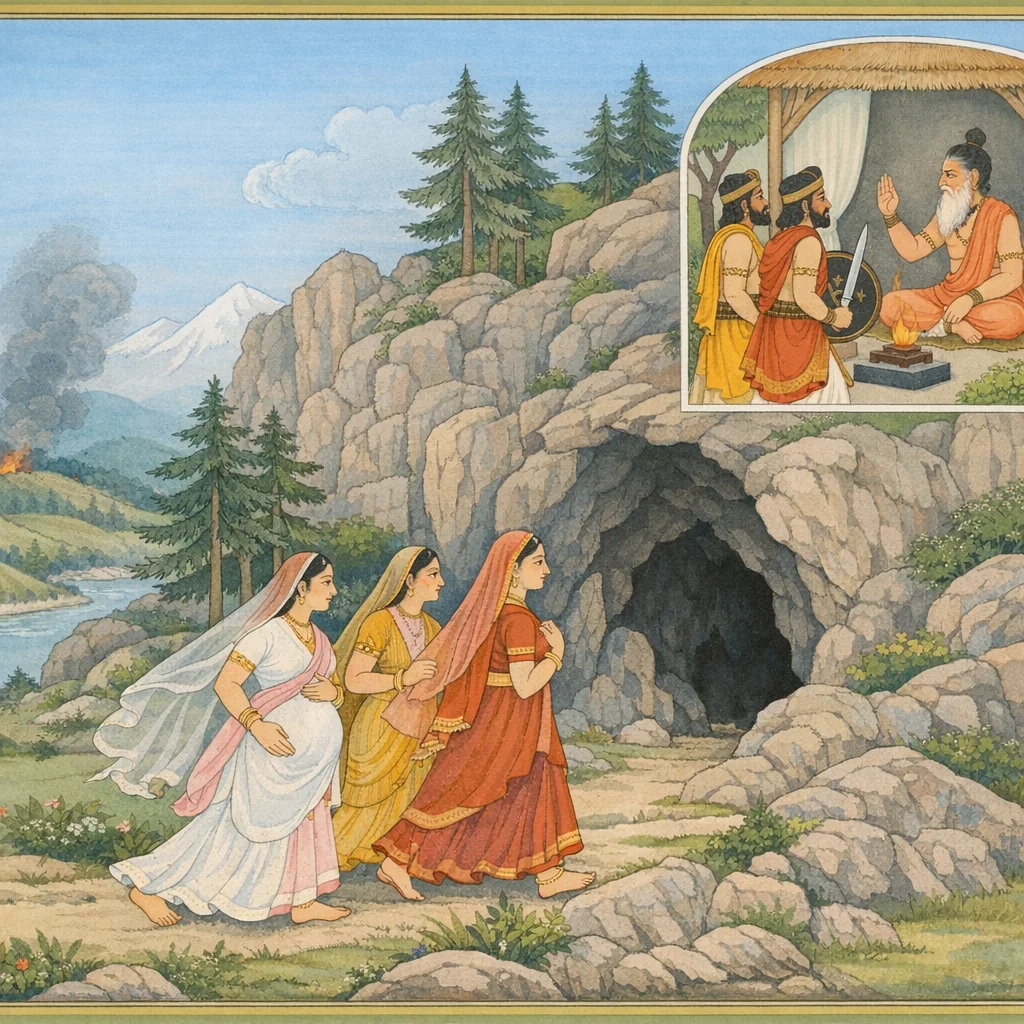
Slaying even those still in the womb, the Kṣatriyas, blinded by rage, roamed over the whole earth. Then, as the Bhṛgus were being cut down in this manner, their women—terrified—hid themselves in the Himalaya’s hard-to-reach caves.
Verse 21
भगुपत्न्यो गिरिं दुर्ग हिमवन्तं प्रपेदिरे । तासामन्यतमा गर्भ भयाद् दश्ने महौजसम्,तदनन्तर भृगुवंशियोंके गर्भस्थ बालकोंकी भी हत्या करते हुए वे क्रोधान्ध क्षत्रिय सारी पृथ्वीपर विचरने लगे। इस प्रकार भृगुवंशका उच्छेद आरम्भ होनेपर भृगुवंशियोंकी पत्नियाँ उस समय भयके मारे हिमालयकी दुर्गम कन्दरामें जा छिपीं। उनमेंसे एक स्त्रीने अपने महान् तेजस्वी गर्भकों भयके मारे एक ओरकी जाँघको चीरकर उसमें रख लिया। उस वामोरुने अपने पतिके वंशकी वृद्धिके लिये ऐसा साहस किया था। उस गर्भका समाचार जानकर कोई ब्राह्मणी बहुत डर गयी और उसने शीघ्र ही अकेली जाकर क्षत्रियोंके समीप उसकी खबर पहुँचा दी। फिर तो वे क्षत्रियलोग उस गर्भकी हत्या करनेके लिये उद्यत हो वहाँ गये
Vasiṣṭha said: “The wives of the Bhṛgus fled to the mountain fastnesses of the Himālaya. Among them, one woman, terrified, concealed her mighty, radiant embryo by placing it within a cleft made in her thigh—an audacious act undertaken to preserve and continue her husband’s lineage. When the news of that hidden pregnancy became known, a certain brāhmaṇa woman, overcome by fear, hurried alone to the kṣatriyas and informed them. Thereupon those wrath-blinded kṣatriyas, intent on destroying even the unborn heirs, went there to kill the child in the womb.”
Verse 22
ऊरुणैकेन वामोरुर्भ्तु: कुलविवृद्धये । तद् गर्भमुपलभ्याशु ब्राह्मणी या भयार्दिता,तदनन्तर भृगुवंशियोंके गर्भस्थ बालकोंकी भी हत्या करते हुए वे क्रोधान्ध क्षत्रिय सारी पृथ्वीपर विचरने लगे। इस प्रकार भृगुवंशका उच्छेद आरम्भ होनेपर भृगुवंशियोंकी पत्नियाँ उस समय भयके मारे हिमालयकी दुर्गम कन्दरामें जा छिपीं। उनमेंसे एक स्त्रीने अपने महान् तेजस्वी गर्भकों भयके मारे एक ओरकी जाँघको चीरकर उसमें रख लिया। उस वामोरुने अपने पतिके वंशकी वृद्धिके लिये ऐसा साहस किया था। उस गर्भका समाचार जानकर कोई ब्राह्मणी बहुत डर गयी और उसने शीघ्र ही अकेली जाकर क्षत्रियोंके समीप उसकी खबर पहुँचा दी। फिर तो वे क्षत्रियलोग उस गर्भकी हत्या करनेके लिये उद्यत हो वहाँ गये
Vasiṣṭha said: “With one thigh, the woman called Vāmorū (the woman of the left thigh) acted for the increase of her husband’s lineage. But when that pregnancy was quickly discovered, a certain Brahmin woman—overcome by fear—swiftly went alone and reported the matter to the Kṣatriyas. Thereupon those Kṣatriyas, intent on killing the unborn child, went there.”
Verse 23
गत्वैका कथयामास क्षत्रियाणामुपद्नरे । ततस्ते क्षत्रिया जम्मुस्तं गर्भ हन्तुमुद्यता:,तदनन्तर भृगुवंशियोंके गर्भस्थ बालकोंकी भी हत्या करते हुए वे क्रोधान्ध क्षत्रिय सारी पृथ्वीपर विचरने लगे। इस प्रकार भृगुवंशका उच्छेद आरम्भ होनेपर भृगुवंशियोंकी पत्नियाँ उस समय भयके मारे हिमालयकी दुर्गम कन्दरामें जा छिपीं। उनमेंसे एक स्त्रीने अपने महान् तेजस्वी गर्भकों भयके मारे एक ओरकी जाँघको चीरकर उसमें रख लिया। उस वामोरुने अपने पतिके वंशकी वृद्धिके लिये ऐसा साहस किया था। उस गर्भका समाचार जानकर कोई ब्राह्मणी बहुत डर गयी और उसने शीघ्र ही अकेली जाकर क्षत्रियोंके समीप उसकी खबर पहुँचा दी। फिर तो वे क्षत्रियलोग उस गर्भकी हत्या करनेके लिये उद्यत हो वहाँ गये
Vasiṣṭha said: “Then a certain woman went alone and reported the matter to the Kṣatriyas. Hearing it, those Kṣatriyas set out at once, intent on killing that unborn child.”
Verse 24
ददृशु््राह्मणीं तेडथ दीप्यमानां स्वतेजसा । अथ गर्भ: स भित्त्वोरुं ब्राह्माण्या निर्जागम ह,उन्होंने देखा, वह ब्राह्मणी अपने तेजसे प्रकाशित हो रही है। उसी समय उस ब्राह्मणीका वह गर्भस्थ शिशु उसकी जाँघ फाड़कर बाहर निकल आया
They then beheld the Brahmin woman, radiant with her own innate splendor. At that very moment, the child in her womb burst forth, tearing through her thigh, and emerged.
Verse 25
मुष्णन् दृष्टी: क्षत्रियाणां मध्याह्न इव भास्कर: | ततकश्नक्षुविहीनास्ते गिरिदुर्गेषु बच्रमु:,बाहर निकलते ही दोपहरके प्रचण्ड सूर्यकी भाँति उस तेजस्वी शिशुने (अपने तेजसे) उन क्षत्रियोंकी आँखोंकी ज्योति छीन ली। तब वे अंधे होकर उस पर्वतके बीहड़ स्थानोंमें भटकने लगे
Like the blazing sun at midday, the radiant child, the moment he appeared, robbed those Kṣatriyas of their sight by the force of his splendor. Blinded at once, they wandered helplessly through the rugged fastnesses and mountain strongholds.
Verse 26
ततस्ते मोहमापन्ना राजानो नष्टदृष्टय: । ब्राह्मणीं शरणं जममुर्दृष्ट्यूर्थ तामनिन्दिताम्,फिर मोहके वशीभूत हो अपनी दृष्टिको खो देनेवाले क्षत्रियोंने पुनः दृष्टि प्राप्त करनेके लिये उसी सती-साध्वी ब्राह्मगीकी शरण ली
Then those kings, overcome by delusion and having lost their sight, went for refuge to that blameless Brahmin woman, seeking to regain their vision.
Verse 27
ऊचुश्चैनां महाभागां क्षत्रियास्ते विचेतस: । ज्योतिः प्रहीणा दु:खार्ता: शान्तार्चिष इवाग्नय:,वे क्षत्रिय उस समय आँखकी ज्योतिसे वंचित हो बुझी हुई लपटोंवाली आगके समान अत्यन्त दुःखसे आतुर एवं अचेत हो रहे थे। अतः वे उस महान् सौभाग्यशालिनी देवीसे इस प्रकार बोले--'देवि! यदि आपकी कृपा हो तो नेत्र पाकर यह क्षत्रियोंका दल अब लौट जायगा, थोड़ी देर विश्राम करके हम सभी पापाचारी यहाँसे साथ ही चले जायँगे”
Those Kṣatriyas, their senses bewildered, addressed that greatly fortunate lady. Deprived of the light of their eyes and tormented by suffering, they were like fires whose flames have died down. In their distress they appealed to her for compassion, hoping to regain sight and then withdraw after a brief rest, acknowledging their own wrongdoing and seeking to depart together from that place.
Verse 28
भगवत्या: प्रसादेन गच्छेत् क्षत्र॑ं सचक्षुषम् । उपारम्य च गच्छेम सहिता: पापकर्मिण:,वे क्षत्रिय उस समय आँखकी ज्योतिसे वंचित हो बुझी हुई लपटोंवाली आगके समान अत्यन्त दुःखसे आतुर एवं अचेत हो रहे थे। अतः वे उस महान् सौभाग्यशालिनी देवीसे इस प्रकार बोले--'देवि! यदि आपकी कृपा हो तो नेत्र पाकर यह क्षत्रियोंका दल अब लौट जायगा, थोड़ी देर विश्राम करके हम सभी पापाचारी यहाँसे साथ ही चले जायँगे”
Vasiṣṭha said: “By the gracious favor of the Blessed Goddess, may this company of kṣatriyas regain their sight and depart. And after resting a little, may we—though burdened with sinful deeds—leave this place together.”
Verse 29
सपुत्रा त्वं प्रसाद नः कर्तुमहसि शोभने । पुनर्दृष्टिप्रदानेन राज्ञ: संत्रातुमहिसि,'शोभने! तुम अपने पुत्रके साथ हम सबपर प्रसन्न हो जाओ और पुन: नूतन दृष्टि देकर हम सभी राजपुत्रोंकी रक्षा करो”
Vasiṣṭha said: “O auspicious lady, be gracious to us along with your son. By restoring sight once more, you should protect the king and thereby safeguard these royal heirs.”
Verse 103
वसिष्ठो वारयामास हेतुना येन तच्छूणु । उनके मनका ऐसा निश्चय जान ब्रह्मवेत्ताओंमें श्रेष्ठ महातपस्वी, महात्मा एवं ताच्चिक बुद्धिवाले मित्रावरुणनन्दन वसिष्ठजीने पराशरको ऐसा करनेसे रोक दिया। जिस हेतु और युक्तिसे वे उन्हें रोकनेमें सफल हुए, वह (बताता हूँ,) सुनिये
Vasiṣṭha restrained (Parāśara) for a reason—listen to what it was. Knowing the resolve that had formed in his mind, Vasiṣṭha, the great ascetic and noble soul, son of Mitra and Varuṇa and foremost among the knowers of Brahman, prevented Parāśara from doing so. Hear now the cause and the reasoning by which he succeeded in holding him back.
Verse 177
इति श्रीमहाभारते आदिपर्वणि चैत्ररथपर्वण्यौवोपाख्याने सप्तसप्तत्यधिकशततमो<ध्याय:
Thus ends the one-hundred-and-seventy-eighth chapter of the Ādi Parva of the Śrī Mahābhārata, within the Caitraratha section, in the episode known as the tale of Uparicara Vasu. This is a concluding colophon marking the close of the chapter rather than a spoken verse of instruction.
Frequently Asked Questions
The chapter stages a dharma-sankat between competitive pride and disciplined merit: contenders pursue a socially sanctioned aim (marriage alliance) yet risk moral and political disorder when desire and ego override composure and capability.
Public legitimacy is portrayed as performance under constraint: strength and lineage are insufficient without steadiness, training, and adherence to agreed norms—an implicit critique of self-assessment untested by action.
No explicit phalaśruti appears in this unit; its meta-function is structural—escalating narrative tension by contrasting mass failure with the imminent competence of a prepared agent, thereby integrating ethics, capability, and fate into the plot’s next turn.