Adhyaya 143
Hiḍimbā’s Petition, Conditional Union with Bhīma, and the Birth-Naming of Ghaṭotkaca (आदि पर्व, अध्याय १४३)
Upa-parva: Hiḍimbā-Upākhyāna (Episode of Hiḍimbā and the Birth of Ghaṭotkaca)
The chapter opens with Bhīma warning Hiḍimbā to leave the path used by his brothers, framing rākṣasas as remembering enmity and employing deceptive māyā. Yudhiṣṭhira intervenes with a restraint principle: even in anger, Bhīma should not harm a woman; dharma is to be guarded beyond mere bodily security. He then raises a practical concern—having killed Hiḍimba, what retaliation might Hiḍimbā attempt as his sister. Vaiśaṃpāyana narrates Hiḍimbā’s respectful approach to Kuntī and Yudhiṣṭhira, where she articulates her suffering and declares that the time has come for her welfare through union with Bhīma, asserting choice even at the cost of leaving her own community. She seeks Kuntī’s sanction to be joined with Bhīma and promises logistical protection: mental invocation to guide them, carrying them swiftly, and rescuing them from dangers—an explicit aidd-to-travel covenant. A short dharmic reflection follows on sustaining life in adversity (āpatsu dhāraṇa) as meritorious when aligned with dharma. Yudhiṣṭhira grants consent under ritual-temporal conditions: Bhīma is to be with her at night, after daily rites, and before sunset transitions, while daytime movement remains regulated. Hiḍimbā then carries Bhīma across scenic regions and pleasure-grounds; she bears a powerful son described with formidable features and rapid maturation consistent with rākṣasa attributes. The child honors parents, receives naming (Ghaṭotkaca), becomes devoted to the Pāṇḍavas, and later departs northward with stated duties. The closing verse adds a teleological note: Ghaṭotkaca is portrayed as instrumental in the eventual neutralization of Karṇa’s śakti-based advantage.
Chapter Arc: धृतराष्ट्र के आदेश की आड़ में दुर्योधन का षड्यंत्र आकार लेता है—पाण्डवों को ‘उत्सव’ के बहाने वारणावत भेजने की योजना। → कुशल मन्त्रियों द्वारा वारणावत नगर का रमणीय, उत्सव-समृद्ध चित्र खींचा जाता है—‘पशुपति के नगर’ जैसा महान समाज, ताकि यात्रा आकर्षक और निष्कपट लगे। भीतर-भीतर यह आमंत्रण एक फंदा है। → धृतराष्ट्र की ओर से संदेश आता है—“यदि तुम वारणावत का उत्सव देखना चाहो तो सगण-सान्वय वहाँ विहरो”—और युधिष्ठिर भीष्म, विदुर, द्रोण, सोमदत्त, गान्धारी तथा पुरोहितों-पौरजनों के सम्मुख दीन भाव से विदाई-वचन कहकर आशीर्वाद माँगते हैं। → स्वस्तिवाचन और आवश्यक कर्मकाण्ड पूर्ण कर पाण्डव राज्य-लाभ/राजनीतिक शांति के नाम पर वारणावत के लिए प्रस्थान करते हैं; सभा प्रसन्न मन से शुभाशीष देती है, अनजाने में उन्हें संकट की ओर विदा करती है। → उत्सव-यात्रा के पीछे छिपा उद्देश्य अभी प्रकट नहीं होता—पाण्डव वारणावत की ओर बढ़ते हैं, और जतु-गृह की छाया निकट आती जाती है।
Shlokas
Verse 1
ऑप---ह-< (_) हक २ द्विचत्वारिशर्दाधिकशततमो< ध्याय: धृतराष्ट्रके आदेशसे पाण्डवोंकी वारणावत-यात्रा वैशम्पायन उवाच ततो दुर्योधनो राजा सर्वा: प्रकृतय: शनै: । अर्थमानप्रदानाभ्यां संजहार सहानुज:,वैशम्पायनजी कहते हैं--जनमेजय! तदनन्तर राजा दुर्योधन और उसके छोटे भाइयोंने धन देकर तथा आदर-सत्कार करके सम्पूर्ण अमात्य आदि प्रकृतियोंको धीरे-धीरे अपने वशमें कर लिया। कुछ चतुर मन्त्री धृतराष्ट्रकी आज्ञासे (चारों ओर) इस बातकी चर्चा करने लगे कि “वारणावत नगर बहुत सुन्दर है। उस नगरमें इस समय भगवान् शिवकी पूजाके लिये जो बहुत बड़ा मेला लग रहा है, वह तो इस पृथ्वीपर सबसे अधिक मनोहर है'
Vaiśampāyana said: Thereafter King Duryodhana, together with his younger brothers, gradually brought all the influential elements of the realm—ministers and other key stakeholders—under his control by means of gifts of wealth and calculated honors.
Verse 2
धृतराष्ट्रप्रयुक्तास्ते केचित् कुशलमन्त्रिण: । कथयांचक्रिरे रम्यं नगरं वारणावतम्,वैशम्पायनजी कहते हैं--जनमेजय! तदनन्तर राजा दुर्योधन और उसके छोटे भाइयोंने धन देकर तथा आदर-सत्कार करके सम्पूर्ण अमात्य आदि प्रकृतियोंको धीरे-धीरे अपने वशमें कर लिया। कुछ चतुर मन्त्री धृतराष्ट्रकी आज्ञासे (चारों ओर) इस बातकी चर्चा करने लगे कि “वारणावत नगर बहुत सुन्दर है। उस नगरमें इस समय भगवान् शिवकी पूजाके लिये जो बहुत बड़ा मेला लग रहा है, वह तो इस पृथ्वीपर सबसे अधिक मनोहर है'
Vaiśampāyana said: Acting under Dhṛtarāṣṭra’s direction, certain skilled ministers began to spread talk in all quarters, praising Vāraṇāvata as a delightful city. In the narrative, this public praise serves as a calculated pretext—propaganda cloaked in piety and civic admiration.
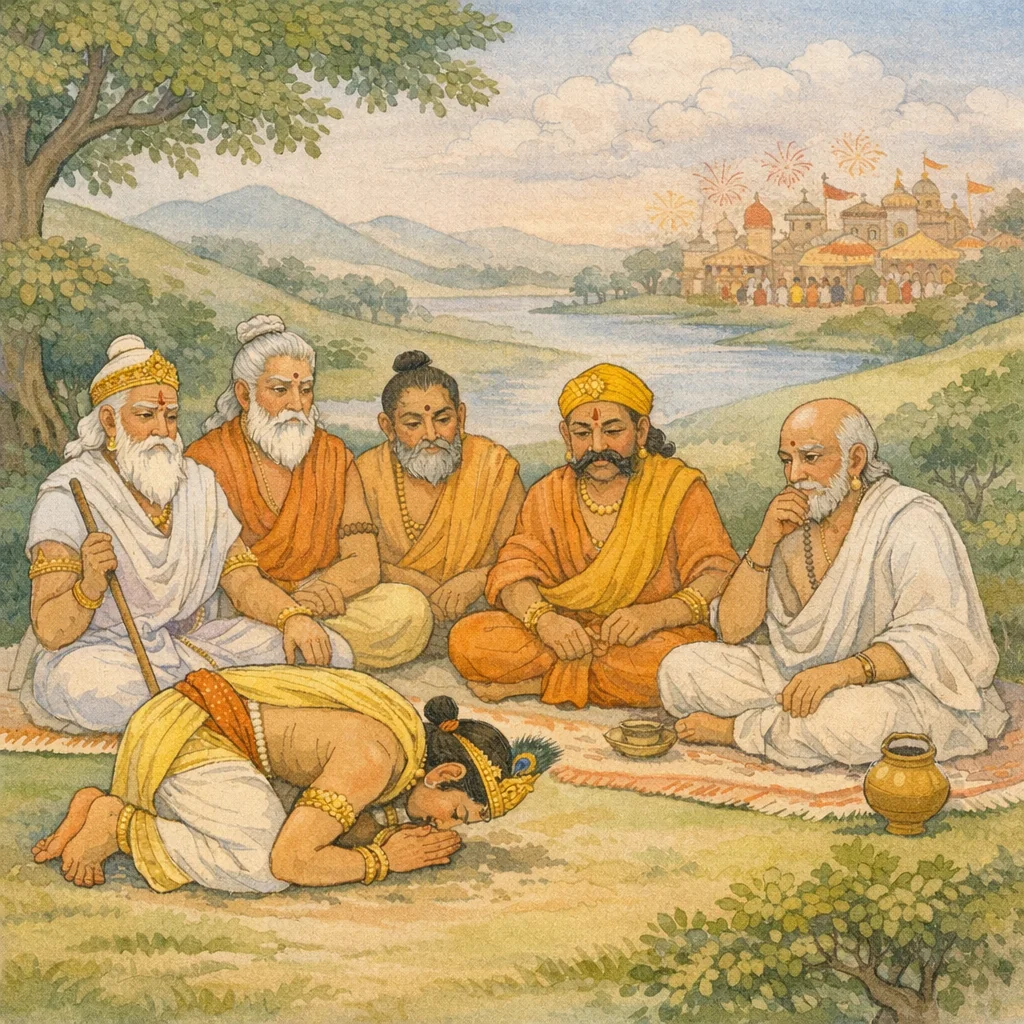
Verse 3
अयं समाज: सुमहान् रमणीयतमो भुवि । उपस्थित: पशुपतेर्नगरे वारणावते,वैशम्पायनजी कहते हैं--जनमेजय! तदनन्तर राजा दुर्योधन और उसके छोटे भाइयोंने धन देकर तथा आदर-सत्कार करके सम्पूर्ण अमात्य आदि प्रकृतियोंको धीरे-धीरे अपने वशमें कर लिया। कुछ चतुर मन्त्री धृतराष्ट्रकी आज्ञासे (चारों ओर) इस बातकी चर्चा करने लगे कि “वारणावत नगर बहुत सुन्दर है। उस नगरमें इस समय भगवान् शिवकी पूजाके लिये जो बहुत बड़ा मेला लग रहा है, वह तो इस पृथ्वीपर सबसे अधिक मनोहर है'
Vaiśampāyana said: “This is a very great gathering—indeed the most delightful on earth—now assembled in the city of Vāraṇāvata for Paśupati (Śiva).” In context, it is persuasive publicity meant to draw the Pāṇḍavas away under the guise of devotion, masking a politically motivated plan.
Verse 4
सर्वरत्नसमाकीर्णे पुंसां देशे मनोरमे । इत्येवं धृतराष्ट्रस्य वचनाच्चक्रिरे कथा:,“वह पवित्र नगर समस्त रत्नोंसे भरा-पूरा तथा मनुष्योंके मनको मोह लेनेवाला स्थान धृतराष्ट्रके कहनेसे वह इस प्रकारकी बातें करने लगे
Vaiśampāyana said: In that delightful region, strewn with every kind of jewel and captivating to the minds of men, they began their conversation in this manner, prompted by Dhṛtarāṣṭra’s words. The scene shows how a king’s speech can set the tone of counsel, amid prosperity that can distract the mind from dharma.
Verse 5
कथ्यमाने तथा रम्ये नगरे वारणावते । गमने पाण्डुपुत्राणां जज्ञे तत्र मतिर्नूप,राजन्! वारणावत नगरकी रमणीयताका जब इस प्रकार (यत्र-तत्र) वर्णन होने लगा, तब पाण्डवोंके मनमें वहाँ जानेका विचार उत्पन्न हुआ
Vaiśampāyana said: As the charming city of Vāraṇāvata was being spoken of in such attractive terms, a resolve arose in the minds of Pāṇḍu’s sons to go there, O king.
Verse 6
यदा त्वमन्यत नृूपो जातकौतूहला इति । उवाचैतानेत्य तदा पाण्डवानम्बिकासुत:,जब अम्बिकानन्दन राजा धृतराष्ट्रको यह विश्वास हो गया कि पाण्डव वहाँ जानेके लिये उत्सुक हैं, तब वे उनके पास जाकर इस प्रकार बोले--
Vaiśampāyana said: When the king (Dhṛtarāṣṭra), having become convinced that the Pāṇḍavas were eager to go there, approached them, he then spoke to them in this manner. The episode highlights the court’s watchful management of the princes’ intentions and the king’s cautious, politically charged engagement.
Verse 7
(अधीतानि च शास्त्राणि युष्माभिरिह कृत्स्नश: । अस्त्राणि च तथा द्रोणाद् गौतमाच्च विशेषत: ।। इदमेवंगते ताताश्चिन्तयामि समन्तत: । रक्षणे व्यवहारे च राज्यस्य सततं हिते ।॥) है 7 ममैते पुरुषा नित्यं कथयन्ति पुनः पुनः । रमणीयतमं लोके नगरं वारणावतम्,“बेटो! तुमलोगोंने सम्पूर्ण शास्त्र पढ़ लिये। आचार्य द्रोण और कृपसे अस्त्र-शस्त्रोंकी भी विशेष-रूपसे शिक्षा प्राप्त कर ली। प्रिय पाण्डवो! ऐसी दशामें मैं एक बात सोच रहा हूँ। सब ओरसे राज्यकी रक्षा, राजकीय व्यवहारोंकी रक्षा तथा राज्यके निरन्तर हित-साधनमें लगे रहनेवाले मेरे ये मन्त्रीलोग प्रतिदिन बारंबार कहते हैं कि वारणावत नगर संसारमें सबसे अधिक सुन्दर है
Vaiśampāyana said: “Here you have thoroughly studied all the treatises, and you have also received instruction in weapons—especially from Droṇa and from Gautama. In this situation, dear sons, I am thinking on every side about the protection of the kingdom, the conduct of its affairs, and the constant pursuit of its welfare. These my men—ever engaged in safeguarding the realm and its administration—repeatedly tell me day after day: ‘In the world, the city of Vāraṇāvata is the most delightful.’”
Verse 8
ते ताता यदि मन्यध्वमुत्सवं वारणावते । सगणा: सान्वयाश्रैव विहरध्वं यथामरा:,'पुत्रो! यदि तुमलोग वारणावत नगरमें उत्सव देखने जाना चाहो तो अपने कुटुम्बियों और सेवकवर्गके साथ वहाँ जाकर देवताओंकी भाँति विहार करो
Vaiśampāyana said: “Dear sons, if you wish to go to Vāraṇāvata for the festival, then go there together with your attendants and with your own kinsmen, and enjoy yourselves like the gods.”
Verse 9
ब्राह्मणेभ्यश्ष रत्नानि गायकेभ्यश्व सर्वश: । प्रयच्छध्वं यथाकामं देवा इव सुवर्चस:,“ब्राह्मणों और गायकोंको विशेषरूपसे रत्न एवं धन दो तथा अत्यन्त तेजस्वी देवताओंके समान कुछ कालतक वहाँ इच्छानुसार विहार करते हुए परम सुख प्राप्त करो। तत्पश्चात् पुनः सुखपूर्वक इस हस्तिनापुर नगरमें ही चले आना”
Vaiśampāyana said: “Give jewels and wealth generously to the brāhmaṇas and also to the singers in every way. Then, shining like the gods, enjoy yourselves there for some time according to your wish and attain the highest happiness; thereafter, return again comfortably to this city of Hastināpura.”
Verse 10
कंचित् काल विहृत्यैवमनुभूय परां मुदम् । इदं वै हास्तिनपुरं सुखिन: पुनरेष्यथ,“ब्राह्मणों और गायकोंको विशेषरूपसे रत्न एवं धन दो तथा अत्यन्त तेजस्वी देवताओंके समान कुछ कालतक वहाँ इच्छानुसार विहार करते हुए परम सुख प्राप्त करो। तत्पश्चात् पुनः सुखपूर्वक इस हस्तिनापुर नगरमें ही चले आना”
Vaiśampāyana said: “After spending some time in such free enjoyment and experiencing the highest delight, you shall return again in happiness to this very city of Hāstinapura.”
Verse 11
वैशम्पायन उवाच धृतराष्ट्रस्य तं काममनुबुध्य युधिष्ठिर: । आत्मनश्लासहायत्वं तथेति प्रत्युवाच तम्,वैशम्पायनजी कहते हैं--जनमेजय! युधिष्छिर धृतराष्ट्रकी उस इच्छाका रहस्य समझ गये, परंतु अपनेको असहाय जानकर उन्होंने “बहुत अच्छा” कहकर उनकी बात मान ली
Vaiśampāyana said: Yudhiṣṭhira understood the intention behind Dhṛtarāṣṭra’s wish; yet, recognizing his own helpless position, he replied to him, “So be it,” and assented.
Verse 12
ततो भीष्म॑ शांतनवं विदुरं च महामतिम् | द्रोणं च बाह्विकं चैव सोमदत्तं च कौरवम्,तदनन्तर युधिष्ठिरने शंतनुनन्दन भीष्म, परम बुद्धिमान् विदुर, द्रोण, बाह्विक, कुरुवंशी सोमदत्त, कृपाचार्य, अश्वत्थामा, भूरिश्रवा, अन्यान्य माननीय मन्त्रियों, तपस्वी ब्राह्मणों, पुरोहितों, पुरवासियों तथा यशस्विनी गान्धारीदेवीसे मिलकर धीरे-धीरे दीनभावसे इस प्रकार कहा--
Then Yudhiṣṭhira approached Bhīṣma, son of Śāntanu, and the supremely wise Vidura; he also met Droṇa, Bāhlīka, and Somadatta of the Kuru line. Thereafter, having greeted other revered elders, ministers, ascetic brāhmaṇas, household priests, and the citizens—together with the illustrious queen Gāndhārī—he spoke slowly, with a subdued and humble bearing.
Verse 13
कृपमाचार्यपुत्रं च भूरिश्रवसमेव च । मान्यानन्यानमात्यांश्र ब्राह्मणांश्न तपोधनान्,तदनन्तर युधिष्ठिरने शंतनुनन्दन भीष्म, परम बुद्धिमान् विदुर, द्रोण, बाह्विक, कुरुवंशी सोमदत्त, कृपाचार्य, अश्वत्थामा, भूरिश्रवा, अन्यान्य माननीय मन्त्रियों, तपस्वी ब्राह्मणों, पुरोहितों, पुरवासियों तथा यशस्विनी गान्धारीदेवीसे मिलकर धीरे-धीरे दीनभावसे इस प्रकार कहा--
Vaiśampāyana said: Then Yudhiṣṭhira approached and met Kṛpa, Aśvatthāmā the preceptor’s son, and Bhūriśravas, along with other respected ministers and ascetic brāhmaṇas rich in austerity. After that, he also met Bhīṣma, son of Śāntanu, the supremely wise Vidura, Droṇa, Bāhlīka, Somadatta of the Kuru line, Kṛpācārya, and others worthy of honor, as well as household priests, townspeople, and the illustrious queen Gāndhārī; and, having greeted them, he spoke slowly with a subdued, humble bearing.
Verse 14
पुरोहितांश्व पौरांक्ष गान्धारीं च यशस्विनीम् | युधिष्ठिर: शनैर्दीन उवाचेदं वचस्तदा,तदनन्तर युधिष्ठिरने शंतनुनन्दन भीष्म, परम बुद्धिमान् विदुर, द्रोण, बाह्विक, कुरुवंशी सोमदत्त, कृपाचार्य, अश्वत्थामा, भूरिश्रवा, अन्यान्य माननीय मन्त्रियों, तपस्वी ब्राह्मणों, पुरोहितों, पुरवासियों तथा यशस्विनी गान्धारीदेवीसे मिलकर धीरे-धीरे दीनभावसे इस प्रकार कहा--
Vaiśampāyana said: Then Yudhiṣṭhira, slowly and with a sorrowful heart, addressed these words to the priests and the townspeople, and also to the illustrious queen Gāndhārī.
Verse 15
रमणीये जनाकीणर्णे नगरे वारणावते । सगणास्तत्र यास्यामो धृतराष्ट्रस्य शासनात्,“हम महाराज धृतराष्ट्रकी आज्ञासे रमणीय वारणावत नगरमें, जहाँ बड़ा भारी मेला लग रहा है, परिवारसहित जानेवाले हैं
Vaiśampāyana said: “By King Dhṛtarāṣṭra’s command, we shall go with our entire party to the delightful city of Vāraṇāvata, which is crowded with people (because of a great gathering).”
Verse 16
प्रसन्नमनस: सर्वे पुण्या वाचो विमुज्चत । आशीर्भिब॑हितानस्मान् न पापं प्रसहिष्यते,“आप सब लोग प्रसन्नचित्त होकर हमें अपने पुण्यमय आशीर्वाद दीजिये। आपके आशीर्वादसे हमारी वृद्धि होगी और पापका हमपर वश नहीं चल सकेगा'
All of you, with minds made serene, please utter auspicious and holy words of blessing for us. Strengthened by your benedictions, we shall prosper, and sin will not be able to overpower us.
Verse 17
एवमुक्तास्तु ते सर्वे पाण्डुपुत्रेण कौरवा: । प्रसन्नवदना भूत्वा तेडन्ववर्तन्त पाण्डवान्,पाण्डुनन्दन युधिष्ठिरके इस प्रकार कहनेपर वे समस्त कुरुवंशी प्रसन्नचदन होकर पाण्डवोंके अनुकूल हो कहने लगे--'पाण्डुकुमारो! मार्गमें सर्वदा सब प्राणियोंसे तुम्हारा कल्याण हो। तुम्हें कहींसे किसी प्रकारका अशुभ न प्राप्त हो”
Vaiśampāyana said: Thus addressed by the son of Pāṇḍu, all those Kauravas, their faces bright with goodwill, assented and aligned themselves with the Pāṇḍavas. In a spirit of reconciliation and propriety, they offered a benediction for the journey—may auspiciousness attend you among all beings on the road, and may no misfortune touch you from any quarter.
Verse 18
स्वस्त्यस्तु व: पथि सदा भूतेभ्यश्वैव सर्वश: । मा च वो>स्त्वशुभं किंचित् सर्वश: पाण्डुनन्दना:,पाण्डुनन्दन युधिष्ठिरके इस प्रकार कहनेपर वे समस्त कुरुवंशी प्रसन्नचदन होकर पाण्डवोंके अनुकूल हो कहने लगे--'पाण्डुकुमारो! मार्गमें सर्वदा सब प्राणियोंसे तुम्हारा कल्याण हो। तुम्हें कहींसे किसी प्रकारका अशुभ न प्राप्त हो”
Vaiśampāyana said: “May well-being attend you always on the road, from all beings in every way. And may no misfortune whatsoever befall you—O sons of Pāṇḍu.” In context, this is a formal benediction offered to the Pāṇḍavas as they depart, expressing social goodwill and the ethical ideal that one should send others forth with auspicious speech and protection from harm.
Verse 19
ततः कृतस्वस्त्ययना राज्यलम्भाय पार्थिवा: । कृत्वा सर्वाणि कार्याणि प्रययुर्वारणावतम्,तब राज्य-लाभके लिये स्वस्तिवाचन करा समस्त आवश्यक कार्य पूर्ण करके राजकुमार पाण्डव वारणावत नगरको गये
Vaiśampāyana said: Then, after having auspicious benedictions recited for the sake of securing the kingdom, the royal princes completed all necessary preparations and set out for Vāraṇāvata. The episode underscores how political aims are outwardly sanctified through ritual, even as the larger narrative moves toward a morally fraught plot against the Pāṇḍavas.
Verse 141
इस प्रकार श्रीमह्ाभारत आदिपरववके अन्तर्गत जदुगृहपर्वमें दुर्योधनपरामर्शविषयक एक सौ इकतालीसवाँ अध्याय पूरा हुआ
Thus ends the one hundred and forty-first chapter of the Jatugṛha section within the Ādi Parva of the Śrī Mahābhārata, dealing with Duryodhana’s counsel and deliberations. The closing note underscores the narrative’s ethical tension: secret plotting and manipulative advice stand in sharp contrast to the demands of dharma and transparent conduct.
Verse 142
इति श्रीमहाभारते आदिपर्वणि जतुगृहपर्वणि वारणावतयात्रायां द्विचत्वारिंशदधिकशततमो< ध्याय:,इस प्रकार श्रीमहाभारत आदिपर्वके अन्तर्गत जतुय॒हपर्वमें वारणावतयात्राविषयक एक सौ बयालीसवाँ अध्याय पूरा हुआ
Thus, in the Śrī Mahābhārata, within the Ādi Parva, in the section concerning the lac-house episode, the chapter on the journey to Vāraṇāvata—being the one hundred and forty-second—comes to an end. The colophon marks the close of this narrative unit, signaling a transition in the plot where the Pāṇḍavas’ movement toward Vāraṇāvata forms part of a larger scheme of deception and impending danger, raising ethical questions about treachery, duty, and vigilance.
Frequently Asked Questions
The dilemma is how to respond to a hostile rākṣasa context after lethal force has already been used: Yudhiṣṭhira insists that retaliation and fear do not justify harming a woman, while still addressing legitimate security risks from potential reprisal.
Dharma is presented as disciplined restraint coupled with pragmatic protection: safeguarding life and group survival in adversity can be righteous when governed by ethical limits and transparent agreements.
A direct phalaśruti formula is not stated; however, the chapter supplies meta-causality by explicitly linking Ghaṭotkaca’s origin to later epic outcomes (notably the eventual countering of Karṇa’s decisive weapon), framing the episode as purposeful within the broader narrative economy.