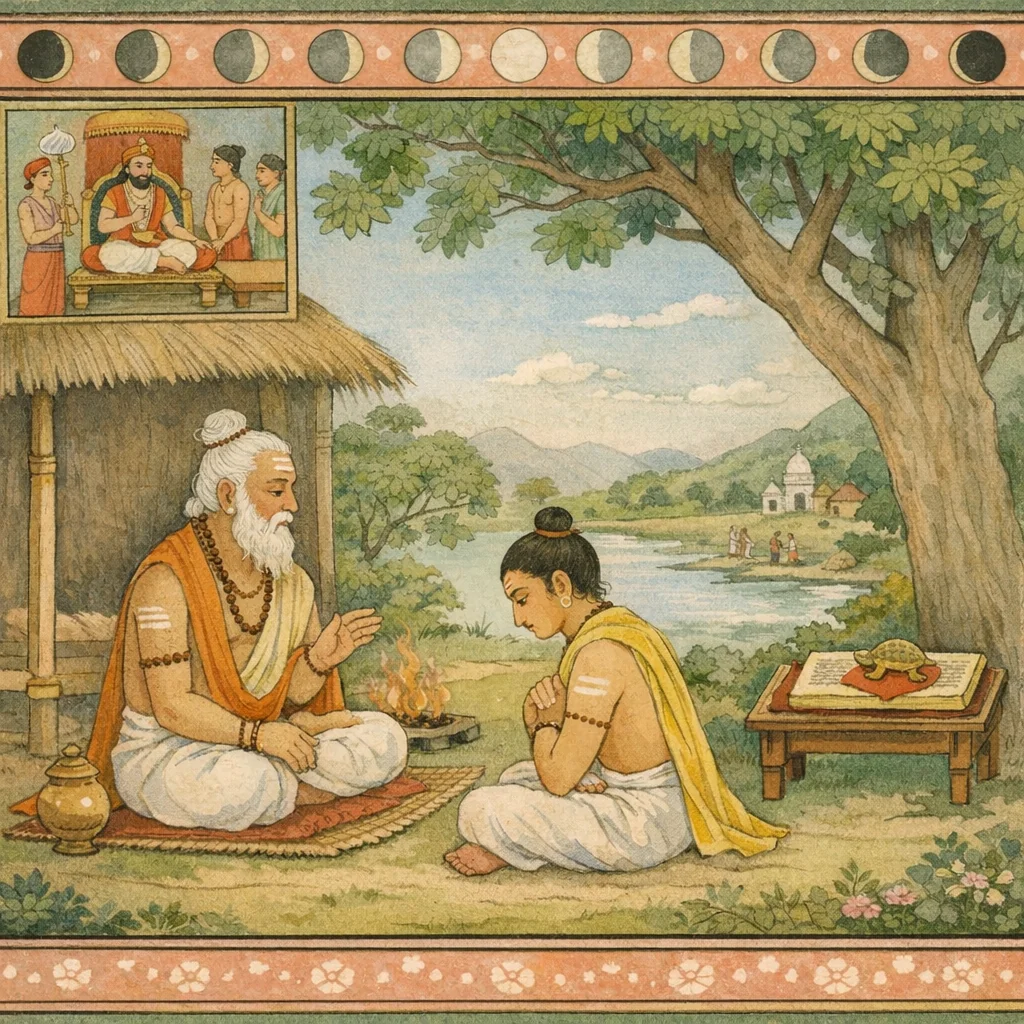
Adhyaya 32
Prāyaścitta for Mahāpātakas: Liquor, Theft, Sexual Transgression, Contact with the Fallen, and Homicide
Concluding the earlier teaching on expiatory discipline, Vyāsa sets out prāyaścittas for the great sins (mahāpātakas) with graded alternatives. He first treats intoxicant-drinking, prescribing severe, heat-symbolic remedies; then gold-theft, stressing confession before the king and the legal principle that royal punishment can remove the thief’s sin, while failure to punish shifts guilt to the ruler. The chapter next lists expiations for sexual transgressions (including the guru’s wife and forbidden kin-relations), combining extreme self-punitive options with structured vows such as Kṛcchra, Atikṛcchra, Taptakṛcchra, Sāṃtapana, and repeated Cāndrāyaṇa. It also addresses impurity from association with patitas, assigning vows proportionate to the degree of contact. The latter portion grades penances for homicide by varṇa and gender, then extends expiation to animals, birds, trees, and plants, linking gifts, mantra-recitation, fasting, and breath-control (prāṇāyāma) to ritual and ecological harm. Establishing proportionality (doṣa–prāyaścitta), the chapter integrates mantra, tīrtha, and ascetic restraint/yoga as a single corrective path, preparing the next movement of dharma-teaching.
Shlokas
Verse 1
इति श्रीकूर्मपाराणे षट्साहस्त्र्यां संहितायामुपरिविभागे एकत्रिशो ऽध्यायः व्यास उवाच सुरापस्तु सुरां तप्तामग्निवर्णां स्वयं पिबेत् / तया स काये निर्दग्धे मुच्यते तु द्विजोत्तमः
Thus, in the Śrī Kūrma Purāṇa, in the Ṣaṭsāhasrī Saṃhitā, in the latter division—(the close of) the thirty-first chapter. Vyāsa said: “But one who has drunk liquor should himself drink liquor heated, fire-colored; when his body is burnt by that, the best of the twice-born is released from the sin.”
Verse 2
गोमूत्रमग्निवर्णं वा गोशकृद्रसमेव वा / पयो घृतं जलं वाथ मुच्यते पातकात् ततः
By taking cow’s urine, reddish like fire, or even the expressed essence of cow-dung; or else milk, ghee, or water—thereafter one is released from sin.
Verse 3
जलार्द्रवासाः प्रयतो ध्यात्वा नारायणं हरिम् / ब्रह्महत्याव्रतं चाथ चरेत् तत्पापशान्तये
Wearing garments dampened with water, disciplined and self-restrained, one should meditate upon Nārāyaṇa, Hari; and then undertake the vow prescribed for expiating brahmin-slaying (brahmahatyā), for the pacification of that sin.
Verse 4
सुवर्णस्तेयकृद् विप्रो राजानमभिगम्य तु / स्वकर्म ख्यापयन् ब्रूयान्मां भवाननुशास्त्विति
A brāhmaṇa who has stolen gold should approach the king and, confessing his own deed, say: “May you punish and discipline me.”
Verse 5
गृहीत्वा मुसलं राजा सकृद् हन्यात् ततः स्वयम् / वधे तु शुद्ध्यते स्तेनो ब्राह्मणस्तपसैव वा
Taking up a club, the king should strike him once and then deal with him himself. By being put to death the thief is purified; but a brāhmaṇa is purified only through austerity (tapas).
Verse 6
स्कन्धेनादाय मुसलं लकुटं वापि खादिरम् / शक्तिं चोभयतस्तीक्ष्णामायसं दण्डमेव वा
Carrying upon the shoulder a pestle, or a club—even one made of khadira wood—or else a spear sharpened on both sides, or simply an iron staff.
Verse 7
राजा तेन च गन्तव्यो मुक्तकेशेन धावता / आचक्षाणेन तत्पापमेवङ्कर्मास्मि शाधि माम्
Bearing that, he must run with his hair unbound and go to the king, openly declaring that sin: “I am one who has acted in this way—please instruct me and prescribe my due expiation.”
Verse 8
शासनाद् वा विमोक्षाद् वा स्तेनः स्तेयाद् विमुच्यते / अशासित्वा तु तं राजास्तेनस्याप्नोति किल्बिषम्
Whether through punishment or through lawful release, a thief is freed from the sin of theft. But if the king fails to punish him, the king truly incurs the thief’s guilt.
Verse 9
तपसापनुनुत्सुस्तु सुवर्णस्तेयजं मलम् / चीरवासा द्विजो ऽरण्ये चरेद् ब्रह्महणो व्रतम्
A twice-born man who seeks to burn away by austerity the stain born of stealing gold should, clad in bark-garments, dwell in the forest and undertake the vow prescribed for the slayer of a Brāhmaṇa.
Verse 10
स्नात्वाश्वमेधावभृथे पूतः स्यादथवा द्विजः / प्रदद्याद् वाथ विप्रेभ्यः स्वात्मतुल्यं हिरण्यकम्
By bathing in the avabhṛtha, the concluding ablution of the Aśvamedha, a twice-born becomes purified; or else he should give to Brāhmaṇa sages gold equal in value to his own person, as a self-equivalent expiatory gift.
Verse 11
चरेद् वा वत्सरं कृच्छ्रं ब्रह्मचर्यपरायणः / ब्राह्मणः स्वर्णहारी तु तत्पापस्यापनुत्तये
Or else, devoted to brahmacarya, the Brāhmaṇa who has stolen gold should undertake the Kṛcchra penance for a full year, in order to remove that sin.
Verse 12
गुरोर्भार्यां समारुह्य ब्राह्मणः काममोहितः / अवगूहेत् स्त्रियं तप्तां दीप्तां कार्ष्णायसीं कृताम्
A Brāhmaṇa, deluded by lust, who violates his guru’s wife should embrace a woman fashioned of black iron, heated and glowing, as an expiatory punishment.
Verse 13
स्वयं वा शिश्नवृषणावुत्कृत्याधाय चाञ्चलौ / आतिष्ठेद् दक्षिणामाशामानिपातादजिह्मगः
Or else, cutting off his own penis and testicles and placing them upon the ground, he should stand facing the southern direction, without bending, until he falls down.
Verse 14
गुर्वर्थं वा हतः शुद्ध्येच्चरेद् वा ब्रह्महा व्रतम् / शाखां वा कण्टकोपेतां परिष्वज्याथ वत्सरम् / अधः शयीत नियतो मुच्यते गुरुतल्पगः
If one has slain a man for the sake of his teacher, he is purified by observing the vow prescribed for a slayer of a brāhmaṇa. Or else, embracing a thorny branch, he should lie beneath it for a year in strict self-restraint; thus the violator of the teacher’s bed is released from sin.
Verse 15
कृच्छ्रं वाब्दं चरेद् विप्रश्चीरवासाः समाहितः / अश्वमेधावभृथके स्नात्वा वा शुद्ध्यते नरः
A brāhmaṇa should undertake the Kṛcchra penance for a year, wearing bark-garments and remaining disciplined and collected; or else, by bathing at the concluding ablution (avabhṛtha) of an Aśvamedha sacrifice, a person becomes purified.
Verse 16
काले ऽष्टमे वा भुञ्जानो ब्रह्मचारी सदाव्रती / स्थानासनाभ्यां विहरंस्त्रिरह्नो ऽभ्युपयन्नपः
Observing lifelong vows and maintaining brahmacarya, let him take his food only at the appointed eighth time. Moving about with only standing and sitting as his postures, let him ritually sip water (ācaman) three times a day.
Verse 17
अधः शायी त्रिभिर्वर्षैस्तद् व्यपोहति पातकम् / चान्द्रायणानि वा कुर्यात् पञ्च चत्वारि वा पुनः
One who sleeps on the bare ground as an austerity-vow for three years removes that sin. Alternatively, he should perform Cāndrāyaṇa penances again—either five times or four times.
Verse 18
पतितैः संप्रयुक्तानामथ वक्ष्यामि निष्कृतिम् / पतितेन तु संसर्गं यो येन कुरुते द्विजः / स तत्पापापनोदार्थं तस्यैव व्रतमाचरेत्
Now I shall explain the expiation for those who have come into contact with the fallen (patita). Whatever kind of association a twice-born (dvija) forms with a patita, for the removal of the sin arising from that contact he should undertake precisely the corresponding vow of penance.
Verse 19
तप्तकृच्छ्रं चरेद् वाथ संवत्सरमतन्द्रितः / षाण्मासिके तु संसर्गे प्रायश्चित्तार्धमर्हति
Otherwise, he should undertake the ‘taptakṛcchra’ penance for a full year, without negligence; but if the illicit sexual association occurred after an interval of six months, he deserves only half of that expiation.
Verse 20
एभिर्व्रतैरपोहन्ति महापातकिनो मलम् / पुण्यतीर्थाभिगमनात् पृथिव्यां वाथ निष्कृतिः
By these vowed observances (vratas), even those guilty of the great sins remove their defilement. Likewise, by visiting sacred pilgrimage-fords (tīrthas) on the earth, expiation arises—release from the stain of sin.
Verse 21
ब्रह्महत्या सुरापानं स्तेयं गुर्वङ्गनागमः / कृत्वा तैश्चापि संसर्गं ब्राह्मणः कामकारतः
A brāhmaṇa who, out of lustful self-will, commits brahmin-slaying, drinks intoxicants, steals, or violates the wife of one’s guru—and even one who knowingly keeps company with such offenders—incurs grave sin.
Verse 22
कुर्यादनशनं विप्रः पुण्यतीर्थे समाहितः / ज्वलन्तं वा विशेदग्निं ध्यात्वा देवं कपर्दिनम्
A brāhmaṇa, collected in mind at a sacred tīrtha, should undertake the vow of fasting (anaśana); or else, having meditated upon the Lord Kapardin (Śiva, the matted-haired God), he may enter into blazing fire.
Verse 23
न ह्यन्या निष्कृतिर्दृष्टा मुनिभिर्धर्मवादिभिः / तस्मात् पुण्येषु तीर्थेषु दहेद् वापि स्वदेहकम्
For the sages who expound Dharma have seen no other expiation than this; therefore, at sacred and meritorious tīrthas, one should even burn—offer up—one’s own body.
Verse 24
गत्वा दुहितरं विप्रः स्वसारं वा स्नुषामपि / प्रविशेज्ज्वलनं दीप्तं मतिपूर्वमिति स्थितिः
If a brāhmaṇa has approached (had illicit intercourse with) his own daughter, or his sister, or even his daughter-in-law, then—having resolved with full awareness—he should enter a blazing fire; such is the prescribed ordinance.
Verse 25
मातृष्वसां मातुलानीं तथैव च पितृष्वसाम् / भागिनेयीं समारुह्य कुर्यात् कृच्छ्रातिकृच्छ्रकौ
If a man has sexual intercourse with his maternal aunt, his maternal uncle’s wife, his paternal aunt, or his sister’s daughter, he should perform the severe expiations known as the Kṛcchra and the Atikṛcchra.
Verse 26
चान्द्रायणं च कुर्वोत तस्य पापस्य शान्तये / ध्यायन् देवं जगद्योनिमनादिनिधनं परम्
To pacify that sin, one should also undertake the Cāndrāyaṇa expiatory vow, while meditating upon the Supreme Lord—the womb of the universe—beginningless and endless, the highest Reality.
Verse 27
भ्रातृभार्यां समारुह्य कुर्यात् तत्पापशान्तये / चान्द्रायणानि चत्वारि पञ्च वा सुसमाहितः
If one has violated his brother’s wife, then for the pacification of that sin he should, with full concentration, perform four— or even five—Cāndrāyaṇa vows (the lunar penance).
Verse 28
पैतृष्वस्त्रेयीं गत्वा तु स्वस्त्रेयां मातुरेव च / मातुलस्य सुतां वापि गत्वा चान्द्रायणं चरेत्
If a man has sexual relations with the daughter of his paternal aunt, or with the daughter of his own sister, or with the daughter of his mother’s sister, or even with the daughter of his maternal uncle, he should perform the Cāndrāyaṇa penance.
Verse 29
सखिभार्यां समारुह्य गत्वा श्यालीं तथैव च / अहोरात्रोषितो भूत्वा तप्तकृच्छ्रं समाचरेत्
If a man has had intercourse with a friend’s wife, and likewise with his sister-in-law, then—having remained in penance for a full day and night—he should duly perform the Taptakṛcchra (the “heated” kṛcchra) expiatory observance.
Verse 30
उदक्यागमने विप्रस्त्रिरात्रेण विशुध्यति / चाण्डालीगमने चैव तप्तकृच्छ्रत्रयं विदुः / सह सांतपनेनास्य नान्यथा निष्कृतिः स्मृता
If a brāhmaṇa has intercourse with a woman in her menses, he becomes purified after three nights of prescribed observance. But if he has intercourse with a Caṇḍāla woman, the authorities prescribe a threefold Taptakṛcchra; and together with the Sāṃtapana rite—there is remembered to be no other expiation for him.
Verse 31
मातृगोत्रां समासाद्य समानप्रवरां तथा / चाद्रायणेन शुध्येत प्रयतात्मा समाहितः
If a man has approached a woman of his mother’s gotra, or likewise one belonging to the same pravara, then—self-restrained and composed—he should purify himself by performing the Āndrāyaṇa expiatory observance.
Verse 32
ब्राह्मणो ब्राह्मणीं गत्वा गृच्छ्रमेकं समाचरेत् / कन्यकां दूषयित्वा तु चरेच्चान्द्रायणव्रतम्
If a Brāhmaṇa has intercourse with a Brāhmaṇī, he should undertake one Gṛcchra penance; but if he violates an unmarried maiden, then he should perform the Cāndrāyaṇa vow as expiation.
Verse 33
अमानुषीषु पुरुष उदक्यायामयोनिषु / रेतः सिक्त्वा जले चैव कृच्छ्रं सान्तपनं चरेत्
If a man discharges semen into non-human females, into a woman in her menstrual period, into an improper receptacle (ayoni), or even into water, he should undertake the Kṛcchra and the Sāntapana penances as expiation.
Verse 34
बन्धकीगमने विप्रस्त्रिरात्रेण विशुद्ध्यति / गवि भथुनमासेव्य चरेच्चान्द्रायणव्रतम्
If a brāhmaṇa has intercourse with a bandhakī (a woman of disreputable conduct), he becomes purified by observing purification for three nights. But if he has intercourse with a cow, having done so he should undertake the Cāndrāyaṇa vow as expiation.
Verse 35
अजावी मैथुनं कृत्वा प्राजापत्यं चरेद् द्विजः / पतितां च स्त्रियं गत्वा त्रिभिः कृच्छ्रै र्विशुद्ध्यति
Having had sexual intercourse with a she-goat, a twice-born man should perform the Prājāpatya penance. If he has gone to a fallen woman, he becomes purified by undertaking three Kṛcchra penances.
Verse 36
पुल्कसीगमने चैव क्रच्छ्रं चान्द्रायणं चरेत् / नटीं शैलूषकीं चैव रजकीं वेणुजीविनीम् / गत्वा चान्द्रायणं कुर्यात् तथा चर्मोपजीविनीम्
If one has intercourse with a Pulkasī woman, one should perform the Kr̥cchra penance and also undertake the Cāndrāyaṇa vow. Likewise, after going to a female dancer, an actress, a washerwoman, a woman who lives by playing the flute, or one who earns her living from hides/leather-work, one should perform the Cāndrāyaṇa expiation.
Verse 37
ब्रहामचारी स्त्रियं गच्छेत् कथञ्चित्काममोहितः / सप्तगारं चरेद् भैक्षं वसित्वा गर्दभाजिनम्
If a brahmacārin, deluded by desire, should in any way go to a woman, then wearing a donkey-hide he should live on alms, begging from seven houses, as an expiation.
Verse 38
उपस्पृशेत् त्रिषवणं स्वपापं परिकीर्तयन् / संवत्सरेण चैकेन तस्मात् पापात् प्रमुच्यते
Performing ritual sipping/purification (ācamana) at the three daily junctures, while openly acknowledging and reciting one’s own wrongdoing, one becomes released from that sin within a single year.
Verse 39
ब्रह्महत्याव्रतं वापि षण्मासानाचरेद् यमी / मुच्यते ह्यवकीर्णो तु ब्राह्मणानुमते स्थितः
Or else, the self‑controlled man should practice for six months the expiatory vow prescribed for brahmin‑slaying; thus he is freed. Indeed, even one stained by a grave lapse (avakīrṇa) is released when he abides in accordance with the assent of the Brāhmaṇas.
Verse 40
सप्तरात्रमकृत्वा तु भैक्षचर्याग्निपूजनम् / रेतसश्च समुत्सर्गे प्रायश्चित्तं समाचरेत्
But if for seven nights one fails to observe the disciplines of living on alms and worshipping the sacred fire, then—if there is also an emission of semen—one should duly undertake the prescribed expiatory rite (prāyaścitta).
Verse 41
ओङ्कारपूर्विकाभिस्तु महाव्याहृतिभिः सदा / संवत्सरं तु भुञ्जानो नक्तं भिक्षाशनः शुचिः
But one should always employ the great Vyāhṛtis preceded by Oṃ; living thus for a full year, pure in conduct, he should eat only once at night, subsisting on alms‑food.
Verse 42
सावित्रीं च जपेच्चैव नित्यं क्रोधविवर्जितः / नदीतीरेषु तीर्थेषु तस्मात् पापाद् विमुच्यते
And one should also recite the Sāvitrī (Gāyatrī) daily, free from anger; by doing so at sacred fords on riverbanks, one is released from that sin.
Verse 43
हत्वा तु क्षत्रियं विप्रः कुर्याद् ब्रह्महणो व्रतम् / अकामतो वै षण्मासान् दद्यान् पञ्चशतं गवाम्
If a Brahmin kills a Kshatriya, he should undertake the vow prescribed for the slayer of a Brahmin. If it was done without intent, he should observe it for six months and give five hundred cows in donation.
Verse 44
अब्दं चरेत नियतो वनवासी समाहितः / प्राजापत्यं सान्तपनं तप्तकृच्छ्रं तु वा स्वयम्
Disciplined and self-restrained, dwelling in the forest with a collected mind, one should undertake the vow for a year; or else, for oneself, perform the Prājāpatya penance, the Sāntapana penance, or the Taptakṛcchra austerity.
Verse 45
प्रमाप्याकामतो वैश्यं कुर्यात् संवत्सरद्वयम् / गोसहस्रं सपादं च दद्याद् ब्रह्महणो व्रतम् / कृच्छ्रातिकृच्छ्रौ वा कुर्याच्चान्द्रायणमथावि वा
If one causes the death of a Vaiśya unintentionally, one should observe a penance for two years. One should also give a thousand cows with their calves, in accordance with the observance prescribed for a slayer of a brāhmaṇa; or else one may perform the Kṛcchra and Ati-kṛcchra austerities, or even undertake the Cāndrāyaṇa vow.
Verse 46
संवत्सरं व्रतं कुर्याच्छूद्रं हत्वा प्रमादतः / गोसहस्रार्धपादं च दद्यात् तत्पापशान्तये
If, through negligence, one kills a Śūdra, one should undertake a vow of expiation for one year; and to pacify that sin, one should also give as a gift half of a thousand cows.
Verse 47
अष्टौ वर्षाणि षट् त्रीणि कुर्याद् ब्रह्महणो व्रतम् / हत्वा तु क्षत्रियं वैश्यं शूद्रं चैव यथाक्रमम्
For the slayer of a brāhmaṇa, the prescribed expiatory vow should be performed for eight years; and (for one who has) killed a kṣatriya, a vaiśya, and a śūdra—six, three, and (one year) respectively, in due order.
Verse 48
निहत्य ब्राह्मणीं विप्रस्त्वष्टवर्षं व्रतं चरेत् / राजन्यां वर्षषट्कं तु वैश्यां संवत्सरत्रयम् / वत्सरेण विशुद्ध्येत शूद्रां हत्वा द्विजोत्तमः
Having killed a Brāhmaṇa woman, a Brāhmaṇa should undertake a vow of expiation for eight years. For killing a Kṣatriya woman, (he should perform it) for six years; for a Vaiśya woman, for three years. But having killed a Śūdra woman, the best of the twice-born becomes purified in one year.
Verse 49
वैश्यां हत्वा प्रमादेन किञ्चिद् दद्याद् द्विजातये / अन्त्यजानां वधे चैव कुर्याच्चान्द्रायणं व्रतम् / पराकेणाथवा शुद्धिरित्याह भगवानजः
Having slain a Vaiśyā woman through negligence, one should give some donation to a twice-born (dvija). But in the killing of those of the last-born (antyaja) communities, one should undertake the Cāndrāyaṇa vow; or else purification is obtained by the Parāka fast—thus declares the Unborn Lord.
Verse 50
मण्डूकं नकुलं काकं दन्दशूकं च मूषिकम् / श्वानं हत्वा द्विजः कुर्यात् षोडशांशं व्रतं ततः
After killing a frog, a mongoose, a crow, a snake, or a mouse—or after killing a dog—a twice-born man should then undertake a vow of expiation equal to one-sixteenth (of the prescribed full penance).
Verse 51
पयः पिबेत् त्रिरात्रं तु श्वानं हत्वा सुयन्त्रितः / मार्जारं वाथ नकुलं योजनं वाध्वनो व्रजेत् / कृच्छ्रं द्वादशरात्रं तु कुर्यादश्ववधे द्विजः
Having killed a dog, a person—well-restrained—should subsist on milk for three nights. Having killed a cat or a mongoose, one should travel a yojana on foot. But in the case of killing a horse, a twice-born man should perform the kṛcchra penance for twelve nights.
Verse 52
अभ्रीं कार्ष्णायसीं दद्यात् सर्पं हत्वा द्विजोत्तमः / पलालभारं षण्डं च सैसकं चैकमाषकम्
Having killed a serpent, an excellent brāhmaṇa should give in charity an iron hoe, along with a load of straw, a bull, and one māṣaka’s weight of lead.
Verse 53
धृतकुम्भं वराहं च तिलद्रोणं च तित्तिरिम् / शुकं द्विहायनं वत्सं क्रौञ्चं हत्वा त्रिहायनम्
Having killed a dhṛtakumbha bird, a boar, a tiladroṇa (a bird so called), a partridge, a parrot, a two-year-old calf, and a krauñca (crane) that is three years old—(one becomes liable to the corresponding expiatory discipline prescribed in this context).
Verse 54
हत्वा हंसं बलाकां च बकं बर्हिणमेव च / वानरं श्येनभासौ च स्पर्शयेद् ब्राह्मणाय गाम्
Having slain a swan, a crane, a heron, a peacock, a monkey, and also a hawk and the bird of prey called bhāsa, one should make expiation by gifting a cow to a Brāhmaṇa.
Verse 55
क्रव्यादांस्तु मृगान् हत्वा धेनुं दद्यात् पयस्विनीम् / अक्रव्यादान् वत्सतरीमुष्ट्रं हत्वा तु कृष्णलम्
Having killed flesh-eating wild animals, one should give in charity a milch-cow rich in milk. Having killed non–flesh-eating animals, one should give a heifer; and having killed a camel, one should offer a kṛṣṇala (a small weight/coin of gold) as expiation.
Verse 56
किञ्चिदेव तु विप्राय दद्यादस्थिमतां वधे / अनस्थ्नां चैव हिंसायां प्राणायामेन शुध्यति
For the killing of creatures that have bones, one should give some expiatory gift to a Brāhmaṇa. But for the injury of boneless beings, one becomes purified through the discipline of prāṇāyāma (breath-control).
Verse 57
फलदानां तु वृक्षाणां छेदने जप्यमृक्शतम् / गुल्मवल्लीलतानां तु पुष्पितानां च वीरुधाम्
If one cuts down fruit-bearing trees, one should atone by reciting a hundred Ṛk-verses. Likewise, for cutting flowering shrubs, creepers, climbers, and flowering plants, the same expiatory recitation is prescribed.
Verse 58
अन्येषां चैव वृक्षाणां सरसानां च सर्वशः / फलपुष्पोद्भवानां च घृतप्राशो विशोधनम्
For other trees as well, and for all succulent plants in general—especially those that arise as fruits and flowers—the prescribed means of purification is the ingestion of ghee.
Verse 59
हस्तिनां च वधे दृष्टं तप्तकृच्छ्रं विशोधनम् / चान्द्रायणं पराकं वा गां हत्वा तु प्रमादतः / मतिपूर्वं वधे चास्याः प्रायश्चित्तं न विद्यते
For the slaying of elephants, the purificatory expiation enjoined is the Taptakṛcchra penance. If a cow is killed through negligence, one should undertake the Cāndrāyaṇa or the Parāka vow. But if she is slain with deliberate intent, no expiation is declared here for that deed.
Frequently Asked Questions
It states that lawful punishment (or official release) can remove the thief’s sin, and if the king neglects to punish, the king incurs the thief’s guilt—linking political dharma (rāja-dharma) to moral-ritual order.
Kṛcchra, Atikṛcchra, Taptakṛcchra, Sāṃtapana, Cāndrāyaṇa, and Parāka appear as recurring frameworks, often combined with brahmacarya, forest-dwelling, mantra-japa (Oṃ/Vyāhṛtis/Sāvitrī), and tīrtha observance.
Alongside meditation on Nārāyaṇa (Hari), it also prescribes contemplation of Kapardin (Śiva) and tīrtha-based rites, showing a sect-inclusive devotional field within a unified dharma-and-purification program.