Adhyaya 45
Jambūdvīpa Varṣas, Bhārata as Karmabhūmi, and the Sacred Hydro-Topography of Dharma
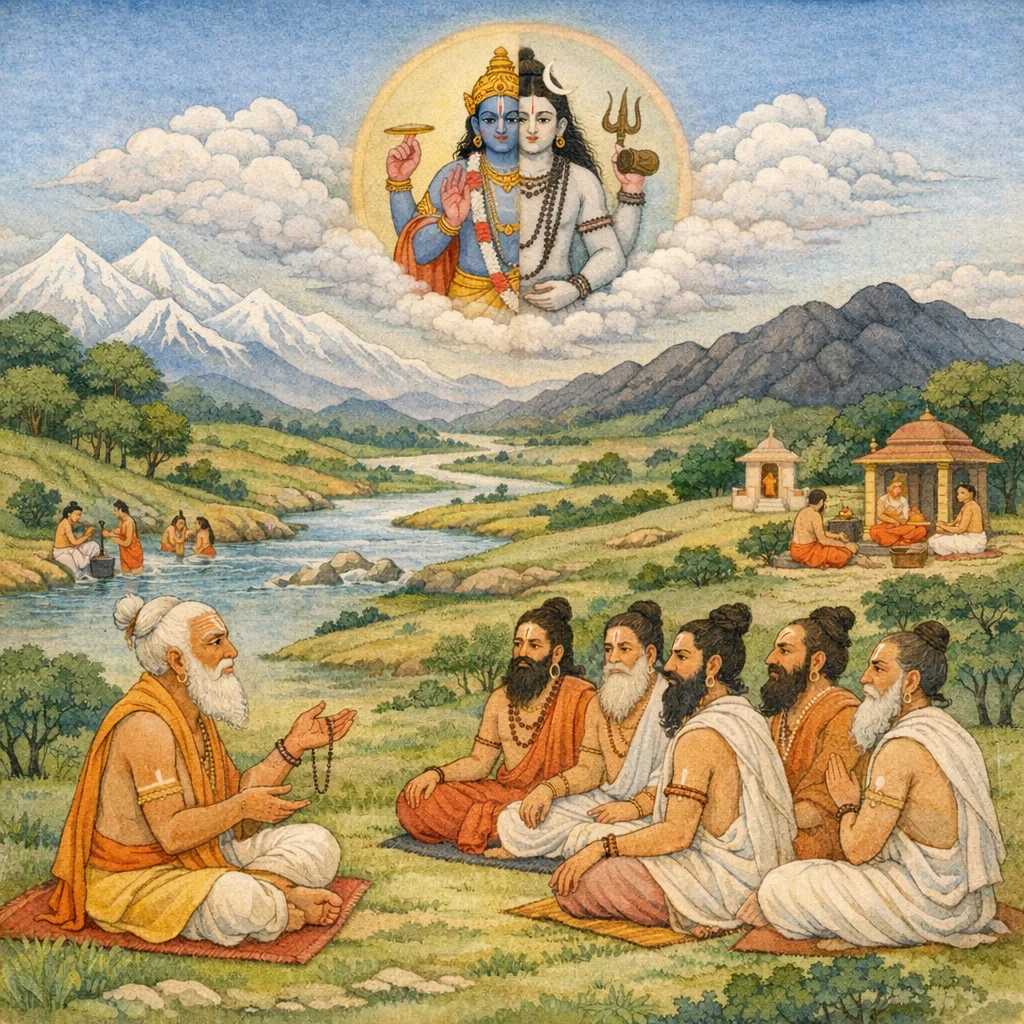
After closing the prior unit (marked by the colophon ending Adhyāya 44), Sūta continues the Purāṇic cosmography by surveying human life across the varṣas of Jambūdvīpa—complexion, customary foods, and extraordinary lifespans—in regions such as Ketumāla, Bhadrāśva, Ramyaka, Hiraṇmaya, Kuru, Kiṁpuruṣa, Harivarṣa, Ilāvṛta, and Candra-dvīpa. The account then turns from those ideal, sorrowless lands—where bhakti is constant and fear is absent—to Bhārata-varṣa, distinguished by social plurality (varṇas), diverse occupations, and limited lifespan, and thus defined as karmabhūmi, the field where dharma is enacted through yajña, warfare, and trade. Anchoring this ethic-geography, the chapter lists Bhārata’s principal mountain ranges and an extensive catalogue of purifying rivers rising from Himavat, Vindhya, Sahya, Malaya, Śuktimat, and Ṛkṣavat, along with the peoples dwelling along these waters. It concludes by noting that the four yugas are specifically manifest in Bhārata and by reiterating the contrast: the eight varṣas beginning with Kiṁpuruṣa are free from hunger, toil, and sorrow, while Bhārata is the arena of transformative action, preparing the way for deeper doctrinal and liberative instruction to follow.
Shlokas
Verse 1
इती श्रीकूर्मपुराणे षट्साहस्त्र्यां संहितायां पूर्वविभागे चतुश्चत्वारिंशो ऽध्यायः सूत उवाच केतुमाले नराः कालाः सर्वे पनसभोजनाः / स्त्रियश्चोत्पलपत्राभा जीवन्ति च वर्षायुतम्
Thus, in the Śrī Kūrma Purāṇa, in the six-thousand-verse Saṃhitā, in the Pūrva-bhāga, the forty-fourth chapter concludes. Sūta said: “In Ketumāla, the men are dark of complexion and all subsist on jackfruit. The women, too, are lovely like lotus-petals, and they live for ten thousand years.”
Verse 2
भद्राश्वे पुरुषाः शुक्लाः स्त्रियश्चन्द्रांशुसन्निभाः / दश वर्षसहस्त्राणि जीवन्ते आम्रभोजनाः
In Bhadrāśva-varṣa, the men are fair of complexion, and the women resemble the radiance of moonbeams. They live for ten thousand years, sustaining themselves on mangoes.
Verse 3
रम्यके पुरुषा नार्यो रमन्ते रजतप्रभाः / दशवर्षसहस्त्राणि शतानि दश पञ्च च / जीवन्ति चैव सत्त्वस्था न्यग्रोधफलभोजनाः
In Ramyaka, men and women rejoice, radiant with a silvery lustre. They live for one hundred and five thousand years, established in sattva (purity and harmony), sustaining themselves on the fruits of the nyagrodha, the banyan tree.
Verse 4
हिरण्मये हिरण्याभाः सर्वे च लकुचाशनाः / एकादशसहस्त्राणि शतानि दश पञ्च च / जीवन्ति पुरुषा नार्यो देवलोकस्थिता इव
In that golden land, all beings gleam with a golden radiance and live upon the lakuca fruit. Men and women endure for eleven thousand one hundred and fifteen years, as though abiding in the realm of the gods.
Verse 5
त्रयोदशसहस्त्राणि शतानि दश पञ्च च / जीवन्ति कुरुवर्षे तु श्यामाङ्गाः क्षीरभोजनाः
In the land called Kuru-varṣa, people live for thirteen thousand one hundred and fifteen years; their limbs are dark in hue, and milk is their sustenance.
Verse 6
सर्वे मिथुनजाताश्च नित्यं सुखनिषेविनः / चन्द्रद्वीपे महादेवं यजन्ति सततं शिवम्
In Candra-dvīpa, all beings are born in pairs and ever partake of well-being; there they ceaselessly worship Mahādeva—Śiva—without pause.
Verse 7
तथा किंपुरुषे विप्रा मानवा हेमसन्निभाः / दशवर्षहस्त्राणि जीवन्ति प्लक्षभोजनाः
Likewise, O Brahmins, in the land of Kimpuruṣa the humans are golden in appearance; they live for ten thousand years, sustained by the food of the plakṣa (fig) tree.
Verse 8
यजन्ति सततं देवं चतुर्मूर्ति चतुर्मुखम् / ध्याने मनः समाधाय सादरं भक्तिसंयुताः
Ever devoted, they constantly worship the Lord—four-formed and four-faced—setting the mind in meditative samādhi, with reverence and wholehearted bhakti.
Verse 9
तथा च हरिवर्षे तु महारजतसन्निभाः / दशवर्षसहस्त्राणि जीवन्तीक्षुरसाशिनः
Likewise, in Harivarṣa they shine like mighty silver; sustained by sugarcane juice, they live for ten thousand years.
Verse 10
तत्र नारायणं देवं विश्वयोनिं सनातनम् / उपासते सदा विष्णुं मानवा विष्णुभाविताः
There, the Vishnu-minded people ever worship Lord Nārāyaṇa—Vishnu, the eternal God, the womb and source of the universe.
Verse 11
तत्र चन्द्रप्रभं शुभ्रं शुद्धस्फटिकनिर्मितम् / विमानं वासुदेवस्य पारिजातवनाश्रितम्
There he beheld the radiant, auspicious vimāna—moon-bright, fashioned of pure crystal—belonging to Vāsudeva and stationed within the Pārijāta grove.
Verse 12
चतुर्धारमनोपम्यं चतुस्तोरणसंयुतम् / प्राकारैर्दशभिर्युक्तं दुराधर्षं सुदुर्गमम्
It was like a wondrous four-gated citadel, furnished with four grand gateways; enclosed by ten ramparts, it was unassailable and exceedingly hard to enter.
Verse 13
स्फाटिकैर्मण्डपैर्युक्तं देवराजगृहोपमम् / स्वर्णस्तम्भसहस्त्रैश्च सर्वतः समलङ्कृतम्
It was furnished with crystal pavilions, resembling the palace of the king of the gods; and on every side it was richly adorned with thousands of golden pillars.
Verse 14
हेमसोपानसंयुक्तं नानारत्नोपशोभितम् / दिव्यसिंहासनोपेतं सर्वशोभासमन्वितम्
Adorned with golden steps and beautified by many kinds of jewels, it was furnished with a celestial lion-throne, endowed with every splendour.
Verse 15
सरोभिः स्वादुपानीयैर्नदीभिश्चोपशोभितम् / नारायणपरैः शुद्धैर्वेदाध्ययनतत्परैः
Adorned with lakes of sweet, wholesome water and with rivers as well, it is inhabited by pure people devoted to Nārāyaṇa, intent upon the study and recitation of the Vedas.
Verse 16
योगिभिश्च समाकीर्णं ध्यायद्भिः पुरुषं हरिम् / स्तुवद्भिः सततं मन्त्रैर्नमस्यद्भिश्च माधवम्
It was thronged with yogins—some meditating on Hari, the Supreme Person; others continually praising him with mantras; and others bowing in reverence to Mādhava.
Verse 17
तत्र देवादिदेवस्य विष्णोरमिततेजसः / राजानः सर्वकालं तु महिमानं प्रकुर्वते
There, the kings at all times celebrate and extol the glory of Vishnu—the God of gods—whose splendour is immeasurable.
Verse 18
गायन्ति चैव नृत्यन्ति विलासिन्यो मनोरमाः / स्त्रियो यौवनशालिन्यः सदा मण्डनतत्पराः
Charming, pleasure-seeking women sing and dance; endowed with the bloom of youth, they are ever intent on adornment.
Verse 19
इलावृते पद्मवर्णा जम्बूफलरसाशिनः / त्रयोदश सहस्त्राणि वर्षाणां वै स्थिरायुषः
In Ilāvṛta, the people are lotus-hued, living on the juice of the jambu fruit; their lifespan is steady and endures for thirteen thousand years.
Verse 20
भारते तु स्त्रियः पुंसो नानावर्णाः प्रकीर्तिताः / नानादेवार्चने युक्ता नानाकर्माणि कुर्वते / परमायुः स्मृतं तेषां शतं वर्षाणि सुव्रताः
But in Bhārata, women and men are spoken of as belonging to many varṇas. Engaged in the worship of various deities, they perform many kinds of duties and works. Their highest human lifespan is remembered as a hundred years, O you of good vows.
Verse 21
नानाहाराश्च जीवन्ति पुण्यपापनिमित्ततः / नवयोजनसाहस्त्रं वर्षमेतत् प्रकीर्तितम् / कर्मभूमिरियं विप्रा नराणामधिकारिणाम्
Beings subsist on diverse foods according to causes arising from merit and demerit. This extent is proclaimed as nine thousand yojanas, with “a year” as its measure. O Brāhmaṇas, this land is the karmabhūmi—the field of action—for human beings entitled to practice dharma.
Verse 22
महेन्द्रो मलयः सह्यः शुक्तिमानृक्षपर्वतः / विन्ध्यश्च पारियात्रश्च सप्तात्र कुलपर्वताः
Mahendra, Malaya, Sahya, Śuktimān, and Ṛkṣa Mountain; and also Vindhya and Pāriyātra—these are the seven principal mountain ranges here.
Verse 23
इन्द्रद्युम्नः कशेरुमांस्ताम्रवर्णो गभस्तिमान् / नागद्वीपस्तथा सौम्यो गन्धर्वस्त्वथ वारुणः
Indradyumna, Kaśerumān, Tāmravarṇa, and Gabhastimān; likewise Nāgadvīpa and Saumya; and then Gandharva and Vāruṇa—these are the regions/islands spoken of in the Purāṇic account.
Verse 24
अयं तु नवमस्तेषां द्वीपः सागरसंवृतः / योजनानां सहस्त्रं तु द्वीपो ऽयं दक्षिणोत्तरः
This indeed is the ninth among those dvīpas, encircled by the ocean. This island extends for a thousand yojanas, stretching from south to north.
Verse 25
पूर्वे किरातास्तस्यान्ते पशिचमे यवनास्तथा / ब्राह्मणाः क्षत्रिया वैश्य मध्ये शूद्रास्तथैव च
To the east are the Kirātas; at its far end in the west are the Yavanas. In between are the Brāhmaṇas, Kṣatriyas, and Vaiśyas, and likewise the Śūdras as well.
Verse 26
इज्यायुद्धवणिज्याभिर्वर्तयन्त्यत्र मानवाः / स्त्रवन्ते पावना नद्यः पर्वतेभ्यो विनिः सृताः
Here, people sustain their lives through sacrificial worship, warfare, and trade; and from the mountains flow forth purifying rivers, streaming down as they emerge from their sources.
Verse 27
शतद्रुश्चन्द्रभागा च सरयूर्यमुना तथा / इरावती वितस्ता च विपाशा देविका कुहूः
Śatadru, Candrabhāgā, Sarayū, and likewise Yamunā; Irāvatī, Vitastā, Vipāśā, Devikā, and Kuhū—these too are celebrated rivers.
Verse 28
गोमती धूतपापा च बाहुदा च दृषद्वती / कौशिकी लोहिता चैव हिमवत्पादनिः सृताः
The rivers Gomati, Dhūtapāpā, Bāhudā, and Dṛṣadvatī—along with Kauśikī and Lohitā—are all said to spring forth from the feet of Himavat, flowing out from that sacred source.
Verse 29
वेदस्मृतिर्वेदवती व्रतघ्नी त्रिदिवा तथा / पर्णाशा वन्दना चैव सदानीरा मनोरमा
Vedasṃṛti, Vedavatī, Vrataghnī, and also Tridivā; likewise Parṇāśā, Vandanā, Sadānīrā, and Manoramā—these are sacred rivers to be remembered and reverently adored.
Verse 30
चर्मण्वती तथा दूर्या विदिशा वेत्रवत्यपि / शिग्रुः स्वशिल्पापि तथा पारियात्राश्रयाः स्मृताः
Likewise Carmaṇvatī, Dūryā, Vidiśā, and Vetravatī are remembered; and also Śigru and Svaśilpā—by tradition all these are held to belong to the Pāriyātra mountain realm.
Verse 31
नर्मदा सुरसा शोण दशार्णा च महानदी / मन्दाकिनी चित्रकूटा तामसी च पिशाचिका
Narmadā, Surasā, Śoṇa, Daśārṇā, and the great river Mahānadī; Mandākinī, the river of Citrakūṭa, Tāmasī, and Piśācikā—these too are sacred rivers to be remembered.
Verse 32
चित्रोत्पला विपाशा च मञ्जुला वालुवाहिनी / ऋक्षवत्पादजा नद्यः सर्वपापहरा नृणाम्
Citrotpalā, Vipāśā, Mañjulā, and Vāluvāhinī—these rivers, born from the feet of the sacred mountain Ṛkṣavat, remove all sins of humankind.
Verse 33
तापी पयोष्णी निर्विन्ध्या शीघ्रोदा च महानदी / वेण्या वैतरणी चैव बलाका च कुमुद्वती
Tāpi, Payoṣṇī, Nirvindhyā, and Śīghrodā; the great river Mahānadī; and also Veṇyā, Vaitaraṇī, Balākā, and Kumudvatī—these are proclaimed as sacred waters.
Verse 34
तोया चैव महागैरी दुर्गा चान्तः शिला तथा / विन्ध्यपादप्रसूतास्ता नद्यः पुण्यजलाः शुभाः
Likewise, the rivers Toyā, Mahāgairī, Durgā, and Antaḥśilā—born from the feet of the Vindhya mountain—are auspicious streams whose waters are holy and purifying.
Verse 35
सोदावरी भीमरथी कृष्णा वर्णा च मत्सरी / तुङ्गभ्द्रा सुप्रयोगा कावेरी च द्विजोत्तमाः / दक्षिणापथगा नद्यः सह्यपादविनिः सृताः
O best of the twice-born, the rivers Godāvarī, Bhīmarathī, Kṛṣṇā, Varṇā, Matsarī, Tuṅgabhadrā, Suprayogā, and Kāverī flow in the southern region (Dakṣiṇāpatha), issuing forth from the foothills of the Sahya mountain.
Verse 36
ऋतुमाला ताम्रपर्णो पुष्पवत्युत्पलावती / मलयान्निः सृता नद्यः सर्वाः शीतजलाः स्मृताः
Ṛtumālā, Tāmraparṇī, Puṣpavatī, and Utpalāvatī—these rivers that spring forth from the Malaya mountains are all remembered as streams of cool waters.
Verse 37
ऋषिकुल्या त्रिसामा च मन्दगा मन्दगामिनी / रूपा पालासिनी चैव ऋषिका वंशकारिणी / शुक्तिमत्पादसंजाताः सर्वपापहरा नृणाम्
Ṛṣikulyā, Trisāmā, Mandagā, Mandagāminī, Rūpā, Pālāsinī, Ṛṣikā, and Vaṃśakāriṇī—these rivers, arisen from the feet of Śuktimat, remove every sin of human beings.
Verse 38
आसां नद्युपनद्यश्च शतशो द्विजपुङ्गवाः / सर्वपापहराः पुण्याः स्नानदानादिकर्मसु
O best of twice-born sages, the rivers and their tributaries among these are counted by the hundreds; they are holy and remove all sins, especially in acts such as bathing, charitable giving, and related rites.
Verse 39
तास्विमे कुरुपाञ्चाला मध्यदेशादयो जनाः / पूर्वदेशादिकाश्चैव कामरूपनिवासिनः
In those regions dwell these peoples—the Kurus and the Pañcālas, and the inhabitants of Madhyadeśa and other lands; likewise those of the eastern countries, including the residents of Kāmarūpa.
Verse 40
पुण्ड्राः कलिङ्गामगधा दाक्षिणात्याश्चकृत्स्नशः / तथापरान्ताः सौराष्ट्राः शूद्राभीरास्तथार्ऽबुदाः
Also counted are the Puṇḍras, the Kaliṅgas, and the Magadhas; and, in full, the peoples of the southern regions. Likewise there are the Aparāntas and the Saurāṣṭras, as well as the Śūdras, the Ābhīras, and those of Arbuda.
Verse 41
मालका मालवाश्चैव पारियात्रनिवासिनः / सौवीराः सैन्धवा हूणा शाल्वाः कल्पनिवासिनः
There are the Mālakas and the Mālavas as well—those dwelling in the Pāriyātra region; the Sauvīras, the Saindhavas, the Hūṇas, and the Śālvas—these are the peoples said to inhabit their respective territories.
Verse 42
मद्रा रामास्तथाम्बष्ठाः पारसीकास्तथैव च / आसां पिबन्ति सलिलं वसन्ति सरितां सदा
The Madrās, the Rāmās, the Ambaṣṭhas, and likewise the Pārasīkas (Persians)—these people drink the waters of those rivers and ever dwell along the river-courses.
Verse 43
चत्वारि भारते वर्षे युगानि कवयो ऽब्रुवन् / कृतं त्रेता द्वापरं च कलिश्चान्यत्र न क्वचित्
The sages have declared that in Bharata-varṣa there are four ages: Kṛta, Tretā, Dvāpara, and Kali; nowhere else is this found.
Verse 44
यानि किंपुरुषाद्यानि वर्षाण्यष्टौ महर्षयः / न तेषु शोको नायासो नोद्वेगः क्षुद्भयं न च
O great sages, in those eight regions (varṣas) beginning with Kiṁpuruṣa, there is no sorrow, no toil, no agitation, and neither hunger nor fear.
Verse 45
स्वस्थाः प्रजा निरातङ्काः सर्वदुः खविवर्जिताः / रमन्ति विविधैर्भावैः सर्वाश्च स्थिरयौवनाः
The people are healthy and secure, free from calamity and fear, and devoid of every kind of suffering. They rejoice in diverse wholesome pursuits, and all remain in steady youthfulness and vigor.
Frequently Asked Questions
Bhārata is presented as karmabhūmi with multiple varṇas, diverse duties, and a short maximum lifespan (100 years), where merit and demerit shape conditions; other varṣas are depicted as largely sorrowless realms with long lifespans and steady devotion, lacking hunger, fear, and agitation.
Alongside Viṣṇu-centered devotion (Harivarṣa worship of Nārāyaṇa and descriptions of Vāsudeva’s vimāna), the chapter explicitly includes uninterrupted worship of Mahādeva (Śiva) in Candra-dvīpa, indicating a non-exclusive sacred map where multiple forms of Īśvara are honored within one cosmological order.