Adhyaya 29
Avimukta-Māhātmya — Vyāsa in Vārāṇasī and Śiva’s Secret Teaching of Liberation
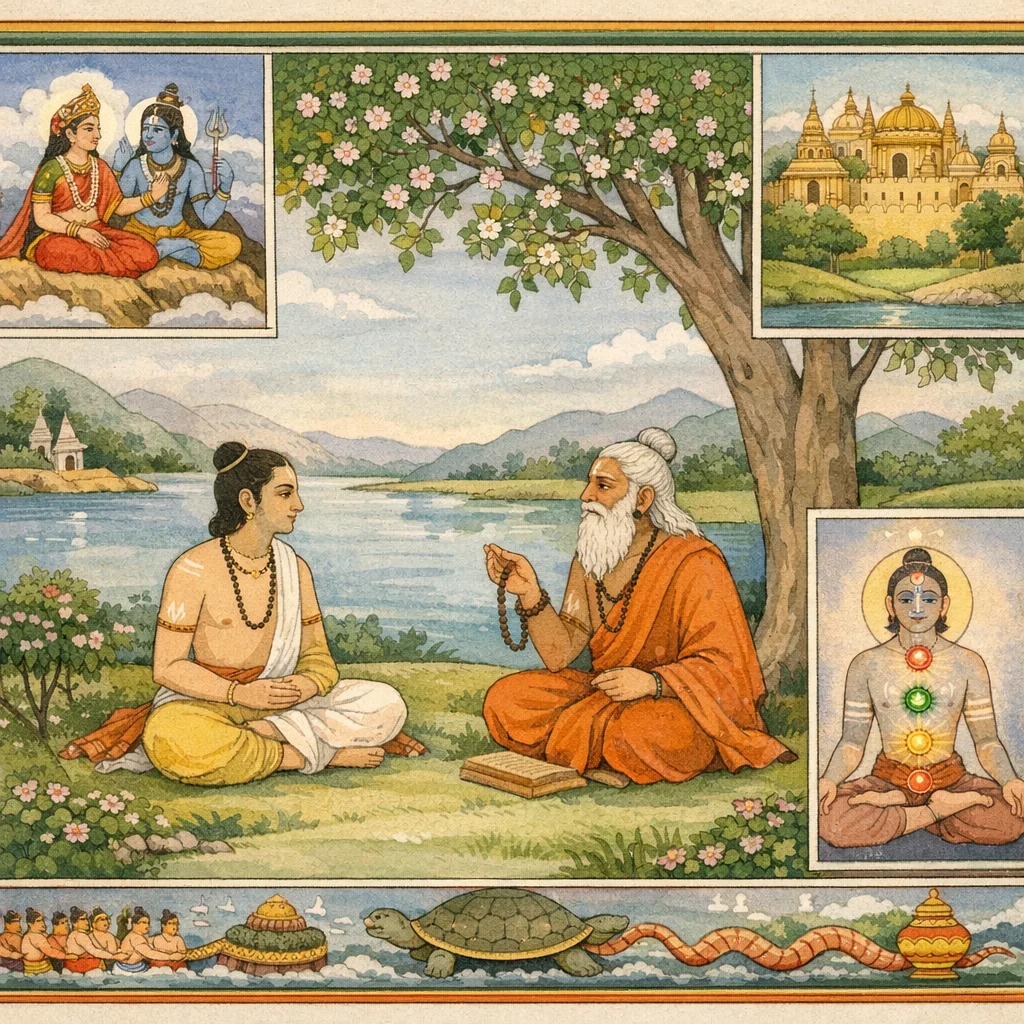
Arriving at Vārāṇasī (Kāśī), Vyāsa worships Viśveśvara on the bank of the Gaṅgā and is honored by the resident sages, who ask for a sin-destroying mokṣa-dharma rooted in Mahādeva. Jaimini requests Vyāsa to judge the rival spiritual emphases—dhyāna, dharma, Sāṅkhya-Yoga, tapas, ahiṃsā, satya, saṃnyāsa, dāna, tīrtha, and indriya-nigraha—and to reveal any deeper secret. Vyāsa replies by recounting an ancient revelation: on Mount Meru Devī asks Īśvara how to swiftly behold the Lord, and Śiva answers that the supreme secret is Avimukta (Kāśī), the foremost kṣetra and highest abode of knowledge, where deeds become imperishable, sins are exhausted, and even the socially excluded may be liberated. Śiva proclaims that death in Kāśī averts hell and grants the highest state; though he names other tīrthas, he ranks Kāśī above all, stressing the Gaṅgā’s unique power there and the rarity of perfectly accomplished religious acts in Kāśī. The teaching culminates in the doctrine of Tāraka Brahman imparted by Mahādeva at life’s end, and in a yogic interiorization that locates Avimukta’s reality in bodily centers (bhrūmadhya, nābhi, hṛd, mūrdhan). Vyāsa concludes by moving about Kāśī with his disciples, preparing for the continuation of liberation-focused instruction in the following chapters.
Shlokas
Verse 1
इति श्रीकूर्मपुराणे षट्साहस्त्र्यां संहितायां पूर्वविभागे अष्टाविंशो ऽध्यायः ऋषय ऊचुः प्राप्य वाराणसीं दिव्यां कृष्णद्वैपायनो मुनिः / किमकार्षोन्महाबुद्धिः श्रोतुं कौतूहलं हि नः
Thus, in the Śrī Kūrma Purāṇa, in the six-thousand-verse Saṃhitā, in the Pūrva-bhāga, the twenty-eighth chapter begins. The sages said: “Having reached the divine city of Vārāṇasī, what did the great-minded sage Kṛṣṇa-Dvaipāyana (Vyāsa) do? We long indeed to hear.”
Verse 2
सूत उवाच प्राप्य वाराणसी दिव्यामुपस्पृश्य महामुनिः / पूजयामास जाह्नव्यां देवं विश्वेश्वरं शिवम्
Sūta said: Reaching the radiant city of Vārāṇasī and purifying himself by touching the sacred waters, the great sage worshipped Lord Śiva, Viśveśvara, upon the bank of the Jāhnavī (Gaṅgā).
Verse 3
तमागतं पुनिं दृष्ट्वा तत्र ये निवसन्ति वै / पूजयाञ्चक्रिरे व्यासं मुनयो मुनिपुङ्गवम्
Seeing that holy sage arrive, those dwelling there honored Vyāsa—the bull among sages—by performing acts of worship and reverence.
Verse 4
पप्रच्छुः प्रणताः सर्वे कथाः पापविनाशनीः / महादेवाश्रयाः पुण्या मोक्षधर्मान् सनातनान्
All of them, bowing down in reverence, asked about the sin-destroying sacred accounts—holy teachings founded upon Mahādeva—namely, the eternal principles of liberation, mokṣa-dharma.
Verse 5
स चापि कथयामास सर्वज्ञो भगवानृषिः / माहात्म्यं देवदेवस्य धर्मान् वेदनिदर्शितान्
And that venerable, omniscient sage spoke as well—proclaiming the greatness of the Deva of devas, and expounding the dharmas as they are shown forth by the Veda.
Verse 6
तेषां मध्ये मुनीन्द्राणां व्यासशिष्यो महामुनिः / पृष्टवान् जैमिनिर्व्यासं गूढमर्थं सनातनम्
In the midst of those foremost sages, the great sage Jaimini—disciple of Vyāsa—questioned Vyāsa about the hidden and eternal meaning (of the teaching).
Verse 7
जैमिनिरुवाच भगवन् संशयं त्वेकं छेत्तुमर्हसि तत्त्वतः / न विद्यते ह्यविदितं भवता परमर्षिणा
Jaimini said: “O Blessed Lord, be pleased to dispel this single doubt of mine in accordance with truth. For to you, O supreme seer, nothing remains unknown.”
Verse 8
केचिद् ध्यानं प्रशंसन्ति धर्ममेवापरे जनाः / अन्ये सांख्यं तथा योगं तपस्त्वन्ये महर्षयः
Some praise meditation (dhyāna); others among people extol dharma alone. Yet others commend Sāṅkhya and Yoga, while other great seers uphold austerity (tapas).
Verse 9
ब्रह्मचर्यमथो मौनमन्ये प्राहर्महर्षयः / अहिंसां सत्यमप्यन्ये संन्यासमपरे विदुः
Some great seers declare dharma to be celibate discipline (brahmacarya) and the observance of silence (mauna); others teach non-violence (ahiṃsā) and truthfulness (satya); while yet others understand renunciation (saṃnyāsa) itself to be dharma.
Verse 10
केचिद् दयां प्रशंसन्ति दानमध्ययनं तथा / तीर्थयात्रां तथा केचिदन्ये चेन्द्रियनिग्रहम्
Some extol compassion; others praise charity (dāna) and the study of sacred teaching. Some commend pilgrimage to holy places (tīrthas), while still others praise the restraint of the senses.
Verse 11
किमेतेषां भवेज्ज्यायः प्रब्रूहि मुनिपुङ्गव / यदि वा विद्यते ऽप्यन्यद् गुह्यं तद्वक्तुमर्हसि
O best of sages, tell me which among these is the higher good. And if there exists any other secret teaching besides this, you are worthy to declare it.
Verse 12
श्रुत्वा स जैमिनेर्वाक्यं कृष्णद्वैपायनो मुनिः / प्राह गम्भीरया वाचा प्रणम्य वृषकेतनम्
Having heard Jaimini’s words, the sage Kṛṣṇa Dvaipāyana (Vyāsa), after bowing to Vṛṣaketanā—Śiva whose emblem is the bull—spoke in a deep and solemn voice.
Verse 13
साधु साधु महाभाग यत्पृष्टं भवता मुने / वक्ष्ये गुह्यतमाद् गुह्यं श्रुण्वन्त्वन्ये महर्षयः
“Well said, well said, O greatly fortunate sage—your question is most fitting. I shall proclaim a teaching most secret, more hidden than the hidden; let the other great seers also listen.”
Verse 14
ईश्वरेण पुरा प्रोक्तं ज्ञानमेतत् सनातनम् / गूढमप्राज्ञविद्विष्टं सेवितं सूक्ष्मदर्शिभिः
This eternal knowledge was taught long ago by the Lord Īśvara. It is deep and hidden—spurned by the unwise—yet cherished and practised by those who behold the subtle truth.
Verse 15
नाश्रद्दधाने दातव्यं नाभक्ते परमेष्ठिनः / न वेदविद्विषु शुभं ज्ञाननानां ज्ञानमुत्तमम्
It should not be given to one without faith, nor to one who lacks devotion to Parameṣṭhin, the Supreme Lord. Among those who hate the Veda there is nothing auspicious; among all knowledges, the highest is the knowledge that leads to the Supreme.
Verse 16
मेरुशृङ्गे पुरा देवमीशानं त्रिपुरद्विषम् / देवासनगता देवी महादेवमपृच्छत
Long ago, upon the peak of Mount Meru, the Goddess—seated upon a divine throne—questioned Mahādeva, the Lord Īśāna, the destroyer of Tripura.
Verse 17
देव्युवाच देवदेव महादेव भक्तानामार्तिनाशन / कथं त्वां पुरुषो देवमचिरादेव पश्यति
Devī said: “O God of gods, O Mahādeva—destroyer of the distress of devotees—how may a person behold You, the Divine Lord, in a short time?”
Verse 18
सांख्ययोगस्तथा ध्यानं कर्मयोगो ऽथ वैदिकः / आयासबहुला लोके यानि चान्यानि शङ्कर
“Sāṅkhya-yoga, meditation (dhyāna), and karma-yoga, as well as the Vedic path of rites—and whatever other disciplines exist in this world, O Śaṅkara—are for people largely laden with strenuous effort.”
Verse 19
येन विब्रान्तचित्तानां योगिनां कर्मिणामपि / दृश्यो हि भगवान् सूक्ष्मः सर्वेषामथ देहिनाम्
“By that means, even for yogins and ritualists whose minds are still bewildered, the Blessed Lord—subtle indeed—becomes directly perceivable to all embodied beings.”
Verse 20
एतद् गुह्यतमं ज्ञानं गूढं ब्रह्मादिसेवितम / हिताय सर्वभक्तानां ब्रूहि कामाङ्गनाशन
“This is the most secret knowledge—profound and hidden—revered and served even by Brahmā and the other gods. For the welfare of all devotees, O destroyer of Kāma and his hosts, please proclaim it.”
Verse 21
ईश्वर उवाच अवाच्यमेतद् विज्ञानं ज्ञानमज्ञैर्बहिष्कृतम् / वक्ष्ये तव यथा तत्त्वं यदुक्तं परमर्षिभिः
Īśvara said: “This realized knowledge is beyond ordinary speech; it is the wisdom that the ignorant cast aside. I shall declare to you the truth as it truly is—just as it has been taught by the highest seers.”
Verse 22
परं गुह्यतमं क्षेत्रं मम वाराणसी पुरी / सर्वेषामेव भूतानां संसारार्णवतारिणी
Varanasi—My city—is the supremely secret and most profound sacred field. For all beings, it is the deliverer that carries one across the ocean of saṃsāra.
Verse 23
तत्र भक्ता महादेवि मदीयं व्रतमास्थिताः / निवसन्ति महात्मानः परं नियममास्थिताः
There, O Mahādevī, the devotees who have undertaken My sacred observance dwell—great-souled ones, steadfast in the highest discipline of self-restraint.
Verse 24
उत्तमं सर्वतीर्थानां स्थानानामुत्तमं च तत् / ज्ञानानामुत्तमं ज्ञानमविमुक्तं परं मम
Avimukta is the foremost of all sacred pilgrimage-sites; it is also the best of holy abodes. Among all forms of knowledge, it is the highest knowledge—Avimukta, which is My supreme, transcendent state.
Verse 25
स्थानान्तरं पवित्राणि तीर्थान्यायतनानि च / श्मशानसंस्थितान्येव दिव्यभूमिगतानि च
There are other sacred places as well—holy tīrthas and sanctuaries—some situated in cremation-grounds, and others located in divine and consecrated regions.
Verse 26
भूर्लोके नैव संलग्नमन्तरिक्षे ममालयम् / अयुक्तास्तन्न पश्यन्ति युक्ताः पश्यन्ति चेतसा
My abode is not attached to the earthly realm; it is in the intermediate expanse (antarikṣa). The undisciplined do not perceive it, but those established in Yoga behold it with the purified mind.
Verse 27
श्मसानमेतद् विख्यातमविमुक्तमिति श्रुतम् / कालो भूत्वा जगदिदं संहराम्यत्र सुन्दरि
This place is famed as the cremation-ground, and is heard of as “Avimukta.” Here, O beautiful one, becoming Kāla—Time itself—I draw back this entire universe into Myself.
Verse 28
देवीदं सर्वगुह्यानां स्थानं प्रियतमं मम / मद्भक्तास्तत्र गच्छन्ति मामेव प्रविशन्ति ते
O Goddess, this is the most secret of all secrets—My dearest abode. My devotees go there, and upon entering that place, they enter Me alone.
Verse 29
दत्तं जप्तं हुतं चेष्टं तपस्तप्तं कृतं च यत् / ध्यानमध्ययनं ज्ञानं सर्वं तत्राक्षयं भवेत्
Whatever is given in charity, recited as japa, offered as oblation in the fire, performed as righteous endeavor, practiced as tapas, and whatever else is done—together with meditation, scriptural study, and true knowledge—all of it becomes imperishable there, yielding unfailing fruit.
Verse 30
जन्मान्तरसहस्त्रेषु यत्पापं पूर्वसंचितम् / अविमुक्तं प्रविष्टस्य तत्सर्वं व्रजति क्षयम्
Whatever sin has been accumulated in former births across thousands of lifetimes—upon entering Avimukta, all of it is brought to exhaustion and perishes.
Verse 31
ब्राह्मणाः क्षत्रिया वैश्याः शूद्रा ये वर्णसंकराः / स्त्रियो म्लेच्छाश्च ये चान्ये संकीर्णाः पापयोनयः
Brahmins, Kshatriyas, Vaishyas, and Shudras—those who have become varṇa-saṅkara (mixed in varṇa); women, mlecchas, and others besides—are spoken of as mingled groups, born from sinful origins.
Verse 32
कोटाः पिपीलिकाश्चैव ये चान्ये मृगपक्षिणः / कालेन निधनं प्राप्ता अविमुक्ते वरानने
O fair-faced one, even insects and ants, and other beings such as beasts and birds, have met their end in Avimukta, overtaken by Kāla, the power of Time.
Verse 33
चन्द्रार्धमौलयस्त्र्यक्षा महावृषभवाहनाः / शिवे मम पुरे देवि जायन्ते तत्र मानवाः
O Goddess Śivā, in that city of mine, O Devī, human beings are born bearing Rudra’s marks—crowned with the crescent moon, three-eyed, and riding the great bull.
Verse 34
नाविमुक्ते मृतः कश्चिन्नरकं याति किल्बिषी / ईश्वरानुगृहीता हि सर्वे यान्ति परां गतिम्
No sinful person who dies at Avimukta ever goes to hell; for, being graced by Īśvara, all attain the supreme state.
Verse 35
मोक्षं सुदुर्लभं मत्वा संसारं चातिभीषणम् / अश्मना चरणौ हत्वा वाराणस्यां वसेन्नरः
Knowing liberation (mokṣa) to be exceedingly hard to attain, and saṃsāra to be terrifying indeed, a man should dwell in Vārāṇasī—even if he must force himself, as though striking his own feet with a stone, to remain there.
Verse 36
दुर्लभा तपसा चापि पूतस्य परमेश्वरि / यत्र तत्र विपन्नस्य गतिः संसारमोक्षणी
O Parameśvarī, even for one purified by austerity You are difficult to attain; yet for the distressed, wherever they may be, You become the refuge that liberates from saṃsāra.
Verse 37
प्रसादाज्जायते ह्येतन्मम शैलेन्द्रनन्दिनि / अप्रबुद्धा न पश्यन्ति मम मायाविमोहिताः
By My grace alone does this true realization arise, O daughter of the Lord of mountains. The unawakened do not perceive Me—Truth—being deluded by My Māyā.
Verse 38
अविमुक्तं न सेवन्ति मूढा ये तमसावृताः / विण्मूत्ररेतसां मध्ये ते वसन्ति पुनः पुनः
The deluded, veiled by darkness, do not resort to Avimukta. Again and again they dwell amid filth—among feces, urine, and semen—returning repeatedly to embodied existence.
Verse 39
हन्यमानो ऽपि यो विद्वान् वसेद् विघ्नशतैरपि / स याति परमं स्थानं यत्र गत्वा न शोचति
Even if assailed, the wise one who remains steadfast—though faced with hundreds of obstacles—attains the supreme abode; having gone there, one does not grieve.
Verse 40
जन्ममृत्युजरामुक्तं परं याति शिवालयम् / अपुनर्मरणानां हि सा गतिर्मोक्षकाङ्क्षिणाम् / यां प्राप्य कृतकृत्यः स्यादिति मन्यन्ति पण्डताः
Freed from birth, death, and old age, one attains the supreme abode of Śiva—Śivālaya. Indeed, that is the destination of those who seek mokṣa: a state with no return to death. Having reached it, one becomes fulfilled in all that is to be done; thus the learned declare.
Verse 41
न दानैर्न तपोभिश्च न यज्ञैर्नापि विद्यया / प्राप्यते गतिरुत्कृष्टा याविमुक्ते तु लभ्यते
The highest destiny is not attained by gifts, nor by austerities, nor by sacrifices, nor even by learning; it is obtained only through vimukti—liberation.
Verse 42
नानावर्णा विवर्णाश्च चण्डालाद्या जुगुप्सिताः / किल्बिषैः पूर्णदेहा ये विशिष्टैः पातकैस्तथा / भेषजं परमं तेषामविमुक्तं विदुर्बुधाः
Those of many castes and those fallen into degraded condition—such as the Caṇḍālas and others held in revulsion—whose bodies are, as it were, filled with sins and with distinctive grave transgressions: for them the wise know Avimukta (Kāśī) to be the supreme medicine, the highest remedy.
Verse 43
अविमुक्तं परं ज्ञानमविमुक्तं परं पदम् / अविमुक्तं परं तत्त्वमविमुक्तं परं शिवम्
Avimukta is the supreme knowledge; Avimukta is the highest abode. Avimukta is the supreme Reality; Avimukta is Shiva Himself, the Supreme.
Verse 44
कृत्वा वै नैष्ठिकीं दीक्षामविमुक्ते वसन्ति ये / तेषां तत्परमं ज्ञानं ददाम्यन्ते परं पदम्
Those who, having undertaken the steadfast (naiṣṭhikī) initiation, dwell in Avimukta—unto them I grant that supreme knowledge; and at the end of life I bestow the highest state.
Verse 45
प्रायागं नैमिषं पुण्यं श्रीशैलो ऽथ महालयः / केदारं भद्रकर्णं च गया पुष्करमेव च
Prayāga, the holy Naimiṣa, Śrīśaila and Mahālaya; Kedāra, Bhadrakarṇa, Gayā, and also Puṣkara—these too are sacred pilgrimage places.
Verse 46
कुरुक्षेत्रं रुद्रकोटिर्नर्मदाम्रातकेश्वरम् / शालिग्रामं च कुब्जाम्रं कोकामुखमनुत्तमम् / प्रभासं विजयेशानं गोकर्णं भद्रकर्णकम्
Kurukṣetra; Rudrakoṭi; Amrātakeśvara on the Narmadā; Śāligrāma; Kubjāmra; the unsurpassed Kokāmukha; Prabhāsa; Vijayeśāna; Gokarṇa; and Bhadrakarṇaka—these are declared as eminent sacred tīrthas.
Verse 47
एतानि पुण्यस्थानानि त्रैलोक्ये विश्रुतानि ह / न यास्यन्ति परं मोक्षं वाराणस्यां यथा मृताः
These holy places are indeed famed throughout the three worlds; yet those who die there do not attain the supreme liberation as do those who die in Vārāṇasī.
Verse 48
वाराणस्यां विशेषेण गङ्गा त्रिपथगामिनी / प्रविष्टा नाशयेत् पापं जन्मान्तरशतैः कृतम्
In Vārāṇasī above all, the Gaṅgā—who flows through the three realms—when one enters her waters, destroys sins amassed across hundreds of births.
Verse 49
अन्यत्र सुलभा गङ्गा श्राद्धं दानं तपो जपः / व्रतानि सर्वमेवैतद् वाराणस्यां सुदुर्लभम्
Elsewhere the Gaṅgā is easily found, and so too are śrāddha, charity, austerity, mantra-recitation, and vows; but in Vārāṇasī all of this is exceedingly rare to obtain in its perfected fullness.
Verse 50
यजेत जुहुयान्नित्यं ददात्यर्चयते ऽमरान् / वायुभक्षश्च सततं वाराणस्यां स्तितो नरः
A man who dwells in Vārāṇasī should constantly worship and sacrifice—daily offering oblations, giving gifts, and honoring the immortals, the gods—and he should live in steady restraint, as though sustained on air.
Verse 51
यदि पापो यदि शठो यदि वाधार्मिको नरः / वाराणसीं समासाद्य पुनाति सकलं नरः
Even if a man is sinful, even if he is deceitful, or even if he is unrighteous—having reached Vārāṇasī, he purifies his whole being.
Verse 52
वाराणस्यां महादेवं येर्ऽचयन्ति स्तुवन्ति वै / सर्वपापविनिर्मुक्तास्ते विज्ञेया गणेश्वराः
Those who in Vārāṇasī (Kāśī) worship Mahādeva and truly praise Him—freed from all sins—are to be known as lords among Śiva’s gaṇas (attendants).
Verse 53
अन्यत्र योगज्ञानाभ्यां संन्यासादथवान्यतः / प्राप्यते तत् परं स्थानं सहस्त्रेणैव जन्मना
Apart from Yoga and liberating knowledge—or from renunciation (saṃnyāsa) or some other exceptional means—the supreme state is attained only after a thousand births.
Verse 54
ये भक्ता देवदेवेशे वाराणस्यां वसन्ति वै / ते विन्दन्ति परं मोक्षमेकेनैव तु जन्मना
Those devotees who truly dwell in Vārāṇasī, devoted to the Lord of lords, attain the supreme liberation—indeed, within a single lifetime.
Verse 55
यत्र योगस्तथा ज्ञानं मुक्तिरेकेन जन्मना / अविमुक्तं समासाद्य नान्यद् गच्छेत् तपोवनम्
Where Yoga and liberating Knowledge are present, there is release in a single lifetime. Having reached Avimukta (Kāśī), one should not go to any other forest of austerities.
Verse 56
यतो मया न मुक्तं तदविमुक्तं ततः स्मृतम् / तदेव गुह्यं गुह्यानामेतद् विज्ञाय मुच्यते
Because I never abandon it, it is therefore remembered as “Avimukta” (the Never-Forsaken). This is the supreme secret among secrets; by truly understanding this, one is liberated.
Verse 57
ज्ञानाज्ञानाभिनिष्ठानां परमानन्दमिच्छताम् / या गतिर्विहिता सुभ्रु साविमुक्ते मृतस्य तु
O fair one, for those steadfast in sacred knowledge or in disciplined practice, longing for the supreme bliss—whatever path or state is ordained, that indeed becomes the destiny of one who dies as a liberated soul.
Verse 58
यानि चैवाविमुक्तस्य देहे तूक्तानि कृत्स्नशः / पुरी वाराणसी तेभ्यः स्थानेभ्यो ह्यधिकाशुभा
All the sacred stations spoken of in full as abiding within the body of Avimukta—yet the city of Vārāṇasī is more auspicious than those very places.
Verse 59
यत्र साक्षान्महादेवो देहान्ते स्वयमीश्वरः / व्याचष्टे तारकं ब्रह्म तत्रैव ह्यविमुक्तकम्
That place where Mahādeva Himself—Īśvara made manifest—at the body’s end directly imparts the Tāraka Brahman, the saving knowledge and mantra: that very place is called Avimuktaka, the Never-abandoned holy ground.
Verse 60
यत् तत् परतरं तत्त्वमविमुक्तमिति श्रुतम् / एकेन जन्मना देवि वाराणस्यां तदाप्नुयात्
That highest Reality, heard of as “Avimukta”—O Devī—one attains that very Supreme Principle within a single lifetime by dwelling in Vārāṇasī.
Verse 61
भ्रूमध्ये नाभिमध्ये च हृदये चैव मूर्धनि / यथाविमुक्तादित्ये वाराणस्यां व्यवस्थितम्
At the midpoint of the brows, at the navel-center, in the heart, and at the crown of the head—just as in Avimukta—so in Vārāṇasī is the liberating sacred presence established.
Verse 62
वरणायास्तथा चास्या मध्ये वाराणसी पुरी / तत्रैव संस्थितं तत्त्वं नित्यमेवाविमुक्तकम्
In the tract between the Varana and the Asi rivers stands the sacred city of Vārāṇasī. There itself the Supreme Reality abides forever—this is the eternal ‘Avimukta’, the Never-abandoned holy ground.
Verse 63
वाराणस्याः परं स्थानं न भूतं न भविष्यति / यत्र नारायणो देवो महादेवो दिवेश्वरः
There has never been, nor will there ever be, a holier and higher abode than Vārāṇasī—where Nārāyaṇa Himself is present, and where Mahādeva, Lord of the gods, also abides as the divine sovereign.
Verse 64
तत्र देवाः सगन्धर्वाः सयक्षोरगराक्षसाः / उपासते मां सततं देवदेवं पितामहम्
There the Devas—together with Gandharvas, Yakṣas, Nāgas (Uraga), and Rākṣasas—worship Me unceasingly: Me, the God of gods, the primordial Grandfather (Pitāmaha).
Verse 65
महापातकिनो ये च ये तेभ्यः पापकृत्तमाः / वाराणसीं समासाद्य ते यान्ति परमां गतिम्
Even those who have committed the great sins, and even those more sinful still—upon reaching Vārāṇasī (Kāśī), they attain the supreme state.
Verse 66
तस्मान्मुमुक्षुर्नियतो वसेद् वै मरणान्तिकम् / वाराणस्यां महादेवाज्ज्ञानं लब्ध्वा विमुच्यते
Therefore, the seeker of liberation should dwell there with disciplined resolve until life’s end; for in Vārāṇasī, having received liberating knowledge from Mahādeva, one is set free.
Verse 67
किन्तु विघ्ना भविष्यन्ति पापोपहतचेतसः / ततो नैव चरेत् पापं कायेन मनसा गिरा
Yet obstacles will surely arise for those whose minds are wounded by sin; therefore one should never commit wrongdoing—by the body, by the mind, or by speech.
Verse 68
एतद् रहस्यं वेदानां पुराणानां च सुव्रताः / अविमुक्ताश्रयं ज्ञानं न कश्चिद् वेत्ति तत्त्वतः
O you of noble vows, this is the secret teaching of the Vedas and the Purāṇas: the wisdom grounded in Avimukta is not truly known in its reality by just anyone.
Verse 69
देवतानामृषीणां च शृण्वतां परमेष्ठिनाम् / देव्यै देवेन कथितं सर्वपापविनाशनम्
While the gods and sages—together with the highest celestial beings—were listening, the Deva spoke to the Goddess this teaching that destroys all sin.
Verse 70
यथा नारायणः श्रेष्ठो देवानां पुरुषोत्तमः / यथेश्वराणां गिरिशः स्थानानां चैतदुत्तमम्
Just as Nārāyaṇa is the foremost among the gods—the Supreme Person—so too, among the lords, Girīśa (Śiva) is preeminent; and among all sacred places, this very site is the highest.
Verse 71
यैः समाराधितो रुद्रः पूर्वस्मिन्नेव जन्मनि / ते विन्दन्ति परं क्षेत्रमविमुक्तं शिवालयम्
Those by whom Rudra was duly worshipped in a former life—those very ones attain the supreme sacred region: Avimukta, the abode of Śiva.
Verse 72
कलिकल्मषसंभूता येषामुपहता मतिः / न तेषां वेदितुं शक्यं स्थानं तत् परमेष्ठिनः
Those whose understanding is struck down, born of the defilement of the Kali age, are not able to know the supreme Abode of Parameṣṭhin, the Highest Lord.
Verse 73
ये स्मरन्ति सदा कालं विन्दन्ति च पुरीमिमाम् / तेषां विनश्यति क्षिप्रमिहामुत्र च पातकम्
Those who remember (this sacred place/deity) at all times indeed attain this holy city of Puri; for them, sin is swiftly destroyed—both here in this world and in the world beyond.
Verse 74
यानि चेह प्रकुर्वन्ति पातकानि कृतालयाः / नाशयेत् तानि सर्वाणि देवः कालतनुः शिवः
Whatever sins are committed here by those who have taken up residence, Lord Śiva—whose very form is Time—destroys them all.
Verse 75
आगच्छतामिदं स्थानं सेवितुं मोक्षकाङ्क्षिणाम् / मृतानां च पुनर्जनम् न भूयो भवसागरे
Let those who long for liberation come and worship at this sacred place. For those who die here, there is no rebirth again in the ocean of saṃsāra.
Verse 76
तस्मात् सर्वप्रयत्नेन वाराणस्यां वसेन्नरः / योगी वाप्यथवायोगी पापी वा पुण्यकृत्तमः
Therefore, with every possible effort, a man should dwell in Vārāṇasī—whether he is a yogin or not a yogin, whether sinful or the most devoted performer of meritorious deeds.
Verse 77
न वेदवचनात् पित्रोर्न चैव गुरुवादतः / मतिरुत्क्रमणीया स्यादविमुक्तगतिं प्रति
One should not let one’s resolve turn away—whether by appeal to Vedic injunctions, by the insistence of one’s parents, or even by the counsel of one’s guru—from the path that leads to Avimukta, the unforsaken holy way/place of liberation.
Verse 78
सूत उवाच इत्येवमुक्त्वा भगवान् व्यासो वेदविदां वरः / सहैव शिष्यप्रवरैर्वाराणस्यां चचार ह
Sūta said: Having spoken thus, the blessed Vyāsa—foremost among the knowers of the Vedas—then moved about in Vārāṇasī together with his excellent disciples.
Frequently Asked Questions
It acknowledges multiple disciplines but elevates a ‘most secret’ mokṣa-dharma centered on Avimukta: in Kāśī, worship, japa, dāna, tapas, study, and jñāna become imperishable and culminate in liberation—especially through Śiva’s final transmission of Tāraka Brahman.
Rituals, gifts, austerities, and learning are praised yet declared insufficient for the highest destiny by themselves; the chapter insists the supreme state is obtained through vimukti—realized liberation—granted decisively in Avimukta by Śiva’s grace and saving instruction.
No. It explicitly includes mixed castes, women, mlecchas, and even beings like insects as falling under Kāśī’s Time-power and salvific scope, portraying Avimukta as the ‘supreme medicine’ even for those marked by grave sins.
Other tīrthas are revered, but the chapter claims that dying in them does not yield liberation ‘in the same way’ as dying in Vārāṇasī, where Śiva directly gives Tāraka Brahman and where sin-destruction and perfected religious fruit are said to be uniquely concentrated.