Adhyaya 28
Kali-yuga Doṣas, the Supremacy of Rudra as Refuge, and the Closure of the Manvantara Teaching
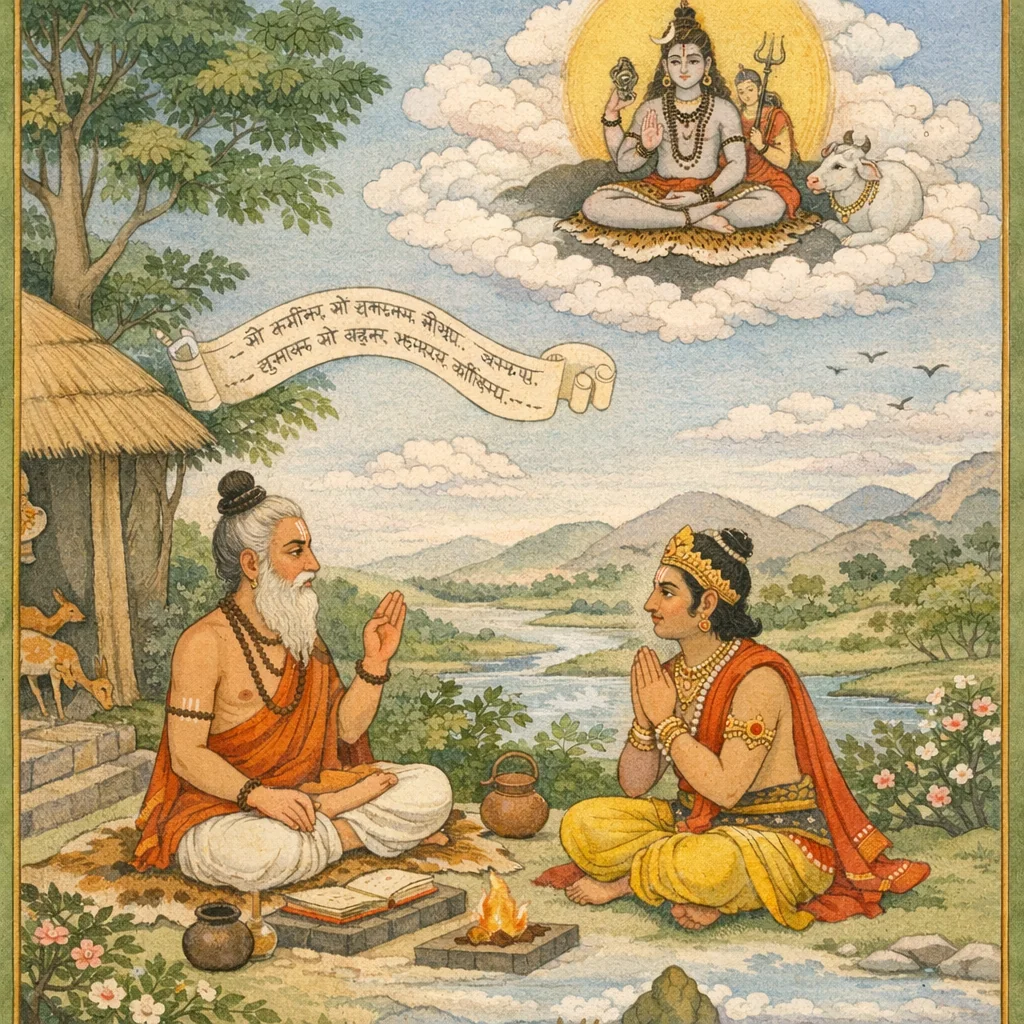
Continuing from the prior chapter, Vyāsa describes the marks of Tiṣya/Kali: social and ritual disorder, fear from famine, drought, and disease, and the decline of Vedic study and śrauta-smārta observance. The critique of varṇāśrama sharpens—misconduct among the twice-born, confused rites, and outward asceticism masking inner emptiness—presented as kāla-driven degeneration as the yuga nears its end. Against this bleakness, the teaching turns prescriptive: Rudra/Mahādeva is proclaimed the transcendent Lord and the sole purifier in Kali, with salutations, meditation, and charity held to be especially potent. A sustained stuti to Śiva follows, praising his cosmic and yogic dimensions and placing him as the deliverer across saṃsāra. The discourse then widens to cosmological instruction: by knowing one Manvantara and one Kalpa, the patterns of all cycles are understood. It closes with Arjuna’s unwavering bhakti, Vyāsa’s blessing, and an explicit affirmation that Vyāsa is Viṣṇu manifest, grounding the chapter’s authority in the Śaiva–Vaiṣṇava synthesis it proclaims and preparing for continued dharma-and-devotion teaching beyond this point.
Shlokas
Verse 1
इती श्रीकूर्मपुराणे षट्साहस्त्र्यां संहितायां पूर्वविभागे सप्तविंशो ऽध्यायः व्यास उवाच तिष्ये मायामसूयां च वधं चैव तपस्विनाम् / साधयन्ति नरा नित्यं तमसा व्याकुलीकृताः
Thus ends the twenty-seventh chapter in the first part of the Śrī Kūrma Purāṇa, in the Ṣaṭsāhasrī Saṃhitā. Vyāsa said: In the age of Tiṣya (Kali), men—agitated and clouded by tamas—continually pursue deceit, envy, and even the harming or slaying of ascetics (tapasvins).
Verse 2
कलौ प्रमारको रोगः सततं क्षुद् भयं तथा / अनावृष्टिभयं घोरं देशानां च विपर्ययः
In the Kali age, deadly epidemics will prevail; there will be constant fear of hunger, and a dreadful fear of drought; and the regions of the world will fall into disorder and reversal.
Verse 3
अधार्मिका अनाचारा महाकोपाल्पचेतसः / अनृतं वदन्ति ते लुब्धास्तिष्ये जाताः सुदुः प्रजाः
In the age of Tiṣya (Kali), people are born thoroughly miserable—irreligious, devoid of right conduct, quick to great anger, and of little understanding; driven by greed, they speak falsehood.
Verse 4
दुरिष्टैर्दुरधीतैश्च दुराचारैर्दुरागमैः / विप्राणां कर्मदोषैश्च प्रजानां जायते भयम्
From faulty rites, misguided study, corrupt conduct, and perverse teachings—together with the ritual and moral faults of the Brahmins—fear arises among the people.
Verse 5
नाधीयते कलौ वेदान् न यजन्ति द्विजातयः / यजन्त्यन्यायतो वेदान् पठन्ते चाल्पबुद्धयः
In the Kali age, the Vedas are not properly studied, and the twice-born do not perform the sacred sacrifices. Instead, people of little understanding recite the Vedas and carry out rites in unrighteous ways, contrary to rule and tradition.
Verse 6
शूद्राणां मन्त्रयौनैश्च संबन्धो ब्राह्मणैः सह / भविष्यति कलौ तस्मिञ् शयनासनभोजनैः
In that Kali age, Śūdras will form associations with Brāhmaṇas—through mantra-rites and through sexual relations—and they will share with them bed, seat, and food.
Verse 7
राजानः सूद्रभूयिष्ठा ब्राह्मणान् बाधयन्ति च / भ्रूणहत्या वीरहत्या प्रजायेते नरेश्वर
O lord of men, kings will become dominated by śūdra-like conduct and will harass the brāhmaṇas; from such disorder arise the sins of embryo‑slaying and the killing of heroes (righteous warriors).
Verse 8
स्नानं होमं जपं दानं देवतानां तथार्ऽचनम् / अन्यानि चैव कर्माणि न कुर्वन्ति द्विजातयः
Bathing, fire-offerings (homa), mantra-recitation (japa), charitable giving, and the worship of the deities—these and the other prescribed rites are not performed properly by the twice-born.
Verse 9
विनिन्दन्ति महादेवं ब्राह्मणान् पुरुषोत्तमम् / आम्नायधर्मशास्त्राणि पुराणानि कलौ युगे
In the Kali age, people revile Mahādeva (Śiva), the Brāhmaṇas, and Puruṣottama, the Supreme Lord; they also disparage the sacred transmitted traditions, the Dharma-śāstras, and the Purāṇas.
Verse 10
कुर्वन्त्यवेददृष्टानि कर्माणि विविधानि तु / स्वधर्मे ऽभिरुचिर्नैव ब्राह्मणानां प्रिजायते
They perform many kinds of acts not sanctioned by the Veda; thus, among the Brāhmaṇas, no true inclination toward their own sacred duty (svadharma) arises.
Verse 11
कुशीलचर्याः पाषण्डैर्वृथारूपैः समावृताः / बहुयाचनको लोको भविष्यति परस्परम्
People will be covered over by base conduct and by heretical, hollow appearances; society will become one of mutual, constant begging from one another.
Verse 12
अट्टशूला जनपदाः शिवशूलाश्चतुष्पथाः / प्रमदाः केशशूलिन्यो भविष्यन्ति कलौ युगे
In the Kali age, provinces will be afflicted by ‘biting’ pains; crossroads will be marked by ‘Śiva’s trident’; and women will be tormented by pains of the hair—such conditions will arise in Kali-yuga.
Verse 13
शुक्लदन्ताजिनाख्याश्च मुण्डाः काषायवाससः / शूद्रा धर्मं चरिष्यन्ति युगान्ते समुपस्थिते
As the end of the age draws near, Śūdras will take up the practice of “dharma,” appearing with white teeth, calling themselves ‘wearers of skins,’ with shaven heads and dressed in ochre robes (kaṣāya).
Verse 14
शस्यचौरा भविष्यन्ति तथा चैलाभिमर्षिणः / चौराश्चौरस्य हर्तारो हर्तुर्हर्ता तथापरः
There will be thieves who steal the standing crops, and likewise those who snatch away garments. Thieves will rob other thieves; and one robber will be robbed by another—robbery preying upon robbery.
Verse 15
दुः खप्रचुरताल्पायुर्देहोत्सादः सरोगता / अधर्माभिनिवेशित्वात् तमोवृत्तं कलौ स्मृतम्
In the age of Kali, because beings become intensely attached to adharma, it is remembered as a tamasic condition—marked by an abundance of suffering, short lifespan, bodily deterioration, and pervasive disease.
Verse 16
काषायिणो ऽथ निर्ग्रन्थास्तथा कापालिकाश्च ये / वेदविक्रयिणश्चान्ये तीर्थविक्रयिणः परे
Then there are those who merely wear the ochre robe; the so‑called ‘free from bonds’ (nirgrantha); and the skull‑bearing ascetics (kāpālika). Others even trade in the Veda, and some sell pilgrimage—turning sacred duty into commerce.
Verse 17
आसनस्थान् द्विजान् दृष्ट्वा न चलन्त्यल्पबुद्धयः / ताडयन्ति द्विजेन्द्रांश्च शूद्रा राजोपजीविनः
Seeing the twice-born seated in places of honor, the dull-witted do not rise (in respect); and Śūdras who live by serving kings even strike the foremost of the twice-born.
Verse 18
उच्चासनस्थाः शूद्रास्तु द्विजमध्ये परन्तप / ज्ञात्वा न हिंसते राजा कलौ कालबलेन तु
In the age of Kali, O scorcher of foes, even Śūdras will sit on high seats among the twice-born; yet the king, understanding that this is driven by the overpowering force of Time, does not resort to violence.
Verse 19
पुष्पैश्च हसितैश्चैव तथान्यैर्मङ्गलैर्द्विजाः / शूद्रानभ्यर्चयन्त्यल्पश्रुतभग्यबलान्विताः
Some twice-born men, possessed of little learning, scant good fortune, and weak discernment, even offer reverential worship to Śūdras—using flowers, laughter, and other (so‑called) auspicious gestures.
Verse 20
न प्रेक्षन्ते ऽर्चितांश्चापि शूद्रा द्विजवरान् नृप / सेवावसरमालोक्य द्वारि तिष्ठन्ति च द्विजाः
O king, even when the best of the twice-born have been duly honoured, the Śūdras do not properly attend to them; and the twice-born, looking for an occasion of service, stand waiting at the door.
Verse 21
वाहनस्थान् समावृत्य शूद्राञ् शूद्रोपजीविनः / सेवन्ते ब्राह्मणास्तत्र स्तुवन्ति स्तुतिभिः कलौ
In the age of Kali, Brahmins—living by the support of Śūdras—will gather around the places where vehicles are kept, and there they will serve Śūdras, praising them with flattering eulogies.
Verse 22
अध्यापयन्ति वै वेदाञ् शूद्राञ् शूद्रोपजीविनः / पठन्ति वैदिकान् मन्त्रान् नास्तिक्यं घोरमाश्रिताः
Those who live by serving Śūdras even teach the Vedas to Śūdras; and they recite Vedic mantras while having taken refuge in a dreadful unbelief (nāstikya).
Verse 23
तपोयज्ञफलानां च विक्रेतारो द्विजोत्तमाः / यतयश्च भविष्यन्ति शतशो ऽथ सहस्त्रशः
O best of the twice-born, there will be Brahmins who sell the fruits of austerities and sacrifices; and ascetics (yatis) too will arise—by the hundreds, indeed by the thousands.
Verse 24
नाशयन्ति ह्यधीतानि नाधिगच्छन्ति चानघ / गायन्ति लौकिकैर्गानैर्दैवतानि नराधिप
O sinless one, they ruin even what they have studied and attain no true understanding; O king, they merely sing to the deities with worldly songs.
Verse 25
वामपाशुपताचारास्तथा वै पाञ्चरात्रिकाः / भविष्यन्ति कलौ तस्मिन् ब्राह्मणाः क्षत्रियास्तथा
In that Kali age, there will arise Brahmins and Kshatriyas who follow the practices of the left-hand Pāśupata discipline, and likewise those devoted to the Pāñcarātra tradition.
Verse 26
ज्ञानकर्मण्युपरते लोके निष्क्रियतां गते / कीटमूषकसर्पाश्च धर्षयिष्यन्ति मानवान्
When the world turns away from both true knowledge and righteous action and sinks into inertia, even pests—worms, rats, and serpents—will harass and overpower human beings.
Verse 27
कुर्वान्ति चावताराणि ब्राह्मणानां कुलेषु वै / दधीचशापनिर्दग्धाः पुरा दक्षाध्वरे द्विजाः
Indeed, they take incarnations within the families of Brāhmaṇas; long ago, at Dakṣa’s sacrifice, those twice-born were scorched by the curse of Dadhīca.
Verse 28
निन्दन्ति च महादेवं तमसाविष्टचेतसः / वृथा धर्मं चरिष्यन्ति कलौ तस्मिन् युगान्तिके
In that Kali age, near the end of the yuga, people whose minds are seized by darkness will revile Mahādeva; and they will practice dharma in vain—mere outward observance without its inner truth.
Verse 29
ये चान्ये शापनिर्दग्धा गौतमस्य महात्मनः / सर्वे ते च भविष्यन्ति ब्राह्मणाद्याः स्वजातिषु
And those others who were scorched by the curse of the great-souled sage Gautama—all of them too shall be reborn within their own respective communities, beginning with the Brāhmaṇas.
Verse 30
विनिन्दन्ति हृषीकेशं ब्राह्मणान् ब्रह्मवादिनः / वेदबाह्यव्रताचारा दुराचारा वृथाश्रमाः
They revile Hṛṣīkeśa, the Lord of the senses, and the Brāhmaṇas who proclaim Brahman; taking up vows and observances outside the Veda, they are of corrupt conduct—ascetics in name alone, their āśrama-life made futile.
Verse 31
मोहयन्ति जनान् सर्वान् दर्शयित्वा फलानि च / तमसाविष्टमनसो वैडालवृत्तिकाधमाः
Displaying supposed “results” as proof, they delude all people; those lowest of men, whose minds are seized by darkness, live by base, cat-like ways—hypocrisy and stealth.
Verse 32
कलौ रुद्रो महादेवो लोकानामीश्वरः परः / न देवता भवेन्नृणां देवतानां च दैवतम्
In the age of Kali, Rudra—Mahādeva—is the transcendent Īśvara, the supreme ruler of the worlds. For human beings there is no other deity; and for the gods as well, He is the very Divinity, the ultimate object of worship.
Verse 33
करिष्यत्यवताराणि शङ्करो नीललोहितः / श्रौतस्मार्तप्रतिष्ठार्थं भक्तानां हितकाम्यया
Śaṅkara, the Nīlalohita—the blue‑red Lord—will assume incarnations to establish the authority of the Śrauta and Smārta traditions, seeking the welfare and benefit of His devotees.
Verse 34
उपदेक्ष्यति तज्ज्ञानं शिष्याणां ब्रह्मसंज्ञितम् / सर्ववेदान्तसारं हि धर्मान् वेदनिदर्शितान्
He will teach that knowledge to the disciples—known as Brahma-knowledge—indeed the very essence of all Vedānta, and the dharmas that are indicated and established by the Vedas.
Verse 35
ये तं विप्रा निषेवन्ते येन केनोपचारतः / विजित्यकलिजान् दोषान् यान्ति ते परमं पदम्
Those brāhmaṇas who attend upon him—by whatever service or mode of reverent worship they can—conquer the faults born of the Kali age and attain the supreme state.
Verse 36
अनायासेन सुमहत् पुण्यमाप्नोति मानवः / अनेकदोषदुष्टस्य कलेरेष महान् गुणः
With little effort a human being attains very great merit; though the age of Kali is corrupted by many faults, this indeed is its great virtue.
Verse 37
तस्मात् सर्वप्रयत्नेन प्राप्य माहेश्वरं युगम् / विशेषाद् ब्राह्मणो रुद्रमीशानं शरणं व्रजेत्
Therefore, with every possible effort, having attained the Māheśvara age, one should take refuge in Rudra, the Lord Īśāna; and a brāhmaṇa, in particular, should go to Him for shelter.
Verse 38
ये नमन्ति विरूपाक्षमीशानं कृत्तिवाससम् / प्रसन्नचेतसो रुद्रं ते यान्ति परमं पदम्
Those who, with a tranquil and pleased mind, bow to Rudra—Virūpākṣa, the Lord (Īśāna), the wearer of the hide—attain the supreme state (the highest abode).
Verse 39
यथा रुद्रनमस्कारः सर्वकर्मफलो ध्रुवम् / अन्यदेवनमस्कारान्न तत्फलमवाप्नुयात्
Just as reverent salutations to Rudra surely bestow the fruit of all sacred acts, so that same fruit is not attained merely by paying homage to other deities.
Verse 40
एवंविधे कलियुगे दोषाणामेकशोधनम् / महादेवनमस्कारो ध्यानं दानमिति श्रुतिः
In such a Kali-yuga there is one purifier that cleanses faults: reverent salutation to Mahādeva, together with meditation and charitable giving—so declares the Śruti.
Verse 41
तस्मादनीश्वरानन्यान् त्यक्त्वा देवं महेश्वरम् / समाश्रयेद् विरूपाक्षं यदीच्छेत् परमं पदम्
Therefore, abandoning all others who are not truly sovereign, one should take complete refuge in Mahēśvara, Virūpākṣa the wide‑eyed Lord, if one desires the supreme state.
Verse 42
नार्चयन्तीह ये रुद्रं शिवं त्रिदशवन्दितम् / तेषां दानं तपो यज्ञो वृथा जीवितमेव च
Those who do not worship here Rudra—Śiva, revered by the gods—find their charity, austerity, and sacrifices in vain; indeed, even their very life becomes fruitless.
Verse 43
नमो रुद्राय महते देवदेवाय शूलिने / त्र्यम्बकाय त्रिनेत्राय योगिनां गुरवे नमः
Salutations to great Rudra, God of gods, bearer of the trident; salutations to Tryambaka, the three‑eyed Lord; salutations to the Guru of yogins.
Verse 44
नमो ऽस्तु वामदेवाय महादेवाय वेधसे / शंभवे स्थाणवे नित्यं शिवाय परमेष्ठिने / नमः शोमाय रुद्राय महाग्रासाय हेतवे
Salutations to Vāmadeva, to Mahādeva, to Vedhas, the Ordainer. Ever salutations to Śambhu, to Sthāṇu the Immovable, to Śiva, the Supreme Lord (Parameṣṭhin). Salutations to Śoma, to Rudra, to Mahāgrāsa the Great Devourer, and to Hetu, the primal Cause.
Verse 45
प्रपद्ये ऽहं विरूपाक्षं शरण्यं ब्रह्मचारिणम् / महादेवं महायोगमीशानं चाम्बिकापतिम्
I take refuge in Virūpākṣa, the gracious protector, the brahmacārin ascetic. I take refuge in Mahādeva, the great Yogi, Īśāna the Lord, the consort of Ambikā.
Verse 46
योगिनां योगदातारं योगमायासमावृतम् / योगिनां कुरुमाचार्यं योगिगम्यं पिनाकिनम्
I bow to Pinākin (Śiva), the bestower of Yoga upon yogins—veiled by His own yogic māyā—teacher of yogins in the discipline of practice, attainable only through Yoga.
Verse 47
संसारतारणं रुद्रं ब्रह्माणं ब्रह्मणो ऽधिपम् / शाश्वतं सर्वगं ब्रह्मण्यं ब्राह्मणप्रियम्
I revere Rudra—the deliverer across saṃsāra—who is Brahmā and the Lord over Brahman; eternal, all-pervading, devoted to dharma and the Vedas, and beloved of the Brāhmaṇas.
Verse 48
कपर्दिनं कालमूर्तिममूर्ति परमेश्वरम् / एकमूर्ति महामूर्ति वेदवेद्यं दिवस्पतिम्
I worship Kapardin, the matted-haired Lord—Time embodied and yet beyond all embodiment—Parameśvara, the Supreme Lord: the One Form who is also the Vast Cosmic Form, knowable through the Vedas, the Lord of the heavens.
Verse 49
नीलकण्ठं विश्वमूर्ति व्यापिनं विश्वरेतसम् / कालाग्निं कालदहनं कामदं कामनाशनम्
Salutations to the Blue-throated Lord, whose very form is the cosmos—all-pervading, the seed of the universe; to the Fire of Time that consumes Time; to the giver of desired boons, and to the destroyer of desire itself.
Verse 50
नमस्ये गिरिशं देवं चन्द्रावयवभूषणम् / विलोहितं लेलिहानमाहित्यं परमेष्ठिनम् / उग्रं पशुपतिं भीमं भास्करं तमसः परम्
I bow to Girīśa, the divine Lord of the mountains, adorned with the Moon upon His person—ruddy in splendor, blazing as though licking up the worlds; the all-pervading Paramēṣṭhin, the Supreme Ordainer. I bow to Paśupati, fierce and formidable, radiant like the Sun, the One beyond darkness (ignorance).
Verse 51
इत्येतल्लक्षणं प्रोक्तं युगानां वै समासतः / अतीतानागतानां वै यावन्मन्वन्तरक्षयः
Thus, in brief, the defining characteristics of the yugas have been explained—of those that have passed and those yet to come—up to the end of a Manvantara, the age of a Manu.
Verse 52
मन्वन्तरेण चैकेन सर्वाण्येवान्तराणि वै / व्याख्यातानि न संदेहः कल्पः कल्पेन चैव हि
By describing even a single Manvantara, all the other intermediate cycles are thereby explained—there is no doubt. Likewise, by explaining one Kalpa, the other Kalpas too are understood, for they follow the same pattern.
Verse 53
मन्वन्तरेषु सर्वेषु अतीतानागतेषु वै / तुल्याभिमानिनः सर्वे नामरूपैर्भवन्त्युत
In all the Manvantara cycles—whether past or yet to come—beings are indeed alike in their self-identification; they arise again and again through varied names and forms.
Verse 54
एवमुक्तो भगवता किरीटी श्वेतवाहनः / बभार परमां भक्तिमीशाने ऽव्यभिचारिणीम्
Thus addressed by the Blessed Lord, the crowned hero—riding the white mount—embraced supreme, unwavering devotion to Īśāna, the Lord.
Verse 55
नमश्चकार तमृषिं कृष्णद्वैपायनं प्रभुम् / सर्वज्ञं सर्वकर्तारं स्क्षाद् विष्णुं व्यवस्थितम्
He bowed in reverence to that sage—Kṛṣṇa Dvaipāyana (Vyāsa), the venerable lord—omniscient and the doer of all, manifest and firmly established as Viṣṇu Himself.
Verse 56
तमुवाच पुनर्व्यासः पाथं परपुरञ्जयम् / कराभ्यां सुशुभाभ्यां च संस्पृश्य प्रणतं मुनिः
Then the sage Vyāsa spoke again to Pārtha, Parapurañjaya, as he lay bowed down; and the muni, touching him with his two beautiful hands, addressed him with gentle care.
Verse 57
धन्यो ऽस्यनुगृहीतो ऽसि त्वादृशो ऽन्यो न विद्यते / त्रैलोक्ये शङ्करे नूनं भक्तः परपुरञ्जय
Blessed indeed are you; you have truly received grace. None other like you exists. In the three worlds, you are surely a devotee of Śaṅkara—O conqueror of enemy citadels.
Verse 58
दृष्टवानसि तं देवं विश्वाक्षं विश्वतोमुखम् / प्रत्यक्षमेव सर्वेशं रुद्रं सर्वजगद्गुरुम्
You have beheld that God—whose eyes are the universe and whose faces turn to every direction—Rudra, the Lord of all, directly manifest before you, the Guru of the entire world.
Verse 59
ज्ञानं तदैश्वरं दिव्यं यथावद् विदितं त्वया / स्वयमेव हृषीकेशः प्रीत्योवाच सनातनः
That divine, sovereign knowledge has been rightly understood by you. Then Hṛṣīkeśa Himself—the eternal Lord—spoke with joy and affection.
Verse 60
गच्छ गच्छ स्वकं स्थानं न शोकं कर्तुमर्हसि / व्रजस्व परया भक्त्या शरण्यं शरणं शिवम्
Go—go back to your own abode; you should not give way to grief. Proceed with supreme devotion to Śiva, the true refuge—Him who is the refuge of all who seek shelter.
Verse 61
एवमुक्त्वा स भगवाननुगृह्यार्जुनं प्रभुः / जगाम शङ्करपुरीं समाराधयितुं भवम्
Having spoken thus, the Blessed Lord—graciously favoring Arjuna—departed for Śaṅkara’s city, in order to duly worship Bhava (Śiva).
Verse 62
पाण्डवेयो ऽपि तद् वाक्यात् संप्राप्य शरणं शिवम् / संत्यज्य सर्वकर्माणि तद्भक्तिपरमो ऽभवत्
Even Pāṇḍaveya, following those words, took refuge in Śiva; abandoning all other undertakings, he became wholly devoted to Him in supreme bhakti.
Verse 63
नार्जुनेन समः शंभोर्भक्त्या भूतो भविष्यति / मुक्त्वा सत्यवतीसूनुं कृष्णं वा देवकीसुतम्
None has been or will be equal to Arjuna in devotion to Śambhu—except for Satyavatī’s son (Vyāsa) or Kṛṣṇa, the son of Devakī.
Verse 64
तस्मै भगवते नित्यं नमः सत्याय धीमते / पाराशर्याय मुनये व्यासायामिततेजसे
Ever do we bow to that Blessed Lord—truth itself and supremely wise—namely the sage Vyāsa, son of Parāśara, of immeasurable splendor.
Verse 65
कृष्णद्वैपायनः साक्षाद् विष्णुरेव सनातनः / को ह्यन्यस्तत्त्वतो रुद्रं वेत्ति तं परमेश्वरम्
Kṛṣṇa-Dvaipāyana (Vyāsa) is in truth none other than the eternal Viṣṇu made manifest. For who else could know Rudra in his real essence—him, the Supreme Lord, Parameśvara?
Verse 66
नमः कुरुध्वं तमृषिं कृष्णं सत्यवतीसुतम् / पाराशर्यं महात्मानं योगिनं विष्णुमव्ययम्
Offer your salutations to that sage—Kṛṣṇa Dvaipāyana, son of Satyavatī—Parāśara’s son: the great-souled yogin, the imperishable Viṣṇu incarnate.
Verse 67
एवमुक्तास्तु मुनयः सर्व एव समीहिताः / प्रेणेमुस्तं महात्मानं व्यासं सत्यवतीसुतम्
Thus addressed, all the sages—each fulfilled in purpose—bowed down to that great-souled Vyāsa, the son of Satyavatī.
Frequently Asked Questions
Kali is depicted as tamas-dominated: epidemics, drought and hunger fears, ritual corruption, weakened Vedic study, social disrespect and inversion, and the proliferation of outward asceticism without inner truth—producing widespread disorder and suffering.
Reverent salutation to Rudra/Mahādeva—supported by meditation and charitable giving—is named a singular purifier in Kali, yielding the fruit of sacred actions with comparatively little effort.
It prioritizes refuge in Rudra as the supreme Lord for Kali-yuga while closing by identifying Vyāsa as Viṣṇu manifest and as the knower of Rudra’s true essence—signaling a samanvaya where supreme divinity is approached through multiple orthodox idioms rather than sectarian negation.
The yuga diagnosis is grounded in kāla’s force: dharma and conduct vary by age, yet the chapter claims that understanding one Manvantara and one Kalpa reveals the repeating structure of all cycles, enabling a principled reading of decline and restoration across time.