Adhyaya 76
Himavat Ratna-utpatti, Bhīṣma-maṇi Praśaṃsā, and Pitṛ-tarpaṇa Phala
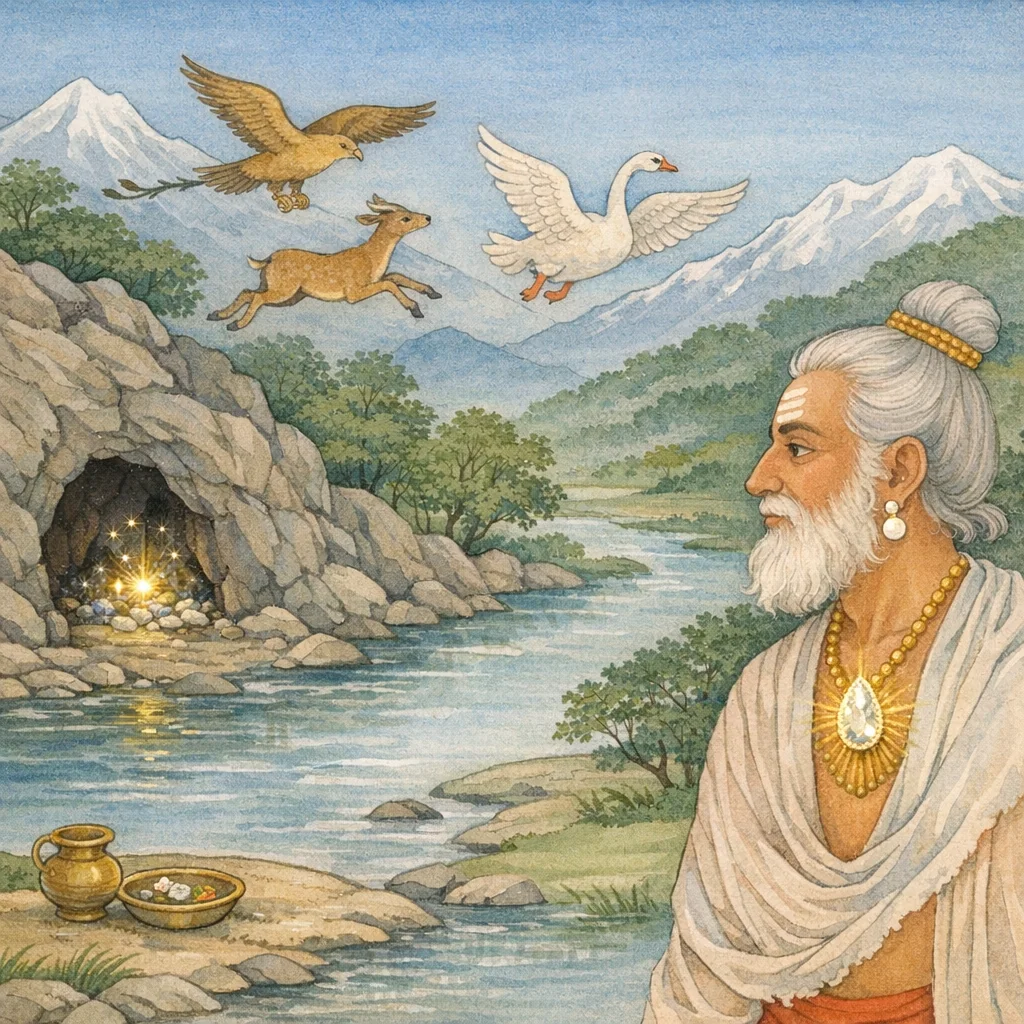
Continuing the Ācāra-focused teaching, this chapter grounds gem-lore in sacred geography: a mythic event in the northern Himavat gives rise to a premier mine yielding radiant, formidable formations. From there it praises the Bhīṣma-gem (Bhīṣma-maṇi) as a wearable source of prosperity and protection, so potent that dangerous forest animals flee at the sight of its bearer. One verse is explicitly flagged as textually problematic, marking a break where philological verification is needed. The discourse then shifts from bodily safety to ritual safeguarding: Pitṛ-tarpaṇa is lauded for granting long-lasting satisfaction to the pitṛs (ancestors) and for neutralizing severe threats such as poisons and elemental or social fears. The chapter closes with practical discernment: avoid inauspicious, lusterless appearances (a dharma sign of inner disorder) and judge worth by deśa-kāla—recognizing that rarity and distance affect value—bridging to later discussions where right conduct and prudent judgment secure welfare in both seen and unseen realms.
Shlokas
Verse 1
नाम पञ्चसप्ततितमो ऽध्यायः सूत उवाच / हिमवत्युत्तरदेशे वीर्यं पतितं सुरद्विषस्तस्य / संप्राप्तमुत्तमानामाकरतां भीष्मरत्नानाम्
Thus begins the seventy-sixth chapter. Sūta said: In the northern region of Himavat, the virile seed (vīrya) of that foe of the gods fell; from it arose a foremost mine, an abundant source of awe-inspiring gems.
Verse 2
शुक्लाः शङ्खाब्जनिभाः स्योनाकसन्निभा प्रभावन्तः / प्रभवन्ति ततस्तरुणा वज्रनिभा भीष्मपाषाणाः
Radiant white forms appear, like conch and lotus, shining like the syonāka tree; thereafter arise fearsome boulders, newly formed and hard as the vajra, the thunderbolt.
Verse 3
हेमादिप्रतिबद्धाः शुद्धमपि श्रद्धया विधत्ते यः / भीष्ममणिं ग्रीवादिषु सुसम्पदं स सर्वदा लभते
Whoever, with faith, properly wears the Bhīṣma-gem—set in gold and the like—upon the neck and other parts of the body, even if it is simple and pure, always attains prosperity and well-being.
Verse 4
निरीक्ष्य पलायन्ते यं तमरण्यनिवासिनः समीपऽपि / द्वीपिवृकशरभकुञ्जरसिंहव्याघ्रादयो हिंस्त्राः
Seeing him, even the fierce creatures that dwell in the forest flee—though they may be nearby—such as leopards, wolves, śarabhas, elephants, lions, tigers, and other violent beasts.
Verse 5
तसोयत्कलतष्टतरोर्भवति भयं न चास्तीशमुपहसन्ति / भीष्ममणिर्गुणयुक्तो सम्यक्प्राप्ताङ्गुलीकलत्रत्वः
This reading appears corrupt or garbled and does not yield a coherent Garuḍa Purāṇa sense in standard editions. Please verify the Sanskrit (especially “तसोयत्कलतष्टतरोर… / भीष्ममणि…”); then a faithful translation and technical gloss can be produced.
Verse 6
पितॄतर्पणे पितॄणां तृप्तिर्बहुवार्षिकी भवति / शाम्यन्त्यद्भुतान्यपि सर्पाण्डजाखुवृश्चिकविषाणि / सलिलाग्निवैरितस्करभयानि भीमानि नश्यन्ति
By performing tarpaṇa (ritual libations) for the Pitṛs, the ancestors attain satisfaction that lasts for many years. Even extraordinary afflictions subside—such as poisons from serpents, egg-born creatures, rats, and scorpions—and dreadful fears of water, fire, enemies, and thieves are destroyed.
Verse 7
शैवलबलाहकाभं पुरुषं पीतप्रभं प्रभाहीनम् / मलिनद्युति च विवर्णं दूरात्परिवर्जयेत्प्राज्ञः
A wise person should keep far away from a man whose appearance is like mossy water or a dark cloud—whose glow is yellow yet devoid of radiance—whose luster is tainted and whose color is disfigured.
Verse 8
मूल्यं प्रकल्प्यमेषां विबुधवरैर्दैशकालविज्ञानात् / दूरे भूतानां बहु किञ्चिन्निकटप्रसूतानाम्
Their value should be assessed by the best of the wise, with knowledge of place and time: what is brought from far away is of great worth, while what is produced nearby is worth only a little.
Frequently Asked Questions
The structure juxtaposes external safeguards (ratna as apotropaic, conditioned by śraddhā and proper wearing) with ritual safeguards (tarpaṇa as a dharmic act securing Pitṛ-tṛpti and removing calamities). This pairing reflects Purāṇic Ācāra logic: auspicious material supports are meaningful when integrated with correct conduct and rites.
The chapter frames tarpaṇa as a merit-bearing rite that pleases the Pitṛs for an extended duration; as a consequence, extraordinary afflictions (including poisonings and various fears) are said to subside. The causal logic is Purāṇic karma-phala: dharmic offerings strengthen auspicious forces and reduce adversity.