Adhyaya 53
The Eight Nidhis: Guna-Based Types of Wealth, Giving, Hoarding, and Public Benefit
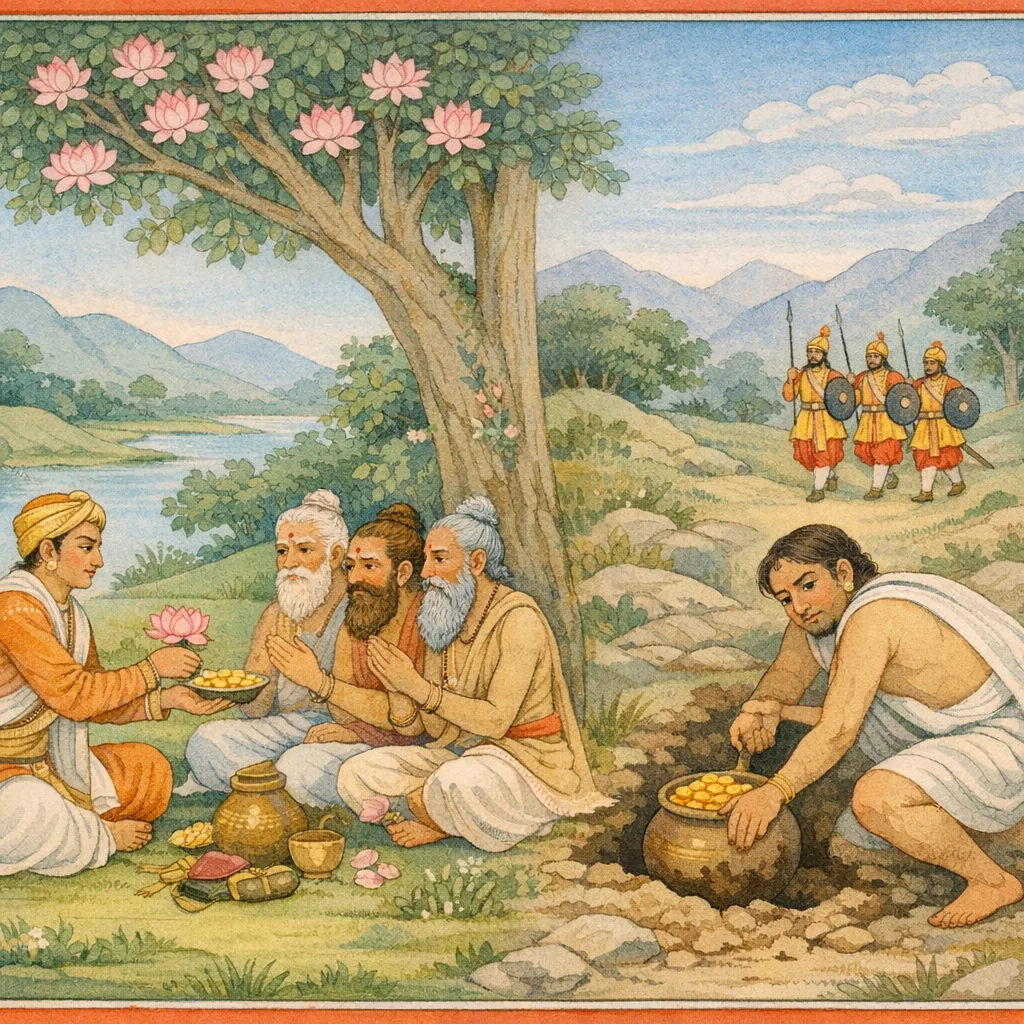
Continuing the earlier teaching on Hari’s “eight treasures,” Sūta conveys Brahmā’s reply and begins portraying the nidhis as embodied types of wealth, known by their marks and conduct. Padma and Mahāpadma are described as sāttvika: lotus-marked persons incline to compassion, the gaining of wealth, and dharmic giving—especially to ascetics, learned ritualists, and worthy recipients. Makara is linked to hoarding weapons and a rajas–tamas drive for power, alliances with kings, and even ruin through conflict; Kacchapa/Kacchapī is marked by distrust, miserliness, and inert hoarding, with a warning that buried wealth may be seized by royal authority. The chapter also sketches mixed (rajas/tamas) patterns—pleasure-spending, craving praise, shifting loyalties—and a sāttvika provisioning type (Nīla) who gathers necessities and supports public works like ponds and groves. It concludes that mixed observation yields mixed results and turns toward Hari’s broader cosmological explanations (the world-sheath and related matters) to be recounted next.
Shlokas
Verse 1
नाम द्विपञ्चाशत्तमो ऽध्यायः सूत उवाच / एवं ब्रह्माब्रवीच्छ्रुत्वा हरेरष्टनिधींस्तथा / तत्र पद्ममहापद्मौ तथा मकरकच्छपौ
Chapter Fifty-Three (so named). Sūta said: Thus, having heard of Hari’s eight treasures, Brahmā spoke; among them are Padma and Mahāpadma, and also Makara and Kacchapa.
Verse 2
मुकुन्दकु(न) न्दौ नीलश्च शङ्खश्चैवापरो निधिः / सत्यामृद्धौ भवन्त्येते स्वरूपं कथयाम्यहम्
Mukunda, Kunda, Nīla, Śaṅkha, and yet another treasure—these manifest in the Satya (Kṛta) age, when prosperity prevails. I shall now describe their true forms.
Verse 3
पद्मेन लक्षितश्चैव सात्त्विको जायते नरः / दाक्षिण्यसारः पुरुषः सुवर्णादिकसंग्रहम्
A man who bears the mark of a lotus is indeed born with a sāttvic nature—one whose essence is kindness and generosity, and who attains the gathering of gold and other wealth.
Verse 4
रुप्यादि कुर्याद्दद्यात्तु यतिदैवादियज्वनाम् / महापद्माङ्कितो दद्याद्धनाद्यं धार्मिकाय च
One should set aside silver and the like and give it to ascetics (yatis) and to those who perform sacrificial offerings to the gods. Bearing the emblem of the great lotus (Mahāpadma), one should also donate wealth and other gifts to a righteous person established in dharma.
Verse 5
नीधी पद्ममहापद्मौ सात्त्विकौ पुरुषौ स्मृती / मकरेणाङ्कितः खड्गबाणकुन्तादिसंग्रही
Nidhi, Padma, and Mahāpadma are remembered as sāttvika beings, pure in nature. There is also one marked with the makara emblem, who bears and gathers weapons such as swords, arrows, spears, and the like.
Verse 6
दद्याच्छ्रुताय मैत्रीं च याति नित्यं च राजभिः / द्रव्यार्थं शत्रुणा नाशं संग्रामे चापि संव्रजेत्
One should give to the learned and cultivate friendship; one should also keep constant association with kings and those in authority. For the sake of wealth, one may even be brought to ruin by an enemy and be drawn into battle as well.
Verse 7
मकरः कच्छपश्चैव तामसौ तु निधी स्मृतौ / कच्छपी विश्वसेन्नैव न भुङ्केन (ना) ददाति च
“Makara” and “Kacchapa” are said to be two treasure-types of tāmasika nature, dark and inert. The “Kacchapī” trusts no one, neither eats, nor gives in charity.
Verse 8
निधानमुर्व्यां कुरुते निधिः सोप्येकपूरुषः / राजसेनमुकुन्देन लक्षिता राज्यसंग्रही
A treasurer (nidhi) buries a hoard in the earth—yet that hoard, in the end, serves only one person. When marked out by the royal army and the king’s agent, it becomes property seized for the kingdom.
Verse 9
भुक्तभोगो गायनेभ्यो दद्याद्वेश्यादिकासु च / रजस्तमोमयो नन्दी आधारः स्यात्कुलस्य च
Having indulged in pleasures, he gives gifts to singers and squanders wealth on courtesans and the like. Such a man—ruled chiefly by rajas and tamas—becomes only a worldly “support” of the family, not a true upholder of dharma.
Verse 10
स्तुतः प्रीतो भवति वै बहुभार्या भवन्ति च / पूर्वमित्रेषु शैथिल्यं प्रीतिमन्यैः करोति च
When a man is praised, he truly becomes pleased; he may also come to have many wives. His loyalty to former friends grows slack, and he instead cultivates affection for others.
Verse 11
नीलन चाङ्कितः सत्त्वतेजसा संयुतो भवेत् / वस्त्रधान्यादिसंग्राही तडागादि करोति च
Marked with a bluish sign and endowed with the radiance born of sattva, he becomes one who gathers garments, grain, and the like; and he also undertakes public benefactions such as building ponds and similar works.
Verse 12
त्रिपू(पौ) रुषो निधिश्चैव आम्रारामादि कारयेत् / एकस्य स्यान्निधिः शङ्खः स्वयं भुङ्क्ते धनादि(न्त)कम्
One should also establish a treasure (nidhi) and create mango-groves and the like. For one person, the “treasure” may be a sacred conch (śaṅkha); it itself yields benefit, granting wealth and the rest.
Verse 13
कदन्नभुक्परिजनो न च शोभनवस्त्रधृक् / स्वपोषणपरः शङ्खी दद्यात्परनरे वृथा
One whose household lives on inferior food, who does not wear decent clothing, and who is intent only on maintaining himself—such a miser, even if he gives in charity to others, gives in vain, without fruit.
Verse 14
मिश्रावलोकनान्मिश्रस्वभावफलदायिनः / निधीनां रूपमुक्तं तु हरिणापि हरादिके / हरिर्भुवनकोशादि यथोवाच तथा वदे
Because their observation is mixed, they bestow fruits of a mixed nature. The forms of the cosmic treasures called Nidhis were also described by Hari (Vishnu) to Hara (Shiva) and others. As Hari explained the world-sheath and related matters, so shall I recount it.
Frequently Asked Questions
The text emphasizes setting aside wealth (e.g., silver and other valuables) for dāna to ascetics, learned ritual performers, and righteous recipients. The Padma/Mahāpadma orientation is to convert prosperity into merit through intentional giving and supportive association with the virtuous.
Adhyāya 53 notes that hoarded treasure ultimately serves only one person and may be identified by royal agents and seized for the kingdom. The point is ethical and pragmatic: tamasic hoarding is insecure and fails to yield dharmic fruit compared to purposeful, righteous expenditure.