Adhyaya 173
Rasa-Dravya Varga: Sweet, Sour, Salty, Pungent, Bitter, Astringent; Snehana and Svedana Guidelines
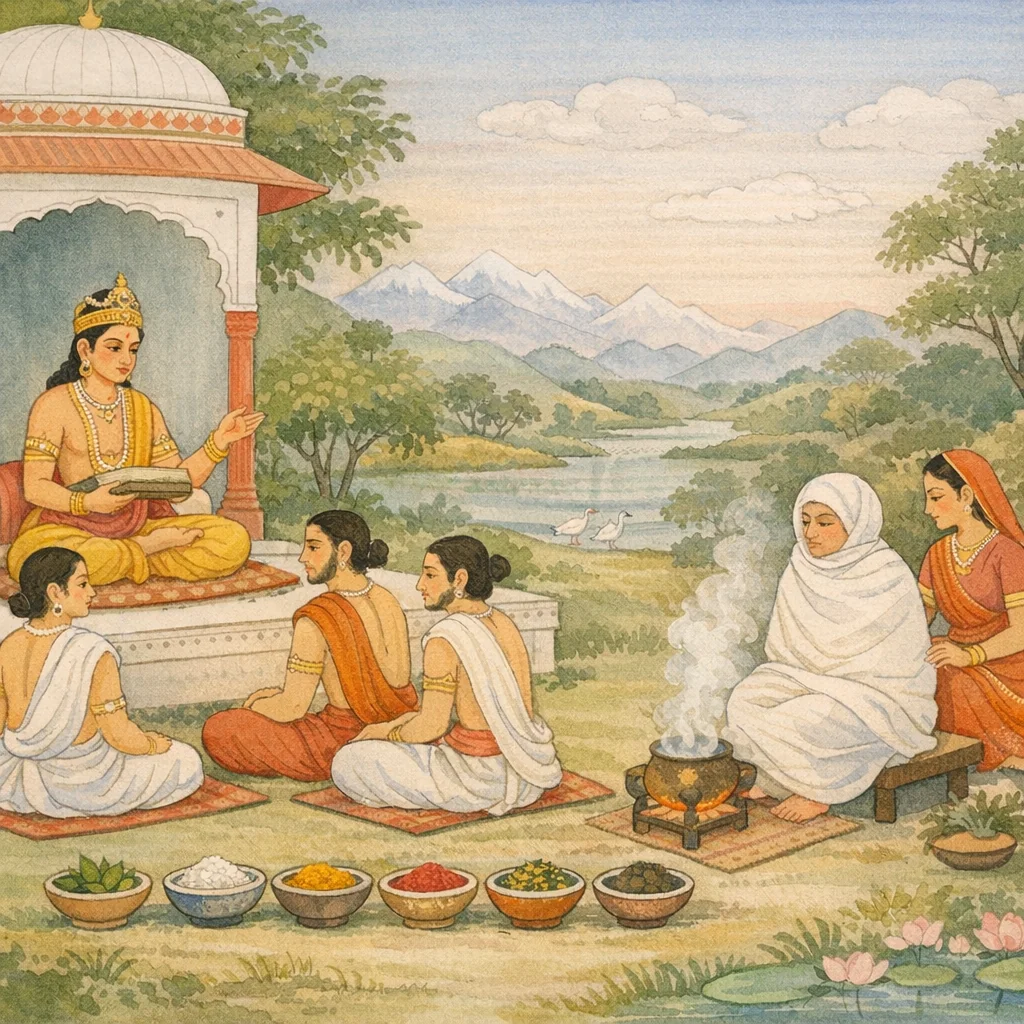
Continuing Dhanvantari’s medical teaching, this chapter organizes diet and medicine by the six tastes (rasa). It begins with the madhura (sweet) group—grains, dairy, nourishing juices, honey, and certain fruits/tubers—describing benefits such as easing burning and fainting and clarifying the senses, and noting external lepa (pastes) for respiratory troubles and glandular swellings. It then lists āmla (sour) fruits and fermented items as digestive aids, warning that excess causes burning, worsens wounds, and sensitizes teeth. Next are lavaṇa (salts/alkalis), cleansing and digestive yet obstructive to bodily channels when overused. The chapter proceeds through kaṭu (pungent) and tikta (bitter) herbs that reduce kapha and kindle appetite, though they can dry the body, and then kaṣāya (astringent), absorbent and healing but harmful in excess to the heart and by dryness. It expands therapeutic groupings (including daśamūla) and turns to procedure: ghṛta as the foremost sneha, doṣa-based combinations, dosing by patient strength, signs of proper oleation, and svedana (sudation/heat) rules with clear contraindications—bridging to the therapies discussed next.
Shlokas
Verse 1
नाम द्विसप्तत्युत्तरशततमो ऽध्यायः धन्वन्तरिरुवाच / द्रव्याणि मधुरादीनि वक्ष्ये रागहराण्यहम् / शालिषष्टिकगोधृमक्षीरं घृतं रसा मध
Chapter one hundred and seventy-three: Dhanvantari said—Now I shall describe the sweet-tasting substances and the rest, which remove raga (morbid redness/inflammation and passion). These include śāli rice, ṣaṣṭika rice, wheat, milk, ghee, nourishing juices, and honey.
Verse 2
मज्जाशृङ्गाटकयवकशेर्विवारुगीक्षुरम् / गम्भगी पौष्करं बीजं द्राक्षा खर्जूरकं बला
Marrow, water-chestnut, barley, śer(v)ā, vārugī, sugarcane; gambhagī; the seed of pauṣkara; grapes, dates, and balā—these too are included among the beneficial substances being taught.
Verse 3
नारिकलेक्ष्वात्मणुप्ता विदारी च प्रियालकम् / मधुकं तालकष्माण्डं मुख्यो ऽयं मधुरो गणः
Coconut, sugarcane, Ātmaṇuptā, vidārī, priyāla, madhūka, palm-fruit, and ash-gourd—this is the principal group among the sweet (madhura) class.
Verse 4
मूर्छादाहप्रशमनः पडिन्द्रियप्रसादनः / कृमिकृत्कफकृच्चैव एको ऽत्यर्थ निपेवितः
It alleviates fainting and burning, brings clarity to the six senses, destroys worms, and reduces phlegm—especially when taken properly and in the right measure.
Verse 5
श्वासकासाम्यमाधुर्यस्वरघातार्वुदानि च / गलगण्डश्लीपदानि गुडलेपादि कारयेत्
For breathlessness, cough, disorders of taste, hoarseness or loss of voice, and swellings (arbuda), as well as goitre and ślīpada (elephantiasis), one should prepare applications (lepa) such as a jaggery-based plaster (guda) and related treatments.
Verse 6
दाडिमामलकाम्रं च कपित्थकरमर्दकौ / मातुलुङ्गाम्रातकं च बदरं तिन्तडीफलम्
Pomegranate, āmalaka (Indian gooseberry), mango; wood-apple and karamaṛda; citron and ambraṭaka; jujube and the fruit of tintaḍī—these are counted among the sour fruits.
Verse 7
दधि तक्रं काञ्जिकं च लकुचं चाम्लवे तसम् / अम्लो लोणः शुण्ठीयुक्तो जारणः पाचनो रसः
Curd (dadhi), buttermilk (takra), fermented gruel (kāñjika), lakuca, and the sour cane (āmla-vetasa): these are of the sour taste. Sourness—especially joined with salt and dry ginger (śuṇṭhī)—acts as a digestive, carminative juice, as though it “cooks” the food within.
Verse 8
क्लेदनो वातकृद्धृप्यो विदाही चानुलोमनः / अम्लो ऽत्यर्थं सेव्यमानः कुर्याद्धै दन्तहर्षकम्
The sour taste is moistening, can aggravate vāta, is stimulating, causes burning, and promotes downward movement (anulomana) of wind and wastes. But when taken in excess, it indeed produces tooth-sensitivity (dantaharṣa).
Verse 9
शरीरस्य च शैतिल्यं स्वरकण्ठास्यहृद्दहेत् / छिन्नभिन्नव्रणादीनि पाचयित्वाग्निभावितः
It causes laxity of the body and produces burning in the voice, throat, mouth, and heart. Being of a fiery (heating) nature, it also aggravates and brings to suppuration cut, torn, and other wounds.
Verse 10
लवणानि यवक्षारसर्जिकादिश्च लावणः / शोधनः पाचनः क्लेदी विश्लेषसर्पणादिकृत्
Salts—such as yavakṣāra (alkali derived from barley) and sarjikā and the rest—are counted in the class of the “saline taste” (lavaṇa). They cleanse and purify, kindle digestion, bring moisture and softening, and cause the separation of adhesions and the stirring of flow and movement, and effects akin to these.
Verse 11
मार्गरोधी मार्दवकृत्स एकः परिषेवितः / गात्रकण्डूकोष्ठशोथवैवर्ण्यं जनयेद्रसः / रक्तवातं पित्तरक्तं पुंस्त्वेन्द्रियरुजादिकम्
When that saline taste (lavaṇa) is indulged in to excess, it blocks the channels of the body and brings about laxity. It gives rise to itching of the limbs, distension of the belly, edema, and discoloration; and it produces disorders such as raktavāta and pittarakta, and ailments that afflict virility and the sense-organs, and the like.
Verse 12
व्योषशिग्रूमूलकं देवदारु च कुष्ठकम् / लशुनं वल्गुजी फलं मुस्तागुग्गुलुलाङ्गली
Trikatu (vyōṣa), the root of śigrū (the drumstick/moringa tree), mūlaka (radish), devadāru (deodar) and kuṣṭhaka; garlic; the fruit of valgujī; mustā; guggulu; and lāṅgalī—these are the substances that are enumerated.
Verse 13
कटुको दीपनः शोधी कुष्ठकण्डूकफान्तकृत् / स्थौल्यालस्यक्रिमिहरः शुक्रमेदोविरोधनः / एको ऽत्यर्थं सेव्यमानः भ्रमदाहादिकृद्भवेत्
Kaṭuka (the bitter-pungent) kindles the digestive fire (agni) and is cleansing; it alleviates skin disease, itching, and kapha disorders. It removes obesity, lethargy, and worms, and checks excess śukra (semen) and fat. Yet if taken alone in undue excess, it may bring on dizziness, burning sensations, and similar troubles.
Verse 14
कृतमालः कीराणि हरिद्रेन्द्रयवास्तथा / स्वादुकण्टकवेत्राणि बृहतीद्वयशङ्खिनी
Kṛtamāla; kīrāṇi; haridrā (turmeric); indrayava as well; the sweet, thorny vetras; the two bṛhatīs (bṛhatī-dvaya); and śaṅkhinī—these too are included in the enumeration.
Verse 15
गुडूची चद्रवन्ती च त्रिवृन्मण्डूकपर्ण्यपि / कारवेल्लकवार्ताकुकरवीरकवासकाः
Guduchi, Cadravanti, Trivrit, and Mandukaparni; and also karela (bitter gourd), vārtāku (eggplant), karavīra, and vāsaka—these are among the medicinal plants being enumerated.
Verse 16
रोहिणी शङ्खचूर्णं च कर्कोटो वै जयन्तिका / जातीवारुणकं निम्बो ज्योतिष्मती पुनर्नवा
Rohini, śaṅkhacūrṇa, karkoṭa, and jayantikā; jātī, vāruṇaka, nimba (neem), jyotiṣmatī, and punarnavā—these too are medicinal substances being listed.
Verse 17
तिक्तो रसश्छेदनः स्याद्रोचनी दीपनस्तथा / शोधनो ज्वरतृष्णाघ्नो मूर्छाकण्ठार्तिकादिजित्
Its taste is bitter; it is said to “cut through” obstructive accumulations, to restore appetite and kindle the digestive fire; it purifies, destroys fever and thirst, and overcomes fainting, throat-pain, and ailments of that kind.
Verse 18
विण्मूत्रक्लेदसंशोषो ह्यत्यर्थं स च सेवितः / हनुस्तम्भाक्षेपकार्तिशिरः शूलब्रणादिकृत्
When taken to excess, it causes extreme drying of feces, urine, and bodily moisture; and it brings about lockjaw, convulsions, wasting, headache, stabbing pains, wounds, and related afflictions.
Verse 19
त्रिफलासल्लकीजम्बु आम्रातकवचादिकम् / तिन्दुकं वकुलं शालं पालङ्कीमुद्गचिल्लकम्
Triphala, sallakī, jambu, āmrātaka, vacā and similar substances; tinduka, vakula, śāla; and also pālaṅkī, mudga, and cillaka—these are enumerated here.
Verse 20
कषायो ग्राहको रोपी स्तम्भनक्लेदशोषणः / एको ऽत्यर्थं सेव्यमानो हृदये चाथ पीडकः / मुखशोषज्वराध्मानमन्यास्तम्भादिकारकः
The astringent (kaṣāya) is absorbent and healing; it constricts and dries up moisture. Yet when a single astringent is taken to excess, it also oppresses the heart and brings dryness of the mouth, fever, abdominal bloating, stiffness of the neck, and other such disorders.
Verse 21
हरिद्राकुष्ठलवणं मेषशृङ्गिबलाद्वयम् / कच्छुरा सल्लकी पाठा पुनर्नवा शतावरी
Turmeric (haridrā), costus (kuṣṭha), and salt; meṣaśṛṅgī and the two balā herbs; kācchurā, sallakī, pāṭhā, punarnavā, and śatāvarī—these are the ingredients being enumerated.
Verse 22
अग्नि मन्थो ब्रह्मदण्डी श्वदंष्ट्रैरण्डके तथा / यवकोलकुलत्थादिकर्षाशी दशमूलकम् / पृथक् समस्तो वातातोर्बहुपित्तहरस्तथा
Agnimantha, brahmadaṇḍī, śvadaṁṣṭrā, and also eraṇḍaka; along with yava (barley), kola, kulattha and the like—measured in karṣa portions—constitute the daśamūla (ten-root) group. Taken singly or together, it pacifies disorders of vāta and also lessens excessive pitta.
Verse 23
शतावरी विदारी च बालकोशीरचन्दनम् / दूर्वा वटः पिप्पली च बदरी सल्लकी तथा
Śatāvarī and vidārī; bālaka, uśīra, and sandalwood; dūrvā grass, the banyan (vaṭa), pippalī, badarī, and also sallakī—these, too, are further ingredients being listed.
Verse 24
कदली चोत्पलं पद्ममुदुम्बरपटोलकन् / अथ श्लेष्महरो वर्गो हरिद्रागुडकुष्ठकम्
Plantain (kadalī), blue water-lily (utpala), lotus (padma), udumbara (cluster fig), and patola (pointed gourd) are mentioned; and next is the group that alleviates phlegm (śleṣma)—turmeric, guḍa (jaggery), and kuṣṭha (costus).
Verse 25
शतपुष्पी च जाती च व्योषारग्वधलाङ्गली / सर्पिस्तैलवसामज्जाः स्नेहेषु प्रवरं स्मृतम्
Śatapuṣpī and jāti are mentioned, along with trikaṭu (the three pungents), āragvadha, and lāṅgalī; and among the unctuous substances (sneha), ghee (ghṛta), oil, fat, and marrow are remembered as foremost.
Verse 26
तथा धीस्मृतिमेधाग्निकाङ्क्षिणां शस्यते घृतम् / केवलं पैत्तिके सर्पिर्वातिके लवणान्वितम्
Likewise, for those who seek intellect (dhī), memory (smṛti), understanding (medhā), and the digestive fire (agni), ghee (ghṛta) is commended. In pitta conditions, ghee alone is prescribed; in vāta conditions, ghee taken together with salt is advised.
Verse 27
देयं बहुकफे वापि व्योषक्षारसमायुतम् / ग्रन्थिनाडीकृमिस्लेष्ममेदोमारुतरोगिषु
Even when kapha (phlegm) is excessive, the remedy should be administered mixed with trikaṭu (the three pungents) and alkaline salts (kṣāra)—especially for those afflicted with glandular swellings, nāḍī/fistula disorders, worms, phlegmatic ailments, disorders of fat (meda), and diseases arising from disturbed vāta.
Verse 28
तैलं लाघवदार्ढ्याय क्रूरकोष्ठेषु देहिषु / वातातपाम्बुभारस्त्रीव्यायामक्षीणधातुषु
Oil (oleation) is to be given to bring about lightness and firmness in those of harsh, bound bowels; and also in those whose bodily tissues (dhātu) are depleted by vāta, by sun and heat, by excess water intake, by heavy loads, by sexual activity, and by strenuous exercise.
Verse 29
रूक्षक्लेशक्षयात्याग्निवाता वृतपथेषु / अथ दग्ध्वा शिराजालं योनिकर्म शिरोरुजि (जम् )
In those whose channels (nāḍī) are obstructed due to dryness, strain, depletion, excessive digestive fire, and aggravated vāta—then, having cauterized as needed the network of vessels (śirā-jāla), one should perform yoni-procedures (yoni-karma); this is also indicated in disorders such as headache.
Verse 30
उत्तमस्य पलं मात्रा त्रिभिश्चाक्षैश्च मध्यमे / जघन्यस्य पलार्धेन स्नेहक्वाथौषधेषु च
For the strongest person, the proper dose is one pala; for one of middling strength, three akṣa; and for the weakest, half a pala—this is the measure for unctuous preparations, decoctions, and medicines as well.
Verse 31
जलमुष्णं घृते देयं पृथक् तैले तु शस्यते / सेनेहे पित्ते तु तृष्णायां पिबेदुष्णोदकं नरः
When taking ghee (ghṛta), warm water should be given; but with oil, a different suitable drink is recommended. And if thirst arises from pitta during oleation (snehana), one should drink warm water.
Verse 32
वातानुलोमं दीप्ताग्रर्वर्चः स्निग्धस्य तन्मतम् / रूक्षम्य स्नेदृनं कार्यमभिस्निग्धस्य रूक्षणम्
For one who has been properly oleated, the intended signs are: vāta moving downward, a keen digestive fire, and well-formed stool. If dryness is present, unction should be done; but if one has become excessively unctuous, drying therapy (rūkṣaṇa) should be performed.
Verse 33
श्यामाककोरदोषान्नतक्रपिण्याकसकुभिः / वातश्लेष्माणि वाते वा कफे वा स्वेद इष्यते / न स्वेदयेदतिम्थूलरूक्षदुर्वलमूर्छितान्
With applications made from śyāmāka, kora, doṣānna, buttermilk, oil-cake, and sakubha, sudation (sveda) is prescribed for disorders of vāta and śleṣman (kapha)—whether vāta-dominant or kapha-dominant. But one should not administer sudation to those who are excessively corpulent, overly dry, very weak, or fainted/unconscious.
Frequently Asked Questions
It states that proper oleation is indicated by downward movement of vāta and a keen digestive fire with well-formed stool; if dryness remains, more unction is needed, while excessive unctuousness calls for drying therapy (rūkṣaṇa).
Ghṛta is described as foremost among snehas and supportive of intellect, memory, understanding, and digestive fire. For pitta conditions, ghṛta alone is prescribed; for vāta conditions, ghṛta taken with salt is advised.
Sudation is contraindicated for those who are excessively corpulent, overly dry, very weak, or fainted/unconscious, even if vāta/kapha disorders are present.
Excess sour is said to cause burning, looseness, tooth sensitivity, and aggravation/suppuration of wounds; excess salty taste is said to obstruct channels and produce flabbiness, itching, swelling/edema, discoloration, and disorders affecting blood, virility, and the sense organs.