Adhyaya 137
Vratas, Nakṣatra Observances, Naivedya Rules, and Tithi-wise Devatā Worship
This adhyāya continues the Ācāra teaching on calendrical discipline, closing certain named vows and widening into a fuller system of time-based worship. It opens with the merit of gifting water-pots to brāhmaṇas—especially on a riverbank—for destroying sin and gaining desired ends. It notes the completion of the Madanaka-Trayodaśī vow and the Śiva Caturdaśī–Aṣṭamī vow, then enjoins the Dhāma-vrata in Kārtika (donating a dwelling), yielding attainment of Sūrya-loka. Amāvasyā offerings to the Pitṛs are affirmed as imperishable, alongside weekday-vratas and monthly nakṣatra observances with worship of Acyuta. Month-specific rites are added (Keśava in Mārgaśīrṣa; ghee oblations and kṛsara offerings; Āṣāḍha sweet-rice feeding; pañcagavya bathing; discipline regarding night meals). Ritual status is clarified: offerings remain naivedya until visarjana, then become nirmālya; Pāñcarātra experts do not eat naivedya. A prayer to Acyuta seeks the ending of sin and prosperity, followed by the fruits of multi-year fasting. The chapter culminates in a tithi-wise mapping of deities (Agni, Aśvins, Śrī, Yama, Pārvatī, Nāgas, Kārttikeya, Sūrya, Mother-goddesses, Takṣaka, Indra, Kubera, sages, Hari, Kāma, Maheśvara, Brahmā and the Pitṛs), setting a template for further vrata/tithi instruction.
Shlokas
Verse 1
अघौघसंक्षयं कृत्वा सर्वसौख्यप्रदो भव / प्रीयतां देवदेवेशो विप्रेभ्यः कलशान्ददेत् / नद्यस्तीरे ऽयः वा कुर्यात्सर्वान्कामानवाप्नुयात् // गर्प्१,१३६। १२ // नाम षट्त्रिंशदुत्तरशततमो ऽध्यायः ब्रह्मोवाच / कामदेवत्रयोदश्यां पूज्यो दमनकादिभिः / रतिप्रीतिसमायुक्तो ह्यसोको मणिभूषितः
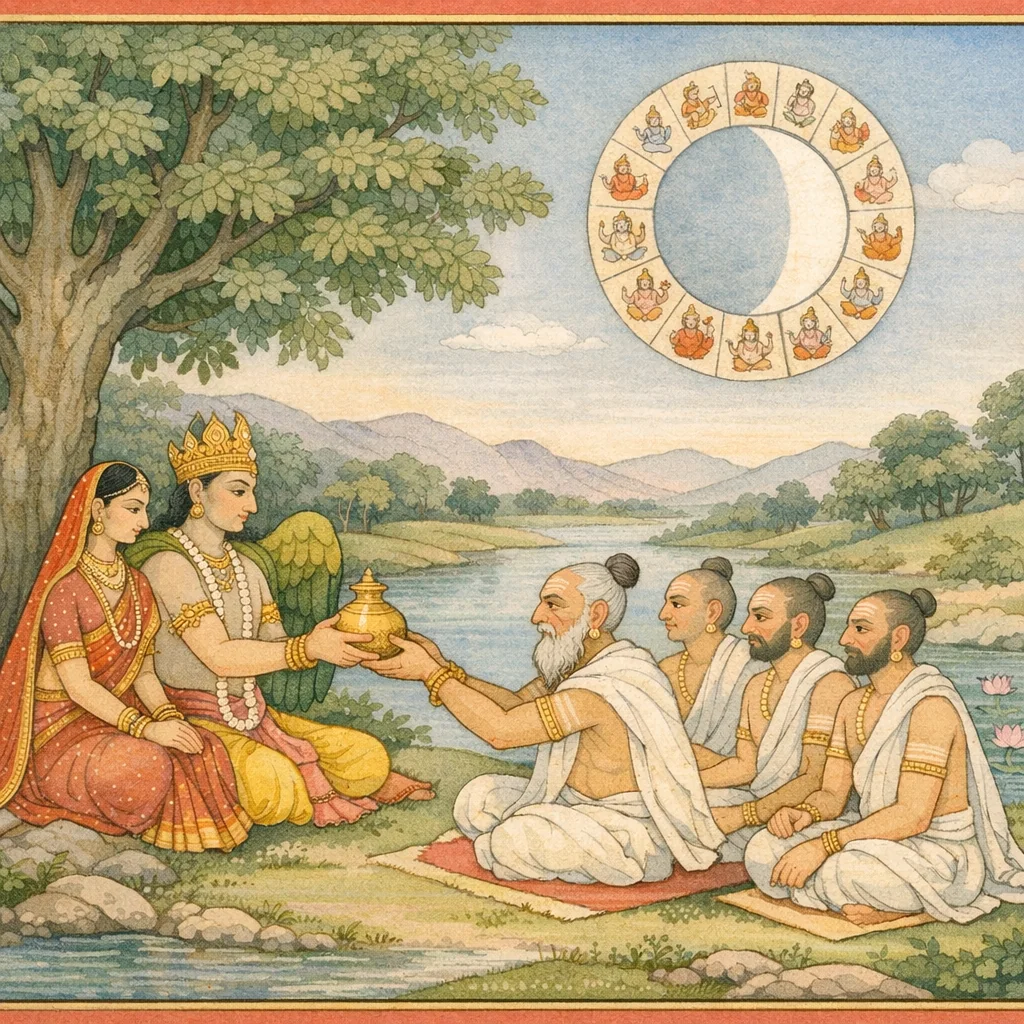
Having brought about the destruction of a multitude of sins, become a bestower of all happiness. To please the Lord of gods, one should give ritual water-pots (kalaśas) to brāhmaṇas; if this is performed on a riverbank, one attains all desired aims.
Verse 2
(इति मदनकत्रयोदशीव्रतम्) / चतुर्दश्यां तथाष्टभ्यां पक्ष्योः शुक्लकृष्णयोः / यो ऽब्दमेकं न भुञ्जीत मुक्तिभाक् शिवपूजनात्
Thus ends the Madanaka-Trayodaśī vow. On the fourteenth day and on the eighth day of both fortnights (waxing and waning), whoever refrains from eating for one full year becomes entitled to liberation through the worship of Śiva.
Verse 3
(इति शिवचतुर्दश्यष्टमीव्रतम्) / त्रिरात्रोपोषितो दद्यात्कार्तिक्यां भवनं शुभम् / सूर्यलोकमवाप्नोति धामव्रतमिदं शुभम्
Thus ends the Śiva Caturdaśī–Aṣṭamī vow. Having fasted for three nights, one should, in the month of Kārtika, donate an auspicious dwelling. By this blessed Dhāma-vrata—the vow of offering a home—one attains Sūrya-loka, the world of the Sun.
Verse 4
अमावस्यां पितॄणां च दत्तं जलादितदक्षयम् / नक्ताभ्याशी वारनाम्ना यजन्वाराणि सर्वभाक्
On Amāvasyā, the new-moon day, water and other offerings given to the Pitṛs become imperishable. One who eats only at night and worships according to the prescribed weekday observances becomes a recipient of all merits.
Verse 5
(इति वारव्रतानि) / द्वादशर्क्षाणि विप्रर्षे ! प्रतिमासं तु यानि वै / तन्नाम्नान्ते ऽतच्युतं तेषु सम्यक् संपूजयेन्नरः
“Thus are the weekday-vratas. O best of Brahmins, as for the twelve nakṣatra-observances that occur each month—at the end of the name of each observance, one should properly worship Acyuta (Viṣṇu) in those rites.”
Verse 6
केशवं मार्गशीर्षे तु इत्यादौ कृतिकादिके (का) / घृतहोमश्चतुर्मासं कृसरञ्च निवेदयेत्
In the month of Mārgaśīrṣa one should worship Keśava; and beginning from Kṛttikā and the succeeding lunar asterisms, throughout the four-month period one should perform ghee oblations in homa and also offer kṛsara as naivedya.
Verse 7
आषाढादौ पायसं तु विप्रांस्तेनैव भोजयेत् / पञ्चाव्यजलस्नाननैवेद्यैर्नक्तमाचरेत्
At the beginning of Āṣāḍha, one should feed the Brāhmaṇas with pāyasa, sweet rice. One should observe the vow by bathing in water mixed with pañcagavya and by offering naivedya, keeping the discipline of a single meal taken at night.
Verse 8
अर्वाग्विसर्जनाद्द्रव्यं नैवेद्यं सर्वमुच्यते / विसर्जिते जगन्नाथे निर्माल्यं भवति क्षणात्
Until the formal visarjana (ritual dismissal) is performed, every substance offered is called naivedya (an offering). Once Jagannātha is dismissed, it becomes nirmālya (the removed sacred remainder) in an instant.
Verse 9
पाञ्चरात्रविदो मुख्या नैवेद्यं भुञ्जते स्वयम् / एवं संवत्सरस्यान्ते विशेषेण प्रपूजयेत्
The foremost knowers of the Pāñcarātra tradition do not themselves partake of the naivedya (offered food). Therefore, at the year’s completion, one should perform the worship with special solemnity.
Verse 10
नमोनमस्ते ऽच्युत ! संक्षयो ऽस्तु पापस्य वृद्धिं समुपैतु पुण्यम् / ऐश्वर्यवित्तादि सदाक्षयं मे तथास्तु मे सन्ततिरक्षयैव
Salutations, salutations to You, O Acyuta. May my sin be brought to an end, and may my merit increase. May my prosperity, wealth, and the like be ever undiminishing; and so too, may my lineage be unending.
Verse 11
यथाच्युत !त्वं परतः परस्मात्स ब्रह्मभूतः परतः परस्मात् / तथाच्युतं मे कुरु वाञ्छितं सदा मया कृतं पापहराप्रमेय
O Acyuta! You are beyond the beyond—the Supreme, Brahman itself, transcending all. Therefore, O Unfailing One, ever fulfill my desired prayer, O immeasurable remover of sins, for what has been done by me.
Verse 12
अच्युतानन्त ! गोविन्द ! प्रसीद यदभीप्सितम् / तदक्षयममेयात्मन्कुरुष्व पुरुषोत्तम
O Acyuta, O Ananta, O Govinda—be gracious. O immeasurable Self, O Supreme Person (Puruṣottama): make the desired boon imperishable.
Verse 13
कुर्याद्वै सप्त वर्षाणि आयुः श्रीसद्गतीर्नरः / उपोष्यैकादशीब्दमष्टमीं च चतुर्दशीम्
A man should observe these fasts for seven years; by fasting for a full year on Ekādaśī, Aṣṭamī, and Caturdaśī, he gains long life, prosperity (Śrī), and a blessed destiny after death.
Verse 14
सप्तमीं पूजयेद्विष्णुं दुर्गां शम्बुं रविं क्रमात् / तेषां लोकं समाप्नोति सर्वकामांश्च निर्मलः
On the seventh lunar day (Saptamī), one should worship in order—Viṣṇu, Durgā, Śambhu (Śiva), and Ravi (the Sun). Purified thereby, one attains their worlds and the fulfillment of all desires.
Verse 15
एकभक्तेन नक्तेन तथैवायाचितेन च / उपवासेन शाकाद्यैः पूजयन्तसर्वदेवताः
By eating only once a day, by taking food only at night, by accepting only what is unsolicited, by fasting, and by living on vegetables and the like—one thereby worships and pleases all the deities.
Verse 16
सर्वः सर्वासु तिथिषु भुक्तिं मुक्तिमवाप्नुयात् / धनदो ऽग्निः प्रतिपदि नासत्यो दस्त्र अर्चितः
By honoring the prescribed deities on every tithi (lunar day), one attains both worldly enjoyment and final liberation (mukti). On Pratipadā (the first lunar day), Agni is worshiped as the giver of wealth; and the Aśvins—Nāsatya and Dasra—are also worshiped.
Verse 17
श्रीर्यमश्च द्वितीयायां पञ्चम्या पार्वती श्रिया / नागाः षष्ठ्यां कार्तिकेयः सप्तम्यां भास्करोर्ऽथदः
On Dvitīyā (the second lunar day) are Śrī (Lakṣmī) and Yama; on Pañcamī (the fifth), Pārvatī together with prosperity; on Ṣaṣṭhī (the sixth), the Nāgas and Kārttikeya; and on Saptamī (the seventh), Bhāskara (the Sun), the giver of wealth.
Verse 18
दुर्गाष्टम्यां मातरश्च नवम्यामथ तक्षकः / इन्द्रो दशम्यां धनद एकादश्यां मुनीश्वराः
On Durgāṣṭamī are the Mother-goddesses; on Navamī, Takṣaka; on Daśamī, Indra; and on Ekādaśī, Kubera and the great sages.
Verse 19
द्वादश्यां च हरिः कामस्त्रयोदश्यां महेश्वरः / चतुर्दश्यां पञ्चदश्यां ब्रह्मा च पितरो ऽपरे
On the twelfth (lunar day) Hari is to be worshipped; on the thirteenth, Kāma; on the fourteenth, Maheśvara; and on the fifteenth, Brahmā as well as the other Pitṛs (ancestral beings).
Frequently Asked Questions
The chapter explicitly states that after fasting for three nights and donating an auspicious dwelling in the month of Kārtika, the observer attains Sūrya-loka (the world of the Sun).
The text asserts that on Amāvasyā, water and related offerings given to the Pitṛs become akṣaya (imperishable), indicating a time-qualification where ancestral rites yield enduring merit.
It frames regulated fasting as a sustained merit-generator: observing these fasts for a year is said to grant longevity, prosperity, and a favorable post-mortem destiny; extended observance (seven years) intensifies the soteriological orientation toward purification and higher attainment.
Examples given include: Pratipadā—Agni and the Aśvins; Dvitīyā—Śrī and Yama; Ṣaṣṭhī—Nāgas and Kārttikeya; Saptamī—Bhāskara; Durgāṣṭamī—Mother-goddesses; Navamī—Takṣaka; Daśamī—Indra; Ekādaśī—Kubera and sages; Dvādaśī—Hari; Trayodaśī—Kāma; Caturdaśī—Maheśvara; Pūrṇimā/Amāvasyā (15th)—Brahmā and Pitṛs.