Adhyaya 4
Pratisarga-pravartana (How Re-Creation Proceeds) / पुनःसर्ग-प्रवर्तन
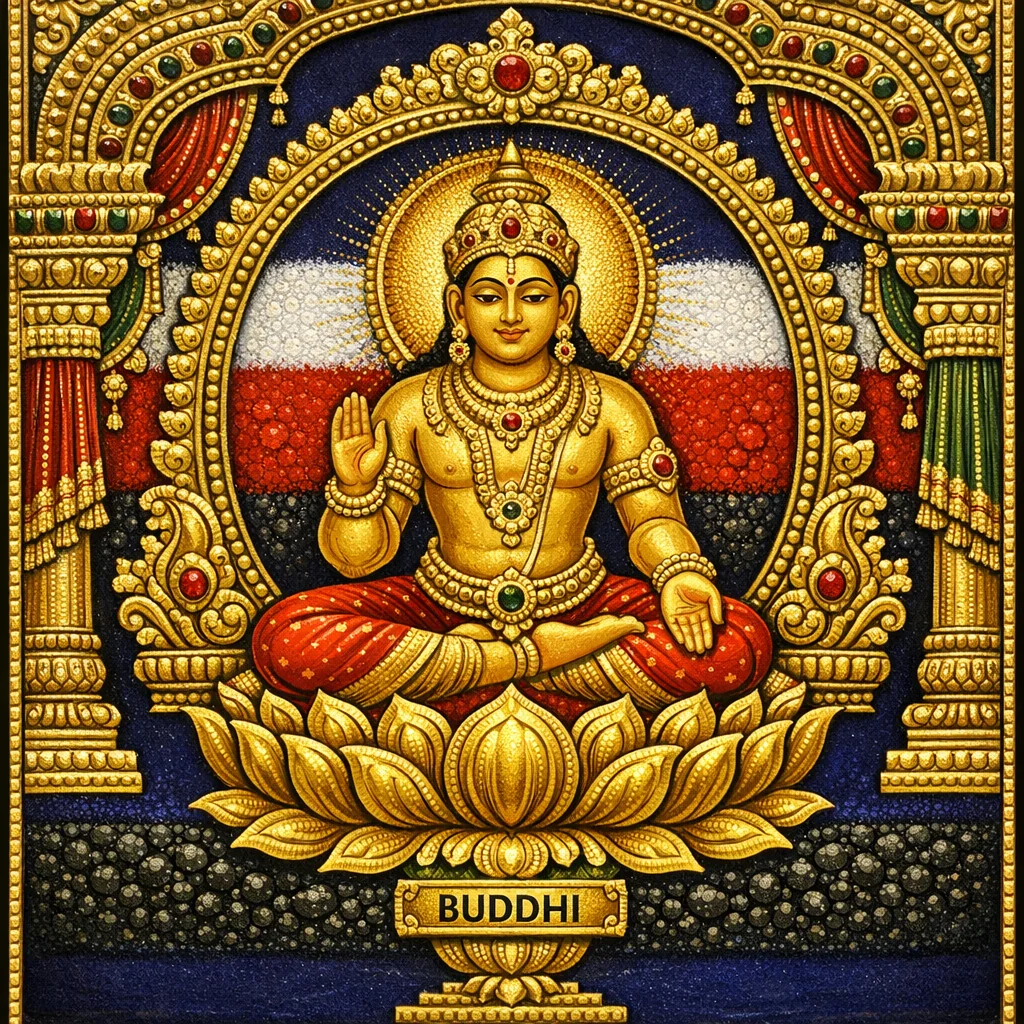
This chapter begins with the ṛṣis addressing the Sūta (Lomaharṣaṇa), praising the earlier “great account” of beings and orders of existence (pitṛs, gandharvas, bhūtas, piśācas, nāgas, rākṣasas, daityas, dānavas, yakṣas, and birds). They ask for a renewed, technical explanation of how creation restarts after dissolution—when bonds have merged back, the guṇas are in equilibrium, and the tamas-dominant, unmanifest (avyakta) state prevails. The Sūta agrees to explain pratisarga “as before,” reasoning by inference from what is seen, while admitting the unmanifest is beyond speech and mind. The chapter then presents a Sāṃkhya-leaning sequence: guṇas in sāmya; pradhāna and puruṣa in proximity/sādharmya; dharma and adharma dissolving into the unmanifest; and renewed activity arising as buddhi (intellect) appears first, with kṣetrajña/puruṣa presiding over the guṇas as manifestation resumes.
Shlokas
Verse 1
इति श्री ब्रह्माण्डे महापुराणे वायुप्रोक्ते उत्तरभागे चतुर्थ उपसंहारपादे प्रतिसर्गो नाम तृतीयो ऽध्यायः ऋषय ऊचुः श्रुतं सुमहदाख्यानं भवता परिकीर्त्तितम् / प्रजानां मनुभिः सार्द्धं देवानामृषिभिः सह
Thus, in the holy Brahmāṇḍa Mahāpurāṇa, spoken by Vāyu, in the latter section, within the fourth pāda of the concluding portion, begins the third chapter called “Pratisarga.” The Ṛṣis said: “We have heard the exceedingly great sacred narrative you have proclaimed—of the beings along with the Manus, and of the gods together with the Ṛṣis.”
Verse 2
पितृगन्धर्वभूतानां पिशाचोरगरक्षसाम् / दैत्यानां दानवानां च यक्षाणामेव पक्षिणाम्
(You spoke) of the Pitṛs, Gandharvas, Bhūtas, Piśācas, Nāgas, and Rākṣasas; and also of the Daityas, Dānavas, Yakṣas, and the birds.
Verse 3
अत्यद्भुतानि कर्माणि विविधा धर्मनिश्चयाः / विचित्राश्च कथायोगा जन्म चाग्र्यमनुत्तमम्
Deeds most wondrous, manifold determinations of Dharma, marvelous interweavings of sacred tales, and even a birth supreme and unsurpassed.
Verse 4
तत्कथ्यमानमस्माकं भवता श्लक्ष्णया गिरा / मनः कर्णसुखं सौते प्रीणात्यमृतसन्निभम्
O Sūta, as you speak that tale in gentle words, it delights the mind and is sweet to the ear; it gladdens us like amṛta itself.
Verse 5
एवमाराध्य ते सूतं सत्कृत्य च महर्षयः / पप्रच्छुः सत्त्रिणः सर्वे पुनः सर्गप्रवर्त्तनम्
Thus, having worshiped the Sūta and honored him duly, all the great sages attending the sattra asked again about the re-initiation of creation.
Verse 6
कथं सुत महाप्राज्ञ पुनः सर्गः प्रपत्स्यते / बन्धेषु संप्रलीनेषु गुणसाम्ये तमोमये
O Sūta, most wise—when all bonds have dissolved and, in the tamasic darkness, the guṇas rest in equilibrium, how does creation arise again?
Verse 7
विकारेष्वविसृष्टेषु ह्यव्यक्ते चात्मनि स्थिते / अप्रवृत्ते ब्रह्मणा तु सहसा योज्यगैस्तदा
When the modifications have not yet been emitted, when the Self abides in the unmanifest (avyakta), and Brahmā has not set activity in motion—how then does creation suddenly proceed through the principles fit to be joined?
Verse 8
कथं प्रपत्स्यते सर्गस्तन्नः प्रब्रूहि पृच्छताम् / एवमुक्तस्ततः सूतस्तदासौ लोमहर्षणः
We ask: how does creation come to pass? Tell it to us who inquire. Thus addressed, the Sūta, Lomaharṣaṇa, then began to reply.
Verse 9
व्याख्यातुमुपचक्राम पुनः सर्गप्रवर्त्तनम् / अत्र वो वर्त्तयिष्यामि यथा सर्गः प्रपत्स्यते
He then began to expound the re-initiation of creation: here I shall relate to you how creation comes to pass.
Verse 10
पूर्ववत्स तु विज्ञेयः समासात्तन्निबोधत / दृष्टेनैवानुमेयं च तर्कं वक्ष्यामि युक्तितः
Know this, as before, in brief, and understand it well. From what is directly seen, I shall rightly set forth the reasoning that may be inferred.
Verse 11
यस्माद्वाचो निवर्त्तन्ते त्वप्राप्य मनसा सह / अव्यक्त वत्परोक्षत्वाद्गहनं तद्दुरासदम्
Where speech, together with the mind, cannot reach, it turns back. Being hidden and indirect like the Unmanifest, it is profound and hard to attain.
Verse 12
विकारैः प्रतिसंसृष्टो गुणः साम्येन वर्त्तते / प्रधानं पुरुषाणां च साधर्म्येणैव तिष्ठति
The guna, intermingled with modifications, moves in a state of equilibrium. Pradhāna and the Purushas likewise abide through sameness of nature.
Verse 13
धर्माधर्मौं प्रलीयेते ह्यव्यक्ते प्राणिनां सदा / सत्त्वमात्रात्मको धर्मो गुणे सत्त्वे प्रतिष्ठितः
The dharma and adharma of beings ever dissolve into the Unmanifest. Dharma, whose essence is sattva alone, is established in the sattva-guna.
Verse 14
तमोमात्रात्मको धर्मो गुणे तमसि तिष्ठति / अविभागेन तावेतौ गुणसाम्ये स्थितावुभौ
Dharma, whose essence is tamas alone, abides in the tamas-guna. Without division, those two remain together, established in the equilibrium of the gunas.
Verse 15
सर्वं कार्यं बुद्धिपूर्वं प्रधानस्य प्रपत्स्यते / बुद्धिपूर्वं क्षेत्रज्ञ अधिष्ठास्यति तान्गुणान्
All activity, with intellect as its forerunner, resorts to Pradhāna; and with intellect as its forerunner, the Knower of the Field presides over those guṇas.
Verse 16
एवं तानभिमानेन प्रपत्स्यति पुनस्तदा / यदा प्रवर्त्तितव्यं तु क्षेत्रक्षेत्रज्ञयोर् द्वयोः
Thus, through ego-sense, it again resorts to them at that time, when the activity of both—the Field and the Knower of the Field—must commence.
Verse 17
भोज्यभोक्तृत्वसंबन्धाः प्रपत्स्यन्ते च तावुभौ / तस्मादक्षरमव्यक्तं साम्ये स्थित्वा गुणात्मकम्
The relations of the enjoyed and the enjoyer arise in them both; therefore the Imperishable, the Unmanifest, abiding in equilibrium, is of the nature of the guṇas.
Verse 18
क्षेत्रज्ञाधिष्ठितं तत्र वैपम्यं भजते तु तत् / ततः प्रपत्स्यते व्यक्तं क्षेत्रक्षेत्रज्ञयोर्द्वयोः
There, presided over by the Knower of the Field, it takes on disparity; then the manifest state of both—the Field and the Knower of the Field—arises.
Verse 19
क्षेत्रज्ञाधिष्ठितं सत्त्वं विकारं जनयिष्यति / महदाद्यं विशेषान्तं चतुर्विंशगुणात्मकम्
Presided over by the Knower of the Field, sattva will generate transformation—from Mahat down to the Viśeṣas—constituting the twenty-four principles (tattvas).
Verse 20
क्षेत्रज्ञस्य प्रधानस्य पुरुषस्य प्रवर्त्स्यतः / आदिदेवः प्रधानस्यानुग्रहाय प्रजक्षते
When Kṣetrajña, Pradhāna, and Puruṣa set forth into activity, the Primordial Deity manifests to bestow grace upon Pradhāna.
Verse 21
अनाद्यौ वरमुत्पादौ उभौ सूक्ष्मौ तु तौ स्मृतौ / अनादिसंयोगयुतौ सर्वं क्षेत्रज्ञमेव च
Those two—beginningless and supreme—are held to be the source of manifestation, and both are remembered as subtle. Joined in a beginningless union, all is indeed Kṣetrajña alone.
Verse 22
अबुद्धिपूर्वकं युक्तमाशक्तौ तु वरौ तदा / अप्रत्ययममोघं च स्थितावुदकमत्स्यवत्
Then those two supreme principles are joined within Śakti without the prior lead of intellect; seeming without a ground of certainty, yet unfailing—like a fish abiding still in water.
Verse 23
प्रवृत्तपूर्वौं तौ पूर्वं पुनः सर्वं प्रपत्स्यते / अज्ञा गुणैः प्रवर्त्तन्ते रजःसत्त्वतमो ऽभिधैः
Those two have acted before; in the same way all things again come to unfold. The unknowing are set in motion by the guṇas called rajas, sattva, and tamas.
Verse 24
प्रवृत्तिकाले रजसाभिपन्नो महत्त्वभूतादिविशेषतां च / विशेषतां चेन्द्रियतां च याति गुणावसानौषधिभिर्मनुष्यः
At the time of manifestation, a human being, overpowered by rajas, attains the differentiations of Mahat-tattva and of the elements and the rest; and from that differentiation he also reaches the state of the senses—through the ‘herbs’ that are the guṇas’ ripening to their end.
Verse 25
सत्याभिध्यायिनस्तस्य ध्यायिनः सन्निमित्तकम् / रजः सत्त्वतमोव्यक्ता विधर्माणः परस्परम्
For the meditator who contemplates that Truth, the very contemplation becomes the cause; rajas, sattva, and tamas manifest and act with natures opposed to one another.
Verse 26
आद्यन्तं वै प्रवत्स्यन्ते क्षेत्रमज्ञाम्वु सर्वशः / संसिद्धकार्यकरणा उत्पद्यन्ते ऽभिमानिनः
From beginning to end they flow everywhere into the field of ignorance; then arise the ‘abhimānins’, endowed with already-formed instruments of action and effect.
Verse 27
सर्वे सत्त्वाः प्रपद्यन्ते ह्यव्यक्तात्पूर्वमेव च / प्राक्सृतौ ये त्वसुवहाः साधकाश्चाप्यसाधकाः
All beings indeed first resort to the Unmanifest (avyakta); and in the pre-creation, those who bear the vital breath are some sādhakas and some not sādhakas.
Verse 28
असंशान्तास्तु ते सर्वे स्थानप्रकरणैः सह / कार्याणि प्रतिपत्स्यन्ते उत्पत्स्यन्ते पुनः पुनः
All of them, unappeased, together with their stations and modes, will take up their works and will arise again and again.
Verse 29
गुणमात्रात्मकावेव धर्माधर्मौं परस्परम् / आरप्संते हि चान्योन्यं वरेणानुग्रहेण वा
Dharma and adharma are indeed nothing but forms of the guṇas, intertwined with each other; they stir one another, by boon or by grace.
Verse 30
शर्वस्तुल्यप्रसृष्ट्यर्थ सर्गादौ याति विक्रियाम् / गुणास्तं प्रतिधीयन्ते तस्मात्तत्तस्य रोचते
At the dawn of creation, for the work of emanation like Śarva, he enters into transformation. The guṇas are set within him; therefore that very state pleases him.
Verse 31
गुणास्ते यानि कर्माणि प्राक्सृष्ट्यां प्रतिपेदिरे / तान्येव प्रतिपद्यन्ते सृज्यमानाः पुनः पुनः
Whatever actions those guṇas had assumed in the former creation, when they are created again they take up those very actions, time after time.
Verse 32
हिंस्राहिंस्रे मृदुकूरे धर्माधर्मावृतानृते / तद्भाविताः प्रपद्यन्ते तस्मात्तत्तस्य रोचते
Shaped by violence and non-violence, gentleness and cruelty, dharma and adharma, truth and untruth, they enter the state they have been formed by; therefore that very thing pleases him.
Verse 33
महाभूतेषु नानात्वमिन्द्रियार्थेषु मूर्त्तिषु / विप्रयोगश्च भूतानां गुणेभ्यः संप्रवर्त्तते
Diversity among the great elements, among the objects of the senses, and among embodied forms—and even the separation of beings—arises and proceeds from the guṇas.
Verse 34
इत्येष वो मया ख्यातः पुनः सर्गः समासतः / समासादेव वक्ष्यामि ब्रह्मणो ऽथ समुद्भवम्
Thus have I declared to you, in brief, the re-creation (punar-sarga). Now I shall speak, in brief as well, of the arising of Brahmā.
Verse 35
अव्यक्तात्कारणात्तस्मान्नित्यात्सदसदात्मकात् / प्रधानपुरुषाभ्यां तु जायते च महेश्वरः
From that unmanifest, eternal cause—of the nature of both being and non-being—through Pradhāna and Puruṣa together, Maheśvara is born and made manifest.
Verse 36
स पुनः संभावयिता जायते ब्रह्मसंज्ञितः / सृजते स पुनर्लोकानभिमान गुणात्मकान्
He again is born as the one who sets creation in motion, known as Brahmā; and he creates the worlds, imbued with ego-sense and constituted of the guṇas.
Verse 37
अहङ्कारस्तु महतस्तस्माद्भूतानि चात्मनः / युगपत्संप्रवर्त्तन्ते भूतान्येवेन्द्रियाणि च
From Mahat arises ahaṃkāra; and from it, simultaneously, proceed the elements (bhūtas) and the senses (indriyas) of the Self.
Verse 38
भूतभेदाश्च भूतेभ्य इति सर्गः प्रवर्त्तते / विस्तरावयवस्तेषां यथाप्रज्ञं यथाश्रुतम् / कीर्त्त्यतो वो यथापूर्वं तथैवाप्युपधार्यताम्
From the elements arise the distinctions among elements; thus the sarga, creation, proceeds. Their expansion and their parts, as understood and as heard in śruti, I proclaim to you as before; so too should you hold it in mind.
Verse 39
एतच्छ्रुत्वा नैमिषेया स्तदानीं लोकोत्पत्तिं सुस्थितिं चाप्ययं च / तस्मिन्सत्रे ऽवभृथं प्राप्य शुद्धाः पुण्यं लोकमृषयः प्राप्नुवन्ति
Hearing this, the sages of Naimiṣa at once understand the arising of the worlds, their steady continuance, and their dissolution. In that sacrificial session, having attained the avabhṛtha bath and become purified, the ṛṣis reach the meritorious realm.
Verse 40
यथा यूयं विधिना देवातादीनिष्ट्वा चैवावभृथं प्राप्य शुद्धाः / त्यक्त्वा देहानायुषोंऽते कृतार्थाः पुण्यं लोकं प्राप्य मोदध्वमेवम्
As you, according to sacred rule, have worshiped the gods and others, and after attaining the avabhṛtha bath have become purified—so too, at life’s end, casting off the body as those fulfilled, attain the meritorious world and rejoice thus.
Verse 41
एते ते नैमिषेया वै दृष्ट्वा स्पृष्ट्वा च वै तदा / जग्मुश्चावभृथस्नाताः स्वर्गं सर्वे तु सत्रिणः
Then those Naimiṣeyas, having seen and touched him, and having bathed in the avabhṛtha rite, all the satra-performers went to heaven.
Verse 42
विप्रास्तथा यूयमपि इष्टा बहुविधैर्मखैः / आयुषोंऽते ततः स्वर्गं गन्तारः स्थ द्विजोत्तमाः
O vipras, you too have offered many kinds of makha-sacrifices; therefore, at the end of your lives you shall go to heaven, O best of the twice-born.
Verse 43
प्रक्रिया प्रथमः पादः कथायास्तु परिग्रहः / अनुषङ्ग उपोद्धात उपसंहार एव च
The divisions of the narrative are these: ‘prakriyā’ as the first part, then ‘parigraha’; also ‘anuṣaṅga’, ‘upoddhāta’, and ‘upasaṃhāra’.
Verse 44
एवमेव चतुःपादं पुराणं लोकसम्मतम् / उवाच भागवान्सक्षाद्वायुलोकहिते रतः
Thus this fourfold Purāṇa, approved by the world, was spoken directly by Bhagavān Vāyu, devoted to the welfare of all beings.
Verse 45
नैमिषे सत्रमा साद्य मुनिभ्यो मुनिसत्तम / तत्प्रसादं च संसिद्धं भूतोत्पत्तिलयान्वितम्
O best of sages, upon reaching the satra at Naimisha we received from the seers that perfected grace, encompassing the arising and dissolution of all beings.
Verse 46
प्राधानिकीमिमां सृष्टिं तथैवेश्वरकारिताम् / सम्यग्विदित्वा मेधावी न मोहमधिगच्छति
The wise, having rightly understood this pradhānic creation and likewise the creation wrought by the Lord, does not fall into delusion.
Verse 47
इदं यो ब्राह्मणो विद्वानितिहासं पुरातनम् / शृणुयाच्छ्रावयेद्वापि तथाध्यापयते ऽपि च
Any learned brāhmaṇa who listens to this ancient sacred history, or recites it for others to hear, and also teaches it.
Verse 48
स्थानेषु स महेन्द्रस्य मोदते शाश्वतीः समाः / ब्रह्मसायुज्यगो भूत्वा ब्रह्मणा सह मोदते
He rejoices in the realms of Mahendra for everlasting years; and, attaining brahma-sāyujya, he rejoices together with Brahmā.
Verse 49
तेषां कीर्तिमतां कीर्तिं प्रजेशानां महात्मनाम् / प्रथयन्पृथिवीशानां ब्रह्मभूयाय गच्छति
By spreading the glory of those renowned, great-souled Prajēśas and the lords of the earth, he attains brahma-bhūya—the state of Brahman.
Verse 50
धन्यं यशस्यमायुष्यं पुण्यं वेदैश्च संमितम् / कृष्णद्वैपायनेनोक्तं पुराण ब्रह्मवादिना
This Purāṇa is auspicious, bestowing fame and long life, meritorious and in accord with the Vedas; it was spoken by Kṛṣṇadvaipāyana, the proclaimer of Brahman.
Verse 51
मन्वन्तरेश्वराणां च यः कीर्तिं प्रथयेदिमाम् / देवतानामृषीणां च भूरिद्रविमतेजसाम्
Whoever thus proclaims this renown of the lords of the Manvantaras, and of the gods and seers abounding in splendor and might,
Verse 52
स सर्वैर्मुच्यते पापैः पुण्यं च महदाप्नुयात् / यश्चेदं श्रावयेद्विद्वान्सदा पर्वणि पर्वणि
is freed from all sins and attains great merit; and the learned one who has this recited, again and again on every sacred occasion,
Verse 53
धूतपाप्मा जितस्वर्गो ब्रह्मभूयाय कल्पते / यश्चेदं श्रावयेच्छ्राद्धे ब्राह्मणान् पादमन्ततः
has his sins washed away, conquers heaven, and becomes fit for Brahmanhood; and whoever, at a śrāddha, has the brāhmaṇas hear even a single pāda of this to the very end,
Verse 54
अक्षेयं सर्वकामीयं पितॄंस्तच्छोपतिष्ठते / यस्मात्पुरा ह्यणन्तीदं पुराणं तेन चोच्यते
his ancestors (pitṛs) draw near, well-pleased, for its fruit is imperishable and fulfills every desire; and since from ancient times this Purāṇa has been recited unceasingly, therefore it is called “Purāṇa”.
Verse 55
निरुक्तमस्य यो वेद सर्वपापैः प्रमुच्यते / तथैव त्रिषु वर्णेषु ये मनुष्या अधीयते
Whoever knows the nirukta, the true explication of this, is freed from all sins; likewise are the people of the three varṇas who study it.
Verse 56
इतिहासमिमं श्रुत्वा धर्माय विदधे मतिम् / यावन्त्यस्य शरीरेषु रोमकूपानि सर्वशः
Hearing this sacred account, he set his mind upon dharma; and as many as are the hair-pores upon his body in every part, so great (is the merit).
Verse 57
तावत्कोटिसहस्राणि वर्षाणि दिवि मोदते / ब्रह्मसायुज्यगो भूत्वा दैवतैः सह मोदते
For that many millions upon millions of years he rejoices in heaven; attaining brahma-sāyujya, union with Brahman, he delights together with the gods.
Verse 58
सर्वपापहरं पुण्यं पवित्रं च यशस्वि च / ब्रह्मा ददौ शास्त्रमिदं पुराणं मातरिश्वने
This Purāṇa-śāstra—meritorious, pure, and glorious, the remover of all sins—was bestowed by Brahmā upon Mātariśvan (Vāyu).
Verse 59
तस्माच्चोशनसा प्राप्तं तस्माच्चापि बृहस्पतिः / बृहस्पतिस्तु प्रोवाच सवित्रे तदनन्तरम्
From him (Mātariśvan) it was received by Uśanas, and from him also by Bṛhaspati; thereafter Bṛhaspati proclaimed it to Savitṛ.
Verse 60
सविता मृत्यवे प्राह मृत्युश्चेन्द्राय वै पुनः / इन्द्रश्चापि वसिष्ठाय सो ऽपि सारस्वताय च
Savita spoke to Mṛtyu; and Mṛtyu, again, spoke to Indra. Indra gave it to Vasiṣṭha, and he in turn to Sārasvata.
Verse 61
सारस्वतस्त्रिधाम्ने ऽथ त्रिधामा च शरद्वते / शरद्वांस्तु त्रिविष्टाय सोंऽतरिक्षाय दत्तवान्
Sārasvata gave it to Tridhāman; Tridhāman to Śaradvata. Śaradvān gave it to Triviṣṭa, and he bestowed it upon Antarikṣa.
Verse 62
चर्षिणे चान्तरिक्षो वै सो ऽपि त्रय्यारुणाय च / त्रय्यारुणाद्धनञ्जयः स वै प्रादात्कृतञ्जये
Antarikṣa gave it to Carṣi; and he, in turn, to Trayyāruṇa. From Trayyāruṇa, Dhanañjaya received it and bestowed it upon Kṛtañjaya.
Verse 63
कृतञ्जयात्तृणञ्जयो भरद्वाजाय सो ऽप्यथ / गौतमाय भरद्वाजः सो ऽपि निर्य्यन्तरे पुनः
From Kṛtañjaya, Tṛṇañjaya received it and gave it to Bharadvāja. Bharadvāja gave it to Gautama, and Gautama again to Niryantara.
Verse 64
निर्य्यन्तरस्तु प्रोवाच तथा वाजश्रवाय वै / स ददौ सोमशुष्माय स चादात्तृणबिन्दवे
Niryantara spoke likewise to Vājaśrava. He gave it to Somaśuṣma, and Somaśuṣma bestowed it upon Tṛṇabindu.
Verse 65
तृणबिन्दुस्तु दक्षाय दक्षः प्रोवाच शक्तये / शक्तेः पराशरश्चापि गर्भस्थः श्रुतवानिदम्
Tṛṇabindu spoke to Dakṣa, and Dakṣa proclaimed it to Śakti. And Parāśara, son of Śakti, even while in the womb, heard these words.
Verse 66
पराशराज्जातुकर्ण्यस्तस्माद्द्वैपायनः प्रभुः / द्वैपायना त्पुनश्चापि मया प्राप्तं द्विजोत्तम
From Parāśara came Jātukarṇya, and from him the lordly Dvaipāyana. O best of the twice-born, from Dvaipāyana again this teaching reached me.
Verse 67
मया चैतत्पुनः प्रोक्तं पुत्रायामितबुद्धये / इत्येव वाक्यं ब्रह्मादिगुरुणां समुदात्दृतम्
And I, in turn, spoke it again to my son of boundless understanding. Thus is this utterance rightly preserved by the gurus, beginning with Brahmā.
Verse 68
नमस्कार्याश्च गुरवः प्रयत्नेन मनीषिभिः / धन्यं यशस्यमायुष्यं पुण्यं सर्वार्थसाधकम्
The gurus are worthy of reverent salutations, offered with earnest effort by the wise. (Remembrance of them) is blessed, fame-bestowing, life-prolonging, meritorious, and a fulfiller of all aims.
Verse 69
पापघ्नं नियमेनेदं श्रोतव्यं ब्राह्मणैः सदा / नाशुचौ नापि पापाय नाप्यसंवत्सरोषिते
This is a destroyer of sin; by due observance it should always be heard by brāhmaṇas. Not in a state of impurity, not for the sinful, nor for one who has not completed a year (of disciplined observance).
Verse 70
नाश्रद्दधाने ऽविदुषे नापुत्राय कथञ्चन / नाहिताय प्रदातव्यं पवित्रमिदमुत्तमम्
This supreme, most holy teaching must never be given to one without faith, to the ignorant, to one without a son, or to the unworthy.
Verse 71
अव्यक्तं वै यस्य योनिं वदन्ति व्यक्तं देहं कालमेतं गतिं च / वह्निर्वक्त्रं चन्द्रसूर्यौं च नेत्रेदिशः श्रोत्रे घ्राणमाहुश्च वायुम्
He whose womb is said to be the Unmanifest, whose body is manifest, who is Time and the course of beings: fire is his mouth; moon and sun are his eyes; the directions are his ears; and the wind is called his scent.
Verse 72
वाचो वेदा अन्तरिक्षं शरीरं क्षितिः पादास्तारका रोमकूपाः / सर्वाणि द्यौर्मस्तकानि त्वथो वै विद्याश्चैवोपनिषद्यस्य पुच्छम्
The Vedas are his speech; the mid-space is his body; the earth is his feet; the stars are his hair-pores. The whole heaven is his head, and sacred knowledges and the Upaniṣads are his tail.
Verse 73
तं देवदेवं जननं जनानां यज्ञात्मकं सत्यलोकप्रतिष्ठम् / वरं वराणां वरदं महेश्वरं ब्रह्माणमादिं प्रयतो नमस्ये
With reverence I bow to the God of gods, the begetter of beings, whose very nature is sacrifice, established in Satyaloka; the best of the best, the giver of boons, the Great Lord—Brahmā, the primordial.
Frequently Asked Questions
They ask how punaḥ-sarga (re-creation) begins after dissolution—when bonds have merged, the guṇas are in equilibrium (guṇa-sāmya), and reality is in an unmanifest (avyakta), tamas-tinged condition.
A Sāṃkhya-like sequence: pralaya returns differentiations (including dharma/adharma) into avyakta; pradhāna and puruṣa remain in proximity; then manifestation resumes with buddhi (intellect) as a prior condition, with kṣetrajña/puruṣa presiding over the guṇas.
It establishes cosmological first principles for pratisarga; the mention of diverse being-classes functions as scope-setting rather than a full dynastic catalog in the provided excerpt.