Adhyaya 69
Yadu-vaṃśa and the Haihaya Line: From Yadu to Kārtavīrya Arjuna
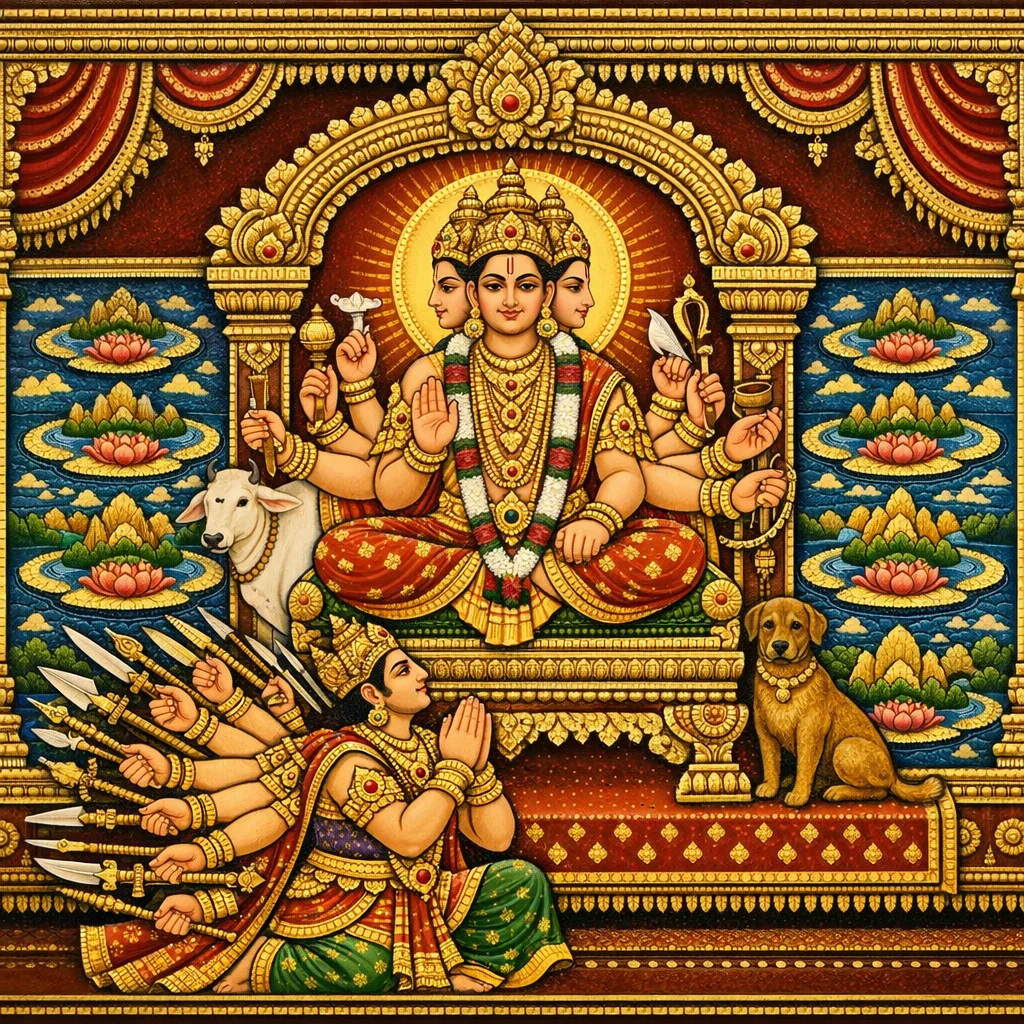
This chapter, narrated in the Sūta style, promises an orderly and expanded account of the Yadu lineage (Yadu-vaṃśa), using genealogical sequence (anupūrvī) as its guiding method. It traces Yadu’s sons through a branch linked with the Haihaya line, culminating in the renowned Kārtavīrya Arjuna. After emphasizing dynastic succession—sons, heirs, and named rulers—the narrative turns to royal theology: Kārtavīrya undertakes severe tapas, propitiates Dattātreya (Atri’s descendant), and receives boons, especially the motif of “a thousand arms,” along with ideals of dharmic conquest and governance and a destined death in battle. The chapter thus blends vaṃśa cataloguing with a mythic charter legitimizing sovereignty, portraying the conquest of the seven-dvīpa world as arising from blessing, yoga-like power, and righteous rule.
Shlokas
Verse 1
इति श्रीब्रह्माण्डे महापुराणे वायुप्रोक्ते मध्यमभागे तृतीय उपोद्धातपादे अष्टषष्टितमो ऽध्यायः // ६८// सूत उवाच यदोर्वंशं प्रवक्ष्यामि ज्येष्ठस्योत्तमतेजसः / विस्तरेणानुपूर्व्या च गदतो मे निबोधत
Thus, in the Śrī Brahmāṇḍa Mahāpurāṇa, in the middle section proclaimed by Vāyu, in the third introductory pāda, is the sixty-eighth chapter. Sūta said: I shall declare the lineage of Yadu, the eldest of supreme splendor, in detail and in due order; listen attentively to my words.
Verse 2
यदोः पुत्रा बभूवुर्हि पञ्च देवसुतोपमाः / सहस्रजिदथ श्रेष्ठः क्रोष्टुर्नीलोञ्जिको लघुः
Yadu had five sons, like the sons of the gods: Sahasrajit; and Kroṣṭu the foremost; Nīla, Oñjika, and Laghu.
Verse 3
सहस्रजित्सुतः श्रीमाञ्छतजिन्नाम पार्थिवः / शतजित्तनयाः ख्यातस्त्रयः परमधार्मिकाः
Sahasrajit’s son was the illustrious king named Śatajit. Śatajit had three renowned sons, supremely devoted to dharma.
Verse 4
हैहयश्च हयस्छैव राजा वेणु हयस्तथा / हैहयस्य तु दायादो धर्मनेत्र इति श्रुतः
Haihaya, Haya, King Venu, and likewise Haya—such were they. And Haihaya’s heir is heard to have been known as Dharmanetra.
Verse 5
धर्मनेत्रस्य कुन्तिस्तु संक्षेयस्तस्य चात्मजः / संज्ञेयस्य तु दायादो महिष्मान्नाम पार्थिवः
Dharmanetra’s son was Kunti, and his son was Saṃkṣeya. And Saṃjñeya’s heir was the king named Mahiṣmān.
Verse 6
आसीन्महिष्मतः पुत्रो भद्रमेनः प्रतापवान् / वाराणस्यधिपो राजा कथितः पूर्व एव हि
Mahishmata had a mighty son, Bhadramena, radiant in valor. He was the king, lord of Varanasi, as has indeed been told before.
Verse 7
भद्र सेनस्य दायादो दुर्मदो नाम पार्थिवः / दुर्मदस्यसुतो धीमान्कनको नाम विश्रुतः
Bhadrasena’s heir was a king named Durmada. Durmada’s wise son was renowned as Kanaka.
Verse 8
कनकस्य तु दायादाश्चत्वारो लोकविश्रुताः / कृतवीर्यः कृताग्निश्च कृतवर्मा तथैव च
Kanaka had four heirs, famed throughout the world—Kritavirya, Kritagni, and likewise Kritavarma.
Verse 9
कृतौजाश्च चतुर्थो ऽभूत्कृतवीर्यात्मजोर्ऽजुनः / जज्ञे बाहुसहस्रेण सप्तद्वीपेश्वरो नृपः
The fourth was Kritauja; and Arjuna, son of Kritavirya (Kartavirya), was born— a king with a thousand arms, sovereign over the seven dvipas.
Verse 10
स हि वर्षायुतं तप्त्वा तपः परमदुश्चरम् / दत्तमाराधयामास कार्त्तवीर्यो ऽत्रिसंभवम्
Kartavirya performed supremely arduous austerities for ten thousand years, and worshiped Dattatreya, born of the lineage of Atri.
Verse 11
तस्मै दत्तो वरान्प्रादाच्च तुरो भूरितेजसः / पूर्वं बाहुसहस्रं तु स वव्रे प्रथमं वरम्
To him boons were granted; the one of mighty splendor swiftly bestowed them. And as his first boon, he chose a thousand arms.
Verse 12
अधर्मं ध्यायमानस्य सहसास्मान्निवारणम् / धर्मेण पृथिवीं जित्वा धर्मेणैवानुपालनम्
Whoever contemplates adharma, we must restrain at once. Conquer the earth by dharma, and by dharma alone uphold it.
Verse 13
संग्रामांस्तु बहुञ्जित्वा हत्वा चारीन्सहस्रशः / संग्रामे युध्यमानस्य वधः स्यात्प्रधने मम
Though I have won many battles and slain enemies by the thousands, let my death come while I fight in the great war.
Verse 14
तेनेयं पृथिवी कृत्स्ना सप्तद्वीपा सपत्तना / सप्तोदधिपरिक्षिप्ता क्षत्रेण विधिना जिता
By him this entire earth—together with the seven continents and all foes—girt by the seven oceans, was conquered according to the kshatriya code.
Verse 15
तस्य बाहुसहस्रं तु युध्यतः किलयोगतः / योगो योगेश्वरस्येव प्रादुर्भवति मायया
As he fought, his thousand arms arose by the power of yoga, as yoga itself manifests through the māyā of Yogeshvara, the Lord of Yoga.
Verse 16
तेन सप्तसु द्वीपेषु सप्तयज्ञशतानि वै / कृतानि विधिना राज्ञा श्रूयते मुनिसत्तमाः
O best of sages, it is heard that that king, in due rite, performed seven hundred sacrifices in the seven continents (dvīpas).
Verse 17
सर्वे यज्ञा महाबाहोस्तस्यामन्भूरितेजसः / सर्वे काञ्चनवेदीकाः सर्वे यूपैश्च काञ्चनैः
All the sacrifices of that mighty-armed king, radiant with abundant splendor, had golden altars, and all were furnished with golden yūpa posts.
Verse 18
सर्वैर्देवैर्महाभागै र्विमानस्थैरलङ्कृताः / गन्धर्वैरप्सरोभिश्च नित्यमेवोपशोभिताः
Those sacrifices were adorned by all the fortunate gods seated in their vimānas, and were ever beautified by gandharvas and apsarases.
Verse 19
तस्य राज्ञो जगौ गाथां गन्धर्वो नारदस्तदा / चरितं तस्य राजर्षेर्महिमानं निरीक्ष्य च
Then the gandharva Nārada sang a sacred lay of that king, having beheld the deeds and majesty of that royal seer.
Verse 20
न नूनं कार्त्तवीर्यस्य गतिं यास्यन्ति मानवाः / यज्ञैर्दानैस्तपोभिश्च विक्रमेण श्रुतेन च
Surely men will not attain the lofty course of Kārttavīrya, even by sacrifices, gifts, austerities, valor, and mastery of the Śruti.
Verse 21
द्वीपेषु सप्तसु स वै धन्वी खड्गी शारासनी / रथी राजा सानुचरो योगाच्चैवानुदृश्यते
That king is seen in all the seven continents—bearing bow and sword, equipped with bow and arrows, riding his chariot with his attendants; and by the power of yoga he is beheld as well.
Verse 22
अनष्टद्रव्यता चासीन्न क्लेशो न च विभ्रमः / प्रभावेण महाराज्ञः प्रजा धर्मेण रक्षितः
There was no loss of wealth; no hardship and no confusion. By the majesty of that great king, the people were protected in accordance with dharma.
Verse 23
पञ्चाशीतिसहस्राणि वर्षाणां स नराधिपः / स सर्वरत्नभाक्स म्राट् चक्रवर्ती बभूव ह
For eighty-five thousand years he ruled as lord of men; he became a samrāt, endowed with all jewels, a cakravartin indeed.
Verse 24
स एष पशुपालो ऽभूत्क्षेत्रपालस्तथै व च / स एव वृष्ट्या पर्जन्यो योगित्वादर्जुनो ऽभवत्
He himself became a herdsman and likewise a guardian of the fields; he himself, as rainfall, became Parjanya, and by his yogic nature he was called Arjuna.
Verse 25
स वे बाहुसहस्रेण ज्याघातकठिनेन च / भाति रश्मिसहस्रेण शारदेनैव भास्करः
He shines with a thousand arms and with a hardness like the snap of the bowstring; like the autumn sun, he blazes with a thousand rays.
Verse 26
स हि नागसहक्रेण माहिष्मत्यां नराधिपः / कर्कोटकसभां जित्वा पुरीं तत्र न्यवेशयत्
That lord of men, aided by a thousand Nāgas, went to Māhiṣmatī; having conquered the assembly of Karkoṭaka, he founded his city there.
Verse 27
स वै वेगं समुद्रस्य प्रावृट्कालेंबुजेक्षणः / क्रीडन्नेव सुखोद्विग्नः प्रावृट्कालं चकार ह
Lotus-eyed, he would sport in rapturous excitement and, like the ocean’s surge, bring forth the fierce onset of the rainy season.
Verse 28
लुलिता क्रीडता तेन हेमस्रग्दाममालिनी / ऊर्मिमुक्तार्त्तसन्नादा शङ्किताभ्येति नर्मदा
As he sported, the Narmadā swayed—adorned with garlands of gold; sounding with the clamor of wave-cast pearls, she drew near as if in awe.
Verse 29
पुरा भुज सहस्रेण स जगाहे महार्मवम् / चकारोद्वृत्तवेलं तमकाले मारुतोद्धतम्
Once, with a thousand arms, he plunged into the great ocean and made it—wind-tossed—overrun its shores, out of season.
Verse 30
तस्य बाहुसहस्रेण क्षोभ्यमाणे महोदधौ / भवन्ति लीना निश्चेष्टाः पातालस्था महासुराः
When the great ocean is churned by his thousand arms, the mighty Asuras dwelling in Pātāla hide away, inert and motionless.
Verse 31
चूर्णीकृतमहावीचिलीनमीनमहाविषम् / पतिताविद्धफेनौघमावर्त्तक्षिप्तदुस्सहम्
The ocean was ground by mighty waves, laden with the dreadful poison of sea-creatures; its fallen, splintering torrents of foam were hurled about by whirlpools—hard to endure.
Verse 32
चकार क्षोभयन्राजा दोःसहस्रेण सागरम् / देवासुरपरिक्षिप्तं क्षीरोदमिव सागरम्
The king, with a thousand arms, churned the ocean into turmoil; ringed by Devas and Asuras, it seemed like Kṣīroda—the Ocean of Milk.
Verse 33
मन्दरक्षोभणभ्रान्तममृतोत्पत्ति हेतवे / सहसा विद्रुता भीता भीमं दृष्ट्वा नृपोत्तमम्
Confounded by the upheaval of Mandara’s churning, undertaken for the birth of amṛta; seeing that dreadful foremost king, they fled at once in fear.
Verse 34
निश्चितं नतमूर्द्धानो बभूवुश्च महोरगाः / सायाह्ने कदलीखञ्च निवातेस्तमिता इव
The mighty serpents surely bowed their heads and grew still—like a grove of plantains at evening when the wind has fallen silent.
Verse 35
ज्यामारोप्य दृढे चापे सायकैः पञ्चभिः शतैः / लङ्केशं मोहयित्वा तु सबलं रावणं बलात्
Stringing the stout bow, he loosed five hundred arrows; bewildering the Lord of Laṅkā, he overpowered Rāvaṇa with his forces by sheer might.
Verse 36
निर्जित्य वशमानीय माहिष्मत्यां बबन्ध तम् / ततो गत्वा पुलस्त्यस्तमर्जुनं च प्रसाधयत्
Having conquered and brought him under control, he bound Arjuna in Mahishmatī; then Pulastya went and soothed him, making him gracious.
Verse 37
मुमोच राजा पौलस्त्यं पुलस्त्येना नुयाचितः / तस्य बाहुसहस्रस्य बभूव ज्यातलस्वनः
At Pulastya’s entreaty the king released Paulastya; and from his thousand arms arose the booming twang of the bowstring.
Verse 38
युगान्तेंबुदवृन्दस्य स्फुटितस्याशनेरिव / अहो मृधे महावीर्यो भार्गवस्तस्य यो ऽच्छिनत्
Like the thunderbolt when, at the end of an age, the massed clouds burst apart—ah! in battle the mighty Bhārgava severed his (arms).
Verse 39
मृधे सहस्रं बाहुनां हेमतालवनं यथा / तृषितेन कदाचित्स भिक्षितश्चित्रभानुना
In battle his thousand arms were like a grove of golden palm-trees; and once Citrabhānu, parched with thirst, begged alms from him.
Verse 40
सप्तद्वीपांश्चित्रभानोः प्रादद्भिक्षां विशांपतिः / पुराणि घोषान्ग्रामांश्च पत्तनानि च सर्वशः
The lord of the people granted Citrabhānu alms in the form of the seven continents-islands; and everywhere he bestowed cities, herdsmen’s settlements, villages, and ports in full.
Verse 41
जज्वाल तस्य बाणेषु चित्राभानुर्दिधक्षया / स तस्य पुरुषेन्द्रस्य प्रतापेन महायशाः
In his arrows Citrabhānu blazed, longing to burn; and that greatly renowned one flared up by the majesty of the lord among men.
Verse 42
ददाह कार्त्तवीर्यस्य शैलांश्चापि वनानि च / स शून्यमाश्रमं सर्वं वरुणस्यात्मजस्य वै
He burned Kārttavīrya’s mountain slopes and forests as well, and left the entire hermitage of Varuṇa’s son utterly deserted.
Verse 43
ददाह सवनाटोपं चित्रभानुः स हैहयः / यं लेभे वरुणः पुत्रं पुरा भास्वन्तमुत्तमम्
Citrabhānu, that Haihaya, burned up all the splendor of the sacrificial festival; he was the radiant, most excellent son whom Varuṇa had obtained long ago.
Verse 44
वसिष्ठनामा स मुनिः ख्यात आपव इत्युत / तत्रापवस्तदा क्रोधादर्जुनं शप्तवान्विभुः
That sage was named Vasiṣṭha and was also famed as Āpava; there the mighty one, Āpava, in wrath pronounced a curse upon Arjuna.
Verse 45
यस्मान्नवर्जितमिदं वनं ते मम हैहय / तस्मात्ते दुष्करं कर्म कृतमन्यो हनिष्यति
O Haihaya! Since you did not leave this forest that is mine, therefore the fruit of your grievous deed shall be this: another will slay you.
Verse 46
अर्जुनो नाम कैन्तेयः स च राजा भविष्यति / अर्जुनं च महावीर्यो रामः प्रहरतां वरः
Kunti’s son named Arjuna shall become a king; and mighty Rama, foremost among those who strike, shall smite Arjuna.
Verse 47
छित्त्वा बाहुसहस्रं वै प्रमथ्य तरसा बली / तपस्वी ब्राह्मणश्चैव वधिष्यति महाबलः
Mighty and swift, he will cut down a thousand arms and crush them; and that great-powerful one will also slay the ascetic Brahmin.
Verse 48
तस्य रामस्तदा ह्यासीन्मृत्युः शापेन धीमतः / राज्ञा तेन वरश्चैव स्वयमेव वृतः पुरा
Then, by the curse of the wise one, Rama became death to him; and that king had long ago chosen him of his own will as a supreme boon.
Verse 49
तस्य पुत्रशतं त्वासीत्पञ्च तत्र महारथाः / कृतास्त्रा बलिनः शूरा धर्मात्मानो यशस्विनः
He had a hundred sons; among them were five great chariot-warriors—masters of weapons, strong and valiant, righteous-souled and renowned.
Verse 50
शूरश्च शूरसेनश्च वृषास्यो वृष एव च / जयध्वजो वंशकर्त्ता अवन्तिषु विशांपतिः
Sura and Surasena, Vrsasya and Vrsa, and Jayadhvaja—the founders of the lineage—became lords of the people in the land of Avanti.
Verse 51
जयध्वजस्य पुत्रस्तु तालजङ्घः प्रतापवान् / तस्य पुत्रशतं त्वेवं तालजङ्घा इतिश्रुतम्
Jayadhvaja’s son was the mighty Talajaṅgha. He had a hundred sons, who are remembered in tradition as the Talajaṅghas.
Verse 52
तेषां पञ्च गणाः ख्याता हैहयानां महात्मनाम् / वीतिहोत्राश्च संजाता भोजाश्चावन्तयस्तथा
Among those great-souled Haihayas, five renowned clans arose: the Vītihotras, the Bhojas, and likewise the Avantyas.
Verse 53
तुण्डिकेराश्च विक्रान्तास्तालजङ्घास्तथैव च / वीतिहोत्रसुतश्चापि अनन्तो नाम पार्थिवः
There were also the Tuṇḍikeras and the valiant Talajaṅghas. And Vītihotra’s son was a king named Ananta.
Verse 54
दुर्जयस्तस्य पुत्रस्तु बभूवामित्रकर्शनः / अनष्ट द्रव्यता चैव तस्य राज्ञो बभूव ह
His son was Durjaya, a crusher of foes. And that king possessed the boon that his wealth would not be lost.
Verse 55
प्रभावेण महाराजः प्रजास्ताः पर्यपालयत् / न तस्य वित्तनाशः स्यान्नष्टं प्रतिलभेच्च सः
By his own majesty the great king protected his people. His wealth never perished, and even what was lost he regained.
Verse 56
कार्त्तवीर्यस्य यो जन्म कथयेदिह धीमतः / वर्द्धन्ते विभवाश्शश्वद्धर्मश्चास्य विवर्द्धते
Whoever, with wise mind, recounts here the birth of Kārttavīrya—his prosperity ever increases, and his dharma too continually grows.
Verse 57
यथा यष्टा यथा दाता तथा स्वर्गे महीपते
O lord of the earth, as is the sacrificer and as is the giver, so is his reward in heaven.
Frequently Asked Questions
It catalogs the Yadu-vaṃśa and a Haihaya-associated branch, moving through named successors (e.g., Sahasrajit → Śatajit → Haihaya line) and culminating in Kārtavīrya Arjuna as a paradigmatic ruler.
Dattātreya functions as the boon-granting ascetic authority: Kārtavīrya’s tapas legitimizes extraordinary sovereignty (notably the ‘thousand arms’) and frames royal power as morally conditioned by dharma and ascetic merit.
It is a Purāṇic sovereignty formula indicating universalized rule over the classical seven-dvīpa world-system; the chapter uses it to elevate the king’s status beyond a local realm into cosmographic, ideal-king territory.