Adhyaya 58
Bhārgavaṃ prati Varuṇāgamanaṃ (Varuṇa’s Approach to Bhārgava/Paraśurāma)
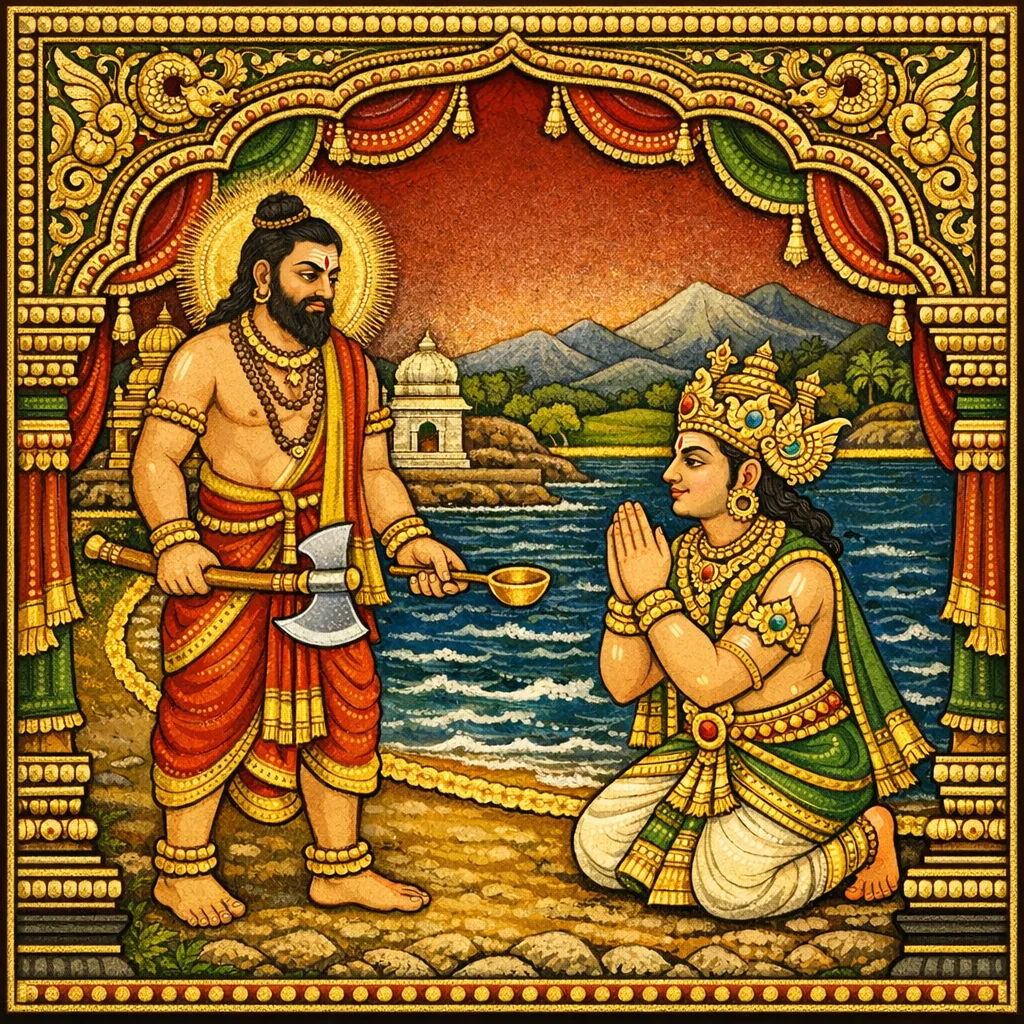
Framed by Jaimini’s narration, this chapter presents a juridical-cosmological negotiation between Bhārgava Rāma (Paraśurāma) and Varuṇa, lord of waters. Subdued by Bhārgava’s tejas and weapon-power, Varuṇa is spared as Bhārgava withdraws the astric threat and speaks without anger. The issue is the restoration of sacred geography: sages of Gokarṇa and the Mahendra region seek the recovery of a Gokarṇa-linked kṣetra said to have been displaced or submerged when Sagara’s sons dug into the earth. Varuṇa explains that, bound by a boon from Brahmā (Viriñci), he cannot simply expel his waters, yet he submits and agrees to restrain them to the measure Bhārgava sets. Bhārgava then marks the boundaries (sīmā), performs a rite suggestive of measurement and purification (taking a sruva), and the water-lord withdraws from sight, while Bhārgava remains composed, facing north. The episode authorizes a tīrtha: cosmic authority (Varuṇa) yields to dharmic-ascetic authority (Bhārgava) to stabilize sacred land for rishis and pilgrims.
Shlokas
Verse 1
इति श्रीब्रह्माण्डे महापुराणे मध्यमभागे तृतीये उपोद्धातपादे भार्गवं प्रति वरुणागमनं नाम सप्तपञ्चशत्तमो ऽध्यायः // ५७// जैमिनिरुवाच एवं ब्रुवाणं वरुणं विलोक्य पतितं भुवि / संजहार पुनर्धीमानस्त्रं मृगुकुलोद्वहः
Thus, in the Śrī Brahmāṇḍa Mahāpurāṇa, the middle section, the third Upoddhāta-pāda, the fifty-seventh chapter called “Varuṇa’s Coming to Bhārgava.” Jaimini said: Seeing Varuṇa speaking thus and fallen upon the earth, the wise one—foremost of Mṛgu’s line—once again withdrew his weapon.
Verse 2
संत्दृतास्त्रस्ततो रामो वरुणं पुरतः स्थिरम् / विलोक्य बिगतक्रोधस्तमुवाच हसन्निव
Then Rāma, still holding his weapon, looked upon Varuṇa standing firm before him; his anger faded, and he spoke as though with a smile.
Verse 3
गोकर्णनिलयाः पूर्वमिमेमां मुनिपुङ्गवाः / समायाता महेन्द्राद्रौ निवसंतं सरित्पते
“O lord of rivers, in former times these foremost sages, dwelling at Gokarṇa, came to you as you abode upon Mount Mahendra.”
Verse 4
त्वत्तोये मेदिनीं पूर्वं खनद्भिः सगरात्मजैः / अधो निपातितं क्षेत्रं गोकर्णमृषिसेवितम्
O Varuṇa, in your waters the sons of Sagara once, while digging the earth, cast down that sacred field below—the Gokarṇa kṣetra, attended by the rishis.
Verse 5
उपलब्धुमिमे भूयः क्षेत्रं तद्भववल्लभम् / अधावन्मामुपागम्य मुनयस्तीर्थवासिनः
To regain once more that kṣetra beloved of Śiva, the sages dwelling at the tīrtha hurried up and came to me.
Verse 6
एषामर्थे ततः सो ऽहं महेन्द्रादचलोत्तमात् / भवन्तमागतो द्रष्टुं सहैभिर्मुनिपुङ्गवैः
For their sake I have come from the lofty mountain Mahendra, together with these foremost sages, to behold you.
Verse 7
तस्मान्मदर्थे सलिलं समुत्सार्यात्मनो भवान् / दातुमर्हति तत्क्षेत्रमेषां तोये च पूर्ववत्
Therefore, for my sake, withdraw your waters and grant that kṣetra; and for these sages, let the waters remain as before.
Verse 8
जैमिनिरुवाच इति तस्य वचः श्रुत्वा वरुणो यादसां पतिः / निरूप्य मनसा राममिद भूयो ऽब्रवीद्वचः
Jaimini said: Hearing his words, Varuṇa, lord of the beings of the waters, reflected on Rāma in his mind and then spoke again as follows.
Verse 9
वरुण उवाच न शक्यमुत्सारयितुं मदंभः केनचिद्भवेत् / तथा हि मे वरो दत्तः पुरानेन विरिञ्चिना
Varuna said: My waters cannot be displaced by anyone, for such a boon was granted to me in ancient times by Lord Brahma.
Verse 10
सो ऽहं त्वत्तेजसेदारीं विहाय सहजां धृतिम् / कातरं समुपायातो वशतां तव भार्गव
So I, abandoning my natural firmness before your brilliance, have come to you in distress and submitted to your will, O Bhargava.
Verse 11
एषामर्थे विशेषण भवता परिचोदितः / कथं न कुर्यां कर्मेदमहं क्षत्त्रकुलान्तक
Urged specifically by you for their sake, how could I not perform this deed, O Destroyer of the Kshatriya race?
Verse 12
तस्माद्यावत्प्रमाणं मे भवान्संकल्पयिष्यति / तावत्संघारयिष्यामि भूमौ सलिलमात्मनः
Therefore, whatever extent you determine for me, I shall hold back my waters on the earth to that limit.
Verse 13
इति तस्य वचः श्रुत्वा तथेत्युक्त्वा स सायकम् / यथागतं प्रचिक्षेप धनुर्निर्भिद्य भार्गवः
Hearing his words and saying 'So be it', Bhargava shot the arrow back the way it had come, releasing it from the bow.
Verse 14
ततो निरूप्य सीमानं दर्शयानो महीपते / स्रुवं जग्राह मतिमान्क्षप्तुकामो जलाशये
Then, O king of the earth, having marked out the boundary and shown it, the wise Rama took up the sruva (the yajña ladle) by the water, wishing to cast it.
Verse 15
प्रसन्नचेतसं रामं गतरोषमथात्मनि / अन्तर्हिते सरिन्नाथे रामः सुवमुदङ्मुखः
When the lord of rivers (the Ocean) had vanished, Rama—his inner wrath gone, his mind serene—stood facing north, holding the sruva.
Verse 16
भ्रामयित्वातिवेगेन चिक्षेप लवणार्णवे / क्षिप्तत्वेन समुद्रे तु दिशमुत्तरपश्चिमाम्
Whirling the sruva with tremendous speed, he cast it into the salt ocean; and as it fell into the sea, it sped toward the northwest.
Verse 17
गत्वा स्रुवोपतद्राजन्योजनानां शतद्वयम् / तीर्थं शुर्पारकं नाम सर्वपापविमोचनम्
O king, the sruva fell after traveling two hundred yojanas; there lies the tīrtha called Śūrpāraka, the remover of all sins.
Verse 18
विश्रुतं यत्त्रिलोकेषु तीरे नदनदीपतेः / तीर्थं तदन्तरीकृत्य स्रुवो रामकराच्च्युतः
That tīrtha, famed in the three worlds upon the shore of the lord of rivers (the Ocean)—passing over it, the sruva that slipped from Rama’s hand fell there.
Verse 19
निपपात महाराज सूचयन्रामविक्रमम् / यत्राभूद्रामसृष्टाया भुवो निष्ठाथ पार्थिव
O great king, he fell there, pointing to Rama’s prowess; for there the boundary of the earth fashioned by Rama became firmly set, O ruler.
Verse 20
तीर्थं शूर्पारकं तत्तु श्रीमल्लोकपरिश्रुतम् / उत्सारयित्वा सलिलं समुद्रस्तावदात्मनः
That sacred ford, Śūrpāraka, is auspicious and famed throughout the world; even the ocean, for a while, drove back its own waters and made room.
Verse 21
अतिष्ठदपसृत्योर्वीं दत्त्वा रामाय पार्थिव / अनतिक्रान्तमर्यादो यथाकालं भृगूद्वहः
O king, the foremost of Bhṛgu’s line withdrew the land and gave it to Rama; without overstepping the boundary, he remained there in due season.
Verse 22
समयं स्वापयामास तस्यैवानुमते भुवि / विज्ञाय पूर्वसीमान्तां भुवमभ्युत्ससर्ज ह
With his very consent upon the earth, the ordinance of time was set in place; knowing the former eastern boundary, he released the land to surge forth.
Verse 23
व्यस्मयन्त सुराः सर्वे दृष्ट्वा रामस्य विक्रमम् / नगरग्रमसीमानः किञ्चित्किञ्चित्क्वचित्क्वचित्
All the gods were astonished on beholding Rama’s might; the boundaries of towns and villages shifted, here and there, little by little.
Verse 24
सह्ये तु पूर्ववत्तस्मिन्नब्धेरपसृतेंऽभसि / तत्र दैवात्तथा स्थानान्निम्नत्वात्स प्रलक्ष्य तु
On Sahya, as before, when the ocean’s waters had withdrawn, there—by divine ordination and because the land lay low—that place became clearly manifest.
Verse 25
ततस्तेषां भृगुश्रेष्ठो मुनीनां भावितात्मनाम् / यथाभिलषितं स्थानं प्रददौ प्रीतिपूर्वकम्
Then the foremost of the Bhṛgus, to those sages of disciplined soul, lovingly granted the very places each had desired.
Verse 26
ततस्ते मुनयः सर्वे हर्षेण महातान्विताः / कृतकृत्या भृशं राममाशिषा समपूजयन्
Then all the sages, filled with great delight and feeling their task fulfilled, reverently worshipped Rāma with abundant blessings.
Verse 27
अथैतैरभ्यनुज्ञातो ययौ प्राप्तमनोरथः / गते मुनिवरे रामे देशात्तस्मान्निजाश्रमम्
Then, permitted by those sages, Rāma—his wish fulfilled—departed from that land and went to his own āśrama.
Verse 28
संभूय मुनयः सर्वे प्रजग्मुस्तीरमंबुधेः / परिचङ्क्रम्य तां भूमिं यत्नेन महातान्विताः
Thereupon all the sages assembled and went to the ocean’s shore; filled with great joy, they carefully walked about and surveyed that land with earnest effort.
Verse 29
ददृशुः सर्वतो राजन्ह्यर्मवान्तः स्थितां महीम् / नित्यत्वा त्सर्वदेवानामधिष्ठानतया तथा
O King, the righteous beheld the earth standing firm on every side, established as the eternal seat and support of all the gods.
Verse 30
कातमब्धौ निपतितं नष्टतोयं चिरोषितम् / अपि रुद्रप्रभावेम प्रायान्नात्यन्तविप्लवम्
That hollow which had fallen into the ocean, lost its waters, and long lay parched—even under Rudra’s might it scarcely came to utter upheaval.
Verse 31
तत्तेयनिःसृतं क्षेत्रमभूत्पूर्ववदेव हि / एतद्धि देवसामर्थ्यमचिन्त्यं नृपसत्तम
When it emerged, that tract became just as it had been before. O best of kings, such is the gods’ inconceivable power.
Verse 32
एवं रामेण जलधेः पुनः सृष्टा वसुंधरा / दक्षिणोत्तरतो राजनयोजनानां चतुःशतम्
Thus did Rama recreate the earth from the ocean; O King, it stretched four hundred yojanas from south to north.
Verse 33
नातिक्रामति सो ऽद्यापि सीमानं पयसां निधिः / कृतं रामेण महता न तु सज्जं महद्धनुः
Even today the ocean, treasury of waters, does not overstep that boundary; this was wrought by the great Rama, without even readying his mighty bow.
Verse 34
एवं प्रभावो रामो ऽसौ सगरश्च महीपतिः / यस्य पुत्रैरयं खण्डो भारतो ऽब्धौ निपतितः
Such was the might of that Rama and of King Sagara: by his sons this portion of Bharata was cast down into the ocean.
Verse 35
योजनानां सहस्रन्तु वर्द्धितश्च महोदधिः / रामेणाभूत्पुनः सृष्टं योजनानां तु षट्शतम्
The great ocean swelled to a thousand yojanas; then Rama recreated it anew, making it six hundred yojanas.
Verse 36
सगरस्य सुतैर्यस्माद्वर्द्धितो मकरालयः / ततः प्रभृति लोकेषु सागराख्यामवाप्तवान्
Because Sagara’s sons enlarged the ocean, the abode of the makaras, from that time onward it became known in the worlds by the name “Sāgara”.
Verse 37
एतत्ते ऽभिहितं सम्यङ्महतश्चरितं मया / रामस्य कार्त्तवीर्यस्य सगरस्य महीपतेः
Thus have I rightly told you the great account of Rama Karttavirya and of King Sagara, lord of the earth.
Frequently Asked Questions
A sacred-geography dispute: sages seek restoration/access to the Gokarṇa kṣetra, while Varuṇa explains he cannot fully withdraw the waters due to Brahmā’s boon—resolved by Varuṇa agreeing to contain the waters within limits set by Bhārgava.
The episode alludes to Sagara’s sons (Sagarātmajāḥ), a well-known Ikṣvāku/Solar-dynasty-linked narrative cluster, used here as an etiological cause for land displacement/submergence affecting Gokarṇa.
Sīmā marks a sacral-legal boundary that stabilizes the kṣetra’s identity; the sruva (ladle used in offerings) signals a ritualized act of measurement/purification, implying that geographic restoration is performed as dharmic-ritual procedure, not mere physical engineering.