Adhyaya 53
अश्वमोचनम् (Aśvamocanam) — “The Release/Recovery of the Sacrificial Horse”
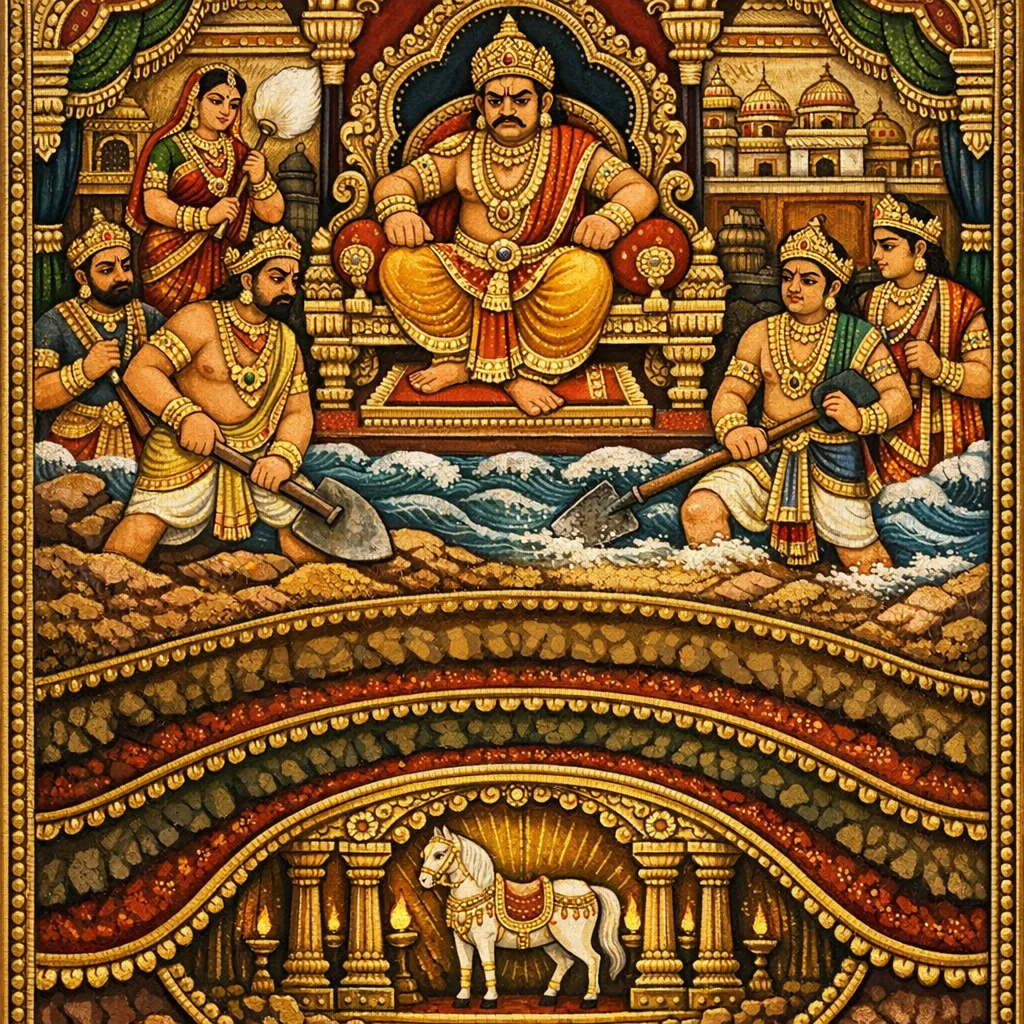
Framed as Jaimini’s narration, this adhyāya recounts the disruption of a royal aśvamedha: the sacrificial horse is suddenly seized and carried to Rasātala, the nether realm, by Vāyu at the prompting of Vāsava/Indra. Sagara’s sons search the whole earth—mountains, forests, and inhabited lands—yet fail to find the yajña-paśu. Returning to Ayodhyā, they report the loss; their father, angered, commands them to go again without turning back, for a king’s dharmic rite must not remain incomplete. The princes then choose an extreme course, digging and splitting the earth from the ocean’s edge down toward Pātāla, making the world tremble and beings cry out. Reaching the lower regions, they finally behold the horse moving in Pātāla, setting the stage for the famed encounter with the sage Kapila and its moral and genealogical consequences. Thus the chapter stands as a ritual-dynastic hinge: a missing horse triggers a world-altering descent that becomes a remembered turning point in the lineage’s history.
Shlokas
Verse 1
इति श्रीब्रह्माण्डे महापुराणे वायुप्रोक्ते मध्यमभागे तृतीय उवोद्धातपादे सगरवरिते ऽश्वमोचनं नाम द्विपञ्चाशत्तमो ऽध्यायः // ५२// जैमिनिरुवाच तेषु तत्र निविष्टेषु वासवेन प्रचोदितः / जहारं तुरगं वायुस्तत्क्षणेन रसातलम्
Thus, in the Śrī Brahmāṇḍa Mahāpurāṇa, in the middle section spoken by Vāyu, within the tale of Sagara, is the fifty-second chapter called “Aśvamocana”. Jaimini said: as they sat there, Vāyu—urged on by Vāsava (Indra)—in that very instant seized the horse and bore it down to Rasātala.
Verse 2
अदृष्टमश्वं तैः सर्वैरपहृत्य सदागतिः / अनयत्तत्पथा राजन्कपिलस्यान्तिकं मुनेः
When the horse was no longer seen by them all, Vāyu—ever swift—having stolen it, O King, carried it along that very path to the presence of the sage Kapila.
Verse 3
ततः समाकुलाः सर्वे विनष्टे ऽश्वे नृपात्मजाः / परीत्य वसुधां सर्वां प्रमार्गन्तस्तुरगमम्
Then, when the horse was lost, all the king’s sons were thrown into turmoil; they ranged over the whole earth, searching for the steed.
Verse 4
विचित्य पृथिवीं ते तु स पुराचलकाननाम् / अपश्यन्तो यज्ञपशुं दुःखं महदवाप्नुवन्
They searched the earth in full—its cities, mountains, and forests—yet, not beholding the sacrificial beast, they fell into great sorrow.
Verse 5
ततो ऽयोध्यां समासाद्य ऋषिभिः परिवारिताम् / दृष्ट्वा प्रणम्य पितरं तस्मै सर्वं न्यवेदयन्
Then they reached Ayodhyā, surrounded by ṛṣis; seeing their father, they bowed in reverence and reported to him the whole account.
Verse 6
परीत्य पृथ्वीमस्माभिर्निविष्टे वरुणालये / रक्ष्यमाणो ऽपि पश्यद्भिः केनापि तुरगो हृतः
Having traversed the earth, we had taken our place in Varuṇa’s abode; yet before our very eyes, though guarded, the steed was carried off by someone.
Verse 7
इत्युक्तस्तै रुषाविष्टस्तानुवाच नृपोत्तमः / प्रयास्यध्वमधर्मिष्ठाः सर्वे ऽनावृत्तये पुनः
Hearing this, the noblest king, seized by wrath, said to them: “O most unrighteous ones, depart—all of you—and do not return again.”
Verse 8
कथं भवद्भिर्जीवद्भिर्विनष्टो वै दरात्मभिः / तुरगेण विना सत्यं नेहाग मनमस्ति वः
How could it be lost while you yet live, O faint-hearted ones? Truly I say: without the steed, there is no coming back here for you.
Verse 9
ततः समेत्य तस्मात्ते सप्रयाताः परस्परम् / ऊचुर्न दृश्यते ऽद्यापि तुरगः किं प्रकुमह
Then they returned from there, gathered together, and said to one another: “Even now the steed is not to be seen; what are we to do?”
Verse 10
वसुधा विचितास्माभिः सशैलवनकानना / न चापि दृश्यते वाजी तद्वार्त्तापि न कुत्रचित्
We have searched the whole earth—its mountains, forests, and wild groves—yet the steed is not seen, nor is any tidings of it found anywhere.
Verse 11
तस्मादब्धेः समारभ्य पातालावधि मेदिनीम् / विभज्य रवात्वा पातालं विविशाम तुरङ्गमम्
Then they divided the earth from the ocean’s edge down to the bounds of Pātāla, and entering Pātāla they went in search of the sacred steed.
Verse 12
इति कृत्वा मतिं सर्वे सागराः क्रूरनिश्चयाः / निचख्नुर्भूमिमंबोधेस्तटा दारभ्य सर्वतः
Having thus resolved, all of them, fierce in determination, began to dig up the earth from the ocean’s shore, in every direction.
Verse 13
तैः खन्यमाना वसुधा ररास भृशविह्वला / चुक्रुशुश्चापि भूतानि दृष्ट्वा तेषां विचेष्टितम्
As they dug, the Earth, sorely distressed, groaned aloud; and all beings, seeing their deeds, cried out in anguish.
Verse 14
ततस्ते भारतं खण्डं खात्वा संक्षिब्य भूतले / भूमेर्योजनसाहस्रं योजयामासुरंबुधौ
Then they dug out the region of Bhārata-khaṇḍa, tore it from the surface of the earth, and cast a thousand yojanas of land into the ocean.
Verse 15
आपातालतलं ते तु खनन्तो मेदिनीतलम् / चरन्तमश्वं पाताले ददृशुर्नृपनन्दनाः
Those princes, digging down through the earth to the very floor of Pātāla, beheld the horse roaming within Pātāla.
Verse 16
संप्रहृष्टास्ततः सर्वे समेत्य च समन्ततः / संतोषाज्जहसुः केचिन्ननृतुश्च मुदान्विताः
Then all of them gathered from every side, filled with delight; in contentment some laughed, and others, brimming with joy, began to dance.
Verse 17
ददृशुश्च महात्मानं कपिलं दीप्ततेजसम् / वृद्धं पद्मासनासीनं नासाग्रन्यस्तलोचनम्
They beheld the great-souled Kapila, radiant with blazing splendor—aged, seated in padmāsana, his gaze set upon the tip of his nose.
Verse 18
ऋज्वायतशिरोग्रीवं पुरोविष्टब्धवक्षसम् / स्वतेजसाभिसरता परिबूर्णेन सर्वतः
His head and neck were straight and long, his chest held firm and forward; his own radiance, complete on every side, spread forth in all directions.
Verse 19
प्रकाश्यमानं परितो निवातस्थप्रदीपवत् / स्वान्तप्रकाशिताशेषविज्ञानमयविग्रहम्
He shone all around like a lamp in a windless place; his very form was made of perfect knowing, illumined from within his own heart.
Verse 20
समाधिगतचित्तन्तु निभृतांभोधिसन्निभम् / आरूढयोगं विधिवद्ध्येयसंलीनमानसम्
His mind had entered samādhi, like a calm and silent ocean; established in yoga, he had, in due discipline, merged his heart into the object of meditation.
Verse 21
च्दृदद्यत्दद्वड्ढ द्यदृ डद्धठ्ठण्थ्र्ठ्ठदड्डठ्ठ-थ्र्ठ्ठड्डण्न्र्ठ्ठडण्ठ्ठग्ठ्ठ योगीन्द्रप्रवरं शान्तं ज्वालामाल मिवानलम् / विलोक्य तत्र तिष्ठन्तं विमृशन्तः परस्परम्
Seeing there the foremost of yogis—peaceful, blazing like fire wreathed in a garland of flames—standing in that place, they conferred with one another.
Verse 22
मुहूर्त्तमिव ते राजन्साध्वसं परमं गताः / ततो ऽयमश्वहर्त्तेति सागरा कालचोदिताः
O King, for a moment they fell into utmost fear; then, driven by Time (Kāla), they declared, “This is the stealer of the horse.”
Verse 23
परिवव्रुर्दुरात्मानः कपिलं मुनिसत्तमम् / ततस्तं परिवार्योचुश्वोरो ऽयं नात्र संशयः
The wicked-minded surrounded Kapila, the foremost of sages; and, hemming him in, they said, “This is the thief—there is no doubt of it.”
Verse 24
अश्वहर्त्ता ततो ऽह्येष वध्यो ऽस्माभिर्दुराशयः / तं प्राकृतवदासीनं ते सर्वे हतवुद्धयः
“Indeed, this is the stealer of the horse; evil-intentioned, he must be slain by us.” Saying so, all those witless men stared at the sage, who sat like an ordinary man.
Verse 25
आसन्नमरणाश्चक्रुर्धर्षितं मुनिमञ्जसा / जैमिनिरुवाच ततो मुनिरदीनात्मा ध्यानभङ्गप्रधर्षितः
They swiftly assailed the sage and brought him near to death. Jaimini said: then the sage—unbroken in spirit, though struck by the disruption of his meditation—(spoke thus).
Verse 26
क्रोधेन महताऽविष्टश्चुक्षुभे कपिलस्तदा / प्रचचाल दुराधर्षो धर्षितस्तैर् दुरात्मभिः
Seized by mighty wrath, Kapila then surged in fury; assailed by those wicked-souled ones, even the unassailable was shaken.
Verse 27
व्यजृंभत च कल्पान्ते मरुद्भिरिव चानलः / तस्य चार्णवगंभीराद्वपुषः कोपपावकः
He flared forth like fire at the end of an aeon, fanned by the winds; from his ocean-deep form the blaze of wrath arose.
Verse 28
दिधक्षुरिव पातालांल्लोकान्सांकर्षणो ऽनलः / शुशुभे धर्षणक्रोधपरामर्शविदीपितः
Like the Saṅkarṣaṇa-fire that would burn the nether worlds, he shone—kindled by the touch of wrath born of insult.
Verse 29
उन्मीलयत्तदा नेत्रे वह्निचक्रसमद्युतिः / तदाक्षिणी क्षणं राजन्राजेतां सुभृशारुणे
Radiant like a wheel of fire, he then opened his eyes; O king, for a moment both eyes blazed a deep, intense red.
Verse 30
पूर्वसंव्यासमुदितौ पुष्पवन्ताविवांबरे / ततो ऽप्युद्वर्त्तमानाभ्यां नेत्राभ्यां नृपनन्दनान्
Like twin Puṣpavanta mountains risen in the eastern twilight of the sky; yet with those upturned eyes he beheld the princes, sons of kings.
Verse 31
अवैक्षत च गंभीरः कृतान्तः कालपर्यये / क्रुद्धस्य तस्यनेत्राभ्यां सहसा पावकार्चिषः
At the turning of time, the deep and solemn Kṛtānta looked on in wrath; from his two eyes, in an instant, burst forth the flames of fire.
Verse 32
निश्चेरुरभिलोदिक्षु कालाग्नेरिव संतताः / सधूमकवलोदग्राः स्फुलिङ्गौघमुचो मुहुः
They streamed forth to every quarter like the unbroken current of the fire of dissolution; with rolling masses of smoke, they again and again cast out floods of sparks.
Verse 33
मुनिक्रोधानलज्वालाः समन्ताव्द्यानशुर्दिशः / व्यालोदरौग्रकुहरा ज्वाला स्तन्नेत्रनिर्गताः
The flames of the muni’s wrathful fire blazed on every side, scorching the quarters; those flames, with dreadful hollows like a serpent’s belly, issued from his eyes.
Verse 34
विरेजुर्निभृतांभोधेर्वडवाग्नेरिवार्चिषः / क्रोधाग्निः सुमहाराज ज्वालावव्याप्तदिगन्तरः
O great king, they shone like the flames of the Vaḍavāgni within the still ocean; the fire of wrath, with its blazing tongues, pervaded the far ends of every quarter.
Verse 35
दग्धांश्चकार तान्सर्वानावृण्वानो नभस्तलम्
Enshrouding the vault of heaven, he burned them all and made them ash.
Verse 36
सशब्दमुद्भ्रान्तमरुत्प्रकोपविवर्त्तमानानलधूमजालैः / महीरजोभिश्च नितान्तमुद्धतैः समावृतं लोक मभूद्भृशातुरम्
With a roaring din, as the maddened wind raged, whirling nets of fire and smoke spread forth; and with earth-dust violently upheaved, the whole world was veiled and fell into grievous distress.
Verse 37
ततः स वह्निर्विलिखन्निवाभितः समीरवेगाभिहताभिरंबरम् / शिखाभिरुर्वीशसुतानशेषतो ददाह सद्यः सुर विद्विषस्तान्
Then that fire, as though scraping the sky on every side, with flames struck by the rush of wind, instantly burned to nothing the sons of Urvīśa—those foes of the gods.
Verse 38
मिषतः सर्वलोकस्य क्तोधाग्निस्तमृते हयम् / सागरांस्तानशेषेण भस्मसादकरोत्स तान्
Before the very eyes of all the worlds, sparing only that horse, the fire of wrath reduced the sons of Sagara to ashes, leaving none behind.
Verse 39
एवं क्रोधाग्निना तेन सागराः पापचेतसः / जज्वलुः सहसा दावे तरवो नीरसा इव
Thus, by that fire of wrath, the sons of Sagara—sin-minded—blazed up all at once, like sapless trees caught in a forest conflagration.
Verse 40
दृष्ट्वा तेषां तु निधनं सागराणान्दुरात्मनाम् / अन्योन्यमबुवन्देवा विस्मिता ऋषिभिः सह
Seeing the destruction of those ill-souled sons of Sagara, the gods—together with the ṛṣis—stood astonished and spoke among themselves.
Verse 41
अहोदारुणपापानां विपाको न चिरायितः / दुरन्तः खलु लोके ऽस्मिन्नराणामसदात्मनाम्
Alas, the ripening of dreadful sins is not long delayed; in this world the end of men of impure heart is truly disastrous.
Verse 42
यदि मे पर्वताकारा नृशंसाः क्रूरवुद्धयः / युगपद्विलयं प्राप्ताः सहसैव तृणाग्निवत्
If those mountain-like men, pitiless and cruel-minded, met destruction all at once—suddenly, like fire upon dry grass.
Verse 43
उद्वेजनीया भूतानां सद्भिरत्यन्तगर्हिताः / आजीवान्तमिमे हर्तु दिष्ट्या संक्षयमागताः
They were a terror to all beings, utterly condemned by the righteous; these who stole away peace for a lifetime have, by providence, come to destruction.
Verse 44
परोपतापि नितरां सर्वलोकजुगुप्सितम् / इह कृत्वाशुभं कर्म कःपुमान्विन्दते सुखम्
He who torments others, loathed by all the worlds—what man, doing evil deeds here, can ever find happiness?
Verse 45
विक्रोश्य सर्वभूतानि संप्रयाताः स्वकर्मभिः / ब्रह्मदण्डहताः पापा निरयं शाश्वतीः समाः
Making all beings cry out, they departed borne along by their own deeds; those sinners, struck by Brahmā’s rod of punishment, fell into hell for everlasting years.
Verse 46
तस्मात्सदैव कर्त्तव्यं कर्म पुंसां मनीपिणाम् / दुरतश्च परित्याज्यमितरल्लोकनिन्दितम्
Therefore the wise among men should ever perform righteous deeds; all else, condemned by the world, should be cast away from afar.
Verse 47
कर्त्तव्यः श्रेयसे यत्नो यावज्जीवं विजानता / नाचरेत्कस्यचिद्द्रोहमनित्यं जीवनं यतः
Knowing that one must strive for the highest good as long as life endures, let one exert oneself; for life is impermanent, one should wrong no one.
Verse 48
अनित्यो ऽयं सदा देहःसपदश्चातिचञ्चलाः / संसारश्चातिनिस्सारस्तत्कथं विश्वसेद्बुधः
This body is ever impermanent, and one’s steps are exceedingly unsteady; the world of saṃsāra is utterly without essence—how can the wise place trust in it?
Verse 49
एवं सुरमुनीन्द्रेषु कथयत्सु परस्परम् / मुनिक्रोधेन्धनीभूता विनेशुः सगरात्मजाः
Thus, as the gods and the lordly sages spoke among themselves, the sons of Sagara—turned into fuel for the sage’s wrath—were destroyed.
Verse 50
निर्दगधदेहाः सहसा भुवं विष्टभ्य भस्मना / अवापुर्निरयं सद्यः सागरास्ते स्वकमभिः
Their bodies were suddenly burned to ash, and the ash spread over the earth; those sons of Sagara, by the fruit of their own deeds, at once fell into hell.
Verse 51
सागरांस्तानशेषेण दग्धवातत्क्रोधजो ऽनलः / क्षणेन लोकानखिलानुद्यतो दग्धुमञ्जसा
That fire born of wrath burned up all those oceans without remainder, and in an instant rose, ready to consume all the worlds with ease.
Verse 52
भयभीतास्ततो देवाः समेत्य दिवि संस्थिताः / तुष्टुवुस्ते महात्मानं क्रोधाग्निशमनार्थिनः
Then the gods, stricken with fear, assembled in heaven and praised that great-souled one, seeking the quelling of the fire of wrath.
Frequently Asked Questions
The disruption of an aśvamedha: the sacrificial horse (yajña-paśu) is stolen/removed and carried to Rasātala, forcing a royal search to preserve the rite’s completion and legitimacy.
Rasātala and Pātāla are named as the destination and search-depth of the horse; they mark a bhuvana-kośa transition from the surface earth into netherworld strata, showing how ritual history is narrated through cosmographic space.
It belongs to the Sagara-cycle within Solar/Ikṣvāku-associated royal memory: the king’s sons (Sāgaras) undertake the search and excavation, leading toward the Kapila encounter that becomes consequential for later dynastic remembrance.