Adhyaya 32
Śivaloka–Brahmaloka Varnana (Description of Śivaloka and the Upper Worlds)
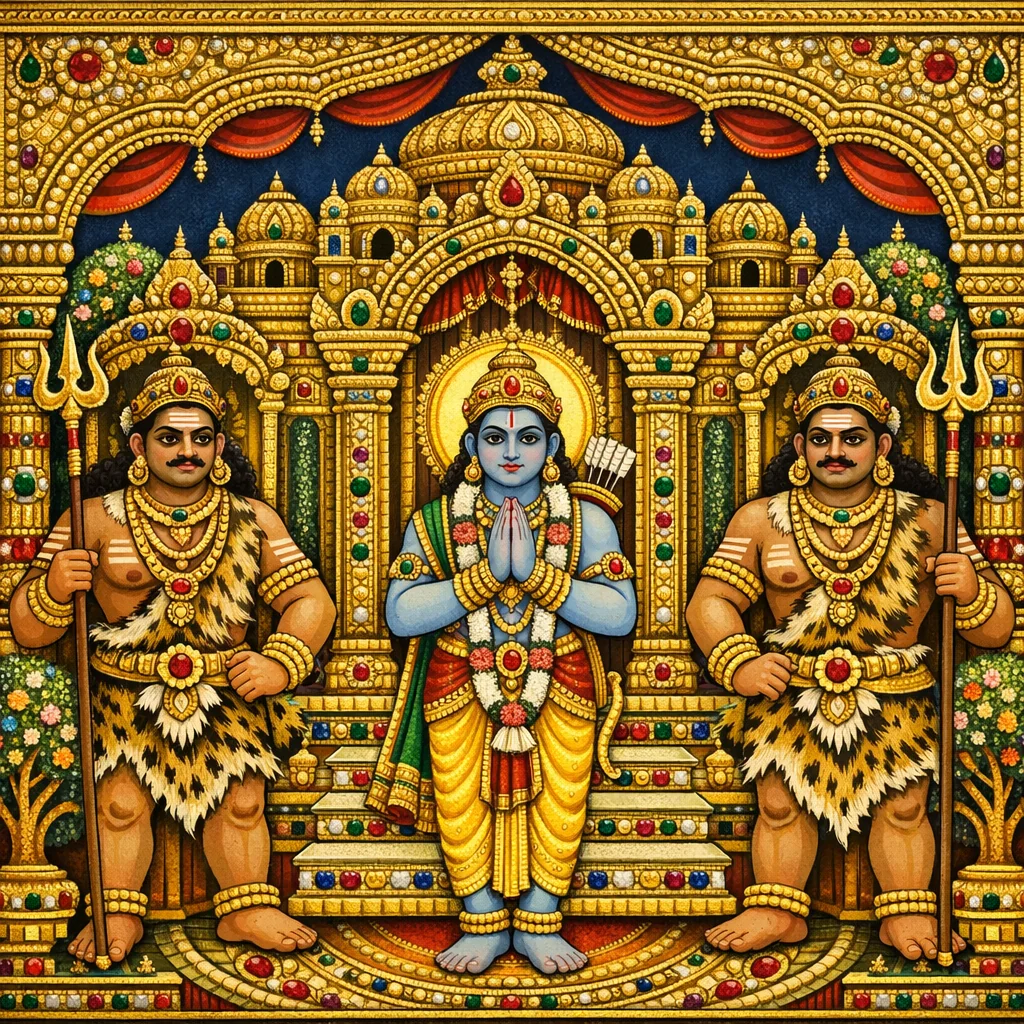
Told by Vasiṣṭha, this adhyāya continues the travel-vision in which Rāma, empowered by tapas and spiritual potency, beholds Śivaloka. After a colophonic transition, it turns to cosmography: Brahmaloka is set at an immense height and distance (in lakṣa-yojanas), ineffable and reachable only by yogins. The relative placement of the supreme realms is then mapped—Vaikuṇṭha to one side, Gaurīloka to the other, with Dhruvaloka below—forming a tiered chart of the upper worlds. Śivaloka is described through sacred splendor: pārijāta-like trees, kāmadhenu imagery, jewel platforms, golden and gem-built enclosures, radiant clarity, and a four-gated palace complex. The narrative culminates as Rāma meets fearsome dvārapālas bearing tridents and weapons, ash-adorned and tiger-skin clad; he speaks respectfully, requesting entry to behold Śaṅkara by divine instruction. Overall, the chapter identifies the realm’s inhabitants (yogīndras, siddhas, pāśupatas), the qualifications for access (yoga/tapas), and its spatial situation among other lokas.
Shlokas
Verse 1
इति श्रीब्रह्माण्डे महापुराणे वायुप्रोक्ते मध्यभागे तृतीय उपोद्धातपादे भार्गवचरिते एकत्रिंशत्तमो ऽध्यायः // ३१// वसिष्ठ उवाच ब्रह्मणो वचनं श्रुत्वा स प्रणम्य जगद्गुरुम् / प्रसन्नचेताः सुभृशं शिवलोकं जगाम ह
Thus, in the Śrī Brahmāṇḍa Mahāpurāṇa, in the middle section spoken by Vāyu, within the third Upoddhāta-pāda in the Bhārgava narrative, the thirty-first chapter concludes. Vasiṣṭha said: Hearing Brahmā’s words, he bowed to the Guru of the worlds; with a heart greatly gladdened, he went to Śivaloka.
Verse 2
लक्षयोजनमूर्द्ध्वं च ब्रह्मलोका द्विलक्षणम् / अथनिर्वचनीयं च योगिगम्यं परात्परम्
Two lakṣas of yojanas above Brahmaloka lies that realm. It is beyond description, attainable by yogins, and higher than the highest.
Verse 3
वैकुण्ठो दक्षिणे यस्माद्गौरीलोकश्च वामतः / यदधो ध्रुवलोकश्च सर्वलोकपरस्तु सः
To its south lies Vaikuṇṭha and to its left the realm of Gaurī; below it is Dhruvaloka. Yet that realm stands beyond all worlds.
Verse 4
तपोवीर्यगती रामः शिवलोकं ददर्श च / उपमानेन रहितं नानाकौतुकसंयुतम्
Moved by the power of austerity and spiritual might, Rāma beheld Śivaloka—beyond all comparison, adorned with many wondrous marvels.
Verse 5
वसंति यत्र योगीन्द्राः सिद्धाः पाशुपताः शुभाः / कोटिकल्पतपः पुण्याः शान्ता निर्मत्सरा जनाः
There dwell the lords of yogins—Siddhas, auspicious Pāśupatas—people made holy by the merit of austerities through countless kalpas, serene and free from envy.
Verse 6
पारिजातमुखैर्वृक्षैः शोभितं कामधेनुभिः / योगेन योगिना सृष्टं स्वेच्छया शङ्करेण हि
Adorned with trees such as the Pārijāta and filled with Kāmadhenus, it was fashioned by the Yogin Śaṅkara, by his own will, through the power of yoga.
Verse 7
शिल्पिनां गुरुणा स्वप्ने न दृष्टं निश्वकर्मणा / सरोवरशतैर्दिव्यैः पद्मरागविराजितैः
Not even Viśvakarman, the master of craftsmen, beheld it—no, not even in a dream; it shines with hundreds of divine lakes, radiant with padmarāga gems.
Verse 8
शोभितं चातिरम्यं च संयुक्तं मणिवेदिभिः / सुवर्णरत्नरचितप्राकारेण समावृतम्
It is splendid and exceedingly lovely, adorned with jewel-altars, and enclosed by a rampart fashioned of gold and precious gems.
Verse 9
अत्यूर्द्ध्वमंबरस्पर्शि स्वच्छं क्षीरनिभंपरम् / चतुर्द्वारसमायुक्तं शोभितं मणिवेदिभिः
Lofty beyond measure, as though touching the sky, it is clear and radiant like milk; furnished with four gates and adorned with jewel-altars.
Verse 10
रक्तसोपानयुक्तैश्च रत्नस्तंभकपाटकैः / नानाचित्रविचित्रैश्च शोभितैः सुमनोहरैः
With crimson steps, jeweled pillars and door-leaves, adorned with many wondrous paintings, it shone—utterly enchanting to behold.
Verse 11
तन्मधये भवनं रम्यं सिंहद्वारोपशोभितम् / ददर्शरामो धर्मात्मा विचित्रमिव संगतः
At its center stood a lovely mansion, graced by a lion-gate; righteous-souled Rama beheld it as though a marvel woven into form.
Verse 12
तत्र स्थितौ द्वार पालौ ददर्शातिभयङ्करौ / महाकरालदन्तास्यौ विकृतारक्तलोचनौ
There he saw two gate-guards, dreadfully fearsome—mouths with huge, ghastly fangs, and distorted eyes, red as blood.
Verse 13
दग्धशैलप्रतीकाशौ महाबलपराक्रमौ / विभूतिभूषिताङ्गौ च व्याघ्रचर्मांबरौ च तौ
The two blazed like fire-scorched mountains, mighty in strength and valor; their limbs were adorned with sacred ash, and they wore tiger-skins as garments.
Verse 14
त्रिशूलपट्टिशधरौ ज्वलन्तौ ब्रह्मतेजसा / तौ दृष्ट्वा मनसा भीतः किञ्चिदाह विनीतवत्
Seeing those two bearing trident and battle-axe, blazing with Brahmanic splendor, he trembled within and spoke a few words in humble reverence.
Verse 15
नमस्करोमि वामीशौ शङ्करं द्रष्टुमागतः / ईश्वराज्ञां समादाय मामथाज्ञप्तुमर्हथ
O Vāmīśau, I bow in reverence; I have come to behold Śaṅkara. Bearing the command of the Lord, be pleased to instruct and direct me.
Verse 16
तौतु तद्वचनं श्रुत्वा गृहीत्वाज्ञां शिवस्य च / प्रवेष्टुमाज्ञां ददतुरीश्वरानुचरौ च तौ
Hearing his words and receiving Śiva’s command, those two attendants of the Lord granted him leave to enter.
Verse 17
स तदाज्ञामनुप्राप्य विवेशान्तः पुरं मुदा / तत्रातिरम्यां सिद्धौघैः समाकीर्णां सभां द्विजः
Having obtained that permission, the dvija entered the inner city in joy. There he beheld a most lovely hall, thronged with hosts of Siddhas.
Verse 18
दृष्ट्वा विस्मयमापेदे सुगन्धबहुलां विभोः / तत्रापश्यच्छिवं शान्तं त्रिनेत्रं चन्द्रशेखरम्
At the sight he was filled with wonder; the Lord’s abode was rich with fragrance. There he beheld tranquil Śiva—three-eyed, Candraśekhara who bears the moon upon his crest.
Verse 19
त्रिशूलशोभितकरं व्याघ्रचर्मवरांबरम् / विभूतिभूषिताङ्गं च नागयज्ञोपवीतिनम्
In his hand the trident shone; tiger-skin was his noble raiment. His limbs were adorned with vibhūti, and a serpent served as his sacred thread (yajñopavīta).
Verse 20
आत्मारामं पूर्णकामं कोटिसूर्यसमप्रभम् / पञ्चाननं दशभुजं भक्तानुग्रहविग्रहम्
He is Ātmārāma, fulfilled of every desire, radiant as ten million suns; five-faced, ten-armed, a manifested form of grace toward devotees.
Verse 21
योगज्ञाने प्रब्रुवन्तं सिद्धेभ्यस्तर्कमुद्रया / स्तूयमानं च योकीन्द्रैः प्रमथप्रकरैर्मुदा
He proclaims the wisdom of Yoga, instructing the siddhas with the mudrā of discernment; and he is joyfully praised by the lords of yogins and the hosts of pramathas.
Verse 22
भैरवैर्योगिनीभिश्च वृतं रुद्रगणैस्तथा / मूर्ध्ना नमाम तं दृष्ट्वा रामः परमया मुदा
Seeing him surrounded by Bhairavas, Yoginīs, and the gaṇas of Rudra, Rāma, filled with supreme joy, bowed his head in reverent homage.
Verse 23
वामभागे कार्त्तिकेयं दक्षिणे च गणेश्वरम् / नन्दीश्वरं महाकालं वीरभद्रं च तत्पुरः
On his left stood Kārttikeya, on his right Gaṇeśvara; and before him were Nandīśvara, Mahākāla, and Vīrabhadra.
Verse 24
क्रोडे दुर्गां शतभुजां दृष्ट्वा नत्वाथ तामपि / स्तोतुं प्रचक्रमे विद्वान्गिरा गद्गदया विभुम्
Seeing Durgā, hundred-armed, seated upon the lap, he bowed to her as well; then the wise Rāma began to hymn that Sovereign Lord in a voice trembling with devotion.
Verse 25
नमस्ये शिवमीशानं विभुं व्यापकमव्ययम् / भुजङ्गभूषणं चोग्रं नृकपालस्रगुज्ज्वलम्
I bow to Śiva Īśāna—the mighty, all-pervading, imperishable Lord—adorned with serpents, fierce, and radiant with a garland of human skulls.
Verse 26
यो विभुः सर्वलोकानां सृष्टिस्थितिविनाशकृत् / ब्रह्मादिरूपधृग्ज्येष्ठस्तं त्वां वेद कृपार्णवम्
You are the sovereign Power who brings about the creation, preservation, and dissolution of all worlds; the eldest who assumes forms such as Brahmā—O ocean of compassion, it is You who are truly known.
Verse 27
वेदा न शक्ता यं स्तोतु मवाङ्मनसगोचरम् / ज्ञानबुद्ध्योरसाध्यं च निराकारं नमाम्यहम्
I bow to the Formless One, whom even the Vedas cannot praise—beyond speech and mind, unattainable by knowledge and intellect.
Verse 28
शक्रादयः सुरगणा ऋषयो मनवो ऽसुराः / न यं विदुर्यथातत्त्वं तं नमामि परात्परम्
Even Śakra and the hosts of gods, the ṛṣis, the Manus, and the asuras do not know Him in His true reality; I bow to the One who is beyond the beyond.
Verse 29
यस्यांशांशेन सृजयन्ते लोकाः सर्वे चराचराः / लीयन्ते च पुनर्यस्मिंस्तं नमामि जगन्मयम्
From a fraction of His fraction all worlds—moving and unmoving—are brought forth, and into Him they dissolve again; I bow to the One who is the very substance of the universe.
Verse 30
यस्येषत्कोपसंभूतो हुताशो दहते ऽखिलम् / सोर्द्ध्वलोकं सपातालं तं नमामि हरं परम्
From a mere flicker of His wrath arises the sacred fire that burns up all; pervading the upper worlds and even Pātāla, to that Supreme Hara I bow.
Verse 31
पृथ्वीपवन वह्न्यभभोनभोयज्वेन्दुभास्कराः / मूर्त्तयो ऽष्टौ जगत्पूज्यास्तं यज्ञं प्रणमाम्यहम्
Earth, wind, fire, waters, sky, the yajvā (embodiment of sacrifice), moon and sun—these eight forms are worshipped by the world; to that Yajña I bow.
Verse 32
यः कालरूपो जगदादिकर्त्ता पाता पृथग्रूपधरो जगन्मयः / रर्त्ता पुना रुद्रवपुस्तथान्ते तं कालरूपं शरणं प्रपद्ये
He who is Time itself—the primal maker of the world; the all-pervading sustainer who bears many forms; and at the end, in Rudra’s body, the dissolver—to that Form of Time I take refuge.
Verse 33
इत्येवमुक्त्वा स तु भार्गवो मुदा पषात तस्याङ्घ्रि समीप आतुरः / उत्थाप्य तं वामकरेण लीलया दध्रे तदा मूर्ध्नि करं कृपार्णवः
So speaking, the Bhārgava, joyful yet trembling with longing, fell near His feet for refuge. Then the Ocean of compassion gently lifted him with the left hand and placed His hand upon his head.
Verse 34
आशीर्भिरेनं ह्यभिनन्द्य सादरं निवेशयामास गणेशपूर्वतः / उवाच वामामभिवीक्ष्य चाप्युमां कृपार्द्रदृष्ट्याखिलकामपूरकः
Blessing him with gracious words, He seated him before Gaṇeśa. Then, casting a compassion-softened gaze upon Vāmā Umā, the Lord who fulfills all desires spoke.
Verse 35
शिव उवाच कस्त्वं वटो कस्यकुले प्रसूतः किं कार्यमुद्दिश्य भवानिहागतः / विनिर्द्दिशाहं तव भक्तिभावतः प्रीतः प्रदद्यां भवतो मनोगतम्
Śiva said: “O child, who are you, and in what lineage were you born? For what purpose have you come here? Pleased by your spirit of devotion, speak plainly; I shall grant what your heart desires.”
Verse 36
इत्येवमुक्तः स भृगुर्महात्मना हरेण विश्वार्त्तिहरेण सादरम् / पुनश्च नत्वा विबुधां पति गुरुं कृपासमुद्रं समुवाच सत्वरम्
Thus addressed with reverence by the great Hari, remover of the world’s distress, Bhṛgu bowed again to the Lord of the gods—the Guru, an ocean of compassion—and spoke at once.
Verse 37
परशुराम उवाच भृगोश्चाहं कुले जातो जमदग्निसुतौ विभो / रामो नाम जगद्वन्द्यं त्वामहं शरणं गतः
Paraśurāma said: “O Mighty One, I was born in the lineage of Bhṛgu, the son of Jamadagni. My name is Rāma; O One revered by the world, I have come to you for refuge.”
Verse 38
यत्कार्यार्थमहं नाथ तव सांनिध्यमागतः / तं प्रसाधय विश्वेश वाञ्छितं काममेव मे
O Lord, it is for that very purpose that I have come into your presence; O Master of the universe, bring it to fulfillment—this alone is my cherished desire.
Verse 39
मृगयामागतस्यापि कार्त्तवीर्यस्य भूपतेः / आतिथ्यं कृतवान् देव जमदग्निः पिता मम
O Deva, even King Kārttavīrya, who had come on a hunting expedition, was received with due hospitality by my father Jamadagni.
Verse 40
राजा तं स बलाल्लोभात्पातयामास मन्दधीः / सा धेनुस्तं मृतं दृष्ट्वा गवां लोकं जगाम ह
The king, dull-witted and driven by greed, cast him down by force. Seeing him dead, the sacred cow departed to the realm of the cows.
Verse 41
राजा न शोचन्मरणं पितुर्मम निरागसः / जगाम स्वपुरं पश्चान्माता मे प्रारुदद्भृशम्
The king did not grieve for the death of my blameless father. Thereafter he returned to his own city, while my mother wept bitterly.
Verse 42
तज्ज्ञात्वा लोकवृत्तज्ञो भृगुर्नः प्रपितामहः / आजगाम महादेव ह्यहमप्यागतो वनात्
O Mahadeva, when this became known, Bhrigu—our fore-ancestor, knower of the ways of the world—came; and I too returned from the forest.
Verse 43
मया मह सुदुःखार्त्तान्भ्रातॄन्मात्रासहैव मे / सांत्वयित्वा स मन्त्रज्ञो ऽजीवयत्पितरं मम
With my mother I consoled my brothers, stricken with grievous sorrow. Then that knower of mantras restored my father to life.
Verse 44
आनागते भृगौ मातुर्दुःखेनाहं प्रकोपितः / प्रतिज्ञां कृतवान्देव सात्वयन्मातरंस्वकाम्
Before Bhrigu had even arrived, my mother’s grief stirred my wrath. O Deva, as I soothed my mother, I made a solemn vow.
Verse 45
त्रिःसप्तकृत्वो यदुरस्ताडितं मातुरात्मनः / तावत्संख्यमहं पृथ्वीं करिष्ये क्षत्रवर्जिताम्
As many times—three times seven—as Yadu’s chest was struck by the mother’s very Self, by that same count I shall make the earth bereft of Kshatriyas.
Verse 46
इत्येवं परिपूर्णा मे कर्त्ता देवो जगत्पतिः / महादेवो ह्यतो नाथ त्वत्सकाणमिहागतः
Thus my vow has been fulfilled. The Deva, Lord of the worlds—Mahadeva himself—O Natha, has now come here together with your companions.
Verse 47
वसिष्ठ उवाच इत्येवं तद्वचः श्रुत्वा दृष्ट्वा दुर्गामुखं हरः / बभूवानम्रवदनस्छिन्तयानः क्षणं तदा
Vasiṣṭha said: Hearing those words and beholding Durgā’s face, Hara (Śiva) then lowered his countenance and pondered for a moment.
Verse 48
एतस्मिन्नन्तरे दुर्गा विस्मिता प्राहसद्भृशम् / उवाच च महाराज भार्गवं वैरसाधकम्
Just then Durgā, astonished, laughed aloud and, O Mahārāja, spoke to Bhārgava, the pursuer of vengeance.
Verse 49
तपस्विन्द्विजपुत्र क्ष्मां निर्भूपां कर्त्तुमिच्छसि / त्रिः सप्तकृत्वः कोपेन साहसस्ते महान्बटो
O ascetic, son of a twice-born! Do you wish to make the earth without kings? In wrath, three times seven—great indeed is your daring, child!
Verse 50
हन्तुमिच्छसि निःशस्त्रः सहस्रार्जुनमीश्वरम् / भ्रूभङ्गलीलया येन रावणो ऽपि निराकृतः
Would you, unarmed, seek to slay the Lord Sahasrārjuna—he who, with a mere playful arch of the brow, repulsed even Rāvaṇa?
Verse 51
तस्मै प्रदत्तं दत्तेन श्रीहरेः कवचं पुरा / शक्तिरत्यर्थवीर्या च तं कथं हन्तुमिच्छसि
Dattā once bestowed upon him the sacred armor of Śrī Hari, and his power is of surpassing might; how then do you wish to slay him?
Verse 52
शङ्करः करुणासिद्धः कर्त्तुं चाप्यन्यथा विभुः / न चान्यः शङ्करात्पुत्र सत्कार्यं कर्त्तुमीश्वरः
Śaṅkara is perfected in compassion, and as the Almighty can act otherwise as well; yet, my son, none but Śaṅkara is Lord enough to accomplish a truly righteous deed.
Verse 53
अथ देव्या अनुमतिं प्राप्य शंभुर्द्दयार्णवः / अभ्यधाद्भद्रया वाया जमदग्निसुतं विभुः
Then, having received the Goddess’s consent, Śambhu—an ocean of compassion, the Mighty One—addressed Jamadagni’s son in gracious, auspicious words.
Verse 54
शिव उवाच अद्यप्रभृति विप्र त्वं मम स्कन्दसमो भव / दास्यामि मन्त्रं दिव्यं ते कवचं च महामते
Śiva said: “O brāhmaṇa, from this day forth be equal to my Skanda. O great-minded one, I shall grant you a divine mantra and a sacred armor.”
Verse 55
लीलया यत्प्रसादेन कार्त्तवीर्यं हनिष्यसि / त्रिः सप्तकृत्वो निर्भूपां महीं चापि करिष्यसि
By His playful grace you shall slay Kārttavīrya, and twenty-one times you shall make the earth bereft of kings.
Verse 56
इत्युक्त्वा शङ्करस्तस्मै ददौ मन्त्रं सुदुर्लभम् / त्रैलोक्यविजयं नाम कवचं परमाद्भुतम्
So saying, Śaṅkara bestowed upon him a most rare mantra—the wondrous protective armor called “Trailokyavijaya”, the Conquest of the Three Worlds.
Verse 57
नागपाशं पाशुपतं ब्रह्मास्त्रं च सुदुर्ल्लभम् / नारायणास्त्रमाग्नेयं वायव्यं वारुणं तथा
The Nāgapāśa, the Pāśupata, and the most rare Brahmāstra; also the Nārāyaṇāstra, and the weapons of Fire, Wind, and Varuṇa.
Verse 58
घान्धर्वं गारुडं चैव जृंभणास्त्रं महाद्भुतम् / गदां शक्तिं च परशुं शूलं दण्डमनुत्तमम्
The Gāndharva and Gāruḍa weapons, and the wondrous Jṛmbhaṇāstra; also the mace, the śakti-spear, the axe, the trident, and the peerless staff.
Verse 59
शस्त्रास्त्रग्राममखिलं प्रहृष्टः संबभूव ह / नमस्कृत्य शिवं शान्तं दुर्गां स्कन्दं गणेश्वरम्
Receiving the entire host of weapons and astras, he rejoiced greatly; then, bowing in reverence, he saluted tranquil Śiva, Durgā, Skanda, and Gaṇeśvara.
Verse 60
परिक्रम्य ययौ रामः पुष्करं तीर्थमुत्तमम् / सिद्धं कृत्वा शिवोक्तं तु मन्त्रं कवचमुत्तमम्
Having circumambulated in reverence, Rama went to Pushkara, the supreme tirtha. He perfected the excellent mantra-kavaca spoken by Shiva.
Verse 61
साधयामास निखिलं स्वकार्यं भृगुनन्दनः / निहत्य कार्त्तवीर्यं तं ससैन्यं सकुलं मुदा / विनिवृत्तो गृहं प्रागात्पितुः स्वस्य भृगूद्वहः
The son of Bhrigu accomplished all his purpose. Having slain Karttavirya along with his army and his whole line, the foremost of the Bhrigus returned in joy to his father’s home.
Frequently Asked Questions
This chapter is primarily cosmological rather than genealogical; it focuses on the placement and phenomenology of higher lokas (Śivaloka/Brahmaloka) and their inhabitants (yogins, siddhas, pāśupatas), not on a royal or sage vaṃśa list.
A key vertical-distance marker appears in the placement of Brahmaloka as ‘lakṣa-yojana’ above (a high-order measure), alongside directional relations among Vaikuṇṭha, Gaurīloka, and the lower Dhruvaloka, forming a tiered upper-world coordinate system.
This adhyāya is not a Lalitopākhyāna passage; it does not present Śākta vidyā/yantra material. Its esoteric emphasis is instead yogic access to supernal realms and the symbolic architecture of Śivaloka guarded by dvārapālas.