Adhyaya 23
Jāmadagnya-Rāmasya Tapaścaraṇam (The Austerities of Rama Jamadagnya)
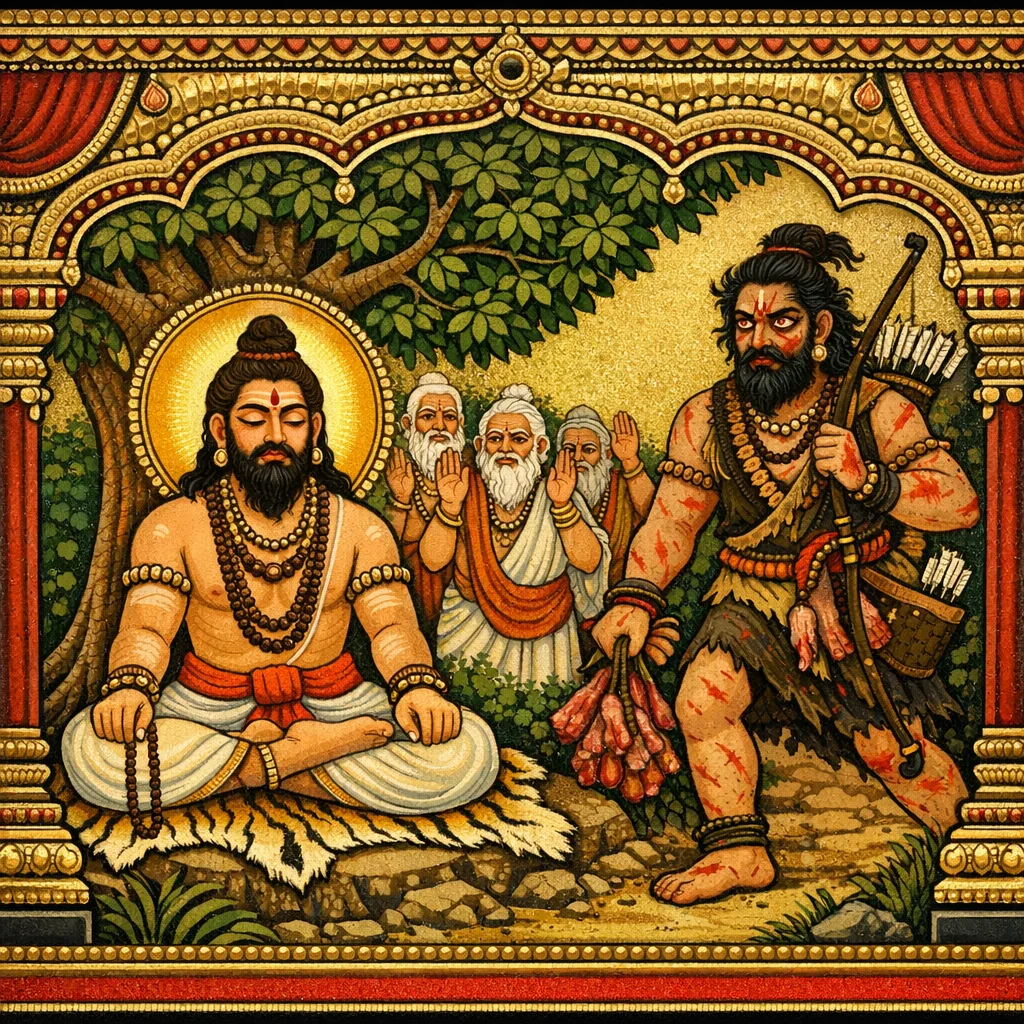
This adhyāya, set within the Vasiṣṭha–Sāgara dialogue and the Arjuna-upākhyāna frame, presents Jāmadagnya Rāma as an exemplar of ascetic discipline. His tapas is depicted as intensely focused, secret, and rule-bound, and it becomes publicly evident when senior ṛṣis arrive. Purified sages—mature in age, knowledge, and karma—come out of curiosity to witness and praise the excellence of his austerities, then return to their hermitages extolling tapas and jñāna as supreme. The narrative then turns to divine verification: Śiva, pleased yet intent on testing Rāma’s devotion, approaches in disguise as a violent hunter (mṛgavyādha), marked by unsettling signs—weapons, bloodshot eyes, a meat-laden body, and thorn-scratched limbs. The chapter thus encodes a “test motif,” where tapas draws both human attestation (the ṛṣi assembly) and divine scrutiny (Śiva’s incognito visit), establishing Rāma’s spiritual authority within the Purāṇa’s wider genealogical-epic memory.
Shlokas
Verse 1
इति श्रीब्रह्माण्डे महापुराणे वायुप्रोक्ते मध्यभागे तृतीये उपोद्धातपादे वसिष्ठसगरसंवादे अर्चुनोपाख्याने जामदग्न्यतपश्चरणं नाम द्वाविंशतितमो ऽध्यायः // २२// वसिष्ठ उवाच तपस्विनं तदा राममेकाग्रमनसं भवे / रहस्येकान्तनिरतं नियतं शंसितव्रतम्
Thus, in the Śrī Brahmāṇḍa Mahāpurāṇa, in the middle section spoken by Vāyu, in the third Upoddhāta-pāda, within the dialogue of Vasiṣṭha and Sagara, in the Arjuna episode, is the twenty-second chapter called “The Austerity-practice of Jāmadagnya.” Vasiṣṭha said: then the ascetic Rāma was single-pointed in mind, devoted to secret solitude, disciplined, and steadfast in praised vows.
Verse 2
श्रुत्वा तमृषयः सर्वे तपोनिर्धूतकल्मषाः / ज्ञानकर्मवयोवृद्धा महान्तः शंसितव्रताः
Hearing this, all the ṛṣis—whose stains had been shaken off by austerity—were venerable, mature in wisdom, rite, and age, and steadfast in praised vows.
Verse 3
दिदृक्षवः समाजग्मुः कुतूहलसमन्विताः / ख्यापयन्तस्तपः श्रेष्ठं तस्य राजन्महात्मनः
Longing to behold him, and filled with wonder, they gathered; O King, they came proclaiming the excellence of that great soul’s supreme austerity.
Verse 4
भृग्वत्रिक्रतुजाबालिवामदेवमृकण्डवः / संभावयन्तस्ते रामं मुनयो वृद्धसंमताः
Bhṛgu, Vatri, Kratu, Jābāli, Vāmadeva, Mṛkaṇḍu, and others—munis revered by the elders—honored Rāma with due esteem.
Verse 5
आजग्मुराश्रमं तस्य रामस्य तपसस्तपः / दूरादेव महान्तस्ते पुण्यक्षेत्रनिवासिनः
Those great ones, dwellers in holy sacred places, came from afar to the āśrama of Rāma—whose austerity was itself the austerity of austerities.
Verse 6
गरीयः सर्वलोकेषु तपो ऽग्र्यं ज्ञानमेव च / प्रशस्य तस्य ते सर्वेप्रययुः स्वं स्वमाश्रमम्
In all the worlds, austerity is most venerable, and knowledge alone is supreme; praising him, they all departed to their own respective āśramas.
Verse 7
एवं प्रवर्त्ततस्तस्य रामस्य भगवाञ्छिवः / प्रसन्नचेता नितरां बभूव नृपसत्तम
O best of kings, as Rama thus conducted himself, Lord Śiva became exceedingly glad at heart.
Verse 8
जिज्ञासुस्तस्य भगवान् भक्तिमात्मनि शङ्करः / मृगव्याधवपुर्भूत्वा ययौ राजंस्तदन्तिकम्
O king, wishing to test his devotion, Lord Śaṅkara assumed the form of a deer-hunter and went to his presence.
Verse 9
भिन्नाञ्जनचयप्रख्यो रक्तान्तायतलोचनः / शरचापधरः प्रांशुर्वज्रसंहननो युवा
He was dark like a shattered heap of anjana, with long eyes rimmed in red; bearing bow and arrows, tall, youthful, and built with a body hard as vajra.
Verse 10
उत्तुङ्गहनुबाह्वंसः पिङ्गलश्मश्रुमूर्द्धजः / मांसविस्रवसागन्धी सर्वप्राणिविहिंसकः
His jaw, arms, and shoulders were prominent; his moustache and hair were tawny; he reeked of meat, blood, and fat, and was a tormentor of all living beings.
Verse 11
सकण्टकुलतास्पर्शक्षतारूषितविग्रहः / सामटक्संचर्वमाणश्च मांसखण्डमनेकशः
Wounded by the touch of thorny creepers and his body inflamed with wrath, he roamed through the thickets, bearing many pieces of flesh.
Verse 12
मांसभारद्वयालंबिविधानानतकन्धरः / आरुजंस्तरसा वृक्षानूरुवेगेन संघशः
His neck was bent beneath the twin loads of flesh hanging at his sides; with the fierce force of his thighs he swiftly broke trees in clusters.
Verse 13
अभ्यवर्त्तत तं देशं पादचारीव पर्वतः / आसाद्य सरसस्तस्य तीरं कुसुमितद्रुमम्
He advanced into that region like a mountain walking on feet, and reached the lake’s shore where trees stood in bloom.
Verse 14
न्यदधान्मासभारं च स मूले कस्यचित्तरोः / निषसाद क्षणन्तत्र तरुच्छायामुपाश्रितः
He set down the load of flesh at the root of a tree, then took refuge in its shade and sat there for a moment.
Verse 15
तिष्ठन्तं सरसस्तीरे सो ऽपश्यद्भृगुनन्दनम् / ततः स शीघ्रमुत्थाय समीपमुपसृत्य च
He saw the son of Bhṛgu standing on the lake’s shore; then he quickly rose and drew near to him.
Verse 16
रामाय सेषुचापाभ्यां कराभ्यां विदधेंऽजलिम् / सजलांभोदसन्नादगंभीरेण स्वरेण च
Before Rama I joined my hands in añjali, even with the bow in them, and spoke in a deep voice like the rumble of rain-laden clouds.
Verse 17
जगाद भृगुशार्दूलं गुहान्तरविसर्पिणा / तोषप्रवर्षव्याधो ऽहं वसाम्यस्मिन्महावने
In a voice that crept forth from within the cave he said, “O tiger among the Bhṛgus, I am the hunter named Toṣa-pravarṣa; I dwell in this great forest.”
Verse 18
ईशो ऽहमस्य देशस्य सप्राणितरुवीरुधः / चरामि समचित्तात्मा नानासत्त्वा मिषाशनः
I am the lord of this region, along with its living trees and creepers. I roam with an even mind, feeding on the flesh of many kinds of beings.
Verse 19
समश्च सर्वभूतेषु न च पित्रादयो ऽपि मे / अभक्ष्यागम्यपेयादिच्छन्दवस्तुषु कुत्रचित्
I am the same toward all beings; for me there is not even father and the like. And regarding forbidden things—what must not be eaten, approached, or drunk—I feel no restraint anywhere.
Verse 20
कृत्याकृत्यविधौचैव न विशेषितधीरहम् / प्रपन्नो नाभिगमनं निवासमपि कस्यचित्
Even in the codes of what should and should not be done, my mind makes no distinctions. I have not taken refuge in anyone; I go to no one, and I dwell in no one’s abode.
Verse 21
शक्रस्यापि बलेनाहमनुमन्ये न संशयः / जानते तध्यथा सर्वे देशो ऽयं मदुपाश्रयः
Even by the power of Śakra (Indra) I affirm it—without doubt. As all know, this land abides under my protection.
Verse 22
तस्मान्न कश्चिदायाति ममात्रानुमतिं विना / इत्येष मम वृत्तान्तः कार्त्स्न्येन कथितस्तव
Therefore none comes here without my consent. Thus have I told you my whole account in full.
Verse 23
त्वं च मे ब्रूहि तत्त्वेन निजवृत्तमशेषतः / कस्त्वं कस्मादिहायातः किमर्थमिह धिष्ठितः / उद्यतो ऽन्यत्र वा गन्तुं किं वा तव चिकीर्षितम्
And you, tell me truthfully your own tale in full: who are you, whence have you come here, and for what purpose do you remain? Are you set to go elsewhere, or what is it you intend to do?
Verse 24
वसिष्ठ उवाच इत्येवमुक्तः प्रहसंस्तेन रामो महाद्युतिः / तूष्णीं क्षणमिव स्थित्वा दध्यौ किञ्चिदवाङ्मुखः
Vasiṣṭha said: Thus addressed, Rāma of great splendor smiled; standing silent for a moment, with his face slightly lowered, he reflected.
Verse 25
को ऽयमेव दुराधर्षः सजलांभोदनिस्वनः / ब्रवीति च गिरो ऽत्यर्थं विस्पष्टार्थपदाक्षराः
Who is this, so hard to withstand, whose voice is like the rumble of rain-laden clouds, and who speaks words whose syllables and letters bear meanings utterly clear?
Verse 26
किं तु मे महतीं शङ्कां तनुरस्य तनोति वै / विजातिसंश्रयत्वेन रमणीया तथा शराः
Yet a great doubt rises in me: by taking refuge in a different kind, this very body seems pleasing—so too do the arrows.
Verse 27
एवं चिन्तयतस्तस्य निमित्तानि शुभानि वै / बभूवुर्भुवि देहे च स्वाभिप्रेतार्थदान्यलम्
As he pondered thus, auspicious signs appeared—upon the earth and within his body—fully able to grant his desired aim.
Verse 28
ततो विमृश्य बहुशो मनसाभृगुपुङ्गवः / उवाच शनकैर्व्याधं वचनं सूनृताक्षरम्
Then the foremost of Bhṛgu’s line, having reflected many times within his mind, spoke slowly to the hunter in words both gentle and true.
Verse 29
जामदग्न्यो ऽस्मि भद्रं ते रामो नाम्ना तु भार्गवः / तपश्चर्तुमिहायातः सांप्रतं गुरुशासनात्
I am Jāmadagnya—may good be upon you. I am the Bhārgava known as Rāma; now, by my guru’s command, I have come here to practice austerity.
Verse 30
तपसा सर्वलोकेशं भक्त्या च नियमेन च / आराधयितुमस्मिंस्तु चिरायाहं समुद्यतः
Through austerity, devotion, and sacred discipline, I have long been resolved to worship the Lord of all worlds.
Verse 31
तस्मात्मर्वेश्वरं सर्वशरण्यमभयप्रदम् / त्रिनेत्रं पापदमनं शङ्करं भक्तवत्सलम्
Therefore I take refuge in Śaṅkara—the Lord of all, the shelter of all, the giver of fearlessness; the Three-Eyed One who subdues sin, ever tender to His devotees.
Verse 32
तपसा तोषयिष्यामि सर्वज्ञं त्रिपुरान्तकम् / आश्रमे ऽस्मिनसरस्तीरे नियमं समुपाश्रितः
By austerity I shall please Tripurāntaka, the All-knowing; in this hermitage, on the lake’s bank, I will abide, upheld by sacred discipline.
Verse 33
भक्तानुकंपी भगवान्यावत्प्रत्यक्षतां हरः / उपैति तावदत्रैव स्थास्यामीति मतिर्मम
So long as Bhagavān Hara, compassionate to His devotees, does not come into direct vision, so long will I remain right here—such is my resolve.
Verse 34
तस्मादितस्त्वयाद्यैव गन्तुमन्यत्र युज्यते / न चेद्भवति मे हानिः स्वकृतेर्नियमस्य च
Therefore it is fitting that you depart from here today for another place; otherwise my self-imposed discipline will be broken, and harm will come to me.
Verse 35
माननीयो ऽथ वाहं ते भक्त्या देशान्तरातिथिः / स्वनिवासमुपायातस्तपस्वी च तथा मुनिः
Or else: I am your guest from a distant land, come in devotion and worthy of honor—an ascetic and a muni who has arrived at his own dwelling.
Verse 36
त्वतसंनिधौ निवासो मे भवेत्पापाय केवलम् / तव चाप्यसुखोदर्कं मत्समीपनिषेवणम्
To dwell in your presence would be for me only a cause of sin; and even for you, association with me at close quarters would end in sorrow.
Verse 37
स त्वंमदाश्रमोपान्ते परिचङ्क्रमणादिकम् / परित्यज्य सुखीभूया लोकयोरुभयोरपि
Therefore, giving up your pacing and the like near my hermitage, be happy in both worlds—this one and the next.
Verse 38
वसिष्ठ उवाच इति तस्य वचः श्रुत्वा स भूयो भृगुपुङ्गवम् / उवाच रोषताम्राक्षस्ताम्राक्षमिदमुत्तरम्
Vasiṣṭha said: Hearing his words, he again addressed the foremost of the Bhṛgus; his eyes reddened with anger, he spoke this reply.
Verse 39
ब्रह्मन् किमिदमत्यर्थं समीपे वसतिं मम / परिगर्हयसे येन कृतघ्नस्येव कांप्रतम्
O Brahman, why do you so vehemently censure my dwelling near you, as though I were some ungrateful wretch?
Verse 40
किं मयापकृतं लोके भवतो ऽन्यस्य वा क्वचित् / अनागस्कारिणं दान्तं को ऽवमन्येत नामतः
What wrong have I done in this world to you or to anyone else, anywhere? Who would scorn—by name even—one who is blameless and self-restrained?
Verse 41
सन्निधिः परिहर्त्तव्यो यदि मे विप्रपुङ्गव / दर्शनं सह संवासः संभाषणमथापि च
O foremost of brahmins, if you would heed my word, then avoid my presence—my very sight, dwelling together, and even conversation.
Verse 42
आयुष्मताधुनैवास्मादपसर्त्तव्यमाश्रमात् / स्वसंश्रयं परित्यज्य क्वाहं यास्ये बुभुक्षितः
O long-lived one, must I depart at once from this āśrama? Abandoning my own refuge, where shall I go, hungry?
Verse 43
स्वाधिवासं परित्यज्य भवता योदितः कथम् / इतो ऽन्यस्मिन् गामिष्यामि दूरे नाहं विशेषतः
How can you bid me abandon my own dwelling? From here I cannot go far to some other place—least of all so.
Verse 44
गम्यतां भवतान्यत्र स्थीयतामत्र वेच्छया / नाहं चालयितुं शक्यः स्थानादस्मात्कथञ्चन
Go you elsewhere, or stay here if you wish; but I cannot be moved from this place in any manner whatsoever.
Verse 45
वसिष्ठ उवाच तच्छ्रुत्वा वचनं तस्य किञ्चित्कोपसमन्वितः / तमुवाच पुनर्वाक्यमिदं राजन्भृगूद्वहः
Vasiṣṭha said: hearing his words, he was touched with a measure of anger; then, O king, that foremost scion of Bhṛgu spoke to him again as follows.
Verse 46
व्याधजातिरियं क्रूरा सर्वसत्त्वभयावहा / खलकर्मरता नित्यं धिक्कृता सर्वजन्तुभिः
This hunter caste is cruel, causing fear to all beings; always delighting in wicked deeds, it is censured by all creatures.
Verse 47
तस्यां जातो ऽसि पापीयान्सर्वप्राणिविहिंसकः / स कथं न परित्याज्यः सुजनैः स्यात्तु दुर्मते
You are born into that sinful lineage, a destroyer of all living beings. O evil-minded one, why indeed should good people not abandon you?
Verse 48
तस्माद्विहीनजातीयं विदित्वात्मानमब्यथ / शीघ्रमस्माद्व्रजान्यत्र नात्र कार्या विचारणा
Therefore, knowing yourself to be of low origin, O fearless one, go quickly from here to another place; there is no need for deliberation here.
Verse 49
शरीरत्राणकारुण्यात्समीपं नोपसर्पसि / यथा त्वं कण्टकादीनामसहिष्णुतया व्यथाम्
Just as you do not approach danger out of compassion to protect your own body, being unable to bear the pain of thorns and the like...
Verse 50
तथावेहि समस्तानां प्रियाः प्राणाः शरीरिणाम् / व्यथा चाभिहतानां तु विद्यते भवतो ऽन्यथा
So know that life is dear to all embodied beings. Pain exists for those who are struck, just as it exists for you.
Verse 51
अहिंसा सर्वभूतानामिति धर्मः सनातनः / एतद्विरुद्धाचरणान्नित्यं सद्भिर्विगर्हितः
Non-violence toward all beings is the eternal Dharma; conduct opposed to it is ever condemned by the righteous.
Verse 52
आत्मप्राणाभिरक्षार्थं त्वमशेषशरीरिणः / हनिष्यसि कथं सत्सुनाप्नोषि वचनीयताम्
To safeguard your own life, how can you slay all embodied beings? Among the good, how will you ever be deemed worthy of praise?
Verse 53
तस्माच्छीघ्रं तु भोगच्छ त्वमेव पुरुषाधम / त्वया मे कृत्यदोषस्य हानिश्च न भविष्यति
Therefore, O lowest of men, hasten to reap the fruit of your indulgence; through you, the fault in my duty will not be diminished.
Verse 54
न चत्स्वयमितो गच्छेश्ततस्तव बलादपि / अपसर्पणताबुद्धिमहमुत्पादये स्फुटम्
And if you do not leave this place of your own accord, then even despite your strength, I shall plainly awaken in you the resolve to withdraw.
Verse 55
क्षणार्द्धमपि ते पाप श्रेयसी नेह संस्थितिः / विरुद्धाचरणो नित्यं धर्मद्रिष् को लभेच्च शाम्
O sinner, it is not for your good to remain here even for half a moment; one who ever acts against Dharma—how could he, with true sight of Dharma, attain peace?
Verse 56
वसिष्ठ उवाच रामस्य वचनं श्रुत्वा प्रीतो ऽपि तमिदं वचः / उवाच संक्रुद्ध इव व्याधरूपी पिनाकधृक्
Vasiṣṭha said: Hearing Rāma’s words, though pleased, the Bearer of the Pināka (Śiva), in the guise of a hunter, spoke to him as if in wrath.
Verse 57
सर्वमेतदहं मन्यं व्यर्थं व्यवसितं तव / कुतस्त्वं प्रथमो ज्ञानी कुतः शंभुः कुतस्तपः
I deem all your resolve to be futile. From where are you the ‘first knower’? From where is Śambhu? From where is austerity?
Verse 58
कुतस्त्वं क्लिश्यसे मूढ तपसा तेन ते ऽधुना / घ्रुवं मिथ्याप्रवृत्तस्य न हि तुष्यति शङ्करः
Fool, why do you torment yourself with such austerity? Śaṅkara surely is not pleased with one who proceeds on a false path.
Verse 59
विरुद्धलोकाचरणः शंभुस्तस्य वितुष्टये / प्रतपत्यबुधो मर्त्त्यस्त्वां विना कः मुदुर्मते
Śambhu moves against the ways of the world; to please Him, dull-witted one, what ignorant mortal besides you would burn in such austerity?
Verse 60
अथ वा च गतं मे ऽद्य युक्तमेतदसंशयम् / संपूज्य पूजकविद्धौ शंभोस्तव च संगमः
Or today I have understood—without doubt this is fitting: after the worship was duly completed according to the devotee’s rite, Śambhu came into communion with you.
Verse 61
त्वया पूजयितुं युक्तः स एव भुवने रतः / संपूजको ऽपि तस्य त्वं योग्यो नात्र विचारणा
He alone, who delights in the world, is worthy to be worshipped by you. You are also a worthy worshipper of His; there is no doubt in this matter.
Verse 62
पितामहस्य लोकानां ब्रह्मणः परमेष्ठिनः / शिरश्छित्त्वा पुनः शंभुर्ब्रह्महत्यामवाप्तवान्
Having severed the head of Brahma, the Grandfather of the worlds and the Supreme Lord, Shambhu once again incurred the sin of Brahmahatya.
Verse 63
ब्रह्महत्याभिभूतेन प्रायस्त्वं शंभुना द्विज / उपदिष्टो ऽसि तत्कर्तुं नोचेदेवं कथं कृथाः
O Brahmin, you were likely instructed to do this by Shambhu, who was overwhelmed by the sin of Brahmahatya; otherwise, how could you have acted in this manner?
Verse 64
तादात्म्यगुणसंयोगान्मन्यं रुद्रस्य ते ऽधुना / तपः सिद्धिरनुप्राप्ता कोलेनाल्पीयसा मुने
I believe, O Sage, that due to your union with the qualities of Rudra, you have now attained the perfection of penance in a very short time.
Verse 65
प्रायो ऽद्य मातरं हत्वा सर्वैलोङ्कैर्निराकृतः / तपोव्याजेन गहने निर्जने संप्रवर्त्तसे
Having likely killed your mother today and being rejected by all the worlds, you are dwelling in this uninhabited forest under the pretext of penance.
Verse 66
गुरुस्त्रीब्रह्महत्योत्थपातकक्षपणाय च / तपश्चरसि नानेन तपसा तत्प्रणश्यति
You perform penance to expiate the sin arising from killing the Guru's wife and a Brahmin, but this sin is not destroyed by such penance.
Verse 67
पातकानां किलान्येषां प्रायश्चित्तानि संत्यपि / मातृद्रुहामवेहि त्वं न क्वचित्किल निष्कृतिः
Indeed, there are atonements for other sins, but know that for those who harm their mother, there is absolutely no redemption anywhere.
Verse 68
अहिंसालक्षणो धर्मो लोकेषु यदि ते मतः / स्वहस्तेन कथं राम मातरं कृत्तवानसि
If you believe that Dharma in the worlds is characterized by non-violence, then how, O Rama, did you kill your mother with your own hand?
Verse 69
कृत्वा मातृवधं घोरं सर्वलोकविगर्हितम् / त्वं पुनर्धार्मिको भूत्वा कामतो ऽन्यान्विनिन्दसि
Having committed the terrible matricide condemned by all worlds, you pose as righteous again and willfully criticize others.
Verse 70
पश्यता हसतामोघं आत्मदोषमजानता / अपर्याप्तमहं नन्यं परं दोषविमर्शनाम्
Looking and laughing in vain, ignorant of your own fault, you are surely not competent to judge the faults of others.
Verse 71
स्वधर्मं यद्यहं त्यक्त्वा वर्त्तेयमकुलोभयम् / तर्हि गर्हय मां कामं निरुप्य मनसा स्वयम्
If I were to abandon my own duty and act in a way that brings disgrace to my lineage, then you may freely blame me as you wish, after judging it in your own mind.
Verse 72
मातापितृसुतादीनां भरणायैव केवलम् / क्रियते प्राणिहननं निजधर्मतया मया
It is solely for the maintenance of my mother, father, children, and others that I perform the killing of living beings, as it is my designated duty.
Verse 73
स्वधर्मादामिषेणाहं सकुटुम्बो दिनेदिने / वर्त्तामि सापि मे वृत्तिर्विधात्रा विहिता पुरा
Day by day, I and my family subsist on the meat obtained through my own duty; indeed, this livelihood was prescribed for me by the Creator long ago.
Verse 74
मांसेन यावता मे स्यान्नित्यं पित्रादि पोषणम् / हनिष्ये चेत्तदधिकं तर्हि युज्येयमेनसा
If I were to kill more than the amount of meat required for the daily nourishment of my parents and others, then I would be connected with sin.
Verse 75
यावत्पोषणघातेन न वयं स्याम निन्दिताः / तदेतत्संप्रधार्य त्वं निन्दवा मां प्रशंस वा
Since we are not to be blamed for killing only as much as is necessary for sustenance, consider this well, and then either condemn me or praise me.
Verse 76
साधु वासाधु वा कर्म यस्य यद्विहितं पुरा / तदेव तेन कर्त्तव्यमापद्यपि कथञ्चन
Whether the deed be noble or ignoble, whatever was ordained for him of old—he must do that alone, even in calamity, somehow or other.
Verse 77
निरूपय स्वभुद्ध्या त्वमात्मनो मम चान्तरम् / अहं तु सर्वभावेन मित्रादिभरणे रतः
Discern with your own understanding the difference between yourself and me; for I, with my whole being, delight in supporting and sustaining friends and the rest.
Verse 78
संत्यज्य पितरं वृद्धं विनिहत्य च मातरम् / भूत्वा तु धार्मिकस्त्वं तु तपश्चर्तुमिहागतः
Having forsaken your aged father and slain your mother, you still pose as righteous and have come here to perform austerities.
Verse 79
ये तु मूलविदस्तेषां विस्पष्टं यत्र दर्शनम् / यथाजिह्वं भवेन्नात्र वचसापि समीहितुम्
For those who know the very root, there is a realm where their vision stands utterly clear; yet here it cannot be sought to be expressed even by speech—as though one had no tongue.
Verse 80
अहं तु सम्यग्जानामि तव वृत्तमशेषतः / तस्मादलं ते तपसा निष्फलेन भृगूद्वह
O foremost of the Bhṛgus, I know your conduct in its entirety; therefore, enough of this fruitless austerity.
Verse 81
सुखमिच्छसि चेत्त्यक्त्वा कायक्लेशकरं तपः / याहि राम त्वमन्यत्र यत्र वा न विदुर्जनाः
If you seek happiness, abandon the austerity that torments the body; O Rama, go elsewhere—where people do not know you.
Frequently Asked Questions
The chapter centers on Jāmadagnya Rāma’s intense tapas, first acknowledged by visiting ṛṣis and then examined by Śiva, who approaches in disguise as a hunter to test or assess Rāma’s devotion.
The sample names include Bhṛgu, Atri, Kratu, Jābāli, Vāmadeva, and Mṛkaṇḍu—presented as senior, vow-observant sages who come to observe and praise the austerity.
The disguise encodes a Purāṇic validation pattern: divine beings test devotion without revealing identity, using a socially/ritually challenging form to measure steadiness, discernment, and non-reactivity grounded in tapas and dharma.