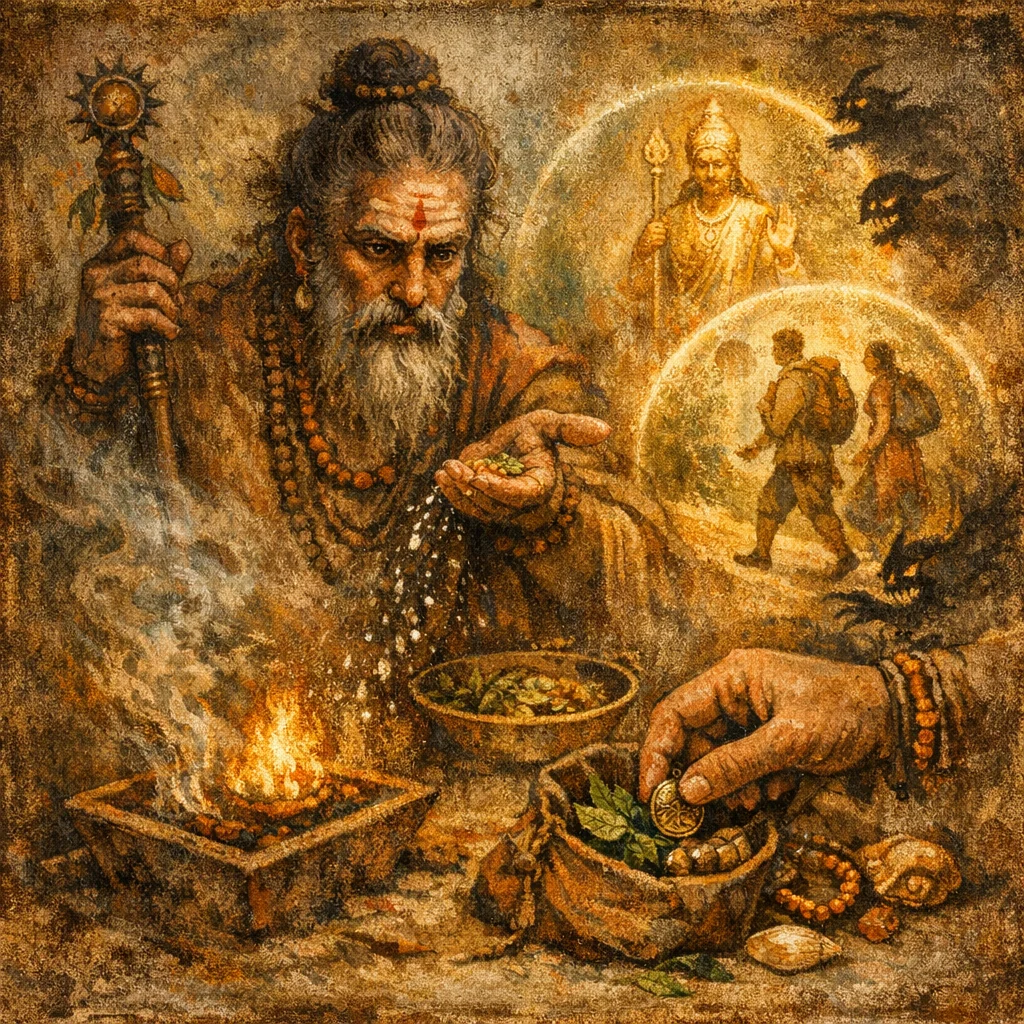
Sukta 9
Rishi: Traditionally connected with Pūṣan-invocations; specific r̥ṣi attribution varies by anukramaṇī tradition for AV 7.9.
Devata: Pūṣan
Chandas: Mixed/Triṣṭubh-like cadence (to be confirmed against pada-count in the project’s metrical module)
Mantras
Mantra 1
स्वस्तिदा पूषा। प्रपथे पथामजनिष्ट पूषा प्रपथे दिवः प्रपथे पृथिव्याः । उभे अभि प्रियतमे सधस्थे आ च परा च चरति प्रजानन्
Welfare-giver Pūṣan was born upon the fore-path of paths—upon the fore-path of heaven, upon the fore-path of earth. Toward both the most beloved stations he moveth, hither and thither, faring with knowledge.
Mantra 2
पूषेमा आशा अनु वेद सर्वाः सो अस्माँ अभयतमेन नेषत्। स्वस्तिदा आघृणिः सर्ववीरोऽप्रयुच्छन् पुर एतु प्रजानन्
Pūṣan knoweth after these directions, all of them: may he lead us by the safest path. The giver of welfare, the glowing one, all-heroic, unfailing—let him go before, discerning.
Mantra 3
पूषन्तव व्रते वयं न रिष्येम कदा चन। स्तोतारस्त इह स्मसि
O Pūṣan, within thy ordinance may we never at any time come to harm: here are we, thy praisers.
Mantra 4
परि पूषा परस्ताद्धस्तं दधातु दक्षिणम्। पुनर्नो नष्टमाजतु सं नष्टेन गमेमहि
Let Pūṣan from beyond set his right hand round about; let him bring back to us what is lost: with the lost restored may we go together.
Frequently Asked Questions
Pūṣan is the Vedic guardian of paths and directions. This hymn calls him “welfare-giver” and asks him to go ahead of the traveler, remove fear, and guide by the safest route.
Both. Along with road-protection and right guidance, the hymn explicitly asks Pūṣan to “bring back what is lost,” which can include people, cattle, or belongings.
No specific substances are required in the verses provided. The practice is primarily recitative: chanting at departure or at a crossroads, with a simple right-hand protective gesture fitting the final verse.