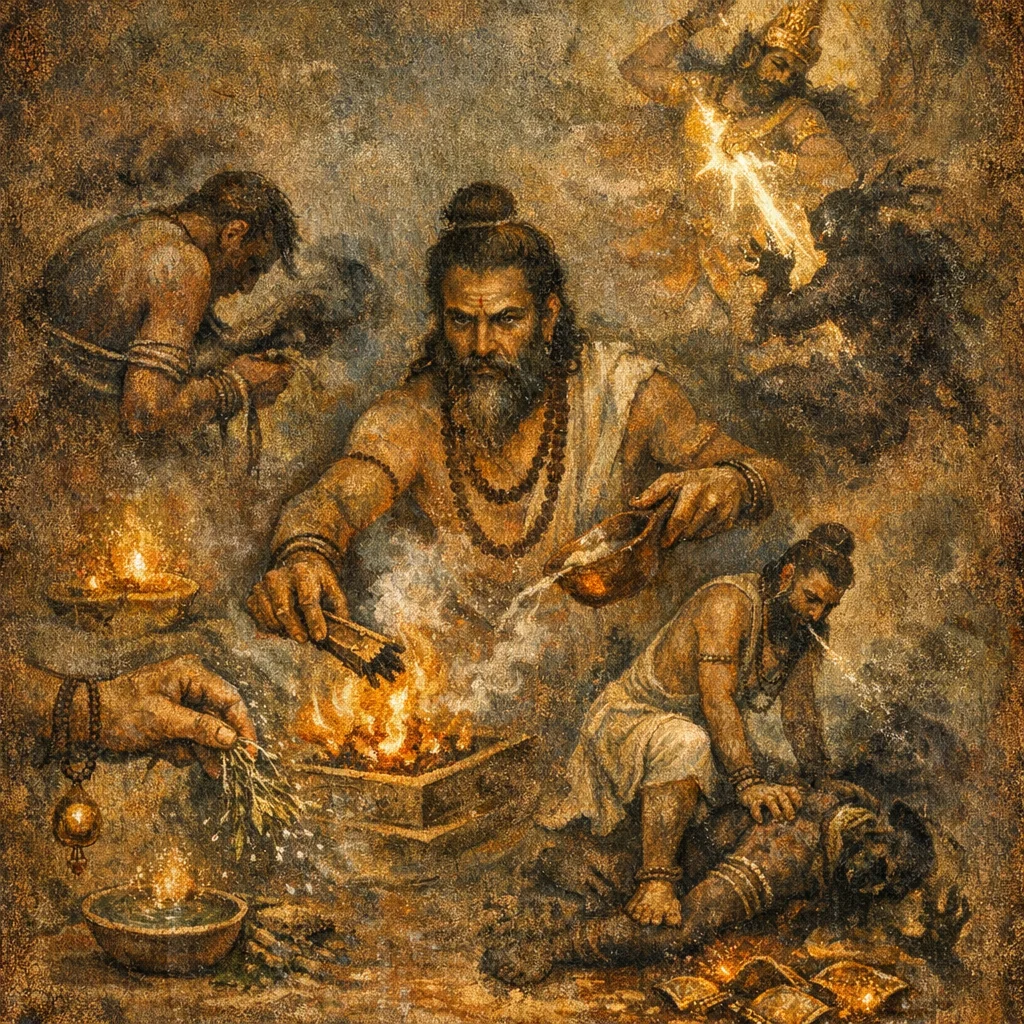
Sukta 8
Rishi: Atharvan/Āṅgirasa (Indra-abhicaric style; specific r̥ṣi attribution depends on anukramaṇī tradition for AVŚ 5.8)
Devata: Indra (Vṛtrahan, Ugra)
Chandas: Mixed/triṣṭubh-jagatī tendency in longer Atharvanic lines (to be confirmed against pada-count in the edition used)
Mantras
Mantra 1
शत्रुनाशनम्। वैकङ्कतेनेध्मेन देवेभ्य आज्यं वह । अग्ने ताँ इह मादय सर्व आ यन्तु मे हवम्
For the slaying of the foe: with fuel of vaikankata bear thou ghee unto the Gods. O Agni, here exhilarate them; let all come hither to my call.
Mantra 2
इन्द्रा याहि मे हवमिदं करिष्यामि तच्छृणु । इम ऐन्द्रा अतिसरा आकूतिं सं नमन्तु मे । तेभिः शकेम वीर्यं१ जातवेदस्तनूवशिन्
O Indra, come thou to my call: this work will I perform—hear thou that. Let these Indraic over-rushers bow wholly to my intent; with them may we be able for heroic might, O Jātavedas, self-ruled.
Mantra 3
यदसावमुतो देवा अदेवः संश्चिकीर्षति । मा तस्याग्निर्हव्यं वाक्षीद्धवं देवा अस्य मोप गुर्ममैव हवमेतन
If yonder godless man from there devise some deed, O Gods—let not his Agni bear the oblation, nor his call. O Gods, go not unto him: to my call alone do ye resort.
Mantra 4
अति धावतातिसरा इन्द्रस्य वचसा हत । अविं वृक इव मथ्नीत स वो जीवन्मा मोचि प्राणमस्यापि नह्यत
Away—run forth, ye Fluxes—smitten by the word of Indra. Like a wolf that mangles a ewe, so would ye rend; but while he liveth, let not his breath be loosed: bind it fast upon him.
Mantra 5
यममी पुरोदधिरे ब्रह्माणमपभूतये । इन्द्र स ते अधस्पदं तं प्रत्यस्यामि मृत्यवे
That spell which those have set before them for the driving-off of evil—O Indra, it is thine: its nether footing, that I cast back upon Death.
Mantra 6
यदि प्रेयुर्देवपुरा ब्रह्म वर्माणि चक्रिरे। तनूपानं परिपाणं कृण्वाना यदुपोचिरे सर्वं तदरसं कृधि
If they have gone forth, those god-fortressed ones, and have wrought spell-armours—body-guard and all-around guard—whatsoever they have muttered thereon, make thou all that sapless, void of power.
Mantra 7
यानसावतिसरांश्चकार कृणवच्च यान्। त्वं तानिन्द्र वृत्रहन् प्रतीचः पुनरा कृधि यथामुं तृणहां जनम्
What fluxes that man hath made, and what he hath caused to be made—those, O Indra Vṛtra-slayer, turn thou back again, returning upon him, so that they smite that grass-cutting fellow yonder.
Mantra 8
यथेन्द्र उद्वाचनं लब्ध्वा चक्रे अधस्पदम्। कृण्वे३ऽहमधरांस्तथामूञ्छश्वतीभ्यः समाभ्यः
As Indra, having won the upraised word, established for them the nether place—so do I make those yonder ones inferior, for everlasting years, through all the seasons of time.
Mantra 9
अत्रैनानिन्द्र वृत्रहन्नुग्रो मर्मणि विध्य । अत्रैवैनानभि तिष्ठेन्द्र मेद्य१हं तव । अनु त्वेन्द्रा रभामहे स्याम सुमतौ तव
Here, O Indra, Vṛtra-slayer, fierce one, pierce these in the vital spot. Here, even here, stand thou over these, O Indra: I, made meet for sacrifice, am thine. Following after thee, O Indra, we lay hold upon thee; may we abide in thy good favour.
Frequently Asked Questions
Both layers are present. It treats atīsāra by expelling the ‘fluxes’ and binding prāṇa (healing), while also directing Indra’s coercive force to strike and permanently subjugate hostile agents (abhicārika/apotropaic).
It is a ritual way of saying: ‘do not let the life-breath slip away.’ The hymn pairs spoken command with a physical ligature (cord/band) to stabilize vitality during dangerous weakness.
Marma is the vital spot or vulnerable life-point. In Atharvanic idiom it is targeted speech-magic asking Indra to disable enemies decisively—neutralizing the force behind the affliction and preventing recurrence.