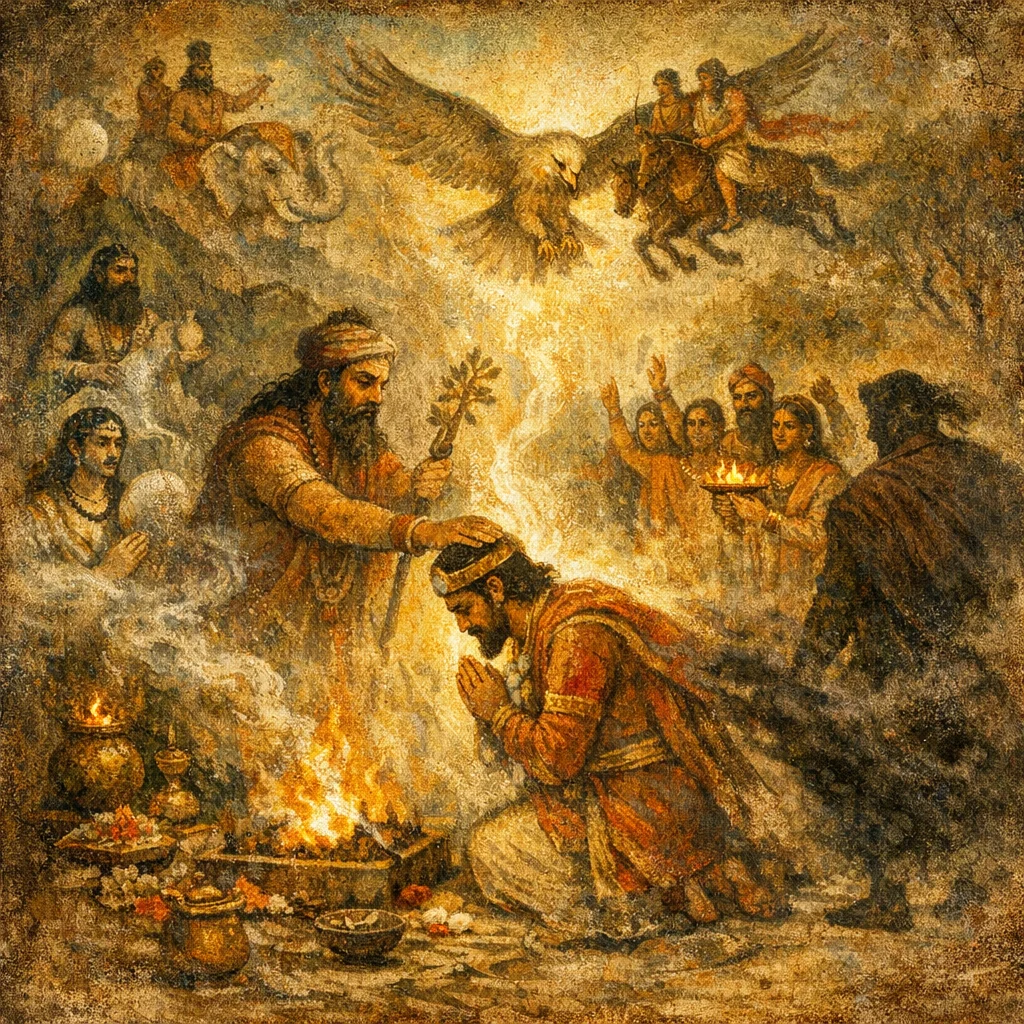
Sukta 3
Rishi: Atharvanic/Angirasa tradition (royal restoration context; specific ṛṣi attribution depends on anukramaṇī tradition).
Devata: Agni (primary), with Maruts as auxiliary enforcers; ‘Rodasī’ as cosmic supports.
Chandas: Triṣṭubh-like cadence (to be confirmed against pada count/accent tradition in the user’s edition).
Mantras
Mantra 1
स्वराज्ये राज्ञः पुनः स्थापननम्। अचिक्रदत् स्वपा इह भुवदग्ने व्यऽचस्व रोदसी उरूची। युञ्जन्तु त्वा मरुतो विश्ववेदस आमुं नय नमसा रातहव्यम्
He hath cried aloud; the well-working One is here become: O Agni, shine forth wide—(make) Heaven and Earth far-radiant. Let the all-knowing Maruts yoke thee on: with reverence lead hither that man, the oblation-given, duly furnished with offering.
Mantra 2
दूरे चित् सन्तमरुषास इन्द्रमा च्यावयन्तु सख्याय विप्रम्। यद् गायत्रीं बृहतीमर्कमस्मै सौत्रामण्या दधृषन्त देवाः
Though he be far away, let the ruddy Powers set Indra in motion hither, for friendship, (to aid) the inspired priest; for when, with the Sautrāmaṇī, the Gods took courage to frame for him the Gāyatrī, the Bṛhatī, and the hymn of praise.
Mantra 3
अद्भ्यस्त्वा राजा वरुणो ह्वयतु सोमस्त्वा ह्वयतु पर्वतेभ्यः । इन्द्रस्त्वा ह्वयतु विड्भ्य आभ्यः श्येनो भूत्वा विश आ पतेमाः
From out the Waters let King Varuṇa summon thee; let Soma summon thee from forth the Mountains. Let Indra summon thee from these our clans: as a hawk becoming, to the peoples may we swiftly fly hither.
Mantra 4
श्येनो हव्यं नयत्वा परस्मादन्यक्षेत्रेअपरुद्धं चरन्तम्। अश्विना पन्थां कृणुतां सुगं त इमं सजाता अभिसंविशध्वम्
Let the Hawk convey the offering hither from afar—him who, moving to and fro, is held fast in another’s field. O Aśvins, make ye for him a path well-going: do ye, his birth-mates, enter together unto this one (and so be reunited).
Mantra 5
ह्वयन्तु त्वा प्रतिजनाः प्रति मित्रा अवृषत । इन्द्राग्नी विश्वे देवास्ते विशि क्षेममदीधरन्
Let the folk in answer call thee; let friendly powers in answer rain thee favour. Indra and Agni, and all the Gods—these have within the clan established security fast.
Mantra 6
यस्ते हवं विवदत् सजातो यश्च निष्ट्यः । अपाञ्चमिन्द्र तं कृत्वाथेममिहाव गमय
Whoso disputes thy rightful call—be he thy kinsman, or an alien—him, Indra, make thou backward-turned; and then bring this man hither, even here, to his place.
Frequently Asked Questions
It is used to bring back and re-establish a rightful ruler (or the ‘sovereign principle’) after displacement, and to stabilize the realm by aligning cosmic order with social order.
They function as summoning and enforcement powers across domains: Varuṇa calls from the waters, Soma from the mountains, and Indra from the clans—together ensuring retrieval and protection from opposition.
Yes, secondarily: the closing verse asks Indra to make any disputant—kinsman or outsider—‘backward-turned,’ so the intended person can return and be installed without obstruction.