Sukta 77
Rishi: Traditionally Indra-hymn seers (RV provenance; in AVŚ 20, many hymns are Rigvedic borrowings—specific r̥ṣi attribution follows RV for the parallel).
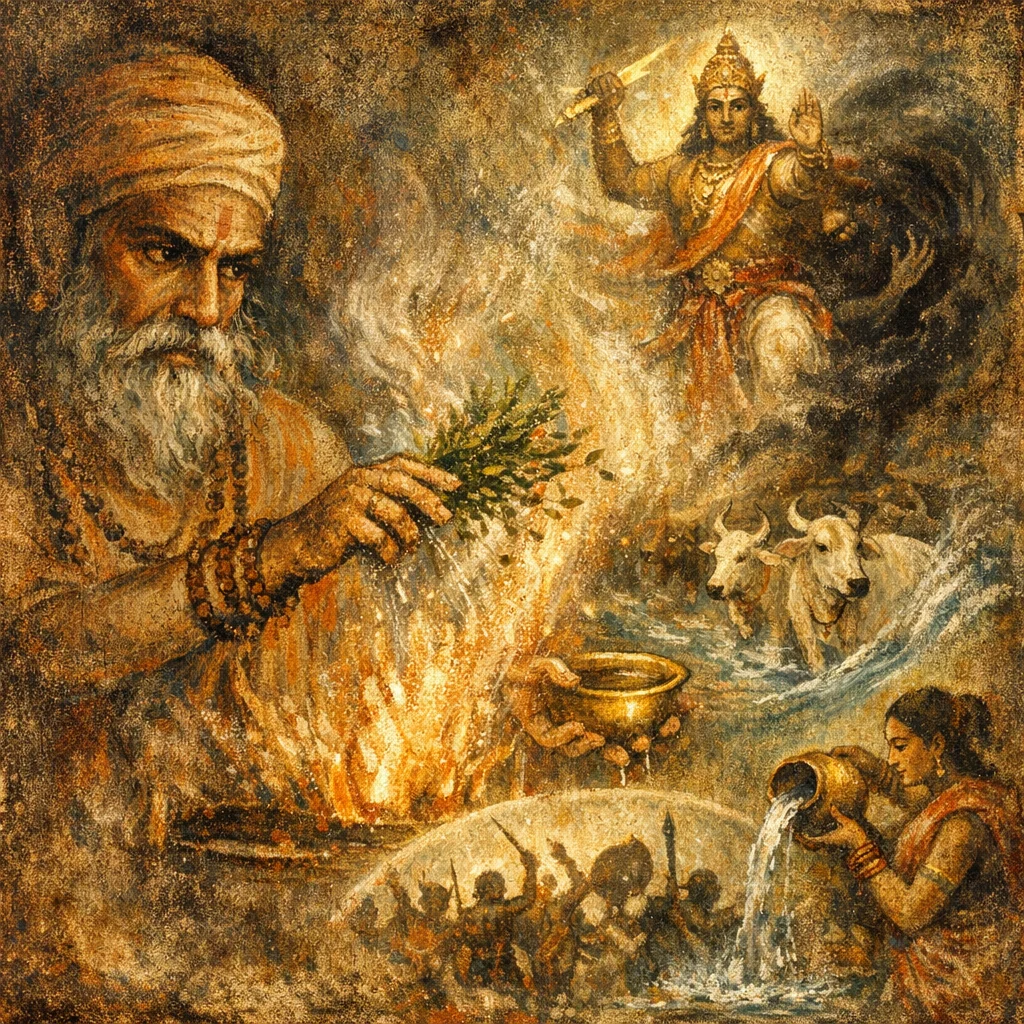
Devata: Indra (Puruhūta), with mythic associates Saramā and the Aṅgirases
Chandas: Triṣṭubh/Jagatī-type cadence typical of RV Indra narratives (exact meter to be confirmed against pada-count of the RV parallel).
Mantras
Mantra 1
आ सत्यो यातु मघवां ऋजीषी द्रवन्त्वस्य हरय उप नः । तस्मा इदन्धः सुषुमा सुदक्षमिहाभिपित्वं करते गृणानः
Let the true one come—Indra the bountiful, companion of the pressing; let his tawny steeds run hither unto us. For him indeed we have well pressed the soma-draught, well-ordered: here, while we praise, he shall make the drinking his own.
Mantra 2
अव स्य शूराध्वनो नान्तेऽस्मिन् नो अद्य सवने मन्दध्यै । शंसात्युक्थमुशनेव वेधाश्चिकितुषे असुर्याऽय मन्म
O hero, let him not fail us at the end of the path—today, in this pressing, for our exhilaration. The inspired one proclaims the hymn, like Uśanā, a sacred intent for the discerning, for lordly power.
Mantra 3
कविर्न निण्यं विदथानि साधन् वृषा यत् सेकं विपिपानो अर्चात्। दिव इत्था जीजनत् सप्त कारूनह्ना चिच्चक्रुर्वयुना गृणन्तः
Like a seer, achieving the hidden things and the ritual acts, the Bull—when, drinking deep, he sang his hymn—thus from heaven begat the Seven Singers; and even by day they wrought their ordered devices, praising aloud.
Mantra 4
स्व१र्यद् वेदि सुदृशीकमर्कैर्महि ज्योती रुरुचुर्यद्ध वस्तोः । अन्धा तमांसि दुधिता विचक्षे नृभ्यश्चकार नृतमो अभिष्टौ
When he found the heaven, fair to look upon, by hymns, when the great light shone forth at dawn—then he discerned the blind darknesses, shaken away, and for men the most heroic made succour.
Mantra 5
ववक्ष इन्द्रो अमितमृजिष्यु१भे आ पप्रौ रोदसी महित्वा। अतश्चिदस्य महिमा वि रेच्यभि यो विश्वा भुवना बभूव
Indra hath waxed—immeasurable, straight-rushing; by his greatness he hath filled both worlds. Therefore even his majesty is spread forth beyond measure—he who hath become over all beings.
Mantra 6
विश्वानि शक्रो नर्याणि विद्वानपो रिरेच सखिभिर्निकामैः । अश्मानं चिद् ये बिभिदुर्वचोभिर्व्रजं गोमन्तमुशिजो वि वव्रुः
The Mighty, knowing all manly deeds, released the waters with comrades, according to desire. Even the stone they clave with words; the eager ones laid open the cow-rich pen.
Mantra 7
अपो वृत्रं वव्रिवांसं पराहन् प्रावत् ते वज्रं पृथिवी सचेताः । प्रार्णांसि समुद्रियाण्यैनोः पतिर्भवं छवसा शूर धृष्णो
The Waters—Vṛtra who had encompassed them—he smote away; Earth, consenting, furthered for thee the bolt. Forth rushed the oceanic floods: be lord thereof by might, O hero, bold of heart.
Mantra 8
अपो यदद्रिं पुरुहूत दर्दराविर्भुवत् सरमा पूर्व्यं ते । स नो नेता वाजमा दर्षि भूरिं गोत्रा रुजन्नङ्गिरोभिर्गृणानः
When, O Much-invoked, thou didst cleave the rock, the Waters came forth to view; Saramā became manifest—an ancient deed of thine. Be thou our leader: show us hither abundant prize, breaking the cow-stalls, while praised with the Aṅgirases.
Frequently Asked Questions
It is used to ‘open what is blocked’: to overcome obstacles, prevent failure at a crucial final stage, and obtain withheld or hidden gains—symbolized as waters and cattle/prize.
Saramā represents discovery and tracking of concealed wealth, while the Aṅgirases represent the praising allies whose sacred speech helps open the enclosure; together they make Indra’s victory-and-revelation myth actionable.
No. The hymn’s imagery is already the method: water for sprinkling (prosperity-flow) and a small stone as the ‘obstruction’ symbol are sufficient for a simple paustika/apotropaic application.