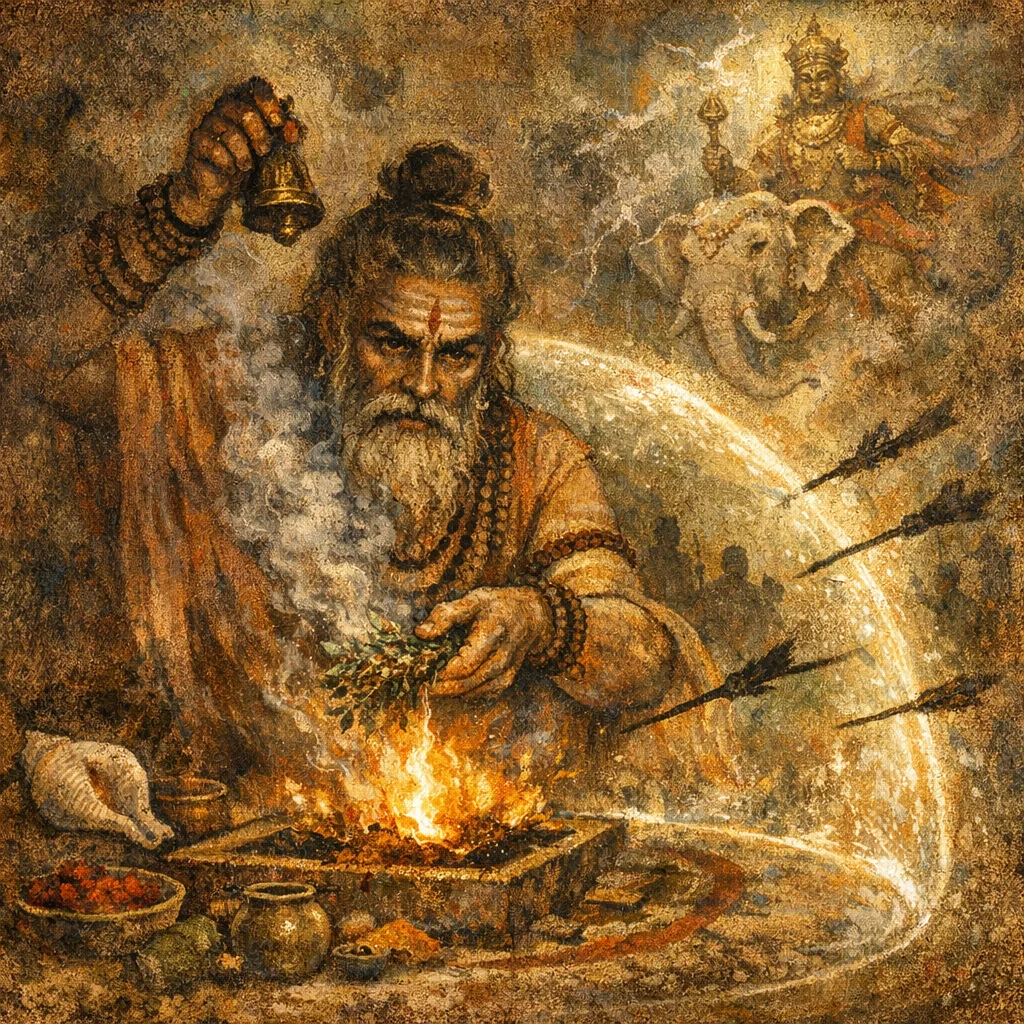
Sukta 54
Rishi: Ṛgvedic provenance (Indra-stuti; traditional attribution varies by RV source-hymn underlying AV 20.54)
Devata: Indra
Chandas: Triṣṭubh (Ṛgvedic-style)
Mantras
Mantra 1
विश्वाः पृतना अभिभूतरं नरं सजूस्ततक्षुरिन्द्रं जजनुश्च राजसे । क्रत्वा वरिष्ठं वर आमुरिमुतोग्रमोजिष्ठं तवसं तरस्विनम्
All battles, in one accord, have wrought the conquering Hero—Indra—and have begotten him for sovran rule: by counsel most excellent, a choicest boon; the Overwhelmer, yea the fierce, the strongest in might, the mighty, the impetuous.
Mantra 2
समीं रेभासो अस्वरन्निन्द्रं सोमस्य पीतये । स्वर्पतिं यदीं वृधे धृतव्रतो ह्योजसा समूतिभिः
Together the singers made him resound—Indra—for Soma’s drinking: the Lord of Light, when for his increase, steadfast in his ordinance, he verily with vigor comes with gathered helps.
Mantra 3
नेमिं नमन्ति चक्षसा मेषं विप्रा अभिस्वरा । सुदीतयो वो अद्रुहोऽपि कर्णे तरस्विनः समृक्वभिः
As men bend the wheel-rim with the eye, so the inspired, lifting voice, (their hymns) well-kindled—harmless—may they, with the united ṛk-singers, reach even to the ear of the impetuous One.
Frequently Asked Questions
It is used to invoke Indra for victory, protection, and the strengthening of sovereignty—especially where leadership, conflict, or rivalry is involved.
No. Soma is a key motif in the hymn (20.54.2), but the sukta can be recited as praise-invocation without a physical Soma offering; an optional soma-analogue offering may be used by tradition.
It expresses a Vedic idea of mantra-efficacy: well-formed, united praise must ‘arrive’ at the deity; once heard, Indra responds with ojas (vigor) and supportive powers for the patron.