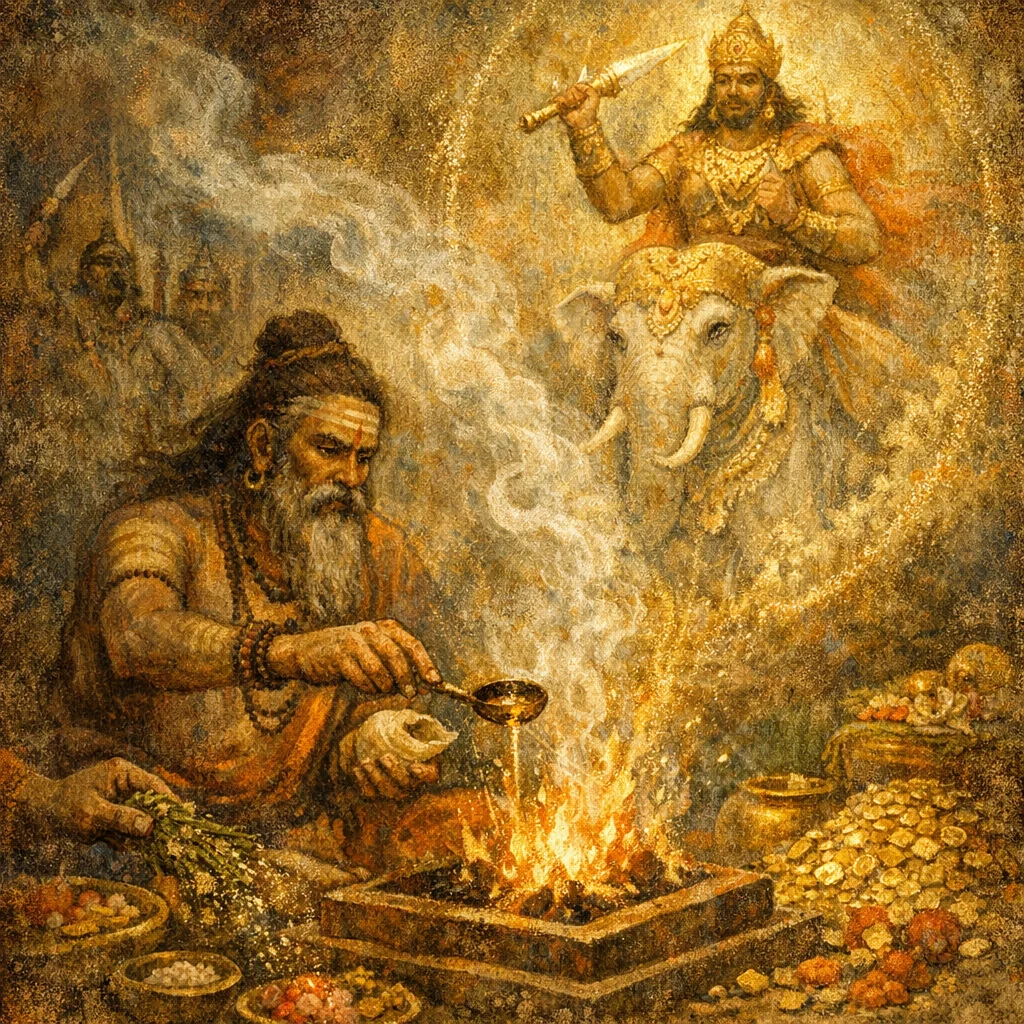
Sukta 51
Rishi: Ṛgvedic provenance (Indra-stuti); in AV 20 the seer-attribution follows the source hymn tradition rather than native AV authorship.
Devata: Indra (Maghavan, Vṛtrahan by implication)
Chandas: Triṣṭubh (Ṛgvedic-style; AV 20 predominantly preserves RV meters)
Mantras
Mantra 1
अभि प्र वः सुराधसमिन्द्रमर्च यथा विदे। यो जरितृभ्यो मघवा पुरूवसुः सहस्रेणेव शिक्षति
Sing forth unto Indra, bounteous in fair gifts, even so that the wise may know him: he, Maghavan, rich in many treasures, to the praisers grants reward as though with a thousandfold bestowal.
Mantra 2
शतानीकेव प्र जिगाति धृष्णुया हन्ति वृत्राणि दाशुषे । गिरेरिव प्र रसा अस्य पिन्विरे दत्राणि पुरुभोजसः
Like one with hundred hosts he presses on; with daring might he smites the Vṛtras for the pious giver. Like juices from a mountain forth they swell—his gifts, of him who yields enjoyment unto many.
Mantra 3
प्र सु श्रुतं सुराधसमर्चा शक्रमभिष्टये । यः सुन्वते स्तुवते काम्यं वसु सहस्रेणेव मंहते
Praise forth, yea praise, the famed and bounteous Śakra for our succor: who to the Soma-presser, to the singer, grants the wished-for good, as though he lavished it a thousandfold.
Mantra 4
शतानीका हेतयो अस्य दुष्टरा इन्द्रस्य समिषो महीः । गिरिर्न भुज्मा मघवत्सु पिन्वते यदीं सुता अमन्दिषुः
Hundredfold are his missiles, hard to be withstood—Indra’s great impellings unto might. Like a compact mountain he swells among the liberal, when the pressed draughts have made him glad.
Frequently Asked Questions
It is primarily a prosperity (paustika) Indra-hymn used to attract wealth, rewards, and supportive patronage, while also invoking Indra’s protective succor.
Indra-stutis assume the Soma-offering economy: Indra’s generosity and irresistible force are portrayed as intensifying when the pressed draughts (sutāḥ) have gladdened him.
No. The hymn’s main ‘technology’ is praise (stotra) and, in its traditional setting, Soma offering; it can also be adapted with a simple oblation and focused recitation for prosperity and protection.