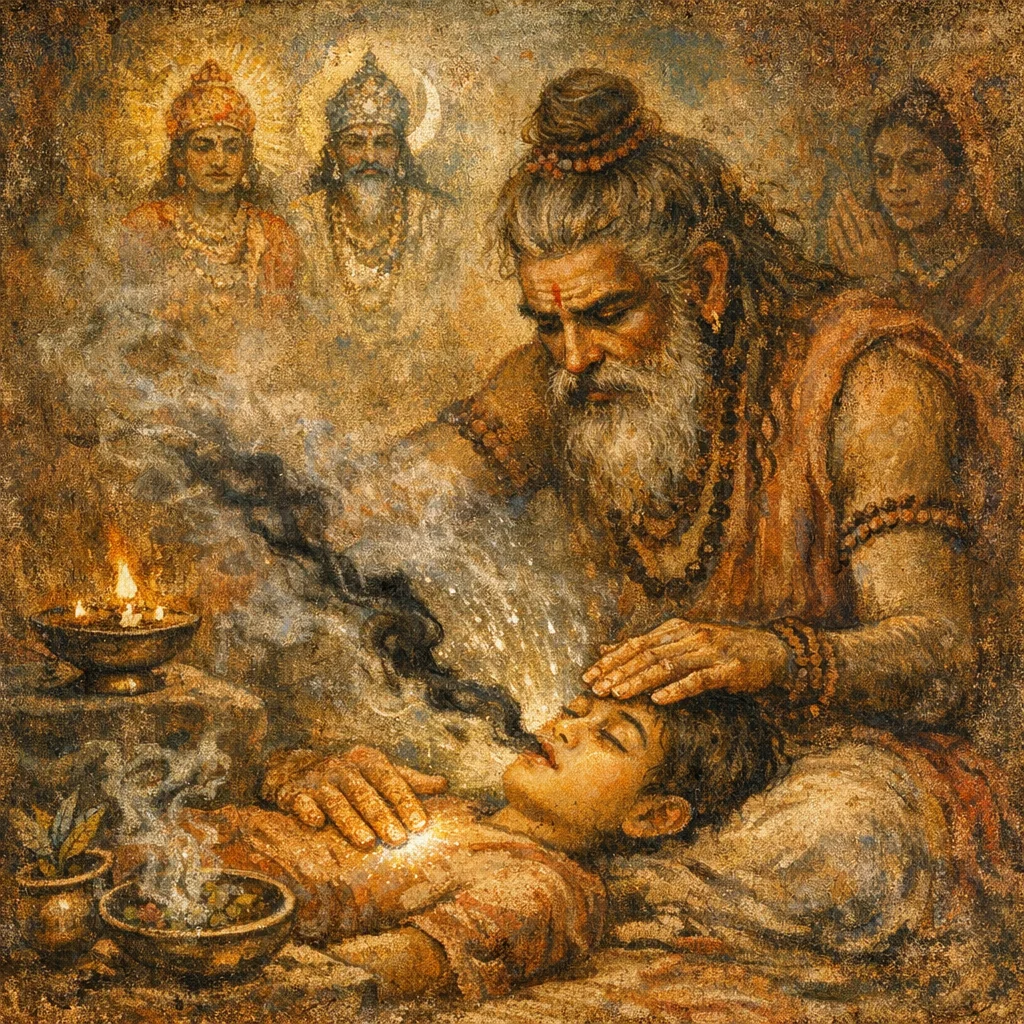
Sukta 28
Rishi: Atharvanic/Angiras-type attribution (as typical for AV healing/life rites; specific r̥ṣi assignment depends on the anukramaṇī tradition for 2.28).
Devata: Mitra-Varuṇa; Agni (Hotṛ) as ritual mediator
Chandas: Triṣṭubh (11-syllable cadence typical of the verse’s structure)
Mantras
Mantra 1
दीर्घायुःप्राप्तिः। तुभ्यमेव जरिमन् वर्धतामयं मेममन्ये मृत्यवो हिंसिषुः शतं ये। मातेव पुत्रं प्रमना उपस्थे मित्र एनं मित्रियात् पात्वंहसः
To thee, yea—to Age—let increase be given: let not the other Deaths, a hundred-fold, do hurt to this my man, to me. As a mother, kindly-minded, holds her son upon her lap, so may Mitra, by his friendly might, guard him from distress.
Mantra 2
मित्र एनं वरुणो वा रिशादा जरामृत्युं कृणुतां संविदानौ। तदग्निर्होता वयुनानि विद्वान् विश्वा देवानां जनिमा विवक्ति
May Mitra—or Varuṇa, the devourer of hurt—by joint accord make for this man a turning from age-and-death. That Agni, the Hotṛ, knowing the ordinances, distinguisheth all the births and offices of the Gods.
Mantra 3
त्वमीशिषे पशूनां पार्थिवानां ये जाता उत वा ये जनित्राः । मेमं प्राणो हासीन्मो अपानो मेमं मित्रा वधिषुर्मो अमित्राः
Thou hast dominion over the earthly cattle, over those that are born, and also over those that beget. Let not the Life-breath abandon this man; nor let the Down-breath: let not friends smite this man, nor enemies.
Mantra 4
द्यौष्ट्वा पिता पृथिवी माता जरामृत्युं कृणुतां संविदाने। यथा जीवा अदितेरुपस्थे प्राणापानाभ्यां गुपितः शतं हिमाः
Heaven, thy Father, and Earth, thy Mother, in concord let them make old age and death to be afar from thee; so mayest thou, living, in Aditi’s lap, guarded by in-breath and out-breath, attain a hundred winters.
Mantra 5
इममग्ने आयुषे वर्चसे नय प्रियं रेतो वरुण मित्रराजन्। मातेवास्मा अदिते शर्म यच्छ विश्वे देवा जरदष्टिर्यथासत्
Lead thou this man, O Agni, unto length of days and unto splendour; (grant) dear seed, O Varuṇa, O Mitra the King. Like a mother, O Aditi, bestow on him shelter: so may all the Gods (ordain) that he become one who beholds old age.
Frequently Asked Questions
It is used as a healing and life-prolonging recitation to avert decline and untimely death, stabilize the vital breaths, and place the person under orderly divine protection.
Together they represent concord and sovereign order (ṛta): by mutual agreement they ‘turn away’ jarā-mṛtyu, making protection effective both socially (Mitra) and juridically/apotropaically (Varuṇa).
Not necessarily. The hymn works primarily through prayer and ritual alignment; a fire (or simple flame) is the most natural support because Agni is the mediator who carries and ‘orders’ the rite.