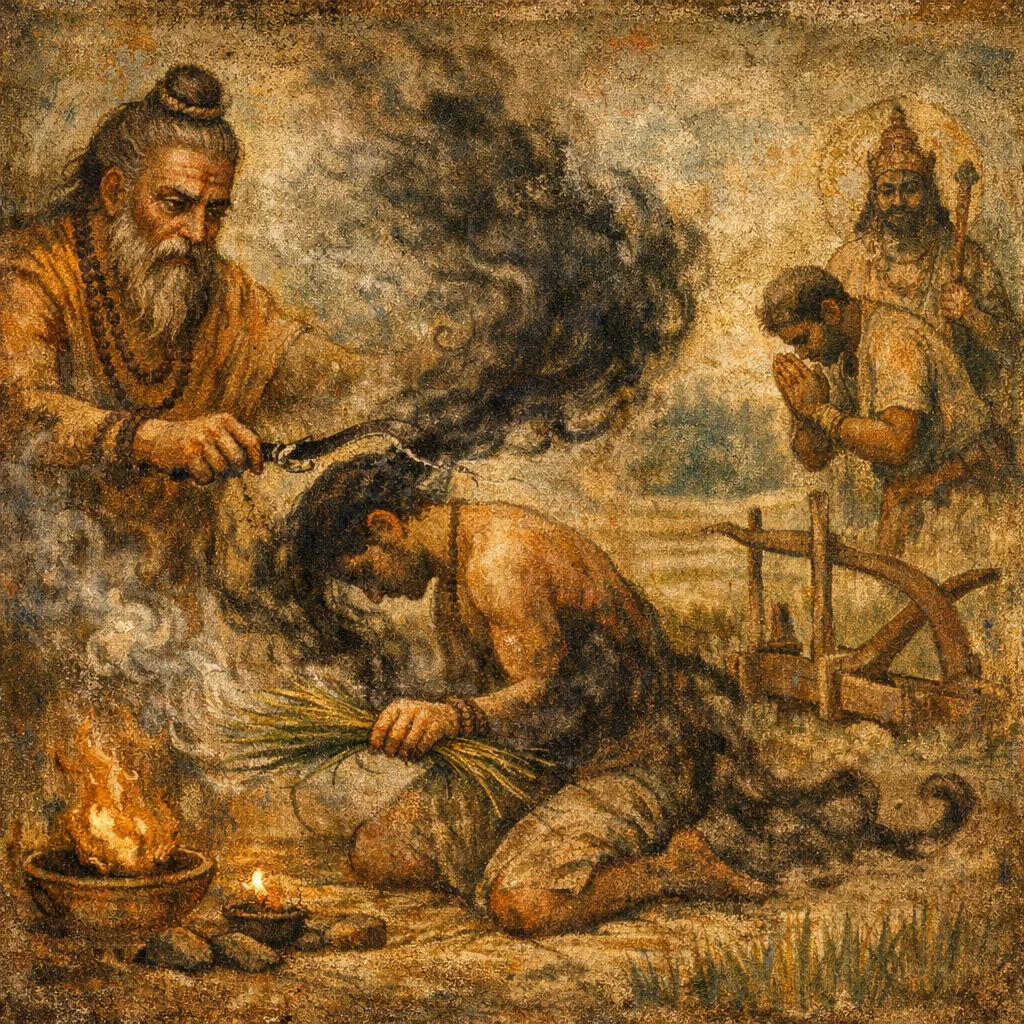
Sukta 8
Rishi: Atharvanic tradition (specific r̥ṣi not stated in the provided excerpt)
Devata: Vicṛtā and Tārakā (personified deliverers/unbinders); secondarily the expulsion of kṣetriya-disease
Chandas: Mixed/irregular as noted in the tradition: Virāṭ / Nicṛt-pathyā-pañkti (per the supplied metrical note)
Mantras
Mantra 1
क्षेत्रियरोगनाशनम्। ४ विराट्, ५ निचृत्पथ्यापङ्क्तिः। उदगातां भगवती विचृतौ नाम तारके । वि क्षेत्रियस्य मुञ्चतामधमं पाशमुत्तमम्
Upward let the two Blessed Ones depart—Vicṛtā by name, the two Deliverers: asunder let them loose, from kṣetriya-disease, the lower noose and the upper.
Mantra 2
अपेयं रात्र्युच्छत्वपोच्छन्त्वभिकृत्वरीः । वीरुत् क्षेत्रियनाशन्यप क्षेत्रियमुच्छतु
Away! let this Night lift and pass; away let the assailing powers be lifted off. The Virút, the Kṣetriya-destroyer—let it lift away the Kṣetriya malady.
Mantra 3
बभ्रोरर्जुनकाण्डस्य यवस्य ते पलाल्या तिलस्य तिलपिञ्ज्या। वीरुत् क्षेत्रियनाशन्यप क्षेत्रियमुच्छतु
With babhru, with Arjuna’s stalk, with barley for thee; with chaff, with sesame, with sesame-paste—let Virut, the kṣetriya-destroyer, thrust the kṣetriya away.
Mantra 4
नमस्ते लाङ्गलेभ्यो नम ईषायुगेभ्यः । वीरुत् क्षेत्रियनाशन्यप क्षेत्रियमुच्छतु
Obeisance be to thee, unto the ploughs; obeisance unto the pole and yokes. Let the Virút-plant, the destroyer of kṣetriya, thrust the kṣetriya malady away.
Mantra 5
नमः सनिस्रसाक्षेभ्यो नमः संदेश्येऽभ्यः । नमः क्षेत्रस्य पतये वीरुत् क्षेत्रियनाशन्यप क्षेत्रियमुछतु
Homage to the bleared and oozing-eyed ones; homage to the powers that haunt the neighborhood. Homage to the Lord of the Field. Let the Virút-plant, the destroyer of field-plague, drive the kṣetriya affliction away.
Frequently Asked Questions
In this sukta, kṣetriya is treated as a named affliction (and almost a personified force) that binds the patient like a noose; the mantra’s goal is to loosen and expel it rather than merely describe symptoms.
They are paired, ‘blessed’ deliverers invoked as unbinders—powers that cut or loosen bonds—so the patient is released from the disease’s grasp (both ‘upper’ and ‘lower’).
The ploughing set symbolizes cutting, turning, and uprooting; by saluting these implements, the rite borrows that ‘uprooting’ power to dislodge the kṣetriya malady and thrust it away.