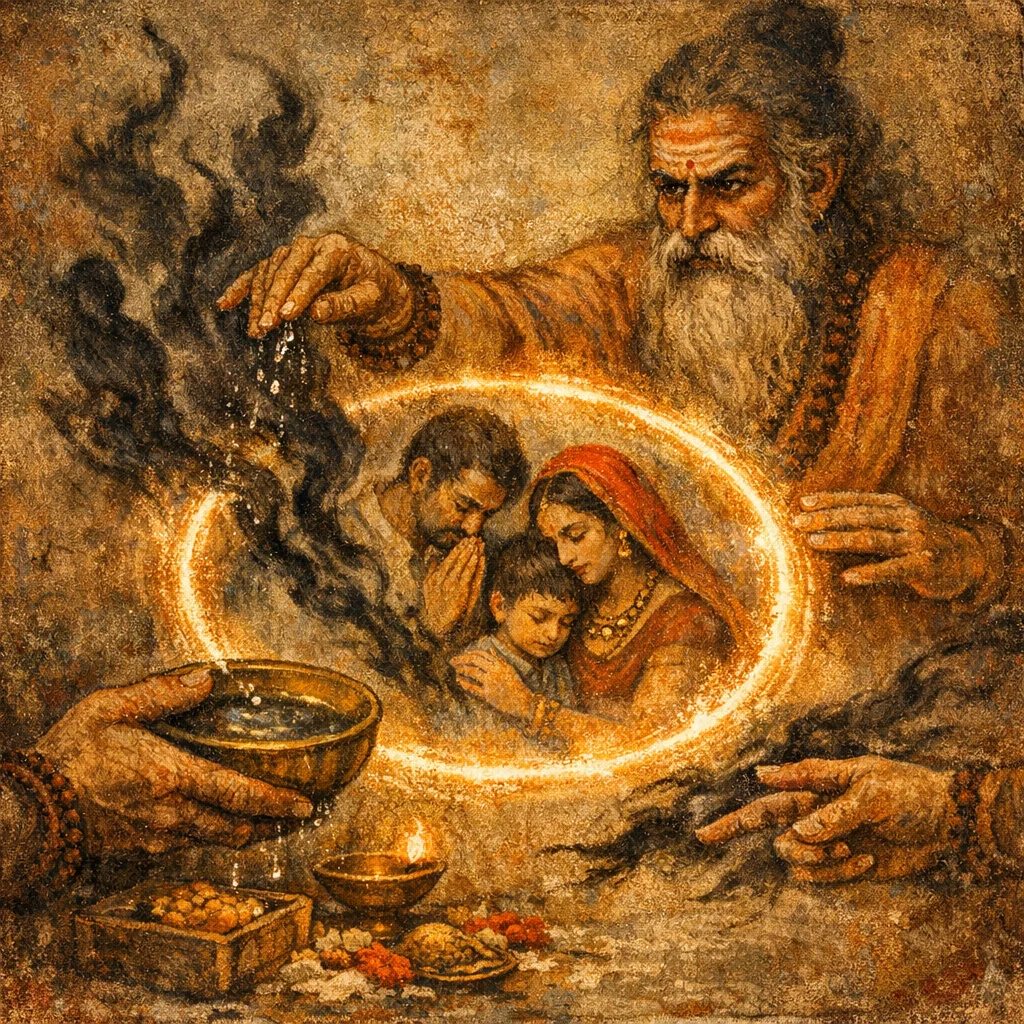
Sukta 7
Rishi: Atharvanic tradition (often anonymous/Angirasic in AV expiatory hymns; specific attribution depends on Anukramaṇī tradition).
Devata: Āpaḥ (the Waters) as purifiers and curse-removers
Chandas: Anuṣṭubh (probable; common for AV expiatory verses)
Mantras
Mantra 1
शापमोचनम्। अघद्विष्टा देवजाता वीरुच्छपथयोपनी । आपो मलमिव प्राणैक्षीत् सर्वान् मच्छपथाँ अधि
God-born Waters, hating sin, who bring the creeping oath-curses to their undoing—like filth, wash ye away, from off me, all the curses that have been laid upon me.
Mantra 2
यश्च सापत्नः शपथो जाम्याः शपथश्च यः । ब्रह्मा यन्मन्युतः शपात् सर्वं तन्नो अधस्पदम्
Whoso is rival, and the curse—yea, the kinsman’s curse—and whatsoever curse there be; whatever Brahman-power, from wrath, from cursing, hath arisen: all that, for us, be set beneath our feet.
Mantra 3
दिवो मूलमवततं पृथिव्या अध्युत्ततम्। तेन सहस्रकाण्डेन परि णः पाहि विश्वतः
The root of heaven, stretched downward; the loftiest growth upon the earth: with that thousand-stemmed (plant), guard us round about, from every side.
Mantra 4
परि मां परि मे प्रजां परि णः पाहि यद्धनम्। अरातिर्नो मा तारीन्मा नस्तारिषुरभिमातयः
Round about me, round about my progeny, round about us—guard thou whatever wealth there is. Let not malignity overpass us; let not the plotters pass beyond us.
Mantra 5
शप्तारमेतु शपथो यः सुहार्त् तेन नः सह। चक्षुर्मन्त्रस्य दुर्हार्दः पृष्टीरपि शृणीमसि
Let the curse-oath go back unto the curser—whatsoever imprecation is well-aimed: with that, along with its train, be it away from us. With the mantra’s eye we shatter the ill-hearted one; yea, even his back-parts do we break in pieces.
Frequently Asked Questions
It addresses harm caused by spoken curses and oath-imprecations (śapatha/śāpa), whether coming from rivals, relatives, or angry ritual speech, and aims to remove and neutralize them.
Because the hymn treats curse-force like a clinging impurity; Āpaḥ are invoked as divine purifiers who can ‘wash off’ the affliction and carry it away from the person.
Both: it cleanses the afflicted person and also performs reversal—sending the curse back to the one who uttered it—while asserting protection through the mantra’s ‘eye’ (cakṣus).