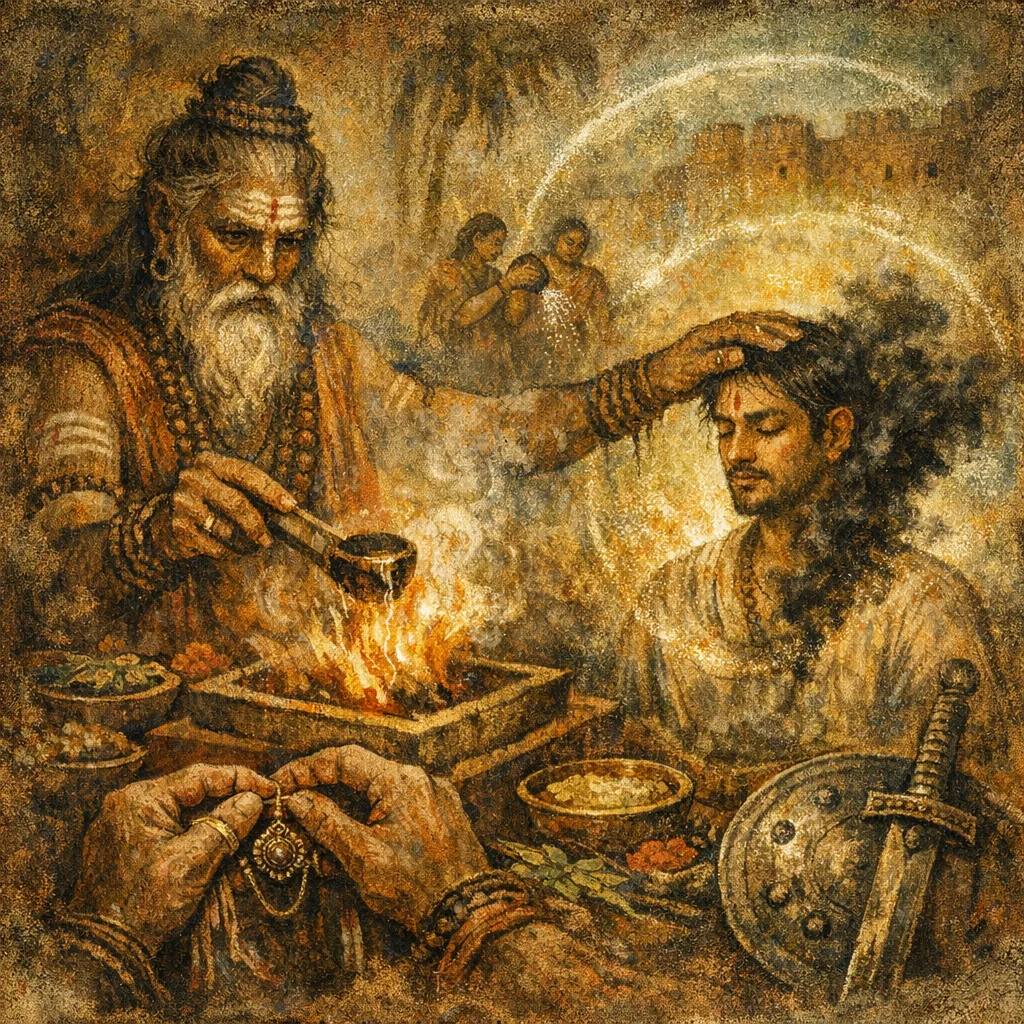
Sukta 58
Rishi: Atharvanic tradition (late AV collections; specific r̥ṣi attribution varies by anukramaṇī)
Devata: Yajña (Sacrifice) as personified power; also implicitly Prāṇa and Varcas
Chandas: Mixed/late AV style; predominantly Anuṣṭubh-like cadence with expanded pādas
Mantras
Mantra 1
यज्ञः। घृतस्य जूतिः समना सदेवा संवत्सरं हविषा वर्धयन्ती । श्रोत्रं चक्षुः प्राणोच्छिन्नो नो अस्त्वच्छिन्ना वयमायुषो वर्चसः
The Sacrifice—ghee’s driving impulse—harmonizing, god-attended, with oblation makes the year to wax. Let not our hearing, sight, nor breath be cut away: unshorn may we abide, in lifetime and in splendour.
Mantra 2
उपास्मान् प्राणो ह्वयतामुप वयं प्राणं हवामहे । वर्चो जग्राह पृथिव्य१न्तरिक्षं वर्चः सोमो बृहस्पतिर्विधत्ता
Hither unto us let Breath call Breath; hither we invoke the Breath. Splendour hath seized on Earth and Mid-air; splendour—Soma, and Bṛhaspati the Ordainer.
Mantra 3
वर्चसो द्यावापृथिवी संग्रहणी बभूवथुर्वर्चो गृहीत्वा पृथिवीमनु सं चरेम । यशसं गावो गोपतिमुप तिष्ठन्त्यायतीर्यशो गृहीत्वा पृथिवीमनु सं चरेम
Of splendour Heaven and Earth have become the Gatherers: having seized splendour, may we fare wholly along the Earth. The cows, bringing glory, stand about the Lord of cattle as they come: having seized fame, may we fare wholly along the Earth.
Mantra 4
व्रजं कृणुध्वं स हि वो नृपाणो वर्मा सीव्यध्वं बहुला पृथूनि । पुरः कृणुध्वमायसीरधृष्टा मा वः सुस्रोच्चमसो दृंहता तम्
Build ye the enclosure—for that is your men’s defence; sew ye on armour, many and broad. Make ye your ramparts, iron, unassailable: let not the high-crying foes make that to totter; make it firm.
Mantra 5
यज्ञस्य चक्षुः प्रभृतिर्मुखं च वाचा श्रोत्रेण मनसा जुहोमि । इमं यज्ञं विततं विश्वकर्मणा देवा यन्तु सुमनस्यमानाः
The Sacrifice’s eye, its source, its mouth—these with speech, with hearing, with mind I offer. This sacrifice, spread forth by Viśvakarman, let the Gods approach, graciously consenting.
Mantra 6
ये देवानामृत्विजो ये च यज्ञिया येभ्यो हव्यं क्रियते भागधेयम्। इमं यज्ञं सह पत्नीभिरेत्य यावन्तो देवास्तविषा मादयन्ताम्
Let those who are the Gods’ appointed priests, and those who are meet for sacrifice—to whom the oblation is duly wrought as an allotted share—having come unto this sacrifice together with their consorts, as many Gods as there be, rejoice herein with vigorous might.
Frequently Asked Questions
It asks that breath (prāṇa), hearing, and sight remain “uncut,” and that the reciter gain long life (āyus) and splendour (varcas) through a well-nourished, well-completed sacrifice.
Because the hymn views sacrifice as a living power that organizes time and vitality: when offerings are correctly given, the year is strengthened and human faculties are preserved in continuity.
It can be applied as a spoken fortification—recited to symbolically ‘build’ a boundary and ‘sew on’ armour for the community or cattle-wealth, reinforcing stability against hostile threats.