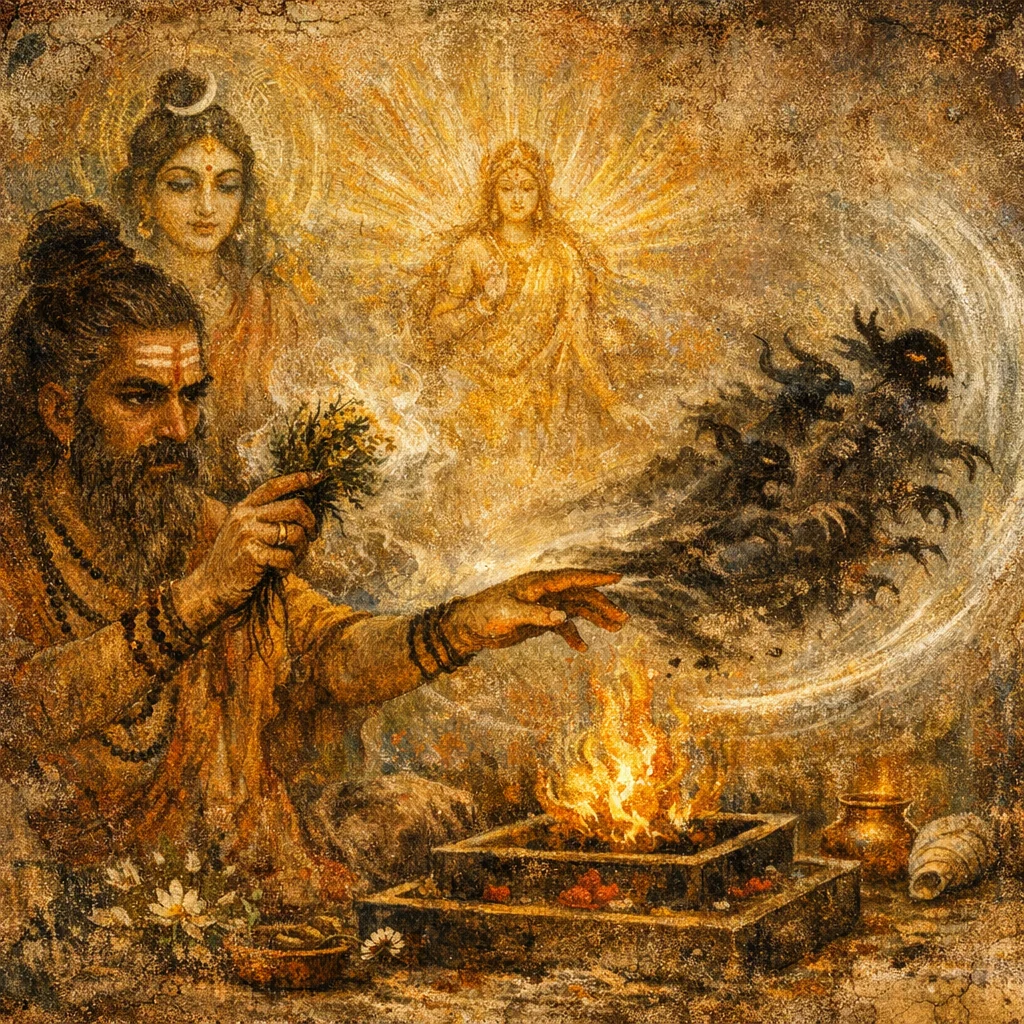
Sukta 6
Rishi: Atharvanic tradition (exact r̥ṣi attribution for 16.6 varies by anukramaṇī/edition)
Devata: Apotropaic force of Vāc (speech) and the ‘parā-vahana’ (banishing) act; implicitly directed against hostile humans
Chandas: Anuṣṭubh-like cadence (short imperative cola; exact metrical classification may be irregular)
Mantras
Mantra 1
अजैष्माद्यासनामाद्याभूमानागसो वयम्
We have conquered; foremost over the Asanā-s, foremost have we become—guiltless are we.
Mantra 2
उषो यस्माद् दुष्वप्न्यादभैष्माप तदुच्छतु
O Dawn, from that evil dreaming wherefrom we were afraid—let that depart, let it be driven away.
Mantra 3
द्विषते तत् परा वह शपते तत् परा वह
Bear thou that evil clean away unto the hater; bear thou that evil clean away unto the curser.
Mantra 4
यं द्विष्मो यश्च नो द्वेष्टि तस्मा एनद् गमयामः
Whom we do hate, and whoso hateth us—unto that man we cause this (evil) to go.
Mantra 5
उषा देवी वाचा संविदाना वाग् देव्यु१षसा संविदाना
Dawn, the Goddess, in concord with Speech; and Speech, the Goddess, in concord with Dawn.
Mantra 6
उषस्पतिर्वाचस्पतिना संविदानो वाचस्पतिरुषस्पतिना संविदानः
The Lord of Dawn in concord with the Lord of Speech; the Lord of Speech in concord with the Lord of Dawn.
Mantra 7
ते३मुष्मै परा वहन्त्वरायान् दुर्णाम्नः सदान्वाः
Let them bear away unto yonder man the ill-wishers—those of evil name, the ever-abiding (foes).
Mantra 8
कुम्भीकाः दूषीकाः पीयकान्
The Kumbhīkās, the Defilers, the Pīyakas—(these) I name and mark out.
Mantra 9
जाग्रद्दुष्वप्न्यं स्वप्नेदुष्वप्न्यम्
The evil dream in waking, the evil dream in sleep—(both alike I meet and counterwork).
Mantra 10
अनागमिष्यतो वरानवित्तेः संकल्पानमुच्या द्रुहः पाशान्
From the boons that come not, from failure to attain, from plotted purposes— I loose thee from the nooses of treachery.
Mantra 11
तदमुष्मा अग्ने देवाः परा वहन्तु वघ्रिर्यथासद् विथुरो न साधुः
That, O Agni, let the Gods bear away unto yonder one—so that the Vaghrí be brought to naught, shattered, and of no avail.
Frequently Asked Questions
It means “carry it away.” In AV 16.6 it is a command that the evil embedded in hatred and curses be removed from the reciter and transported outward—often back toward the hostile source.
Its primary function is protective reversal: it prevents hostile speech from landing on the reciter by sending it away and back to the hater/curser. The emphasis is on expulsion and neutralization rather than initiating unprovoked harm.
The text itself does not require substances. The closing verse explicitly involves Agni, so recitation near a household fire can support the rite, but the core mechanism is the spoken imperative of banishment.