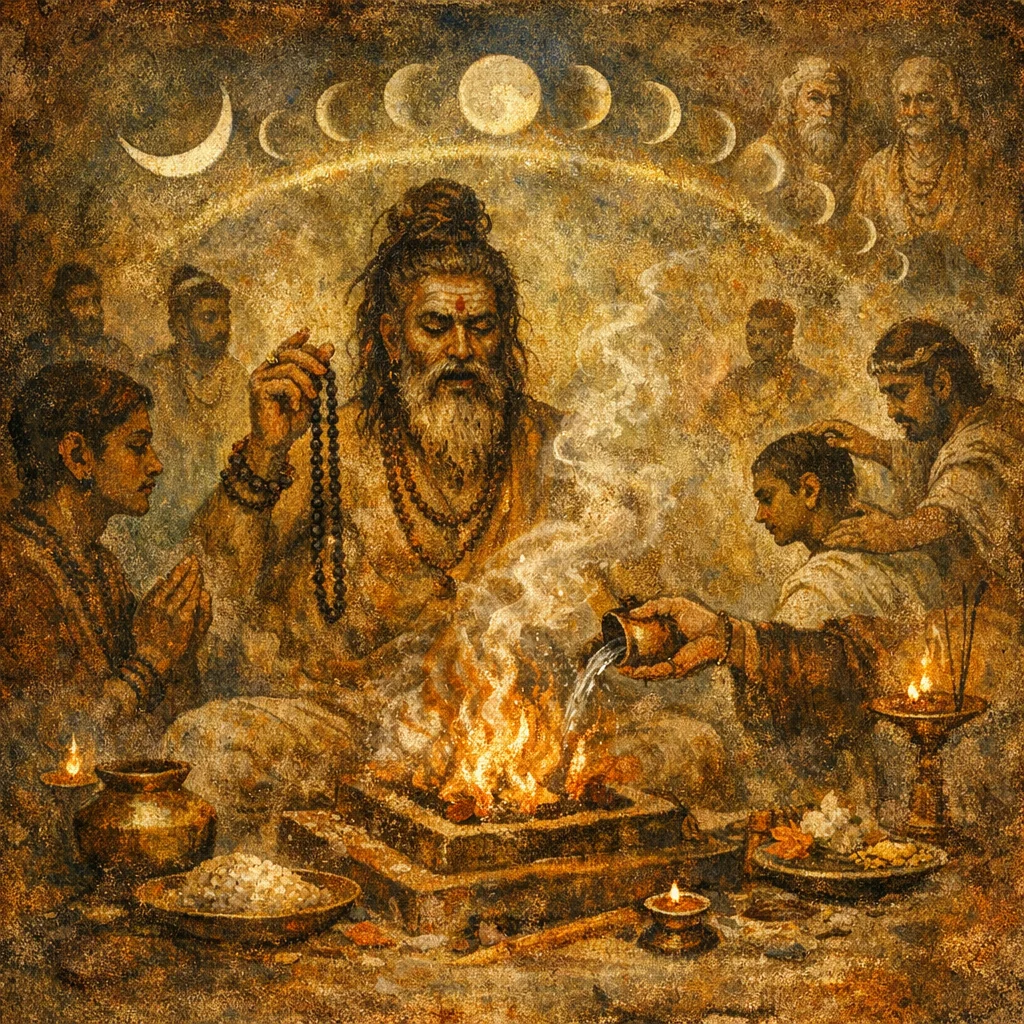
Sukta 16
Rishi: Vratya (mythic/cosmic subject; traditional attribution varies in ancillary lists)
Devata: Vratya / Prāṇa-functions (here Apāna) as cosmic principle
Chandas: Prose-like Atharvanic style (not a strict ṛgvedic meter; often treated as mixed/anuṣṭubh-adjacent in later catalogues)
Mantras
Mantra 1
तस्य व्रात्यस्य ।योऽस्य प्रथमोऽपानः सा पौर्णमासी
Of that Vrātya, the first Apāna-breath—she is Paurṇamāsī, the Full-moon.
Mantra 2
तस्य व्रात्यस्य ।योऽस्य द्वितीयोऽपानः साष्टका
Of that Vratya: the second of his Apāna-breaths—this is the Aṣṭakā.
Mantra 3
तस्य व्रात्यस्य ।योऽस्य तृतीयोऽपानः सामावास्या
Of that Vratya: the third of his Apāna-breaths—this is the New-moon night.
Mantra 4
तस्य व्रात्यस्य । योऽस्य चतुर्थोऽपानः सा श्रद्धा
Of that Vratya: the fourth of his Apāna-breaths—this is Faith.
Mantra 5
तस्य व्रात्यस्य । योऽस्य पञ्चमोऽपानः सा दीक्षा
Of that Vratya: the fifth of his Apāna-breaths—this is Consecration.
Mantra 6
तस्य व्रात्यस्य । योऽस्य षष्ठोऽपानः स यज्ञः
Of that Vratya: the sixth of his Apāna-breaths—this is the Sacrifice.
Mantra 7
तस्य व्रात्यस्य । योऽस्य सप्तमोऽपानस्ता इमा दक्षिणाः
Of that Vratya: that which is his seventh—Apāna, the downward breath—those are these priestly fees.
Frequently Asked Questions
Here the Vratya is treated as a cosmic figure, not only a social category. The hymn speaks of the Vratya’s inner breaths (especially apāna) as identical with major ritual and temporal powers.
The sukta uses bandhu logic: inner physiology mirrors outer cosmos. By saying a particular apāna ‘is’ Amāvāsyā or ‘is’ Yajña, it makes liminal time and sacrifice part of a single cosmic-bodily system that can be ritually affirmed.
It means the priestly fee is presented as a necessary, power-bearing element of the rite—cosmically grounded rather than optional. Giving dakṣiṇā becomes a sacral act that completes and legitimates the ritual order.