Adhyaya 3
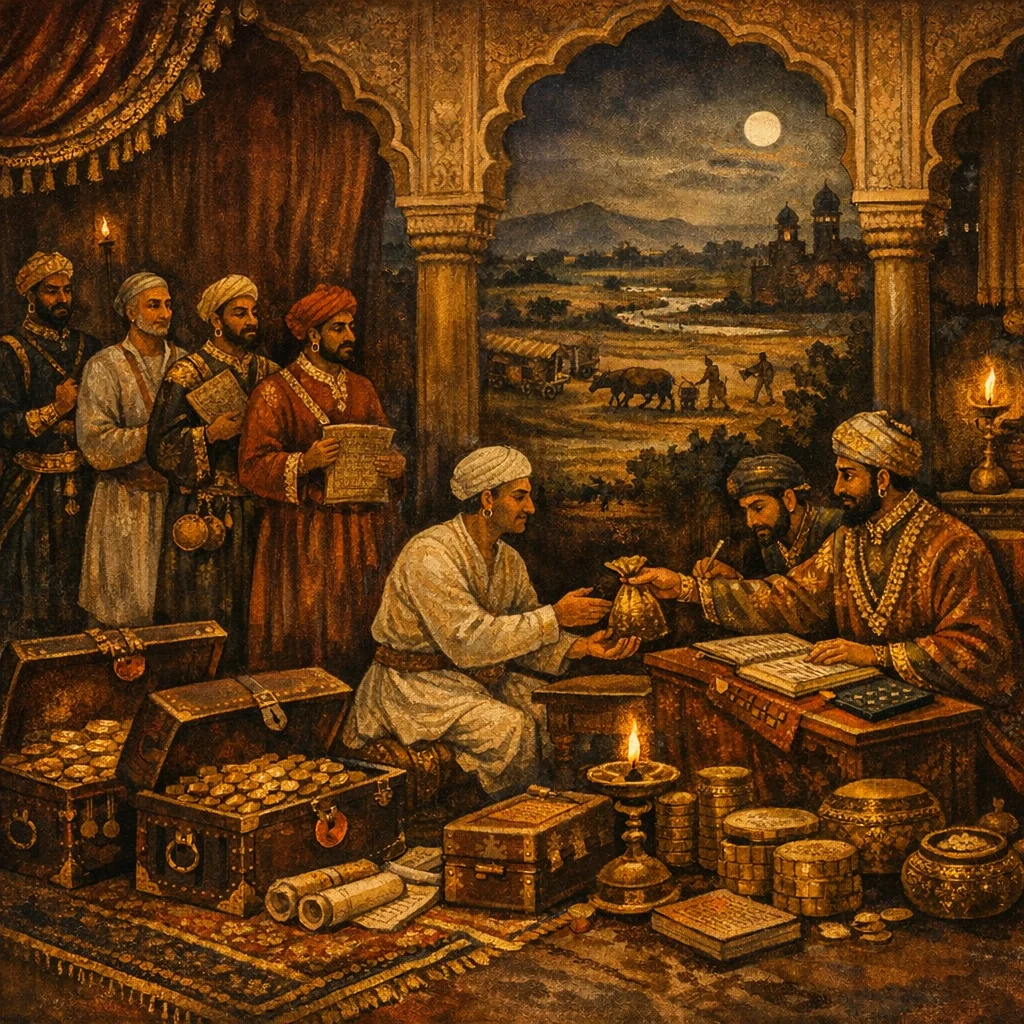
Chapter 5.3_3316 turns rations and pay into a surveillance-and-morale tool by using camp social networks as low-cost intelligence nodes to prevent indiscipline and infiltration. Compensation is framed as a diagnostic lever, not merely welfare. Camp-adjacent groups (sattrins, courtesans, artisans, performers, punishment-hardened persons) are treated as information nodes. The state reads loyalty and discipline through soldiers’ spending, speech, and associations. Rumor and vice are managed as security variables, not moral concerns. Early signals trigger calibrated daṇḍa and corrective provisioning, preventing escalation. This strengthens Sena directly while safeguarding Kośa (waste avoidance) and Durga/Janapada (internal stability).
Sutras
Sutra 1
दुर्गजनपदशक्त्या भृत्यकर्म समुदयपादेन स्थापयेत्कार्यसाधनसहेन वा भृत्यलाभेन ॥ कZ_०५.३.०१ ॥
Using the capacity of forts and the countryside, the king should fix servants’/officials’ work and pay by a share in the yield; or (alternatively) by granting them gains tied to successful completion of tasks.
Sutra 2
शरीरमवेक्षेत न धर्मार्थौ पीडयेत् ॥ कZ_०५.३.०२ ॥
He should look after his body (health) and should not strain or damage dharma and artha.
Sutra 3
ऋत्विगाचार्यमन्त्रिपुरोहितसेनापतियुवराजराजमातृराजमहिष्योऽष्टचत्वारिंशत्साहस्राः ॥ कZ_०५.३.०३ ॥
For the ṛtvij (sacrificial priest), ācārya (royal preceptor), minister, purohita (chief chaplain), commander-in-chief, crown prince, queen-mother, and chief queen(s), the stipend is forty-eight thousand (per annum).
Sutra 4
एतावता भरणेनानास्पद्यत्वमकोपकं चैषां भवति ॥ कZ_०५.३.०४ ॥
With maintenance at this level, they become not open to inducement and do not become resentful.
Sutra 5
दौवारिकान्तर्वंशिकप्रशास्तृसमाहर्तृसंनिधातारश्चतुर्विंशतिसाहस्राः ॥ कZ_०५.३.०५ ॥
For the chamberlain/door-keeper (dauvārika), the inner-palace officer (antarvaṃśika), the superintendent/disciplinarian (praśāstṛ), the chief revenue-collector (samāhartṛ), and the treasurer/custodian of stores (saṃnidhātṛ), the stipend is twenty-four thousand.
Sutra 6
एतावता कर्मण्या भवन्ति ॥ कZ_०५.३.०६ ॥
At this level (of support), they remain effective in their work.
Sutra 7
कुमारकुमारमातृनायकपौरव्यावहारिककार्मान्तिकमन्त्रिपरिषद्राष्ट्रान्तपालाश्च द्वादशसाहस्राः ॥ कZ_०५.३.०७ ॥
For the prince’s attendants (kumāra-), the prince’s mother’s establishment, the leader/captain (nāyaka), the city superintendent (paura), the judicial officer (vyāvahārika), the superintendent of workshops/industry (kārmāntika), members/secretariat of the ministerial council (mantri-pariṣad), and frontier guards (rāṣṭrānta-pāla), the stipend is twelve thousand.
Sutra 8
स्वामिपरिबन्धबलसहाया ह्येतावता भवन्ति ॥ कZ_०५.३.०८ ॥
At this level, they become bound to the master (the king) and serve as supporters of his power.
Sutra 9
श्रेणीमुख्या हस्त्यश्वरथमुख्याः प्रदेष्टारश्चाष्टसाहस्राः ॥ कZ_०५.३.०९ ॥
For heads of guilds (śreṇīmukhya), chiefs of elephant, horse, and chariot units, and pradeṣṭṛs (local judicial/punitive officers), the stipend is eight thousand.
Sutra 10
स्ववर्गानुकर्षिणो ह्येतावता भवन्ति ॥ कZ_०५.३.१० ॥
At this level, they become capable of drawing along their own group (in the king’s direction).
Sutra 11
पत्त्यश्वरथहस्त्यध्यक्षा द्रव्यहस्तिवनपालाश्च चतुःसाहस्राः ॥ कZ_०५.३.११ ॥
For superintendents of infantry, cavalry, chariots, and elephants, and for keepers of stores, elephant-handlers, and forest-guards, the stipend is four thousand.
Sutra 12
रथिकानीकस्थचिकित्सकाश्वदमकवर्धकयो योनिपोषकाश्च द्विसाहस्राः ॥ कZ_०५.३.१२ ॥
For chariot-warriors, physicians attached to military units, horse-trainers and horse-breed enhancers, and breeders/caretakers (of stock), the stipend is two thousand.
Sutra 13
कार्तान्तिकनैमित्तिकमौहूर्तिकपौराणिकसूतमागधाः पुरोहितपुरुषाः सर्वाध्यक्षाश्च साहस्राः ॥ कZ_०५.३.१३ ॥
The kārtāntikas, omen-interpreters (naimittikas), astrologers (mauhūrtikas), purāṇa-specialists, sūtas, māgadhas, the purohita’s personnel, and all superintendents (adhyakṣas) are to be on the thousand-(paṇa) grade.
Sutra 14
शिल्पवन्तः पादाताः संख्यायकलेखकादिवर्गश्च पञ्चशताः ॥ कZ_०५.३.१४ ॥
Skilled foot-soldiers, and the group consisting of accountants (saṃkhyāyakas), scribes (lekhakas), and similar personnel are to be on the five-hundred-(paṇa) grade.
Sutra 15
कुशीलवास्त्वर्धतृतीयशताः द्विगुणवेतनाश्चैषां तूर्यकराः ॥ कZ_०५.३.१५ ॥
Entertainers/performers (kuśīlavas) are on the 250-(paṇa) grade; among them, the instrumentalists (tūryakaras) receive double pay.
Sutra 16
कारुशिल्पिनो विंशतिशतिकाः ॥ कZ_०५.३.१६ ॥
Artisans and craftsmen (kārus and śilpins) are on the 2,000-(paṇa) grade.
Sutra 17
चतुष्पदद्विपदपरिचारकपारिकर्मिकाउपस्थायिकपालकविष्टिबन्धकाः षष्टिवेतनाः आर्ययुक्तारोहकमाणवकशैलखनकाः सर्वोपस्थायिनश्च ॥ कZ_०५.३.१७ ॥
Attendants for quadrupeds and bipeds, service-workers (pārikarmikas), waiters/assistants (upasthāyikas), keepers/guards (pālakās), organizers of corvée labour (viṣṭibandhakas)—these are to receive wages of sixty (paṇas); likewise Arya-yuktas, riders, novices/trainees, quarry/miners (śailakhanakas), and all general attendants.
Sutra 18
आचार्या विद्यावन्तश्च पूजावेतनानि यथार्हं लभेरन्पञ्चशतावरं सहस्रपरम् ॥ कZ_०५.३.१८ ॥
Teachers and learned persons should receive honoraria and remuneration according to merit—no less than five hundred and up to one thousand (paṇas).
Sutra 19
दशपणिको योजने दूतो मध्यमः दशोत्तरे द्विगुणवेतन आयोजनशतादिति ॥ कZ_०५.३.१९ ॥
A messenger of the middle grade is to be paid ten (paṇas) per yojana; beyond ten (yojanas) the wage is doubled—thus up to one hundred yojanas.
Sutra 20
समानविद्येभ्यस्त्रिगुणवेतनो राजा राजसूयादिषु क्रतुषु ॥ कZ_०५.३.२० ॥
In sacrifices such as the rājasūya, the king is to be remunerated at three times the rate of others possessing the same learning.
Sutra 21
राज्ञः सारथिः साहस्रः ॥ कZ_०५.३.२१ ॥
The king’s charioteer is on the thousand-(paṇa) grade.
Sutra 22
कापटिकोदास्थितगृहपतिकवैदेहकतापसव्यञ्जनाः साहस्राः ॥ कZ_०५.३.२२ ॥
Deceptive operatives (kāpaṭikas), udāsthitas, householder-agents (gṛhapatikas), vaidehakas, ascetic-agents (tāpasas), and ‘disguised’/cover operatives (vyañjanas) are on the thousand-(paṇa) grade.
Sutra 23
ग्रामभृतकसत्त्रितीक्ष्णरसदभिक्षुक्यः पञ्चशताः ॥ कZ_०५.३.२३ ॥
Those acting as village hirelings (grāma-bhṛtaka), public-feeding-house operators (sattri), sharp/harsh operatives (tīkṣṇa-rasa), and mendicant-type agents (bhikṣukī) are paid five hundred (units).
Sutra 24
चारसंचारिणोऽर्धतृतीयशताः प्रयासवृद्धवेतना वा ॥ कZ_०५.३.२४ ॥
Roving intelligence operatives (cāra-saṃcārin) are paid 250 (units), or more if the assignment involves exceptional exertion (a hardship increment).
Sutra 25
शतवर्गसहस्रवर्गाणामध्यक्षा भक्तवेतनलाभमादेशं विक्षेपं च कुर्युः ॥ कZ_०५.३.२५ ॥
Superintendents of units of one hundred and one thousand shall regulate (i) rations/allowances and wages, (ii) authorized gains/entitlements, and (iii) postings/transfers (vikṣepa).
Sutra 26
अविक्षेपो राजपरिग्रहदुर्गराष्ट्ररक्षावेक्षणेषु च ॥ कZ_०५.३.२६ ॥
No transfers/reassignments (avikṣepa) should be made in matters of royal property/establishments, fort security, protection of the realm, and inspection/oversight functions.
Sutra 27
नित्यमुख्याः स्युरनेकमुख्याश्च ॥ कZ_०५.३.२७ ॥
They should have permanent chiefs, and also multiple chiefs (as required).
Sutra 28
कर्मसु मृतानां पुत्रदारा भक्तवेतनं लभेरन् ॥ कZ_०५.३.२८ ॥
The sons and wives of those who die while on duty should receive rations and wages.
Sutra 29
बालवृद्धव्याधिताश्चैषामनुग्राह्याः ॥ कZ_०५.३.२९ ॥
Among them, children, the elderly, and the sick are to be supported with special consideration.
Sutra 30
प्रेतव्याधितसूतिकाकृत्येषु चैषामर्थमानकर्म कुर्यात् ॥ कZ_०५.३.३० ॥
In matters concerning funerary rites, illness, and childbirth-related duties, the state should provide assistance in money, honor/status, and necessary services.
Sutra 31
अल्पकोशः कुप्यपशुक्षेत्राणि दद्यात् अल्पं च हिरण्यम् ॥ कZ_०५.३.३१ ॥
When the treasury is small, he should give commodities, livestock, and land, and only a small amount of gold (cash).
Sutra 32
शून्यं वा निवेशयितुमभ्युत्थितो हिरण्यमेव दद्यात् न ग्रामं ग्रामसंजातव्यवहारस्थापनार्थम् ॥ कZ_०५.३.३२ ॥
If he is undertaking the settlement of a vacant area, he should give only cash (gold), not a village—so as not to disturb the established transactions and administration of an existing village.
Sutra 33
एतेन भृतानामभृतानां च विद्याकर्मभ्यां भक्तवेतनविशेषं च कुर्यात् ॥ कZ_०५.३.३३ ॥
By this same method, he should also fix differentiated rations and wages for both salaried and non‑salaried personnel, in proportion to their training/skill (vidyā) and the work performed (karma).
Sutra 34
षष्टिवेतनस्याढकं कृत्वा हिरण्यानुरूपं भक्तं कुर्यात् ॥ कZ_०५.३.३४ ॥
Taking an āḍhaka (a grain measure) as the standard corresponding to a wage-rate of sixty, he should determine the ration allowance in proportion to the cash (hiraṇya) component.
Sutra 35
पत्त्यश्वरथद्विपाः सूर्योदये बहिः संधिदिवसवर्जं शिल्पयोग्याः कुर्युः ॥ कZ_०५.३.३५ ॥
Infantry, cavalry, chariot units, and elephants should, at sunrise and outside the settlement, undertake skill-drills—except on treaty/armistice days.
Sutra 36
तेषु राजा नित्ययुक्तः स्यात् अभीक्ष्णं चैषां शिल्पदर्शनं कुर्यात् ॥ कZ_०५.३.३६ ॥
The king should remain constantly engaged in these matters and should frequently inspect their training and technical proficiency.
Sutra 37
कृतनरेन्द्राङ्कं शस्त्रावरणमायुधागारं प्रवेशयेत् ॥ कZ_०५.३.३७ ॥
Weapons and armour bearing the king’s official mark should be deposited into the state armoury.
Sutra 38
अशस्त्राश्चरेयुः अन्यत्र मुद्रानुज्ञातात् ॥ कZ_०५.३.३८ ॥
They should move about unarmed—except where authorized by a sealed permit.
Sutra 39
नष्टं विनष्टं वा द्विगुणं दद्यात् ॥ कZ_०५.३.३९ ॥
For property lost or destroyed, he should pay double compensation.
Sutra 40
विध्वस्तगणनां च कुर्यात् ॥ कZ_०५.३.४० ॥
He should also prepare an account/reckoning of what has been damaged or destroyed.
Sutra 41
सार्थिकानां शस्त्रावरणमन्तपाला गृह्णीयुः समुद्रमवचारयेयुर्वा ॥ कZ_०५.३.४१ ॥
Border/route guards should take custody of the weapons and armour of caravan traders, or else direct them to take the sea-route.
Sutra 42
यात्रामभ्युत्थितो वा सेनामुद्योजयेत् ॥ कZ_०५.३.४२ ॥
When he has risen to undertake an expedition (yātrā), he should set the army in readiness and mobilize it.
Sutra 43
ततो वैदेहकव्यञ्जनाः सर्वपण्यान्यायुधीयेभ्यो यात्राकाले द्विगुणप्रत्यादेयानि दद्युः ॥ कZ_०५.३.४३ ॥
Thereafter, the Vaidehaka suppliers of condiments and other market goods should, at the time of a march, issue all commodities to the soldiery as advances recoverable at double (i.e., to be repaid in twice the quantity/value).
Sutra 44
एवं राजपण्ययोगविक्रयो वेतनप्रत्यादानं च भवति ॥ कZ_०५.३.४४ ॥
Thus there results (i) the organized sale/issue of royal merchandise and (ii) the recovery/settlement of wages (through repayment/accounting).
Sutra 45
एवमवेक्षितायव्ययः कोशदण्डव्यसनं नावाप्नोति ॥ कZ_०५.३.४५ ॥
With income and expenditure thus supervised, one does not incur calamities affecting the treasury and the coercive apparatus (fines/punishments).
Sutra 46
इति भक्तवेतनविकल्पः ॥ कZ_०५.३.४६ ॥
Thus ends the set of alternatives regarding rations and wages.
Sutra 47
दण्डवृद्धाश्च जानीयुः शौचाशौचमतन्द्रिताः ॥ कZ_०५.३.४७च्द् ॥
And those seasoned in discipline should know (and monitor) what is clean and unclean, remaining vigilant and unremitting.
Frequently Asked Questions
Stable military discipline and reduced internal insecurity: fair/structured provisioning limits grievance, while continuous verification via social informant networks prevents corruption, desertion, and factionalization—protecting public order and the state’s capacity to defend and expand.
This passage implies (rather than enumerates) daṇḍa: those found in aśauca conduct—corruption, disloyalty, or indiscipline—are to be classified and subjected to proportionate punishment/administrative action under the king’s coercive authority, based on verified intelligence.
Read Arthashastra in the Vedapath app
Scan the QR code to open this directly in the app, with audio, word-by-word meanings, and more.