Adhyaya 257
वाक्पारुष्यादिप्रकरणम् (The Topic of Verbal Abuse and Related Offences)
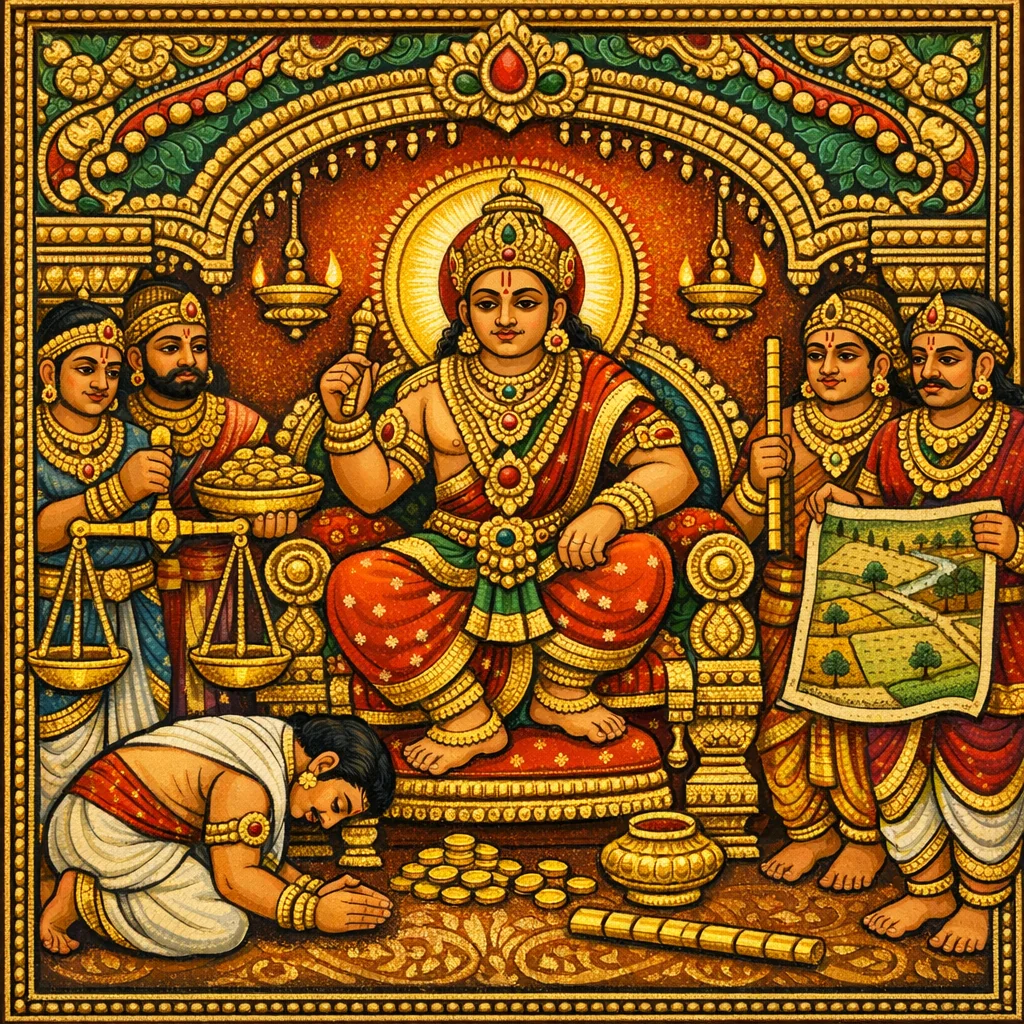
Lord Agni sets out a legal taxonomy of offences: verbal abuse (vāk-pāruṣya), physical assault (sāhasa), sexual and social transgressions, commercial fraud, and the control of theft. It opens with fines for mocking the disabled or diseased and for obscene oath-formulas, then prescribes graded penalties adjusted by varṇa-rank, by circumstance (anuloma/pratiloma), and by the protected status of the victim (Vedic scholars, the king, the deity). It then measures assault from raising a hand to bleeding, fractures, and mutilation, doubling punishment for group violence and for theft amid quarrels, with restitution. Next come economic rules: counterfeit weights and measures, adulteration, price-fixing collusion, norms of fair profit, customs duties, and penalties for evasion. Finally it outlines policing and criminal procedure—marks of suspicion in thieves, witnessless decisions by signs and reasoning, village and boundary liability, and escalating corporal to capital punishments—with special treatment for Brahmin offenders (branding and exile). The close stresses the king’s supervisory role and the ruler’s virtues when personally hearing cases, presenting law as a dharmic instrument of order.
Shlokas
Verse 1
इत्य् आग्नेये महापुराणे सीमाविवादादिनिर्णयो नाम षट्पञ्चाशदधिकद्विशततमो ऽध्यायः अथ सप्तपञ्चाशदधिकद्विशततमो ऽध्यायः वाक्पारुष्यादिप्रकरणम् अग्निर् उवाच सत्यासत्यान्यथा स्तोत्रैर् न्यूनाङ्गेन्द्रियरोगिणां क्षेपं करोति चेद्दण्ड्यः पणानर्धत्रयोदश
Thus, in the Agni Mahāpurāṇa, the two-hundred-and-fifty-sixth chapter, entitled “Decision on boundary-disputes and the like,” concludes. Now begins the two-hundred-and-fifty-seventh chapter: “The topic of verbal abuse and related offences.” Agni said: If a person, whether speaking truth or falsehood, mocks one who is deficient in limb(s), defective in sense-organs, or diseased—by means of disparaging praise or taunting words—he shall be punished with a fine of twelve and a half paṇas.
Verse 2
अभिगन्तास्मि भगिनीम्मातरं वा तवेति च शपन्तं दापयेद्राजा पञ्चविंशतिकं दमं
If someone, while taking an oath, says, “I will violate your sister or your mother,” the king shall make that oath-taker pay a fine of twenty-five paṇas.
Verse 3
अर्धो ऽधमेषु द्विगुणः परस्त्रीषूत्तमेषु च दण्डप्रणयनं कार्यं वर्णजात्युत्तराधरैः
For offenders of lower standing, the penalty is to be reduced by half; for offences involving another man’s wife, and for those of higher standing, it is to be doubled. The imposition of punishment is to be determined according to the varṇa-status of offender and victim, in gradations of higher and lower.
Verse 4
प्रातिलोम्यापवादेषु द्विगुणत्रिगुणा दमाः वर्णानामानुलोम्येन तस्मादेवार्धहानितः
In cases of pratiloma (reverse-order unions) and defamatory censure, the fines for the higher varṇas are doubled or tripled; but in anuloma (the proper order), therefore the penalty is reduced by half.
Verse 5
वाहुग्रीवानेत्रसक्थिविनाशे वाचिके दमः शत्यस्ततो ऽर्धिकः पादनासाकर्णिकरादिषु
For the destruction (loss of function) of the arm, neck, eye, or thigh, the monetary penalty is one hundred (units). For injuries to the foot, nose, ear, the temple, and the like, it is half of that.
Verse 6
अशक्तस्तु वदन्नेवन्दण्डनीयः पणान् दश तथा शक्तः प्रतिभुवं दद्यात् क्षेमाय तस्य तु
But one who is unable (to provide the required surety or payment) and yet speaks in this manner is to be fined ten paṇas; whereas one who is able should provide a pratibhu (surety) for that person’s security, to guarantee compliance or appearance.
Verse 7
पतनीयकृते क्षेपे दण्डी मध्यमसाहसः उपपातकयुक्ते तु दाप्यः प्रथमसाहसं
If the act of throwing/assault is committed in a case involving a patanīya (a grave transgression causing socio-religious downfall), the offender shall be punished with the middle-grade sāhasa fine; but if it is connected with an upapātaka (a secondary sin), he shall be made to pay the first-grade sāhasa fine.
Verse 8
त्रैविद्यनृपदेवानां क्षेप उत्तमसाहसः दद्यादित्यत्र दाप्य इति पाठो भवितुं युक्तः मध्यमो ज्ञातिपूगानां प्रथमो ग्रामदेशयोः
Abuse (kṣepa) directed at a scholar of the three Vedas (traividya), the king, or a deity is the highest grade of sāhasa (violent/insolent offence). In the clause “he should give (dadyāt)”, the more fitting reading is “he should be made to pay (dāpya)”. Abuse aimed at one’s kinsmen or a guild/association is the middle grade; that aimed at a village or a region is the lowest grade.
Verse 9
असाक्षिकहते चिह्नैर् युक्तिभिन्नागमेन च द्रष्टव्यो व्यवहारस्तु कूटचिह्नकृताद्भयात्
When a case is hampered by the absence of witnesses, the legal dispute should be examined by (external) marks and by reasoning grounded in authoritative tradition (āgama), out of fear of those who fabricate forged marks.
Verse 10
भस्मपङ्करजःस्पर्शे दण्डो दशपणः स्मृतः अमेध्यपार्ष्णिनिष्ठ्यूतस्पर्शने द्विगुणः स्मृतः
For touching ash, mud, or dust, the prescribed fine is ten paṇas. For touching what is impure—such as a heel soiled with filth or spittle—the fine is declared to be double.
Verse 11
समेष्वेवं परस्त्रीषु द्विगुणस्तूत्तमेषु च हीनेष्वर्धं दमो मोहमदादिभिरदण्डनम्
In the case of relations with another man’s wife, restraint/penance is to be applied thus: for women of equal status it is as stated; for women of higher standing it is doubled; for women of lower standing it is halved. But if the act occurred due to delusion, intoxication, and the like, no punitive penalty is to be imposed.
Verse 12
विप्रपीडाकरं च्छेद्यमङ्गमब्राह्मणस्य तु उद्गूर्णे प्रथमो दण्डः संस्पर्शे तु तदर्धिकः
For a non-Brahmin who harms a Brahmin, the offending limb is to be cut off. For merely raising the hand/weapon, the first-grade punishment applies; but for actual physical contact, the penalty is increased by an additional half.
Verse 13
उद्गूर्णे हस्तपादे तु दशविंशतिकौ दमौ परस्परन्तु सर्वेषां शास्त्रे मध्यमसाहसः
If a person raises the hand or foot to strike, the fine is ten or twenty dāmas; but if such acts occur mutually among all parties, the śāstras classify it as “middling assault” (madhyama-sāhasa).
Verse 14
पादकेशांशुककरोल्लुञ्चनेषु पणान् दश पीडाकर्षां शुकावेष्टपादाध्यासे शतन्दमः
For acts such as pulling or tearing the foot, hair, garment, or hand, the fine is ten paṇas. For inflicting pain by dragging someone, and for wrapping a person in cloth and trampling upon them, the punishment is a fine of one hundred (paṇas).
Verse 15
शोणितेन विना दुःस्वङ्कुर्वन् काष्ठादिभिर्नरः द्वात्रिंशतं पणान् दाप्यो द्विगुणं दर्शने ऽसृजः
If a man strikes another with wood or similar objects, causing pain but no bleeding, he shall be made to pay a fine of thirty-two paṇas; if blood is seen, the fine is double.
Verse 16
करपाददतो भङ्गे च्छेदने कर्णनासयोः मध्यो दण्डो व्रणोद्भेदे मृतकल्पहते तथा
A middling punishment is prescribed for breaking the hand, foot, or teeth; for cutting off the ear or nose; and likewise for bursting open a wound, and for an assault that leaves a person “as good as dead”.
Verse 17
चेष्टाभोजनवाग्रोधे नेत्रादिप्रतिभेदने कन्धराबाहुसक्थ्याञ्च भङ्गे मध्यमसाहसः
Obstructing a person’s movement, food, or speech; injuring the eyes and other organs; and causing fractures of the neck, arms, and thighs—these are deemed the “middle-grade” violent offence (madhyama-sāhasa).
Verse 18
एकं घ्नतां बहूनाञ्च यथोक्ताद्द्विगुणा दमाः कलहापहृतं देयं दण्डस्तु द्विगुणः स्मृतः
For one who strikes a single person, and for one who strikes many, the fines are to be twice the amounts previously stated. Whatever has been taken away in a quarrel must be restored, and the punitive fine is declared to be double.
Verse 19
दुःखमुत्पादयेद्यस्तु स समुत्थानजं व्ययम् द्वाविंशतिपणामिति ख दाप्यो दण्डञ्च यो यस्मिन् कलहे समुदाहृतः
Whoever causes suffering to another shall pay the expense arising from that occurrence. The fine is said to be twenty-two paṇas, and that penalty is to be imposed in the particular quarrel-case as prescribed.
Verse 20
तरिकः स्थलजं शुल्कं गृह्नन् दण्ड्यः पणान्दश ब्राह्मणप्रातिवेश्यानामेतदेवानिमन्त्रणे
If a ferryman (or toll-collector) takes a land-toll, he shall be fined ten paṇas. For Brāhmaṇas and for prātiveśyas (privileged residents/guests under protection), this very rule applies in the case of non-invitation, that is, when they are not duly summoned or authorized.
Verse 21
अभिघाते तथा भेदे च्छेदे बुद्ध्यावपातने पणान्दाप्यः पञ्चदशविंशतिं तत्त्रयन्तथा
For assault, for causing damage (breach or breakage), for cutting (mutilation), and for causing loss of sense or intellect, a fine of fifteen to twenty paṇas is to be imposed; and likewise, for a higher grade, three times that amount.
Verse 22
दुःस्वोत्पादिगृहे द्रव्यं क्षिपन् प्राणहरं तथा षाडशाद्यं पणात् दाप्यो द्वितीयो मध्यमन्दमम्
He who throws property into a house afflicted by misfortune or ill-omens, and likewise one who administers a life-destroying substance (poison), is deemed an offender of the second grade and shall be made to pay a fine beginning from sixteen paṇas, of the middle grade, mitigated.
Verse 23
दुःखे च शोणितोत्पादे शाखाङ्गच्छेदने तथा दण्डः क्षुद्रपशूनां स्याद्द्विपणप्रभृतिः क्रमात्
For inflicting pain, for drawing blood, and likewise for cutting off a limb or body-part, the penalty in the case of minor animals shall be a fine beginning from two paṇas, increasing progressively according to the gravity of the injury.
Verse 24
लिङ्गस्य च्छेदने मृत्तौ मध्यमो मूल्यमेव च महापशूनामेतेषु स्थानेषु द्विगुणा दमाः
For cutting off the genital organ, and in the case of death, the penalty is the middle grade of fine, and also the full value as compensation. In these situations, for major livestock, the fines are doubled.
Verse 25
प्ररोहिशाखिनां शाखास्कन्धसर्वविदारणे उपजीव्यद्रुमाणान्तु विंशतेर्द्विगुणा दमाः
For trees that send forth shoots and bear branches, if one splits or tears their branches or trunk in any manner, the fine is twenty paṇas. In the case of livelihood-sustaining trees, however, the fine is double that, namely forty.
Verse 26
यः साहसङ्कारयति स दाप्यो द्विगुणन्दमम् यस्त्वेवमुक्त्वाहं दाता कारयेत् स चतुर्गुणम्
Whoever causes an act of violence or assault to be carried out shall be made to pay a double fine; but whoever, having said, “I will pay,” causes it to be carried out, shall pay a fourfold fine.
Verse 27
आर्याक्रोशातिक्रमकृद्भ्रातृजायाप्रहारदः सन्दिष्टस्याप्रदाता च समुद्रगृहभेदकः
One who insults a respectable person, one who commits a transgression, one who strikes his brother’s wife, one who withholds what has been duly entrusted or ordered to be delivered, and one who breaks into a house by force—these are counted among offenders, liable to punishment.
Verse 28
सामन्तकुलिकादीनामपकारस्य कारकः पञ्चाशत्पणिको दण्ड एषामिति विनिश् चयः
For one who commits an offence (injury or wrong) against persons such as a sāmanta and a kulika, the fixed penalty is a fine of fifty paṇas; this is the settled rule concerning them.
Verse 29
स्वच्छन्दविधवागामी विक्रुष्टे नाभिधावकः अकारणे च विक्रोष्टा चण्डालश्चोत्तमान् स्पृशन्
One who freely has relations with a widow; one who does not run to help when someone cries out; one who raises an outcry without cause; and a Caṇḍāla who touches persons of higher rank—all these are regarded as blameworthy.
Verse 30
शूद्रः प्रव्रजितानाञ्च दैवे पैत्र्ये च भोजकः प्ररोहिशाखिनामित्यादिर्विंशतेर्द्विगुणा दमा इत्य् अन्तः पाठः ख पुस्तके नास्ति अयुक्तं शपथं कुर्वन्नयोग्यो योग्यकर्मकृत्
A Śūdra is one who provides the meal for renunciants, and also serves as the feeder in rites for the gods and for the ancestors. The intervening reading beginning with “prarohiśākhinām …” and ending with “the fines are double of twenty (dama)” is not found in the ‘kha’ manuscript. One who undertakes an improper oath—though unfit—is treated as fit with respect to that act, i.e., bound by the consequences of the oath.
Verse 31
वृषक्षुद्रपशूनाञ्च पूंस्त्वस्य प्रतिघातकृत् साधारणस्यापलोपी दासीगर्भविनाशकृत्
One who kills a bull or other small cattle; one who destroys a man’s virility; one who misappropriates what is held in common; and one who causes the miscarriage (destruction of the fetus) of a female slave—these are counted among grievous offenders.
Verse 32
पितापुत्रस्वसृभ्रातृदम्पत्याचार्यशिष्यकाः एषामपतितान्योन्यत्यागी च शतदण्डभाक्
A father and son, a sister and brother, husband and wife, and teacher and pupil—whoever among these pairs, when none has fallen from dharma, abandons the other, becomes liable to a fine of one hundred paṇas.
Verse 33
वसानस्त्रीन् पणान् दण्ड्यो नेजकस्तु परांशुकम् विक्रयावक्रयाधानयाचितेषु पणान् दश
One who wears or uses another’s property shall be fined three paṇas; but in the case of a washerman (nejaka) dealing with a superior garment, a special rule applies. In matters of sale, improper re-sale/buy-back, pledge or deposit, and borrowing upon request, the penalty is ten paṇas.
Verse 34
तुलाशासनमानानां कूटकृन्नाणकस्य च एभिश् च व्यवहर्ता यः स दाप्यो दण्डमुत्तमम्
Whoever conducts transactions with falsified scales, weights, and measures, or with counterfeit coinage, shall be made to pay the highest penalty.
Verse 35
अकूटं कूटकं ब्रूते कूटं यश्चाप्यकूटकम् स नाणकपरीक्षी तु दाप्यः प्रथमसाहसम्
Whoever declares a genuine coin to be counterfeit, or a counterfeit coin to be genuine—such a person, acting as an examiner of coinage, shall be made to pay the fine for the first grade of sāhasa (a penal offence).
Verse 36
भिषङ्मिथ्याचरन् दाप्यस्तिर्यक्षु प्रथमं दमम् मानुषे मध्यमं राजमानुषेषूत्तमन्तथा
A physician who practices deceitfully (treating falsely or fraudulently) shall be made to pay a fine: the lowest fine in cases involving animals, the middle fine in cases involving humans, and likewise the highest fine in cases involving the king’s men (royal personnel).
Verse 37
अबध्यं यश् च बध्नाति बध्यं यश् च प्रमुञ्चति अप्राप्तव्यवहारञ्च स दाप्यो दममुत्तमम्
He who imprisons one who ought not to be imprisoned, and he who releases one who ought to be imprisoned, and he who initiates a legal proceeding that is not admissible—such a person shall be made to pay the highest fine.
Verse 38
मानेन तुलया वापि यो ऽंशमष्टमकं हरेत् द्वाविंशतिपणान् दाप्यो वृद्धौ हानौ च कल्पितम्
Whoever, by measure or by balance, fraudulently takes away an eighth part shall be made to pay twenty-two paṇas; the same penalty is prescribed whether the commodity shows excess or deficiency.
Verse 39
भेषजस्नेहलवणगन्धान्यगुडादिषु पण्येषु प्रक्षिपन् हीनं पणान्दाप्यस्तु षोडश
If someone adulterates commercial goods—such as medicines, oils/ghee, salt, fragrances, and jaggery and the like—by mixing in inferior substances, he shall be made to pay a fine of sixteen paṇas.
Verse 40
सम्भूय कुर्वतामर्घं सबाधं कारुशिल्पिनां अर्थस्य ह्रासः वृद्धिं वा सहस्रो दण्ड उच्यते
If artisans and craftsmen, acting in concert, fix a price in a coercive or obstructive manner, thereby causing loss or an undue rise in the value of goods, the prescribed penalty is a fine of one thousand paṇas.
Verse 41
राजानि स्थाप्यते यो ऽर्थः प्रत्यहं तेन विक्रयः क्रयो वा निस्रवस्तस्माद्बणिजां लाभकृत् स्मृतः
That capital which is deposited with the king—through it, day by day, sale or purchase is carried on, and the resulting yield accrues; therefore it is regarded as profit-producing for merchants.
Verse 42
स्वदेशपण्ये तु शतं बणिज् गृह्णीत पञ्चकं दशकं पारदेश्ये तु यः सद्यः क्रयविक्रयौ
In trade involving goods of one’s own country, the merchant should take a profit of five or ten per hundred; but in foreign goods, one who effects immediate buying and selling may take profit accordingly.
Verse 43
पण्यस्योपरि संस्थाप्य व्ययं पण्यसमुद्भवं अर्थो ऽनुग्रहकृत् कार्यः क्रेतुर्विक्रेतुरेव च
After adding to the commodity’s price the expenses arising from that commodity (such as handling, transport, and related costs), the final amount should be fixed so as to be fair and beneficial to both buyer and seller.
Verse 44
गृहीतमूल्यं यः पण्यं क्रेतुर्नैव प्रयच्छति सोदयन्तस्य दाप्यो ऽसौ दिग्लाभं वा दिगागते
Whoever, after taking the price, does not deliver the merchandise to the buyer must be compelled to hand it over to the claimant; or, if the goods have been carried elsewhere, he must pay their value as realized in that place.
Verse 45
विक्रीतमपि विक्रेयं पूर्वे क्रेतर्यगृह्णति हानिश्चेत् क्रेतृदोषेण क्रेतुरेव हि सा भवेत्
Even after a sale, the item must be resold back (that is, returned to the seller) if the earlier buyer does not accept it; and if any loss occurs due to the buyer’s own fault, that loss belongs to the buyer alone.
Verse 46
राजदैवोपघातेन पण्ये दोषमुपागते हानिर्विक्रेतुरेवासौ याचितस्याप्रयच्छतः
When a defect arises in merchandise due to seizure by the king or an act of fate (daiva), the loss indeed falls upon the seller—especially if, when requested, he does not accept it back or make restitution.
Verse 47
अन्यहस्ते च विक्रीतं दुष्टं वा दुष्टवद्यदि विक्रीनीते दमस्तत्र तन्मूल्यादद्विगुणो भवेत्
If someone sells a thing belonging to another person, or sells a defective item—or sells it as though it were defective—then in that case the fine shall be double the value of that item.
Verse 48
क्षयं वृद्धिञ्च बणिजा पण्यानामविजानता क्रीत्वा नानुशयः कार्यः कुर्वन् षड् भागदण्डभाक्
If a merchant buys goods without understanding their depreciation or appreciation, he should not afterward raise a claim of regret; if he does so, he is liable to a penalty of one-sixth of the value.
Verse 49
समवायेन बणिजां लाभार्थं कर्म कुर्वतां लभालाभौ यथा द्रव्यं यथा वा संविदा कृतौ
For merchants acting in association (as a partnership) to conduct business for profit, profit and loss are to be apportioned either in proportion to the capital contributed, or according to the agreement made.
Verse 50
प्रतिषिद्धमनादिष्टं प्रमादाद्यच्च नाशितं स तद्दयाद्विप्रवाच्च रक्षिताद्दशमांशभाक्
Whatever has been destroyed through negligence—whether it was prohibited or not entrusted—he should repay that; and, by the instruction of a brāhmaṇa, he is entitled to a tenth share from what has been safeguarded.
Verse 51
अर्थप्रेक्षपणाद्विंशं भागं शुल्कं नृपा हरेत् व्यासिद्धं राजयोग्यञ्च विक्रीतं राजगामि तत्
From goods brought for inspection and valuation, the king should collect a toll amounting to a twentieth share. And whatever is fit for royal use, or has been sold after due appraisal, becomes the king’s due (accruing to the royal treasury).
Verse 52
मिथ्या वदन् परीमाणं शुल्कस्थानादपक्रमन् दाप्यस्त्वष्टगुणं यश् च सव्याजक्रयविक्रयौ
One who falsely declares the measured quantity, or who slips away from the customs post, shall be made to pay an eightfold penalty; likewise, purchase and sale conducted through fraud or pretext are punishable.
Verse 53
देशन्तरगते प्रेते द्रव्यं दायादबान्धवाः ज्ञातयो वा हरेयुस्तदागतास्तैर् विना नृपः
If a person dies while having gone to another country, his property should be taken by his heirs or relatives, or by his kinsmen when they arrive; but in their absence, the king may take it.
Verse 54
जिह्मं त्यजेयुर्निर्लोभमशक्तो ऽन्येन कारयेत् अनेन विधिराख्यात ऋत्विक्कर्षकर्मिणां
They should abandon crooked (dishonest) conduct and remain free from greed. One who is incapable should have the work performed by another. Thus the proper rule of procedure has been declared for officiating priests (ṛtvij) and for those engaged in ritual service.
Verse 55
ग्राहकैर् गृह्यते चौरो लोप्त्रेणाथ पदेन वा पूर्वकर्मापराधी वा तथैवाशुद्धवासकः
A thief is apprehended by captors (official catchers), or by a tracking-dog, or by following footprints; likewise, one who is a repeat offender from prior misdeeds, and one whose dwelling or habits are impure (suspicious), is also to be seized.
Verse 56
अन्ये ऽपि शङ्कया ग्राह्या जातिनामादिनिह्नवैः द्यूतस्त्रीपानशक्ताश् च शुष्कभिन्नमुखस्वराः
Others too should be detained on suspicion: those who conceal their caste, name, and other identifying details; those addicted to gambling, women, and drinking; and those with a dry, cracked mouth and an altered (unsteady) voice.
Verse 57
परद्रव्यगृहाणाञ्च पृच्छका गूढचारिणः निराया व्ययवन्तश् च विनष्ट द्रव्यविक्रयाः
Those who take possession of others’ property; those who ask probing questions; those who move about covertly; those without visible income yet given to expenditure; and those who sell goods whose provenance is lost (i.e., suspected stolen property)—these are to be recognized as thieves.
Verse 58
गृहीतः शङ्कया चौर्येनात्मानञ्चेद्विशोधयेत् दापयित्वा हृतं द्रव्यं चौरदण्डेन दण्डयेत्
If a person is apprehended on suspicion of theft and then proves his own innocence, the stolen property shall be restored to its rightful owner, and the thief shall be punished with the penalty prescribed for theft.
Verse 59
चौरं प्रदाप्यापहृतं घातयेद्विविधैर् बुधैः सचिह्नं ब्राह्मणं कृत्वा स्वराष्ट्राद्विप्रवासयेत्
Having compelled the thief to restore what was stolen, the wise should put him to death by two prescribed methods. But if the offender is a Brāhmaṇa, he should be branded with a mark and then banished from the king’s own realm.
Verse 60
घातिते ऽपहृते दोषो ग्रामभर्तुरनिर्गते स्वसीम्नि दद्याद्ग्रामस्तु पदं वा यत्र गच्छति
When a person is killed or property is carried off, the liability falls upon the village-head if he has not gone out (in pursuit/response). But if it occurs within its own boundary, the village shall pay the compensation; otherwise it shall pay according to the track or footprint—wherever it leads.
Verse 61
पञ्चग्रामी वहिः क्रोशाद्दशग्राम्यअथ वा पुनः वन्दिग्राहांस् तथा वाजिकुञ्जराणाञ्च हारिणः
Outside the settlement, within the range of a krośa, appoint a ‘pañcagrāmī’ (officer over five villages) or a ‘daśagrāmya’ (officer over ten villages), to seize abductors/kidnappers, and likewise those who steal horses and elephants.
Verse 62
प्रसह्य घातिनश् चैव शूलमारोपयेन्नरान् उत्क्षेपकग्रन्थिभेदौ करसन्दंशहीनकौ
Those who commit violent assault should, after being forcibly seized, be impaled upon the stake (śūla). Likewise, the punishments called ‘utkṣepaka’ and ‘granthi-bheda’, and the penalty of being deprived of the hands by pincers, are prescribed.
Verse 63
कार्यौ द्वितीयापराधे करपादैकहीनकौ भक्तावकाशाग्न्युदकमन्त्रापकरणव्ययान्
For a second offence, the two penalties are to be imposed: (i) deprivation of one hand or one foot, and (ii) payment of the expenses for food, lodging, fire, water, mantras, and the requisite ritual implements.
Verse 64
दत्त्वा चौरस्य हन्तुर्वा जानतो दम उत्तमः शस्त्रावपाते गर्भस्य पातने चोत्तमो दमः
For one who knowingly provides (aid or support) to a thief or to a murderer, the highest monetary penalty is prescribed. The highest penalty is likewise prescribed for striking with a weapon and for causing the fall of a fetus (abortion/miscarriage).
Verse 65
उत्तमो वाधमो वापि पुरुषस्त्रीप्रमापणे शिलां बद्ध्वा क्षिपेदप्सु नरघ्नीं विषदां स्त्रियं
Whether he is of the highest or the lowest (status), in the case of a man’s death caused by a woman, the woman who kills men or administers poison should be tied to a stone and thrown into the water.
Verse 66
विषाग्निदां निजगुरुनिजापत्यप्रमापणीं विकर्णकरनासौष्ठीं कृत्वा गोभिः प्रमापयेत्
As for one who administers poison or fire, or who causes the death of one’s own teacher or one’s own child—having made him deformed in ear, hand, nose, and lip, he should then be put to death by means of cattle (i.e., trampled by cows/bulls).
Verse 67
क्षेत्रवेश्मवनग्रामविवीतखलदाहकाः राजपत्न्य् अभिगामी च दग्धव्यास्तु कटाग्निना
Those who set fire to a field, a dwelling, a forest, a village, an enclosed pasture (vivīta), or a threshing-floor (khala), and also one who violates the king’s wife—these are to be burned with a fierce fire (kaṭāgni) as punishment.
Verse 68
पुमान् संग्रहणे ग्राह्यः केशाकेशिपरस्त्रियाः स्वजातावुत्तमो दण्ड आनुलोम्ये तु मध्यमः
In cases of abduction (or unlawful taking), the man is to be arrested; and in the case of another man’s wife being seized by the hair (i.e., dragged or assaulted), [the offender is punishable]. If the offence concerns a woman of one’s own caste, the highest penalty is prescribed; but in an anuloma union (a sanctioned hypergamous pairing), the penalty is of the middle grade.
Verse 69
प्रातिलोम्ये बधः पुंसां नार्याः कर्णावकर्तनम् नीवीस्तनप्रावरणनाभिकेशावमर्दनम्
In cases of prātilomya (a socially prohibited union in the reverse order), the punishment for men is execution; for women, the cutting off of the ears—along with the humiliating penalties of stripping the waist-cloth, uncovering the breasts, and defiling (or disfiguring) the navel and the hair.
Verse 70
अदेशकालसम्भाषं सहावस्थानमेव च स्त्री निषेधे शतं दद्याद् द्विशतन्तु दमं पुमान्
For conversing at an improper place or time, and likewise for remaining together (inappropriately), in matters where a woman is under prohibition/restriction, she shall pay a fine of one hundred (paṇas), while the man shall pay a fine of two hundred.
Verse 71
प्रतिषेधे तयोर्दण्डो यथा संग्रहणे तथा पशून् गच्छंश्छतं दाप्यो हीनां स्त्रीं गाश् च मध्यमम्
If the pair act in defiance of a prohibition, their punishment is the same as in the case of illicit cohabitation. One who drives away (or abducts) cattle shall be made to pay a fine of one hundred (paṇas); for taking a low-status woman and for (taking) cows, the fine is of the middle grade.
Verse 72
अवरुद्धासु दासीषु भुजिष्यासु तथैव च गम्यास्वपि पुमान्दाप्यः पञ्चाशत् पणिकन्दमम्
For intercourse with a kept/guarded female slave, and likewise with a bhujiṣyā (bondwoman/servile dependent), even where she is otherwise ‘permissible to approach’, a man shall be made to pay a fine of fifty paṇas as the lowest grade (minimum) penalty.
Verse 73
प्रसह्य दास्यभिगमे दण्डो दशपणः स्मृतः कुबन्धेनाङ्क्य गमयेदन्त्याप्रव्रजितागमे
For one who, by force, has sexual intercourse with a female slave, the penalty is declared to be ten paṇas. Having marked him with a disgraceful brand and bound him, he should be sent away—in the case of intercourse with an Antya woman or with a woman who is not a renunciant.
Verse 74
न्यूनं वाप्यधिकं वापि लिखेद्यो राजशासनम् पारदारिकचौरं वा मुञ्चतो दण्ड उत्तमः
Whoever writes a royal edict with any omission or addition, or whoever releases an adulterer or a thief—(for such acts) the highest punishment is prescribed.
Verse 75
अभक्षैर् दूषयन् विप्रं दण्ड उत्तमसाहसम् कूटस्वर्णव्यवहारी विमांसस्य च विक्रयी
One who defiles a Brahmin by means of forbidden foods incurs the penalty called the ‘highest sāhasa’; likewise, one who deals in counterfeit gold, and one who sells meat (unlawfully).
Verse 76
अङ्गहीनश् च कर्तव्यो दाप्यश्चोत्तमसाहसं शक्तो ह्य् अमोक्षयन् स्वामी दंष्ट्रिणः शृङ्गिणस् तथा
He should be made ‘limb-deficient’ (i.e., subjected to a corporal penalty), and he must also be made to pay the highest fine for violent assault; for the owner who, though able, does not restrain (his animal) is liable—likewise in the case of creatures with tusks and with horns.
Verse 77
प्रथमं साहसं दद्याद्विक्रुष्टे द्विगुणं तथा अचौरञ्चौरे ऽभिवदन् दाप्यः पञ्चशतं दमं
For a first act of violence (sāhasa), one should pay the prescribed fine; if it is accompanied by loud outcry (vikruṣṭa), the fine is doubled. And one who calls a non-thief a thief must pay a fine of five hundred (pañcaśata) panas (dama).
Verse 78
राज्ञो ऽनिष्टप्रवक्तारं तस्यैवाक्रोशकं तथा मृताङ्गलग्नविक्रेतुर्गुरोस्ताडयितुस् तथा
One who speaks what is displeasing (or harmful) about the king, likewise one who reviles him; also one who sells a person attached to a corpse; and likewise one who strikes the guru—(all these are to be treated as punishable offenders).
Verse 79
तन्मन्त्रस्य च भेत्तारं छित्त्वा जिह्वां प्रवासयेत् राजयानासनारोढुर्दण्डो मध्यमसाहसः
And one who divulges that mantra—having cut out (his) tongue, he should be banished. For one who mounts the royal conveyance-seat (without authorization), the penalty is a fine classified as ‘middle sāhasa’ (the intermediate grade of forcible offense).
Verse 80
द्विनेत्रभेदिनो राजद्विष्टादेशकृतस् तथा विप्रत्वेन च शूद्रस्य जीवतो ऽष्टशतो दमः
For one who destroys both eyes, for one who acts as an agent in a place hostile to the king, and likewise for a Śūdra who lives by assuming Brahmin status, the fine is eight hundred (paṇas).
Verse 81
यो मन्येताजितो ऽस्मीति न्यायेनाभिपराजितः तमायान्तं पुनर्जित्वा दण्डयेद्द्विगुणं दमं
If someone, though lawfully defeated, thinks, “I am not defeated,” then—when he returns (to contest again)—having defeated him once more, the king should punish him with a penalty twice as great.
Verse 82
राज्ञान्यायेन यो दण्डो गृहीतो वरुणायतं विवेद्य दद्याद्विप्रेभ्यः स्वयं त्रिंशद्गुणीकृतं
Any fine (daṇḍa) that has been levied according to the king’s judicial procedure—having duly reported it to Varuṇa’s abode/authority—should be given to the Brāhmaṇas, while the king himself (thereafter) pays it thirtyfold.
Verse 83
धर्मश्चार्थश् च कीर्तिञ्च लोकपङ्क्तिरुपग्रहः प्रजाभ्यो बहुमानञ्च स्वर्गस्थानञ्च शाश्वतम्
(One obtains) dharma and worldly prosperity, fame, support from the ranks of society, honor among one’s subjects, and an everlasting place in heaven.
Verse 84
पश्यतो व्यवहारांश् च गुणाः स्युः सप्त भूपतेः
O king, there are said to be seven qualities required of a ruler—especially when he personally observes and supervises judicial proceedings and administrative transactions.
Frequently Asked Questions
A graded penal framework: verbal abuse and assault are fined by severity (sāhasa grades), social status, protected targets, and outcomes (pain, blood, fracture, mutilation), alongside market regulation and theft procedure.
It recommends adjudication through external marks (cihna), reasoned inference (yukti), and authoritative tradition (āgama), explicitly acknowledging the risk of forged signs.
Abuse directed at a Vedic scholar (traividya), the king, or a deity is treated as uttama-sāhasa; similarly severe penalties are invoked for certain acts like weapon-striking and causing fetal loss in specified contexts.
Falsifying weights/measures, counterfeit coinage, declaring genuine coins counterfeit (and vice versa), adulterating goods (medicine, oils, salt, fragrances, jaggery), coercive price-fixing by artisans, and customs evasion.
By framing punishment, restitution, and regulation as dharmic maintenance of social order, and by concluding with the king’s duty to personally supervise judicial dealings and embody rulerly qualities.