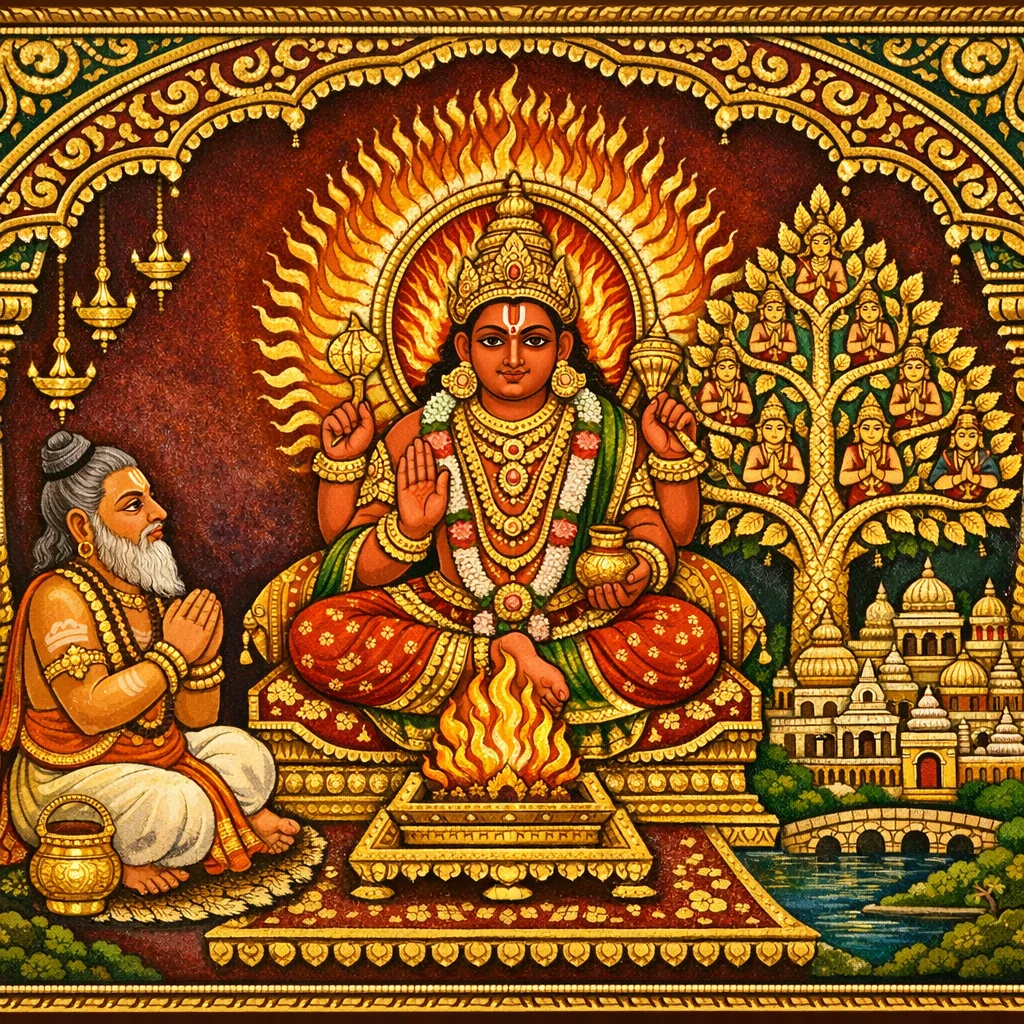
Adhyaya 272
Sūryavaṃśa-kīrtana (Proclamation of the Solar Dynasty)
Lord Agni begins a systematic mapping of dynasties—Solar, Lunar, and royal lineages—starting from the cosmic genealogy (Hari → Brahmā → Marīci → Kaśyapa → Vivasvān). The chapter then unfolds the Solar line through Vivasvān’s consorts and offspring (Manu, Yama–Yamunā, the Aśvins, Śani, etc.), establishing Vaivasvata Manu as the pivotal transmitter of social order and rāja-dharma. From Manu, the account branches to early rulers and peoples (the Ikṣvāku line; the Śakas; and regional polities such as Utkala, Gayāpurī, Pratiṣṭhāna, Ānarta/Kuśasthalī). The Kakudmī–Raivata episode links cosmic time-dilation with earthly dynastic change, culminating in Dvāravatī and Revatī’s marriage to Baladeva, thus tying vaṃśa to pan-Indian sacred history. The Ikṣvāku succession proceeds through emblematic kings (Māndhātā, Hariścandra, Sagara, Bhagīratha) and reaches the Raghu line, Daśaratha, and Rāma, whose story is acknowledged as Vālmīki’s composition from what he heard of Nārada. The chapter closes with post-Rāma successors (from Kuśa onward) and a terminal genealogy (to Śrutāyus), explicitly naming them as upholders of the Solar dynasty, anchoring royal duty, regional memory, and epic exemplars within a single revealed lineage-schema.
Shlokas
Verse 1
इत्यग्नेये महपुरणे दानादिमाहत्म्यं नामैक सप्तत्यधिकद्विशततमो ऽध्यायः अथ द्विसप्तत्यधिकद्विशततमो ऽध्यायः सूर्यवंशकीर्तनं अग्निर् उवाच सूर्यवंशं सोमवंशं रज्ञां वंशं वदमि ते हरेर्ब्रह्मा पद्मगो ऽभून्मरीचिर्ब्रह्मणः सुतः
Thus, in the Agni Mahāpurāṇa ends the two-hundred-and-seventy-first chapter entitled “The Greatness of Gifts and Related Acts.” Now begins the two-hundred-and-seventy-second chapter, “The Proclamation of the Solar Dynasty.” Agni said: “I shall declare to you the lineage of the Solar dynasty, the Lunar dynasty, and the royal genealogies. From Hari arose Brahmā, the lotus-born; and Marīci was the son of Brahmā.”
Verse 2
मरीचेः कश्यपस्तस्माद्विवस्वांस्तस्य पत्न्यपि संज्ञा राज्ञी प्रभा तिस्रो राज्ञी रैवतपुत्रिका
From Marīci came Kaśyapa; from him came Vivasvān (the Sun). His queens were Saṃjñā and Prabhā—three queens in all—including the daughter of King Raivata.
Verse 3
रेवन्तं सुषुवे पुत्रं प्रभातञ्च प्रभा रवेः त्वाष्ट्री संज्ञा मनुं पुत्रं यमलौ यमुनां यमम्
Prabhā bore a son, Revanta, and also Prabhāta for Ravi (the Sun). Saṃjñā, the daughter of Tvaṣṭṛ, bore Manu as a son, and the twins—Yamunā and Yama.
Verse 4
छाया संज्ञा च सावर्णिं मनुं वैवस्वतं सुतम् शनिञ्च तपतीं विष्टिं संज्ञायाञ्चाश्विनौ पुनः
Chāyā and Saṃjñā were his consorts. From them were born Sāvarṇi and Vaivasvata Manu, his son; and also Śani, Tapatī, and Viṣṭi; and again, from Saṃjñā, the Aśvin twins.
Verse 5
मनोर्वैवस्वतस्यासन् पुत्रा वै न च तत्समाः इक्ष्वाकुश् चैव नाभागो धृष्टःशर्यातिरेव च
Vaivasvata Manu indeed had sons, unequalled in prowess—Ikṣvāku, Nābhāga, Dhṛṣṭa, and Śaryāti as well.
Verse 6
नरिष्यन्तस् तथा प्रांशुर्नाभागादिष्टसत्तमाः करुषश् च पृषध्रश् च अयोध्यायां महाबलाः
Likewise, Nariṣyanta and Prāṃśu—together with Ādiṣṭa, foremost among those beginning with Nābhāga—along with Karūṣa and Pṛṣadhra, were mighty men in Ayodhyā.
Verse 7
कन्येला च मनोरासीद्बुधात्तस्यां पुरूरवाः पुरूरवसमुच्पाद्य सेला सुद्युम्नताङ्गता
And Kanyelā became Manu’s consort. From Budha, in her, Purūravas was born. Having given birth to Purūravas, Selā attained the state of Sudyumna.
Verse 8
अत्र छायेतिपाठो युक्तः सुद्युम्नादुत्कलगयौ विनताश्वस्त्रयो नृपाः उत्कलस्योत्कलं राष्ट्रं विनताश्वस्य पश्चिमा
Here, the reading “chāyā” is the appropriate one. From Sudyumna came Utkala and Gaya; and (there was) Vinatāśva—thus three kings. Utkala’s realm is called Utkala, while Vinatāśva’s lies in the western direction.
Verse 9
दिक् सर्वा राजवर्यस्य गयस्य तु गयापुरी वशिष्ठवाक्यात् सुद्युम्नः प्रतिष्ठानमवाप ह
In every direction spread the renown of the noble king Gaya; and for Gaya there was the city called Gayāpurī. By Vasiṣṭha’s word (instruction/blessing), Sudyumna obtained Pratiṣṭhāna.
Verse 10
तत् पुरूरवसे प्रादात्सुद्युम्नो राज्यमाप्य तु नरिष्यतः शकाः पुत्रा नाभागस्य च वैष्णवः
Having obtained the kingdom, Sudyumna bestowed it upon Purūravas. From Nariṣyata were born the Śakas; and from Nābhāga was born Vaiṣṇava.
Verse 11
अम्बरीषः प्रजापालो धार्ष्टकं धृष्टतः कुलम् सुकल्पानर्तौ शर्यार्तेर्वैरोह्यानर्ततो नृपः
Ambarīṣa was a protector of his subjects. From Dhṛṣṭata arose the Dhārṣṭaka lineage; then came Sukalpa and Anarta. From Śaryārti was born Vairohya; and from Anarta arose the king of that line.
Verse 12
आनर्तविषयश्चासीत् पुरी चासीत् कुशस्थली रेवस्य रैवतः पुत्रः ककुद्मी नाम धार्मिकः
There was the Ānarta region, and its city was Kuśasthalī. Reva’s son was Raivata; and his son was the righteous one named Kakudmī.
Verse 13
ज्येष्ठः पुत्रशतस्यासीद्राज्यं प्राप्य कुशस्थलीम् स कन्यासहितः श्रुत्वा गान्धर्वं ब्रह्मणो ऽन्तिके
The eldest among Putraśata’s hundred sons attained sovereignty over Kuśasthalī. Accompanied by the maiden, he heard of the Gāndharva mode of union in the presence of Brahmā.
Verse 14
मुहूर्तभूतं देवस्य मर्त्ये बहुयुगं गतम् आजगाम जवेनाथ स्वां पुरीं यादवैर् वृताम्
What was but a single muhūrta for the deity had, in the human world, elapsed as many yugas; then he swiftly returned to his own city, encircled by the Yādavas.
Verse 15
कृतां द्वारवतीं नाम बहुद्वारां मनोरमाम् भोजवृष्ण्यन्धकैर् गुप्तां वासुदेवपुरोगमैः
He established the city called Dvāravatī—many-gated and delightful—protected by the Bhojas, Vṛṣṇis, and Andhakas, with Vāsudeva at their head.
Verse 16
रेवतीं बलदेवाय ददौ ज्ञात्वा ह्य् अनिन्दिताम् तपः सुमेरुशिखरे तप्त्वा विष्ण्वालयं गतः
Having recognized Revatī as blameless, he gave her to Baladeva; and after performing austerities upon the summit of Sumeru, he departed to the abode of Viṣṇu.
Verse 17
नाभागस्य च पुत्रौ द्वौ वैश्यौ ब्राह्मणतां गतौ करूषस्य तु कारूषाः क्षत्रिया युद्धदुर्मदाः
And of Nābhāga there were two sons—Vaiśyas who attained the status of Brāhmaṇas. But from Karūṣa came the Kārūṣas—Kṣatriyas, fiercely proud in battle.
Verse 18
शूद्रत्वञ्च पृषध्रो ऽगाद्धिंसयित्वा गुरोश् च गाम् मनुपुत्रादथेक्षाकोर्विकुक्षिर्देवराडभूत्
Pṛṣadhra attained the status of a Śūdra after injuring his guru’s cow. From Manu’s son then came Ikṣvāku; and from Ikṣvāku, Vikukṣi was born, who became a god-like king.
Verse 19
विकुक्षेस्तु ककुत्स्थो ऽभूत्तस्य पुत्रः सुयोधनः तस्य पुत्रः पृथुर् नाम विश्वगश्वः पृथोः सुतः
From Vikukṣi was born Kakutstha. His son was Suyodhana; his son was named Pṛthu; and Viśvagaśva was the son of Pṛthu.
Verse 20
आयुस्तस्य च पुत्रो ऽभूद्युवनाश्वस् तथा सुतः युवनाश्वाच्च श्रावन्तः पूर्वे श्रावन्तिका पुरी
And his son was Āyus; and Āyus in turn had a son, Yuvanāśva. From Yuvanāśva was born Śrāvanta; and in former times there was a city named Śrāvantikā.
Verse 21
श्रावन्ताद् वृहदश्वो ऽभूत् कुबलाश्वस्ततो नृपः धुन्धुमारत्वमगमद्धुन्धोर् नाम्ना च वै पुरा
From Śrāvanta was born Vṛhadaśva; from him was born the king Kubalāśva. In former times he attained the epithet “Dhundhumāra,” being indeed called the slayer of Dhundhu.
Verse 22
धुन्धुमारास्त्रयो भूपा दृढाश्वो दण्ड एव च कपिलो ऽथ दृढाश्वात्तु हर्यश्वश् च प्रमोदकः
There were three kings named Dhundhumāra; then (came) Dṛḍhāśva and likewise Daṇḍa; thereafter Kapila. And from Dṛḍhāśva (came) Haryaśva and Pramodaka.
Verse 23
हर्यश्वाच्च निकुम्भो ऽभूत् संहताश्वो निकुम्भतः अकृशाश्वो रणाश्वश् च संहताश्वसुतावुभौ
From Haryaśva was born Nikumbha; from Nikumbha, Saṃhatāśva. And Akṛśāśva and Raṇāśva were both the sons of Saṃhatāśva.
Verse 24
युवनाश्वो रणाश्वस्य मान्धाता युवनाश्वतः मान्धातुः पुरुकुत्सो ऽभून्मुचुकुन्दो द्वितीयकः
Yuvanāśva was the son of Raṇāśva; from Yuvanāśva was born Māndhātā. From Māndhātā arose Purukutsa, and Mucukunda was the second son.
Verse 25
पुरुकुत्सादसस्युश् च सम्भूतो नर्मदाभवः सम्भूतस्य सुधन्वाभूत्त्रिधन्वाथ सुधन्वनः
From Purukutsa was born Asasyu; from Asasyu was born Sambhūta, also known as Narmadābhava. From Sambhūta was born Sudhanvan; and from Sudhanvan, Tridhanvan.
Verse 26
त्रिधन्वनस्तु तरुणस्तस्य सत्यव्रतः सुतः सत्यव्रतात्सत्यरथो हरिश् चन्द्रश् च तत्सुतः
From Tridhanvan was born Taruṇa; his son was Satyavrata. From Satyavrata was born Satyaratha, and Hari and Candra were his sons.
Verse 27
हरिश् चन्द्राद्रोहिताश्वो रोहिताश्वाद्वृको ऽभवत् वृकाद्वाहुश् च वाहोश् च सगरस्तस्य च प्रिया
From Hariścandra was born Rohitāśva; from Rohitāśva arose Vṛka. From Vṛka came Bāhu; and from Bāhu was born Sagara, along with his beloved consort.
Verse 28
प्रभा षष्टिसहस्राणां सुतानां जननी ह्य् अभूत् तुष्टादौर्वान्नृपादेकं भानुमत्यसमञ्जसम्
Prabhā indeed became the mother of sixty thousand sons; and from the king Tuṣṭa, Bhānumatī bore one son—Asamañjasa—(born) through the potency of the sage Aurva.
Verse 29
खनन्तः पृथिवीं दग्धा विष्णुना बहुसागराः असमञ्जसो ऽंश्रुमांश् च दिलीपो ऽंशुमतो ऽभवत्
While they were digging the earth, it was scorched by Viṣṇu, and many seas came into being. From Asamañjasa was born Aṃśrumān, and from Aṃśrumān came Dilīpa; from Dilīpa was born Aṃśumān.
Verse 30
भगीरथो दिलीपात्तु येन गङ्गावतारिता मुनिनेति ज भगीरथात्तु नाभागो नाभागादम्बरीषकः
From Dilīpa came Bhagīratha—by whom, as the sages relate, the descent of the Gaṅgā was accomplished. From Bhagīratha came Nābhāga; and from Nābhāga came Ambarīṣa.
Verse 31
सिन्धुद्वीपो ऽम्बरीषात्तु श्रुतायुस्तत्सुतः स्मृतः श्रुतायोरृतपर्णो ऽभूत्तस्य कल्माषपादकः
From Ambarīṣa was born Sindhudvīpa; his son is remembered as Śrutāyu. From Śrutāyu arose Ṛtaparṇa; and his son was Kalmāṣapādaka.
Verse 32
कल्माषाङ्घ्रेः सर्वकर्मा ह्य् अनरण्यस्ततो ऽभवत् अनरण्यात्तु निघ्नो ऽथ अनमित्रस्ततो रघुः
From Kalmāṣāṅghri was born Sarvakarmā; from him arose Anaraṇya. From Anaraṇya came Nighna; then from him Anamitra; and from Anamitra was born Raghu.
Verse 33
रघोरभुद्दिलीपस्तु दिलीपाच्चाप्यजो नृपः दीर्घवाहुरजात् कालस्त्वजापालस्ततो ऽभवत्
From Raghu was born Dilīpa; and from Dilīpa, King Aja. From Dīrghavāhu was born Kāla; and thereafter Ajāpāla came into being.
Verse 34
तथ दशरथो जातस्तस्य पुत्रचतुष्टयम् नारायणात्मकाः सर्वे रामस्तस्याग्रजो ऽभवत्
Thus was Daśaratha born; and to him were born four sons. All of them were of the very nature of Nārāyaṇa, and Rāma became his eldest.
Verse 35
रावणान्तकरो राजा ह्य् अयोध्यायां रघूत्तमः वाल्मीकिर्यस्य चरितं चक्रे तन्नारदश्रवात्
Indeed, the king—the foremost of Raghu’s line, who brought about Rāvaṇa’s end (namely Rāma)—was in Ayodhyā; and Vālmīki composed his life-story after hearing it from Nārada.
Verse 36
रामपुत्रौ कुशलवौ सीतायां कुलवर्धनौ अतिथिश् च कुशाज्जज्ञे निषधस्तस्य चात्मजः
Rāma’s two sons were Kuśa and Lava, born of Sītā, who increased the glory of the lineage. From Kuśa was born Atithi, and Niṣadha was Atithi’s son.
Verse 37
निषधात्तु नलो जज्ञे नभो ऽजायत वै नलात् नभसः पुण्डरीको ऽभूत् सुधन्वा च ततो ऽभवत्
From Niṣadha was born Nala; and from Nala, indeed, was born Nabhas. From Nabhas came Puṇḍarīka, and from him thereafter arose Sudhanvan.
Verse 38
सुधन्वनो देवानीको ह्य् अहीनाश्वश् च तत्सुतः अहीनाश्वात् सहस्राश्वश् चन्द्रालोकस्ततो ऽभवत्
From Sudhanvan was born Devānīka, whose son was Ahīnāśva. From Ahīnāśva was born Sahasrāśva, and from him arose Candrāloka.
Verse 39
चन्द्रावलोकतस्तारापीडो ऽस्माच्चन्द्रपर्वतः चन्द्रगिरेर्भानुरथः श्रुतायुस्तस्य चात्मजः इक्ष्वाकुवंशप्रभवाः सूर्यवंशधराः स्मृताः
From Candrāvaloka arose Tārāpīḍa; from him came Candraparvata. From Candraparvata came Candragiri; from Candragiri, Bhānuratha; and his son was Śrutāyus. These are remembered as descendants of the Ikṣvāku line, upholders of the Solar dynasty.
Frequently Asked Questions
A structured vaṃśa-list framed as revealed narration: it alternates between linear succession (Ikṣvāku → Raghu → Rāma) and thematic anchors (regions, peoples, and exemplary kings) to preserve political-theological continuity.
By presenting royal lineage as a dharmic technology: genealogies legitimize governance, connect sacred geography to political centers, and hold up exemplary rulers (e.g., Bhagīratha, Rāma) as models where worldly rule becomes a vehicle for cosmic order and spiritual merit.
Daśaratha and Rāma explicitly connect the lineage to the Rāmāyaṇa, with Vālmīki’s authorship noted as derived from Nārada’s transmission, integrating epic authority into vaṃśa structure.