Adhyaya 219
Abhiṣeka-mantrāḥ (Consecration Mantras)
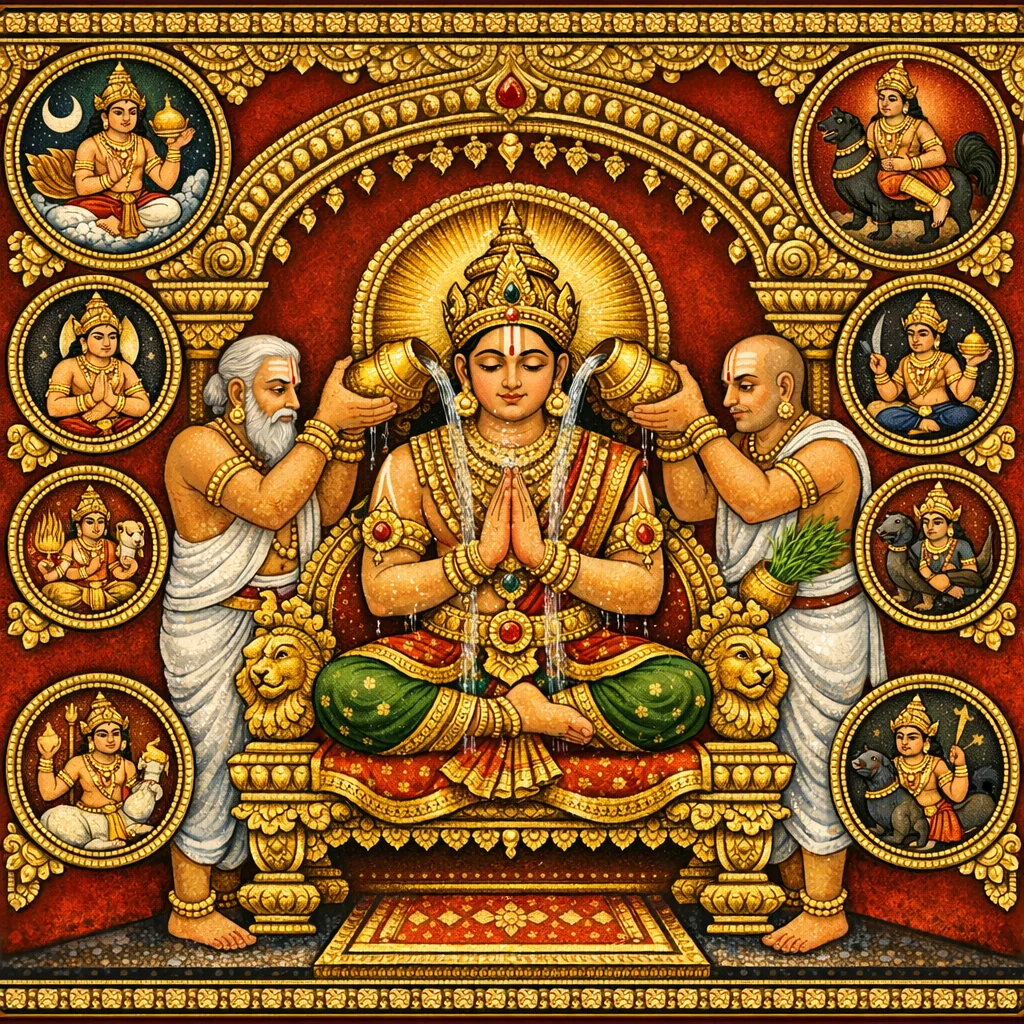
This chapter is a rāja-dharma liturgical manual for royal consecration (abhiṣeka). Puṣkara teaches sin-destroying mantras performed by sprinkling kuśa-sanctified water from a ritual jar, declaring the rite to bestow complete success. The text then expands into an encyclopedic protection-and-victory catalogue (rakṣā, jaya-prayoga): the great deities (Brahmā–Viṣṇu–Maheśvara and the Vāsudeva-vyūha), directional guardians, ṛṣis and prajāpatis, classes of pitṛs and sacred fires, divine consorts and protective śaktis, and the full architecture of Time (kalpa, manvantara, yuga; seasons, months, tithis, muhūrtas). It proceeds through Manus, grahas, Maruts, Gandharvas and Apsarases, Dānavas/Rākṣasas, Yakṣas, Piśācas, Nāgas, divine mounts and weapons, exemplary sages and kings, Vāstu-deities and cosmic geography (lokas, dvīpas, varṣas, mountains), and finally tīrthas and sacred rivers, culminating in a closing anointing-protection formula. The narrative logic is encyclopedic: kingship is sacralized by invoking every layer of cosmic order, establishing sovereignty as a dharmic office stabilized through mantra, cosmology, and protective theology.
Shlokas
Verse 1
इत्य् आग्नेये महापुराणे राजाभिषेको नाम अष्टादशाधिकद्विशततमो ऽध्यायः अथोनविंशाधिकद्विशततमो ऽध्यायः अभिषेकमन्त्राः पुष्कर उवाच राजदेवाद्यभिषेकमन्त्रान्वक्ष्ये ऽघमर्दनान् कुम्भात् कुशोदकैः सिञ्चेत्तेन सर्वं हि सिद्ध्यति
Thus, in the Agni Mahāpurāṇa, the chapter called “Royal Consecration,” the 218th, comes to an end. Now begins the 219th chapter, “Consecration Mantras.” Puṣkara said: “I shall declare the consecration mantras for the king and for the deities, which destroy sin. One should pour water from a jar—water sanctified with kuśa-grass; by that, indeed, all is accomplished successfully.”
Verse 2
सुरास्त्वामभिषिञ्चन्तु ब्रह्मविष्णुमहेश्वराः वासुदेवः सङ्कर्षणः प्रद्युम्नश्चानिरुद्धकः
May the gods anoint you—Brahmā, Viṣṇu, and Maheśvara; and also Vāsudeva, Saṅkarṣaṇa, Pradyumna, and Aniruddha.
Verse 3
भवन्तु विजयायैते इन्द्राद्या दशदिग्गताः रुद्रो धर्मो मनुर्दक्षो रुचिः श्रद्धा च सर्वदा
May these deities—Indra and the others who preside over the ten directions—be for our victory: Rudra, Dharma, Manu, Dakṣa, Ruci, and Śraddhā, at all times.
Verse 4
भृगुरत्रिर्वसिष्ठश् च सनकश् च सनन्दनः सनत्कुमारो ऽङ्गिराश् च पुलस्त्यः पुलहः क्रतुः
Bhrigu, Atri, and Vasiṣṭha; and Sanaka and Sanandana; and Sanatkumāra; and Aṅgiras; and Pulastya, Pulaha, and Kratu—these are the revered sages.
Verse 5
मरीचिः कश्यपः पान्तु प्रजेशाः पृथिवीपतिः प्रभासुरा वहिर्षद अग्निष्वात्ताश् च पान्तु ते
May Marīci and Kaśyapa protect you. May the Prajāpatis, the Lords of Progeny, and the Lord of the Earth protect you. May the Prabhāsuras, the Vahirṣads, and the Agniṣvāttas also protect you.
Verse 6
क्रव्यादाश्चोपहूताश् च आज्यपाश् च सुकालिनः अग्निभिश्चाभिषिञ्चन्तु लक्ष्म्याद्या धर्मवल्लभाः
May the Kravyāda fires, the Upahūta fires, the Ājyapā fires, and the Sukālin fires—together with the sacred fires—consecrate (by sprinkling and empowering) him/her; and may Lakṣmī and the other powers beloved of Dharma bestow their favor.
Verse 7
आदित्याद्याः कश्यपस्य बहुपुत्रस्य वल्लभाः कृशाश्वस्याग्निपुत्रस्य भार्याश्चारिष्ठनेमिनः
The Ādityas and the others are the beloved consorts of Kaśyapa, the father of many sons; likewise, the wives of Kṛśāśva—Agni’s son—and of Āriṣṭanemi are being enumerated.
Verse 8
अश्विन्याद्याश् च चन्द्रस्य पुलहस्य तथा प्रियाः भूता च कपिशा दंष्ट्री सुरसा सरमा दनुः
Aśvinī and the others are said to be dear to the Moon (Candra); likewise they are dear to Pulaha. They are named: Bhūtā, Kapiśā, Daṃṣṭrī, Surasā, Saramā, and Danu.
Verse 9
श्येनी भासी तथा क्रौञ्ची धृतराष्ट्री शुकी तथा पत्न्यस्त्वामभिषिञ्चन्तु अरुणश्चार्कसारथिः
May Śyenī, Bhāsī, Krauñcī, Dhṛtarāṣṭrī, and Śukī—these consorts—anoint and consecrate you; and may Aruṇa, the charioteer of the Sun, also consecrate you.
Verse 10
आयतिर् नियतीरात्रिर् निद्रा लोकस्थितौ स्थिताः उमा मेना शची पान्तु धूमोर् नानिरृतिर्जये
May Āyati, Niyati, Night, and Sleep—abiding in the ordered stability of the worlds—protect me. May Umā, Menā, and Śacī protect me. May Dhūmā, the smoky goddess, protect me, and may Nirṛti not be victorious over me.
Verse 11
गौरी शिवा च ऋद्धिश् च वेला चैव नड्वला अशिक्नी च तथा ज्योत्स्ना देवपत्न्यो वनस्पतिः
Gaurī, Śivā, and Ṛddhi; also Velā and Naḍvalā; likewise Aśiknī and Jyotsnā—these are the divine consorts, and their group is remembered as Vanaspati, the lord and presiding power of vegetation.
Verse 12
महाकल्पश् च कल्पश् च मन्वन्तरयुगानि च देवपुत्रस्येति ज पुलस्त्यस्येति ग , घ , ज च असिता चेति ङ संवत्सराणि वर्षाणि पान्तु त्वामयनद्वयं
May the Mahā-kalpa and the Kalpa, the Manvantaras and the Yugas—together with the years (saṃvatsara), the solar years (varṣa), and the two half-years (ayana)—protect you. (Variant readings in some recensions include “devaputrasya”, “pulastyasya”, and “asitā”.)
Verse 13
ऋतवश् च तथा मासा पक्षा रात्र्यहनी तथा सन्ध्यातिथिमुहूर्ताच्च कालस्यावयवाकृतिः
The seasons and the months, the fortnights (pakṣa), night and day; and also the twilight junctions (sandhyā), lunar days (tithi), and muhūrtas—these form the component structure of Time (Kāla).
Verse 14
सूर्याद्याश् च ग्रहाः पान्तु मनुः स्वायम्भुवादिकः स्वायम्भुवः स्वारोचिष औत्तमिस्तामसो मनुः
May the planets beginning with the Sun protect (me); and may the Manus beginning with Svāyambhuva—namely Svāyambhuva, Svārociṣa, Auttami, and Tāmasa Manu—also protect (me).
Verse 15
रैवतश्चाक्षुषः षष्ठो वैवस्वत इहेरितः सावर्णो ब्रह्मपुत्रश् च धर्मपुत्रश् च रुद्रजः
Raivata and Cākṣuṣa are the sixth Manu; here Vaivasvata is declared to be the present Manu. (Thereafter come) Sāvarṇa, the son of Brahmā, the son of Dharma, and the one born of Rudra.
Verse 16
दक्षजो रौच्यभौत्यौ च मनवस्तु चतुर्दश विश्वभुक् च विपश्चिच्च सुचित्तिश् च शिखी विभुः
Dakṣaja, Raucya, and Bhautyā—these Manus are fourteen in number; and among the associated rulers/sages mentioned here are Viśvabhuk, Vipaścít, Sucitti, Śikhī, and Vibhu.
Verse 17
मनोजवस्तथौजस्वी बलिरद्भुतशान्तयः वृषश् च ऋतधामा च दिवस्पृक् कविरिन्द्रकः
Manojava (swift as thought), Tathaujasvī (possessing that very might), Bali (the strong), Adbhutaśāntayaḥ (of wondrous peace), Vṛṣa (the Bull, emblem of strength), Ṛtadhāmā (whose abode is cosmic order), Divaspṛk (touching the heavens), Kavi (the seer-poet), and Indraka (Indra-like)—these are the names and epithets.
Verse 18
रेवन्तश् च कुमारश् च तथा वत्सविनायकः
And (there are) Revanta, and Kumāra, as well as Vatsavināyaka.
Verse 19
वीरभद्रश् च नन्दी च विश्वकर्मा पुरोजवः अप्_२१९०१८च्बेते त्वामभिषिञ्चन्तु सुरमुख्याः समागताः नासत्यौ देवभिषजौ ध्रुवाद्या वसवो ऽष्ट च
May Vīrabhadra and Nandī, Viśvakarman and Purojava—these foremost gods who have assembled—anoint you in abhiṣeka (consecration). May the two Nāsatyas, the divine physicians, and the eight Vasus beginning with Dhruva also anoint you.
Verse 20
दश चाङ्गिरसो वेदास्त्वाभिषिञ्चन्तु सिद्धये आत्मा ह्य् आयुर्मनो दक्षो मदः प्राणस्तथैव च
May the ten Āṅgirasa Vedas consecrate you by abhiṣeka for the attainment of siddhi (success and accomplishment). Verily, the Self (Ātman), lifespan, mind, capability (dakṣa), vital vigor (mada), and likewise the life-breath (prāṇa) are invoked as empowering principles.
Verse 21
हविष्मांश् च गरिष्ठश् च ऋतः सत्यश् च पान्तु वः क्रतुर्दक्षो वसुः सत्यः कालकामो धुरिर्जये
May Haviṣmān and Gariṣṭha, and also Ṛta and Satya, protect you; may Kratu, Dakṣa, Vasu, Satya, Kālakāma, and Dhuri guard you for victory in battle.
Verse 22
पुरूरवा माद्रवाश् च विश्वेदेवाश् च रोचनः अङ्गारकाद्याः सूर्यस्त्वान्निरृतिश् च तथा यमः
Purūravas, the Mādravas, and the Viśvedevas, as well as Rocana; and the deities beginning with Aṅgāraka (Mars) and Sūrya (the Sun), together with Nirṛti and likewise Yama, are to be invoked and remembered.
Verse 23
अजैकपादहिर्व्रध्रो धूमकेतुश् च रुद्रजाः रुद्रका इति ग , घ , ङ , ञ च भरतश् च तथा मृत्युः कापालिरथ किङ्किणिः
Ajaikapāda, Ahirbudhnya, Dhūmaketu, and the Rudra-born beings are mentioned; likewise those called Rudrakas—classified under the letter-groups ga, gha, ṅa, and ña—and also Bharata, as well as Mṛtyu, Kāpāli, and Kiṅkiṇi.
Verse 24
भवनो भावनः पान्तु स्वजन्यः स्वजनस् तथा क्रतुश्रवाश् च मूर्धा च याजनो ऽभ्युशनास् तथा
May Bhavana and Bhāvana protect me; likewise Svajanya and Svajana; and also Kratuśravā and Mūrdhā; and Yājana, and Abhyuśanā as well.
Verse 25
प्रसवश्चाव्ययश् चैव दक्षश् च भृगवः सुराः मनो ऽनुमन्ता प्राणश् च नवोपानश् च वीर्यवान्
Prasava and Avyaya; Dakṣa; the Bhṛgus; the gods; the mind as the inner consenter; Prāṇa; and the ninefold Apāna—all are powerful.
Verse 26
वीतिहोत्रो नयः साध्यो हंसो नारायणो ऽवतु विभुश् चैव प्रभुश् चैव देवश्रेष्ठा जगद्धिताः
May Vītihotra, Naya, Sādhya, Haṃsa, and Nārāyaṇa protect me; likewise may Vibhu and Prabhu—supreme among the gods, benefactors of the world—grant protection.
Verse 27
धाता मित्रो ऽर्यमा पूषा शक्रो ऽथ वरुणो भगः त्वष्टा विवस्वान् सविता विष्णुर्द्वादश भास्कराः
Dhātā, Mitra, Aryaman, Pūṣan, Śakra, then Varuṇa, Bhaga, Tvaṣṭṛ, Vivasvān, Savitṛ, and Viṣṇu—these are the twelve Bhāskaras (solar forms).
Verse 28
एकज्योतिश् च द्विज्योतिस्त्रिश् चतुर्ज्योतिरेव च एकशक्रो द्विशक्रश् च त्रिशक्रश् च महाबलः
He is the One Light; the Twofold Light; the Threefold and the Fourfold Light as well. He is the One Śakra (Indra), the Twofold Śakra, and the Threefold Śakra—of great power.
Verse 29
इन्द्रश् च मेत्यादिशतु ततः प्रतिमकृत्तथा मितश् च सम्मितश् चैव अमितश् च महाबलः
Then Indra instructed with the words, “Come!”, and likewise the image-maker (pratimakṛt) was appointed. There were also Mita, Sammita, and Amita—Amita being of great strength.
Verse 30
ऋतजित् सत्यजिच्चैव सुषेणः सेनजित्तथा अतिमित्रो ऽनुमित्रश् च पुरुमित्रो ऽपराजितः
And there were Ṛtajit, Satyajit, Suṣeṇa, and likewise Senajit; also Atimitra, Anumitra, Purumitra, and Aparājita (the Unconquered).
Verse 31
ऋतश् च ऋतवाग् धाता विधाता धारणो ध्रुवः विधारणो महातेजा वासवस्य परः सखा
He is Ṛta (the cosmic order) and the Speaker of Ṛta (truthful speech aligned with the Veda); the Sustainer and the Ordainer; the Supporter, the Unshakable; the All-supporting One of great splendor; and the supreme friend of Vāsava (Indra).
Verse 32
ईदृक्षश्चाप्यदृक्षश् च एतादृगमिताशनः क्रीडितश् च सदृक्षश् च सरभश् च महातपाः
‘So-formed’ and also ‘unseen’; ‘of such a kind’ and ‘of measured (regulated) consumption’; ‘playful’; ‘of like form’; ‘Sarabha’; and ‘the great ascetic’—these are the epithets being recited.
Verse 33
सुजनस्तथेति ख , घ च विश्वात्मेति ङ ईदृक्षश्चान्यदृक्षश्चेति छ धर्ता धुर्यो धुरिर्भीम अभिमुक्तः क्षपात्सह धृतिर्वसुरनाधृष्यो रामः कामो जयो विराट्
(He is) Sujana, the Good Person; “Tathā” (“thus indeed”); Viśvātmā, the Universal Self; Īdṛkṣa (“of such a kind”) and Anyadṛkṣa (“of another kind”); Dhartā, the Sustainer; Dhuryo, fit to bear the yoke/burden; Dhurī, the bearer; Bhīma, the awe-inspiring; Abhimukta, wholly liberated; Kṣapāt-saha, enduring night and decay; Dhṛti, steadfastness; Vasu, the good/wealth; Anādhṛṣya, unassailable; Rāma; Kāma, desire; Jaya, victory; and Virāṭ, the all-encompassing cosmic form.
Verse 34
देवा एकोनपञ्चाशन्मरुतस्त्वामवन्तु ते चित्राङ्गदश्चित्ररथः चित्रसेनश् च वै कलिः
May the forty-nine Marut deities protect you. May Citrāṅgada, Citraratha, Citrasena, and indeed Kali also safeguard you.
Verse 35
उर्णायुरुग्रसेनश् च धृतराष्ट्रश् च नन्दकः हाहा हूहूर्नारदश् च विश्वावसुश् च तुम्बुरुः
Also named are Urṇāyu, Ugrasena, Dhṛtarāṣṭra, and Nandaka; as well as Hāhā, Hūhū, Nārada, Viśvāvasu, and Tumburu.
Verse 36
एते त्वामभिषिञ्चन्तु गन्धर्वा विजयाय ते पान्तु ते कुरुपा मुख्या दिव्याश्चाप्सरसाङ्गणाः
May these Gandharvas anoint you with the rite of consecration for your victory; and may the foremost Kurupās, together with the divine companies of the Apsarases, protect you.
Verse 37
अनवद्या सुकेशी च मेनकाः सह जन्यया क्रतुस्थला घृताची च विश्वाची पुञ्जिकस्थला
Anavadyā and Sukeśī; Menakā together with Janyā; Kratusthalā; Ghṛtācī; Viśvācī; and Puñjikasthalā—these are the Apsarases named here.
Verse 38
प्रम्लोचा चोर्वशी रम्भा पञ्चचूडा तिलोत्तमा चित्रलेखा लक्ष्मणा च पुण्डरीका च वारुणी
Pramlocā, Urvaśī, Rambhā, Pañcacūḍā, Tilottamā, Citralekhā, Lakṣmaṇā, Puṇḍarīkā, and Vāruṇī—these are the Apsarases mentioned.
Verse 39
प्रह्लादो विरोचनो ऽथ बलिर्वाणो ऽथ तत्सुताः एते चान्ये ऽभिषिञ्चन्तु दानवा राक्षसास् तथा
May Prahlāda, Virocana, Bali, Vāṇa, and his sons—and these and other Dānavas, and likewise the Rākṣasas—consecrate (him/this rite) by anointing with abhiṣeka.
Verse 40
हेतिश् चैव प्रहेतिश् च विद्युत्स्फुर्जथुरग्रकाः यक्षः सिद्धार्मकः पातु माणिभद्रश् च नन्दनः
May Heti and Praheti, and also Vidyut, Sphurjathu, and Agraka protect (me); may the Yakṣa Siddhārmaka protect, and likewise Māṇibhadra and Nandana.
Verse 41
पिङ्गाक्षो द्युतिमांश् चैव पुष्पवन्तो जयावहः शङ्खः पद्मश् च मकरः कच्छपश् च निधिर्जये
For victory, one should invoke/recite: Piṅgākṣa (the tawny-eyed One), Dyutimān (the Radiant One), Puṣpavant (the Flower-adorned One), Jayāvaha (the Bringer of Victory), Śaṅkha (Conch), Padma (Lotus), Makara (the sea-monster emblem), Kacchapa (Tortoise), and Nidhi (Treasure/Repository).
Verse 42
पिशाचा ऊर्ध्वकेशाद्या भूता भूम्यादिवासिनः महाकालं पुरस्कृत्य नरसिंहञ्च मातरः
Piśācas and other spirits such as the Urdhvakeśas—bhūtas dwelling in the earth and other realms—advance with Mahākāla at their head; there too are Narasiṃha and the Mothers (Mātṛkās).
Verse 43
अभिमुक्तः क्षमासहेति ङ अनाधृष्त इति ग , घ ,ञ च सह कन्ययेति ज गुहः स्कन्दो विशाखस्त्वान्नैगमेयो ऽभिषिञ्चतु डाकिन्यो याश् च योगिन्यः खेचरा भूचराश् च याः
“The syllable Ṅa” is to be recited with the epithet “Abhimukta”; “Ga, Gha, and Ña” with “Anādhṛṣṭa”; and “Ja” with “Saha-kanyā”. May Guha (Kārttikeya), Skanda, and Viśākha—together with Naigameya—consecrate you by abhiṣeka (and protect you); and may the ḍākinīs and yoginīs, whether sky-moving (khecarā) or earth-moving (bhūcarā), do likewise.
Verse 44
गरुडश्चारुणः पान्तु सम्पातिप्रमुखाः खगाः अनन्ताद्या महानागाः शेषवासुकितक्षकाः
May Garuḍa and Aruṇa protect me; may the birds headed by Sampāti protect me. May the great Nāgas beginning with Ananta—Śeṣa, Vāsuki, and Takṣaka—protect me.
Verse 45
ऐरावतो महापद्मः कम्बलाश्वतरावुभौ शङ्खः कर्कोटकश् चैव धृतराष्ट्रो धनञ्जयः
Airāvata, Mahāpadma, Kambala and Aśvatara (these two), as well as Śaṅkha, Karkoṭaka, Dhṛtarāṣṭra, and Dhanañjaya—these are (among) the Nāgas.
Verse 46
कुमुदैर् आवणौ पद्मः पुष्पदन्तो ऽथ वामनः सुप्रतीको ऽञ्जनो नागाः पान्तु त्वां सर्वतः सदा
May the Nāgas—Padma, Puṣpadanta, Vāmana, Supratīka, and Añjana—together with the Nāgas Kumuda and Āvaṇa, always protect you on all sides.
Verse 47
पैतामहस् तथा हंसो वृषभः शङ्करस्य च दुर्गासिंहश् च पान्तु त्वां यमस्य महिषस् तथा
May the Swan of Pitāmaha (Brahmā), the Bull of Śaṅkara (Śiva), the Lion of Durgā, and likewise the Buffalo of Yama protect you.
Verse 48
उच्चैःश्रवाश्चाश्वपतिस् तथा धन्वन्तरिः सदा कौस्तुभः शङ्कराजश् च वज्रं शूलञ्च चक्रकं
Also are named Uccaiḥśravā, lord of horses; Dhanvantari; ever the jewel Kaustubha; and Śaṅkarāja; as well as the thunderbolt (vajra), the trident (śūla), and the discus (cakra).
Verse 49
नन्दको ऽस्त्राणि रक्षन्तु धर्मश् च व्यवसायकः चित्रगुप्तश् च दण्डश् च पिङ्गलो मृत्युकालकौ
May Nandaka protect me with respect to weapons; and may Dharma, the upholder of righteous conduct, safeguard my resolve and undertaking. May Citragupta and Daṇḍa, the personified Rod of punishment, protect me; and may Piṅgala and Mṛtyu-Kāla—Death-and-Time—guard me as well.
Verse 50
बालखिल्यादिमुनयो व्यासवाल्मीकिमुख्यकाः पृथुर्दिलीपो भरतो दुष्यन्तः शक्रजिद्वली
The sages beginning with the Bālakhilyas—foremost among them Vyāsa and Vālmīki—and the kings Pṛthu, Dilīpa, Bharata, Duṣyanta, Śakrajit, and Valī are celebrated as eminent exemplars.
Verse 51
मल्लः ककुत्स्थश्चानेन युवनाश्वो जयद्रथः मान्धाता मुचुकुन्दश् च पान्तु त्वाञ्च पुरूरवाः
May Malla, Kakutstha, Ānena, Yuvanāśva, Jayadratha, Māndhātā, and Mucukunda—and also Purūravas—protect you.
Verse 52
वास्तुदेवाः पञ्चविंशत्तत्त्वानि विजयाय ते रुक्मभौमः शिलाभौमः पतालो नीलमूर्तिकः
These are the Vāstu-deities—twenty-five foundational principles—invoked for victory: Rukmabhauma, Śilābhauma, Patāla, and Nīlamūrtika.
Verse 53
शत्रुजिद्वलो इति क , ख च नीलमृत्तिक इति ख , घ , छ , ज , ञ , ट च नीलमूर्धज इति ङ पीतरक्तः क्षितिश् चैव श्वेतभौमो रसातलं भूल्लोको ऽथ भुवर्मुख्या जम्वूद्वीपादयः श्रिये
“(He is called) Śatrujidvala”—so say the Ka- and Kha-recensions; “Nīlamṛttika”—so read the Kha, Gha, Cha, Ja, Ña and Ṭa recensions; and “Nīlamūrdhaja”—so reads the Ṅa recension. Kṣiti (the Earth) is yellow-red in hue, while Rasātala is white and of Bhūma (earthly) character. Then come Bhūloka, and next Bhuvar—chief among the worlds—together with Jambūdvīpa and the other continents, for prosperity.
Verse 54
उत्तराः कुरवः पान्तु रम्या हिरण्यकस् तथा भद्राश्वः केतुमालश् च वर्षश् चैव वलाहकः
May the Uttara-Kurava realm protect me; likewise Ramya and Hiraṇyaka; and also Bhadrāśva, Ketumāla, and the Varṣa named Valāhaka.
Verse 55
हरिवर्षः किम्पुरुष इन्द्रद्वीपः कशेरुमान् ताम्रवर्णो गभस्तिमान् नागद्वीपश् च सौम्यकः
Harivarṣa, Kimpuruṣa, Indradvīpa, Kaśerumān, Tāmravarṇa, Gabastimān, Nāgadvīpa, and Saumyaka—these are the names of the regions/islands.
Verse 56
गन्धर्वो वरुणो यश् च नवमः पान्तु राज्यदाः हिमवान् हेमकूटश् च निषधो नील एव च
May Gandharva, Varuṇa, and Yaśa—the ninth—protect the king, bestowing sovereignty. May Himavān, Hemakūṭa, Niṣadha, and also Nīla likewise protect him.
Verse 57
श्वेतश् च शृङवान् मेरुर्माल्यवान् गन्धमादनः महेन्द्रो मलयः सह्यः शक्तिमानृक्षवान् गिरिः
Also named are Śveta and Śṛṅgavān; Meru; Mālyavān; Gandhamādana; Mahendra; Malaya; Sahya; Śaktimān; and the mountain Ṛkṣavān.
Verse 58
विन्ध्यश् च पारिपात्रश् च गिरयः शान्तिदास्तु ते ऋग्वेदाद्याः षडङ्गानि इतिहासपुराणकं
May the Vindhya and Pāripātra mountains grant you peace. May the Ṛgveda and the other Vedas, the six Vedāṅgas, and the Itihāsa–Purāṇa tradition likewise bestow tranquility.
Verse 59
आयुर्वेदश् च गन्धर्वधनुर्वेदोपवेदकाः शिक्षा कल्पो व्याकरणं निरुक्तं ज्योतिषाङ्गतिः
And the Upavedas are Ayurveda, Gandharvaveda, and Dhanurveda. The Vedāṅgas are Śikṣā (phonetics), Kalpa (ritual procedure), Vyākaraṇa (grammar), Nirukta (etymology), and Jyotiṣa (astral science) as the ancillary limbs of the Veda.
Verse 60
छन्दोगानि च वेदाश् च मीमांसा न्यायविस्तरः धर्मशास्त्रं पुराणञ्च विद्या ह्य् एताश् चतुर्दश
Chandas (Vedic metres) and the Vedas; Mīmāṃsā and the extensive system of Nyāya (logic); Dharmaśāstra and the Purāṇa—these are indeed the fourteen branches of knowledge.
Verse 61
साङ्ख्यं योगः पाशुपतं वेदा वै पञ्चरात्रकं कृतान्तपञ्चकं ह्य् एतद् गायत्री च शिवा तथा
Sāṅkhya, Yoga, the Pāśupata (Śaiva doctrine), the Vedas, the Pañcarātra (Vaiṣṇava āgama), the so‑called Kṛtānta-pañcaka (the fivefold corpus of authoritative conclusions)—and likewise the Gāyatrī and the Śaiva teaching as well.
Verse 62
दुर्गा विद्या च गान्धारी पान्तु त्वां शान्तिदाश् च ते लवणेक्षुसुरासर्पिदधिदुग्धजलाब्धयः
May Durgā, Vidyā, and Gāndhārī protect you; and may the oceans—of salt, sugarcane-juice, liquor, ghee, curd, milk, and water—grant you peace.
Verse 63
चत्वारः सागराः पान्तु तीर्थानि विविधानि च हैरण्यकस्तथेति घ , ङ , ज च हिरण्मयश्तथेति छ पुष्करश् च प्रयागश् च प्रभासो नैमिषः परः
May the four oceans protect (me), and also the various sacred fords. Likewise (may) Hairaṇyaka—invoked with the syllables gha, ṅa, and ja—and likewise Hiraṇmaya (with the syllable cha). May Puṣkara and Prayāga, and Prabhāsa and supreme Naimiṣa also protect me.
Verse 64
गयाशीर्षो ब्रह्मशिरस्तीर्थमुत्त्रमानसं कालोदको नन्दिकुण्डस्तीर्थं पञ्चनदस् तथा
Gayāśīrṣa, Brahmaśiras, the sacred ford called Uttaramānasa, Kālodaka, Nandikuṇḍa as a holy tīrtha, and likewise Pañcanada—these are the revered pilgrimage places.
Verse 65
भृगुतीर्थं प्रभासञ्च तथा चामरकण्टकं जम्बुमार्गश् च विमलः कपिलस्य तथाश्रमः
Bhṛgu-tīrtha, Prabhāsa, and also Amarakantaka; likewise Jambū-mārga, (the tīrtha called) Vimala, and the hermitage (āśrama) of Kapila.
Verse 66
गङ्गाद्वारकुशावर्तौ विन्ध्यको नीलपर्वतः वराहपर्वतश् चैव तीर्थङ्कणखलं तथा
Gangādvāra and Kuśāvarta; the Vindhya range, Nīla Mountain, and Varāha Mountain; and likewise the sacred ford of Kaṇakhala—these are proclaimed as holy pilgrimage tīrthas.
Verse 67
कालञ्जरश् च केदारो रुद्रकोटिस्तथैव च वाराणसी महातीर्थं वदर्याश्रम एव च
Kālañjara, Kedāra, and likewise Rudrakoṭi; Vārāṇasī, the great tīrtha, and also the hermitage of Badarī—these are eminent pilgrimage places.
Verse 68
द्वारका श्रीगिरिस्तीर्थं तीर्थञ्च पुरुषोत्तमः शालग्रामोथ वाराहः सिन्धुसागरसङ्गमः
Dvārakā; the sacred ford of Śrīgiri; and the holy place called Puruṣottama; likewise Śālagrāma; Varāha; and the confluence where the Sindhu River meets the ocean—these are renowned tīrthas.
Verse 69
फल्गुतीर्थं विन्दुसरः करवीराश्रमस् तथा नद्यो गङ्गासरस्वत्यः शतदुर्गण्डकी तथा
Phalgu-tīrtha; the sacred lake called Vindu-saras; and the Karavīra hermitage; likewise the rivers Gaṅgā and Sarasvatī, and also the rivers Śatadurgā and Gaṇḍakī.
Verse 70
अच्छोदा च विपाशा च वितस्ता देविका नदी कावेरी वरुणा चैव निश् चरा गोमती नदी
And also the rivers Acchodā and Vipāśā, Vitastā and the river Devikā; Kāverī and Varuṇā as well; Niścarā; and the river Gomatī.
Verse 71
पारा चर्मण्वती रूपा मन्दाकिनी महानदी तापी पयोष्णी वेणा च गौरी वैतरणी तथा
The sacred rivers are: Pārā, Carmanvatī, Rūpā, Mandākinī, Mahānadī, Tāpi, Payoṣṇī, Veṇā, Gaurī, and likewise Vaitaraṇī.
Verse 72
गोदावरी भीमरथी तुङ्गभद्रा प्रणी तथा चन्द्रभागा शिवा गौरी अभिषिञ्चन्तु पान्तु वः
May the sacred rivers—Godāvarī, Bhīmarathī, Tuṅgabhadrā, Praṇī, and also Candrabhāgā—together with Śivā and Gaurī, consecrate you by ablution (abhiṣeka) and protect you.
Frequently Asked Questions
To perform consecration by pouring/sprinkling water from a jar, sanctified with kuśa-grass (kuśodaka), while reciting sin-destroying abhiṣeka mantras for the king and deities.
The abhiṣeka is presented as a cosmic alignment rite: kingship becomes stable and victorious when every layer of order—divine hierarchy, ṛṣi authority, temporal cycles, planetary forces, and sacred landscape—is invoked to protect and legitimize rule under Dharma.