Adhyaya 6
Śrīrāmāvatāravarṇanam (Description of Śrī Rāma’s Incarnation) — Ayodhyā Abhiṣeka, Vanavāsa, Daśaratha’s Death, Bharata’s Regency
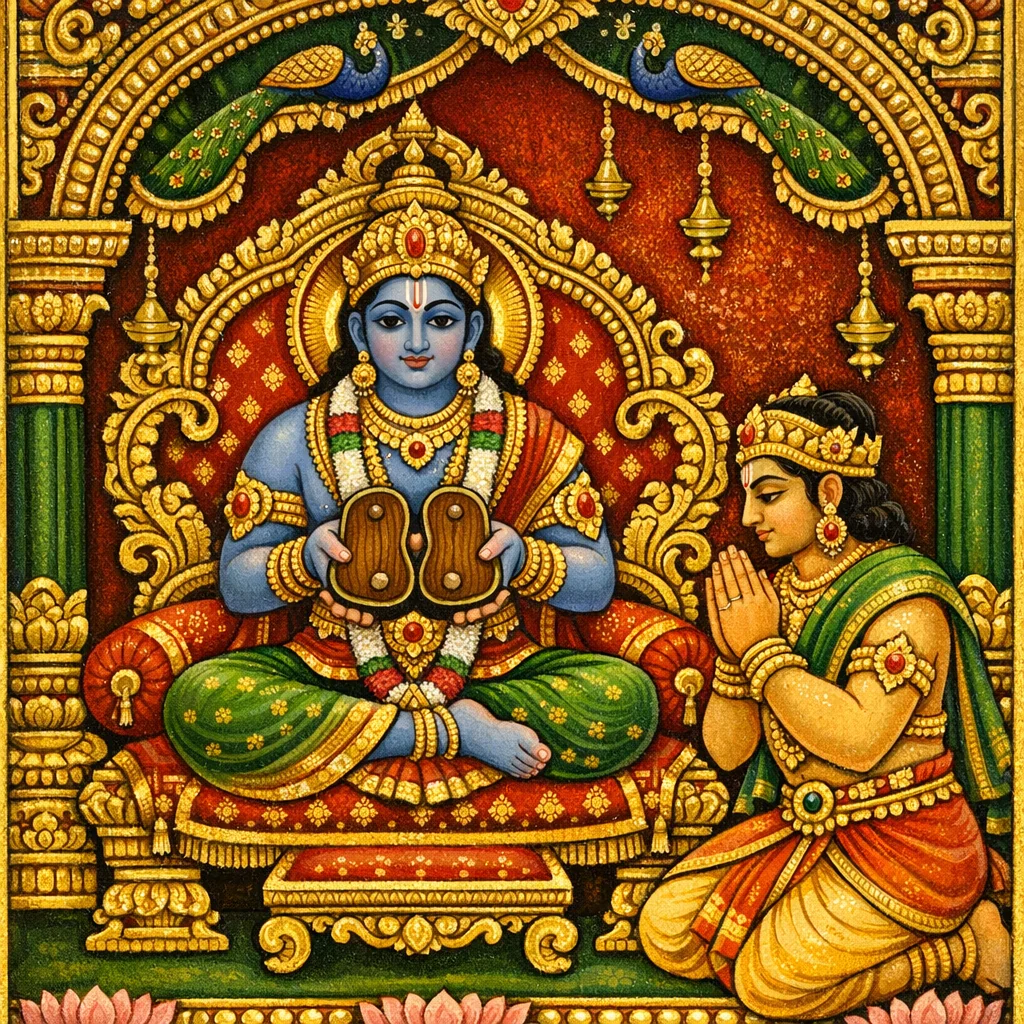
This chapter continues Śrī Rāma’s Avatāra-līlā as a practical lesson in rājadharma, satya (truth), and vow-bound kingship. After Bharata departs, Daśaratha proclaims Rāma’s yuvarāja-abhiṣeka and orders night-long restraint and observance, appointing Vasiṣṭha and the ministers in due sequence. Mantharā then provokes Kaikeyī to invoke her two boons, turning ritual preparations into a political crisis: Rāma’s fourteen-year forest exile and Bharata’s immediate anointing. Bound by satya-pāśa (the noose of truth), Daśaratha collapses under the moral weight of his promise. Rāma accepts exile without revolt, performs filial and social duties (worship, reporting to Kauśalyā, gifts to brāhmaṇas and the poor), and departs with Sītā and Lakṣmaṇa. The route—Tamasā, Śṛṅgaverapura with Guha, Prayāga with Bharadvāja, and Citrakūṭa—frames dharmic renunciation in sacred geography, while the crow episode introduces protective astric knowledge. Daśaratha’s confession of an earlier curse (the Yajñadatta incident) ends in his death from grief. Bharata returns, rejects the taint of adharma, seeks Rāma, and finally rules from Nandigrāma by installing Rāma’s pādukās, symbolizing delegated sovereignty and ideal loyalty.
Shlokas
Verse 1
ः बभञ्ज तद्दृढं धनुरिति ग, चिह्नितपुस्तकपाठः तदा इति ख, घ, ङ, चिह्नितपुस्तकत्रयपाठः भरतोथागात् इति ख, ग, घ, चिह्नितपुस्तकत्रयपाठः अथ षष्ठो ऽध्यायः श्रीरामावतारवर्णनं नारद उवाच भरते ऽथ गते रामः पित्रादीनभ्यपूजयत् राजा दशरथो रामम् उवाच शृणु राघव
“He broke that firm bow”—so reads one marked manuscript; other manuscripts read “then,” and some read “and then Bharata came.” Now begins the sixth chapter, “The Description of Śrī Rāma’s Incarnation.” Nārada said: When Bharata had departed, Rāma duly honored his father and the other elders. King Daśaratha said to Rāma: “Listen, O Rāghava.”
Verse 2
गुणानुरागाद्राज्ये त्वं प्रजाभिरभिषेचितः मनसाहं प्रभाते ते यौवराज्यं ददामि ह
Out of affection for your virtues, the people have consecrated you to kingship. Therefore, with full resolve, at daybreak I bestow upon you the office of yuvarāja, the heir-apparent.
Verse 3
रात्रौ त्वं सीतया सार्धं संयतः सुव्रतो भव राज्ञश् च मन्त्रिणश्चाष्टौ सवसिष्ठास् तथाब्रुवन्
“At night, together with Sītā, remain self-restrained and steadfast in excellent observance.” Thus spoke Vasiṣṭha, along with the king and the eight ministers.
Verse 4
सृष्टिर्जयन्तो विजयः सिद्धार्थो राष्ट्रवर्धनः अशोको धर्मपालश् च सुमन्त्रः सवसिष्ठकः
Sṛṣṭi, Jayanta, Vijaya, Siddhārtha, Rāṣṭravardhana, Aśoka, Dharmapāla, Sumantra, and the line together with Vasiṣṭha—these are the royal names enumerated in this succession.
Verse 5
पित्रादिवचनं श्रुत्वा तथेत्युक्त्वा स राघवः स्थितो देवार्चनं कृत्वा कौशल्यायै निवेद्य तत्
Having heard the words of his father and the others, Rāghava replied, “So be it,” remained composed, performed worship of the gods, and then reported that matter to Kauśalyā.
Verse 6
राजोवाच वसिष्ठादीन् रामराज्याभिषेचने सम्भारान् सम्भवन्तु स्म इत्य् उक्त्वा कैकेयीङ्गतः
The king said to Vasiṣṭha and the others, “Let the preparations for the anointing of Rāma to kingship be made ready.” Having said this, he went to Kaikeyī.
Verse 7
अयोध्यालङ्कृतिं दृष्ट्वा ज्ञात्वा रामाभिषेचनं भविष्यतीत्याचचक्षे कैकेयीं मन्थरा सखी
Seeing Ayodhyā adorned, and realizing that Rāma’s consecration (coronation) was about to take place, Mantharā—the companion—announced this to Kaikeyī.
Verse 8
पादौ गृहीत्वा रामेण कर्षिता सापराधतः तेन वैरेण सा राम- वनवासञ्च काङ्क्षति
Seizing (his) feet, she—being in the wrong—was dragged away by Rāma; and, out of that enmity, she even longs for Rāma’s exile to the forest.
Verse 9
कैकेयि त्वं समुत्तिष्ठ रामराज्याभिषेचनं मरणं तव पुत्रस्य मम ते नात्र संशयः
“Kaikeyī, arise at once—if Rāma’s consecration as king is carried out, then the death of your son is certain; I assure you, there is no doubt.”
Verse 10
राज्यवर्धन इति ख, ग, घ चिह्नितपुस्तकत्रयपाठः सुमन्त्रश् च वशिष्ठक इति ख, ग, घ, ङ, चिह्नितपुस्तकचतुष्टयपाठः मन्थरासती इति ख, ङ, चिह्नितपुस्तकद्वयपाठः मन्थरा सतीमिति ग, चिह्नितपुस्तकपाठः कब्जयोक्तञ्च तच् छ्रुत्वा एकमाभरणं ददौ उवाच मे यथा रामस् तथा मे भरतः सुतः
“Rājyavardhana”—thus is the reading of the three marked manuscripts (kha, ga, gha). “And Sumantra and Vasiṣṭhaka”—thus is the reading of the four marked manuscripts (kha, ga, gha, ṅa). “Mantharā-satī”—thus is the reading of the two marked manuscripts (kha, ṅa); “Mantharā, the virtuous woman”—thus is the reading of the marked manuscript (ga). And hearing what was spoken by Kabja, she bestowed a single ornament and said: “As Rāma is to me, so is my son Bharata.”
Verse 11
उपायन्तु न पश्यामि भरतो येन राज्यभाक् कैकेयीमब्रवीत् क्रुद्धा हारं त्यक्त्वाथ मन्थरा
“I see no means by which Bharata may become heir to the kingdom.” Thus Mantharā, angered, spoke to Kaikeyī and then cast aside her necklace.
Verse 12
बालिशे रक्ष भरतम् आत्मानं माञ्च राघवात् भविता राघवो राजा राघवस्य ततः सुतः
O simple-minded one, protect Bharata—and protect yourself as well; do not act against Rāghava. Rāghava will become king, and thereafter Rāghava’s son will succeed him.
Verse 13
राजवंशस्तु कैकेयि भरतात् परिहास्यते देवासुरे पुरा युद्धे शम्बरेण हताः सुराः
But this royal lineage, O Kaikeyī, is said to become a byword of ridicule because of Bharata. Formerly, in the war between the Devas and Asuras, the gods were slain by Śambara.
Verse 14
रात्रौ भर्ता गतस्तत्र रक्षितो विद्यया त्वया वरद्वयन्तदा प्रादाद् याचेदानीं नृपञ्च तत्
At night the husband went there; protected by the vidyā (sacred knowledge) imparted by you, he then granted two boons. Now let the king also request that which he desires.
Verse 15
रामस्य च वनेवासं नव वर्षाणि पञ्च च यौवराज्यञ्च भरते तदिदानीं प्रदास्यति
And now he will decree for Rāma a forest-exile of nine years and five more, and at this very time he will bestow the office of heir-apparent upon Bharata.
Verse 16
प्रोत्साहिता कुब्जया सा अनर्थे चार्थदर्शिनी उवाच सदुपायं मे कच्चित्तं कारयिष्यति
Urged on by the hunchback woman, she—though bent on a wrongful course yet discerning of advantage—said: “Will someone, by a proper stratagem, carry out my plan?”
Verse 17
क्रोधागारं प्रविष्टाथ पतिता भुवि मूर्छिता द्विजादीनर्चयित्वाथ राजा दशरथस्तदा
Then she entered the chamber of anger; falling to the ground, she lay fainted. Thereupon King Daśaratha, after honoring the Brahmins and others, came there at that time.
Verse 18
ददर्श केकयीं रुष्टाम् उवाच कथमीदृशी रोगार्ता किं भयोद्विग्ना किमिच्छसि करोमि तत्
He saw Kaikeyī, angry, and said: “Why are you like this? Are you afflicted by illness, or disturbed by some fear? What do you desire? I shall do that.”
Verse 19
येन रामेण हि विना न जीवामि मुहूर्तकम् शपामि तेन कुर्यां वै वाञ्छितं तव सुन्दरि
By that Rāma—without whom I do not live even for a single moment—I swear: O beautiful one, I shall indeed fulfill your desired request.
Verse 20
सत्यं ब्रूहीति सोवाच नृपं मह्यं ददासि चेत् वरद्वयं पूर्वदत्तं सत्यात् त्वं देहि मे नृप
He said, “Speak the truth. If you will hand over the kingship to me, then—O king—grant me, in accordance with satya, the two boons that were promised before.”
Verse 21
चतुर्दशसमा रामो वने वसतु संयतः कथितमिति ख, ङ, चिह्नितपुस्तकद्वयपाठः सम्भारैर् एभिरद्यैव भरतोत्राभिषेच्यताम्
“Let Rāma, self-restrained, dwell in the forest for fourteen years—so it is stated (according to the reading of the kha and ṅa manuscript witnesses). And with these very requisites of consecration, let Bharata be anointed here today itself.”
Verse 22
विषं पीत्वा मरिष्यामि दास्यसि त्वं न चेन्नृप तच् छ्रुत्वा मूर्छितो भूमौ वज्राहत इवापतत्
“Having drunk poison, I shall die—unless you grant it, O king.” Hearing that, he fainted and fell upon the ground, as if struck by a thunderbolt.
Verse 23
मुहूर्ताच्चेतनां प्राप्य कैकेयीमिदमब्रवीत् किं कृतं तव रामेण मया वा पापनिश् चये
After a short while, regaining consciousness, he said to Kaikeyī: “What wrong has been done to you by Rāma—or by me, O woman of sinful resolve?”
Verse 24
यन्मामेवं ब्रवीषि त्वं सर्वलोकाप्रियङ्करि केवलं त्वत्प्रियं कृत्वा भविष्यामि सुनिन्दितः
Since you speak to me in this way, O you who make yourself disliked by all people—if I do only what is pleasing to you, I shall become thoroughly censured.
Verse 25
या त्वं भार्या कालरात्री भरतो नेदृशः सुतः प्रशाधि विधवा राज्यं मृते मयि गते सुते
You—my wife—are like Kālarātrī; and Bharata is not a son of such a kind. When I am dead and the son has departed, rule the kingdom as a widow.
Verse 26
सत्यपाशनिबद्धस्तु राममाहूय चाब्रवीत् कैकेय्या वञ्चितो राम राज्यं कुरु निगृह्य माम्
But, bound by the noose of truth, he summoned Rama and said: “Rama, I have been deceived by Kaikeyi; take up the kingdom, after restraining me (overriding my helplessness bound by my vow).”
Verse 27
त्वया वने तु वस्तव्यं कैकेयीभरतो नृपः पितरञ्चैव कैकेयीं नमस्कृत्य प्रदक्षिणं
‘You must indeed dwell in the forest. O king, Bharata—together with Kaikeyī—after paying obeisance to your father and to Kaikeyī, should then circumambulate them respectfully.’
Verse 28
कृत्वा नत्वा च कौशल्यां समाश्वस्य सलक्ष्मणः सीतया भार्यया सार्धं सरथः ससुमन्त्रकः
Having performed the due rites and bowed to Kausalyā, he consoled her; then, accompanied by Lakṣmaṇa, together with Sītā his wife, and with the chariot and Sumantra, he set forth.
Verse 29
दत्वा दानानि विप्रेभ्यो दीनानाथेभ्य एव सः मातृभिश् चैव विप्राद्यैः शोकार्तैर् निर्गतः पुरात्
Having given gifts to the Brahmins and also to the destitute and unprotected, he—accompanied by the mothers and by Brahmins and others, all afflicted with grief—departed from the city.
Verse 30
उषित्वा तमसातीरे रात्रौ पौरान् विहाय च प्रभाते तमपश्यन्तो ऽयोध्यां ते पुनरागताः
Having spent the night on the bank of the Tamasā and leaving the townspeople behind, at daybreak—when they did not see him—they returned again to Ayodhyā.
Verse 31
रुदन् राजापि कौशल्या- गृहमागात् सुदुःखितः पौरा जना स्त्रियः सर्वा रुरुदू राजयोषितः
Weeping, the king too—overwhelmed with intense sorrow—went to Kauśalyā’s house; and all the women of the city-folk, along with the royal ladies, also wept.
Verse 32
रामो रथस्थश्चीराढ्यः शृङ्गवेरपुरं ययौ गुहेन पूजितस्तत्र इङ्गुदीमूलमाश्रितः
Rāma, seated in a chariot and clad in bark-garments, went to Śṛṅgaverapura. There he was honored by Guha, and he stayed there at the foot of an iṅgudī (desert date) tree.
Verse 33
न त्वं भार्या इति ग, घ, छ, चिह्नितपुस्तकत्रयपाठः संश्रित इति ग, घ, चिह्नितपुस्तकद्वयपाठः लक्ष्मणः स गुहो रात्रौ चक्रतुर्जागरं हि तौ सुमन्त्रं सरथं त्यक्त्वा प्रातर् नावाथ जाह्नवीं
“‘You are not (my) wife’”—so reads the three-marked-manuscript recension (ga, gha, cha); and “saṃśrita (having taken refuge)”—so reads the two-marked-manuscript recension (ga, gha). Lakṣmaṇa and Guha kept vigil through the night; and at dawn, leaving Sumantra together with the chariot, they then crossed the Jāhnavī (the river Gaṅgā) by boat.
Verse 34
रामलक्ष्मणसीताश् च तीर्णा आपुः प्रयागकम् भरद्वाजं नमस्कृत्य चित्रकूटं गिरिं ययुः
Rama, Lakshmana, and Sita, having crossed over, reached Prayaga; after paying homage to Bharadvaja, they proceeded to Mount Chitrakuta.
Verse 35
वास्तुपूजान्ततः कृत्वा स्थिता मन्दाकिनीतटे सीतायै दर्शयामास चित्रकूटञ्च राघवः
Having duly completed the Vāstu-worship (Vāstu-pūjā), while staying on the bank of the Mandākinī, Rāghava also showed Sītā the mountain Citrakūṭa.
Verse 36
नखैर् विदारयन्तन्तां काकन्तच्चक्षुराक्षिपत् ऐषिकास्त्रेण शरणं प्राप्तो देवान् विहायसः
As they were tearing him with their claws, a crow struck at his eye. Then, by means of the Aiṣikāstra (the reed-arrow weapon-spell), he obtained refuge with the gods in the sky.
Verse 37
रामे वनं गते राजा षष्ठे ऽह्नि निशि चाब्रवीत् कौशल्यां स कथां पौर्वां यदज्ञानद्धतः पुरा
When Rāma had gone to the forest, on the sixth night the king spoke to Kauśalyā that ancient account—what he had formerly done, driven by ignorance.
Verse 38
कौमारे शरयूतीरे यज्ञदत्तकुमारकः शब्दभेदाच्च कुम्भेन शब्दं कुर्वंश् च तत्पिता
In his boyhood, on the bank of the river Śarayū, the boy named Yajñadatta—owing to a misapprehension in distinguishing a sound—was making a noise with a water-pot; and his father was there as well.
Verse 39
शशाप विलपन्मात्रा शोकं कृत्वा रुदन्मुहुः पुत्रं विना मरिष्यावस् त्वं च शोकान्मरिष्यसि
Then the mother, wailing, overcome with grief and weeping again and again, uttered a curse: “Without my son, I shall die; and you too will die from sorrow.”
Verse 40
पुत्रं विना स्मरन् शोकात् कौशल्ये मरणं मम कथामुक्त्वाथ हा रामम् उक्त्वा राजा दिवङ्गतः
Remembering his son and overwhelmed by grief, the king said to Kausalyā, “My death is now certain.” Having spoken thus, and crying, “Alas, Rāma!”, the king departed for heaven.
Verse 41
सुप्तं मत्त्वाथ कौशल्या सुप्ता शोकार्तमेव सा सुप्रभाते गायनाश् च सूतमागधवन्दिनः
Then Kausalyā, thinking him to be asleep, lay down herself—indeed stricken with grief. At daybreak, the singers—bards such as the Sūtas, Māgadhas, and Vandin-s—began their songs of praise.
Verse 42
प्रबोधका बोधयन्ति न च बुध्यत्यसौ मृतः कौशल्या तं मृतं ज्ञात्वा हा हतास्मीति चाब्रवीत्
Those who were trying to rouse him kept calling to wake him, yet he did not awaken—he was dead. Kausalyā, realizing that he was dead, cried out, “Alas, I am ruined!”
Verse 43
नरा नार्यो ऽथ रुरुदुर् आनीतो भरतस्तदा वशिष्ठाद्यैः सशत्रुघ्नः शीघ्रं राजगृहात्पुरीम्
Then the men and women wept aloud. At that time Bharata—together with Śatrughna—was quickly brought by Vasiṣṭha and the other elders from the royal residence to the city.
Verse 44
पूर्वामिति ग, ङ, चिह्नितपुस्तकद्वयपाठः नृप इति ङ, चिह्नितपुस्तकपाठः चापतदिति ङ, चिह्नितपुस्तकपाठः दृष्ट्वा सशोकां कैकेयीं निन्दयामास दुःखितः अकीर्तिः पातिता मूर्ध्नि कौशल्यां स प्रशस्य च
Seeing Kaikeyī sunk in grief, he (the king) sorrowfully reproached her; and, as though disgrace had been cast upon his head, he praised Kauśalyā as well.
Verse 45
पितरन्तैलद्रोणिस्थं संस्कृत्य सरयूतटे वशिष्ठाद्यैर् जनैर् उक्तो राज्यं कुर्विति सो ऽब्रवीत्
Having duly performed on the bank of the Sarayū the funerary rites for his father—laid in an oil-trough—and being urged by Vasiṣṭha and the others, he replied: “I shall govern the kingdom.”
Verse 46
व्रजामि राममानेतुं रामो राजा मतो बली शृङ्गवेरं प्रयागञ्च भरद्वाजेन भोजितः
“I am going to bring Rāma. Rāma is regarded as a mighty king.” He went to Śṛṅgaverapura and to Prayāga, and Bharadvāja honoured him with hospitality and food.
Verse 47
नमस्कृत्य भरद्वाजं रामं लक्ष्मणमागतः पिता स्वर्गं गतो राम अयोध्यायां नृपो भव
Having paid homage to Bharadvāja, he came to Rāma and Lakṣmaṇa and said: “Your father has gone to heaven, O Rāma; become king in Ayodhyā.”
Verse 48
अहं वनं प्रयास्यामि त्वदादेशप्रतीक्षकः रामः श्रुत्वा जलं दत्वा गृहीत्वा पादुके व्रज
“I shall depart for the forest, awaiting your command.” Hearing this, Rāma offered the water of farewell and reverence, took up the pair of sandals, and went forth.
Verse 49
राज्यायाहन्नयास्यामि सत्याच्चीरजटाधरः रामोक्तो भरतश्चायान् नन्दिग्रामे स्थितो बली त्यक्त्वायोध्यां पादुके ते पूज्य राज्यमपालयत्
Rāma, clad in bark-garments and wearing matted locks, said: “Even for the kingdom I shall not return, for I must uphold truth.” Thus instructed by Rāma, the mighty Bharata came and, leaving Ayodhyā, dwelt at Nandigrāma; he worshipped those sandals and governed the kingdom in Rāma’s name.
Frequently Asked Questions
The chapter preserves a quasi-critical apparatus through manuscript-variant notes (e.g., alternative readings for phrases, names like Rāṣṭravardhana/Rājyavardhana, and descriptors of Mantharā), indicating a transmissional history that is important for philological study alongside narrative theology.
It frames dharma as lived discipline: Rāma’s acceptance of exile demonstrates satya and self-restraint; Daśaratha’s vow illustrates the karmic gravity of promises; and Bharata’s pādukā-regency models humility and non-attachment to power—turning political crisis into instruction for ethical and devotional conduct.
Bharata rejects illegitimate gain, seeks the rightful ruler, and administers the kingdom as a trustee (not an owner) by installing Rāma’s sandals—an archetype of delegated authority, legitimacy, and service-oriented governance.